Control Anaerobic Coffee Fermentation for Producers & Roasters, 24–72 Hours
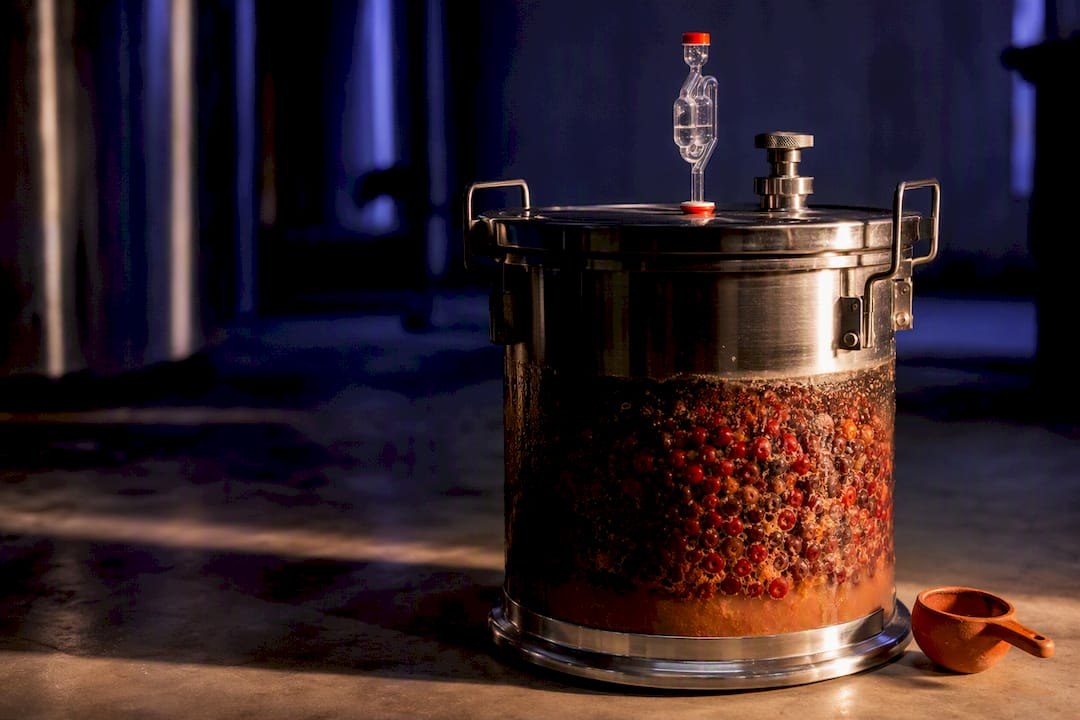
Anaerobic coffee fermentation is a sealed, oxygen-restricted process applied to whole cherry or pulped beans, and its defining effect is ester-driven, wine-like flavor that regular fermentation rarely produces. Done well, it delivers vivid fruit, floral, or spice notes with clean acidity intact. Done poorly, it produces solventy, boozy, or unpleasant flavors, because the same sealed environment that builds complexity also hides overfermentation until it’s too late.
TL;DR:
- Anaerobic fermentation predominantly involves microbes like lactic acid bacteria and specific yeasts, resulting in ester-driven, wine-like flavors with complex fruit and spice notes.
- The process can last from 24 to over 72 hours, with temperature and duration directly influencing the balance of brightness and intensity in the final cup.
- Precise tracking of temperature, Brix, pH, and gas release is essential for consistent results and preventing off-flavors such as solventy or vinegary notes.
- Overfermentation risks include excessive ester buildup, off-odor development, and microbial dominance shifts that can spoil the batch.
- Tasting anaerobic coffee through curated, light-roasted subscription offerings offers flavor insight without the need for production-scale fermenting equipment.
Table of Contents
- What Is Anaerobic Coffee Fermentation?
- How Do Producers Run Anaerobic Fermentation?
- What Microbes and Compounds Drive the Flavor?
- What Flavors Come From Different Times and Temperatures?
- Which Variables Should Producers Actually Track?
- What Can Go Wrong With Anaerobic Fermentation?
- How Do Roasters and Buyers Judge Anaerobic Lots?
- How Moustache Coffee Club Approaches Anaerobic Lots
- Where Anaerobic Fermentation Is Headed
- Taste Anaerobic Coffee Without Running Your Own Fermentation Tank
- Sources
- FAQ
What Is Anaerobic Coffee Fermentation?
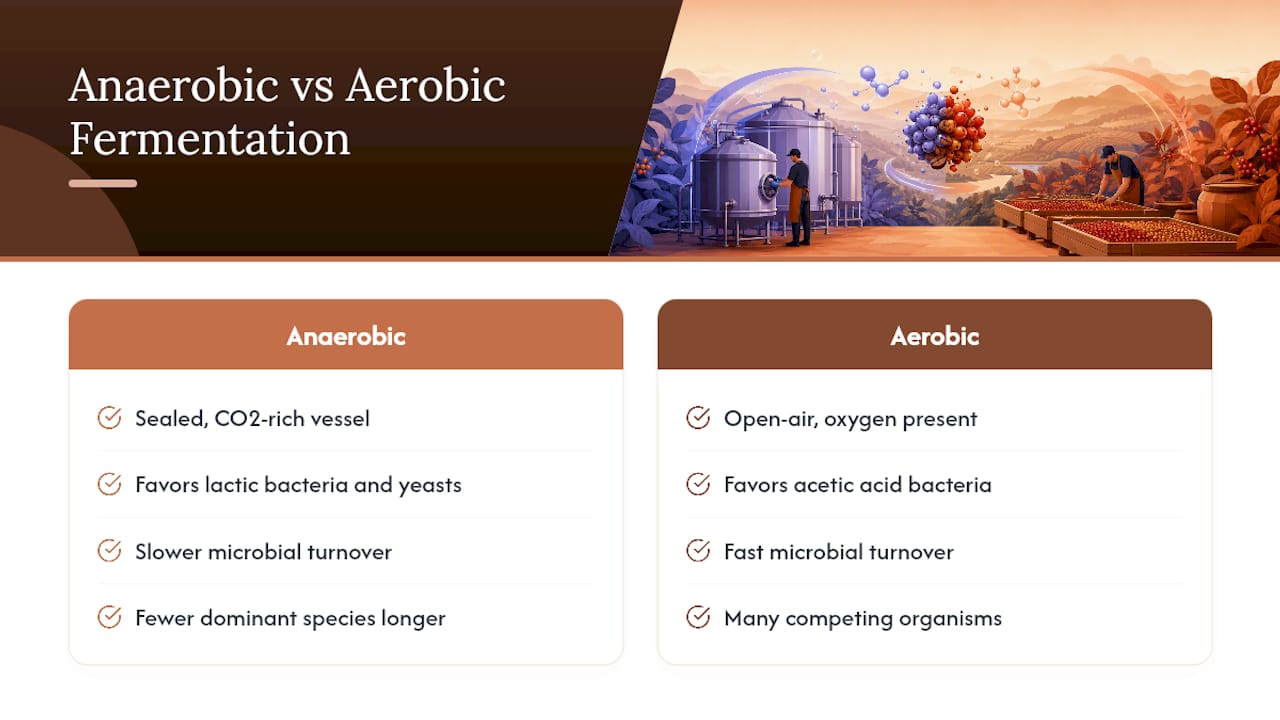
Anaerobic coffee fermentation happens inside a sealed vessel where oxygen is excluded or purged, letting carbon dioxide build up as microbes consume the sugars in the coffee’s mucilage or cherry pulp. That low-oxygen environment favors facultative anaerobes, mainly lactic acid bacteria and select yeasts, while suppressing the acetic acid bacteria that thrive in open-air fermentation.
The technique borrows directly from winemaking’s carbonic maceration, where whole grape clusters ferment in a CO2-rich tank before crushing. Coffee producers adapted the idea within the last couple of decades, sealing tanks with airlocks or submerging beans underwater to recreate similar conditions.
The practical difference from washed or natural processing is microbial succession. Open, aerobic fermentation lets a broad, fast-moving community of bacteria and molds compete for sugars over hours. Anaerobic tanks slow that turnover, letting fewer organisms dominate for longer, which concentrates their specific metabolic byproducts, esters, acids, and alcohols, into the bean itself.
How Do Producers Run Anaerobic Fermentation?
Three methods dominate specialty-grade anaerobic processing, and each handles the sealed environment differently.
- SIAF (self-induced anaerobiosis). Depulped or whole cherries go into sealed tanks, often fitted with airlocks that let CO2 escape without letting oxygen back in. No gas is added; the coffee’s own respiration and microbial activity displace the oxygen naturally over the first few hours.
- Carbonic maceration. Whole, unpulped cherries fill a tank that’s then purged with external CO2 before sealing, mimicking the wine technique more literally. The carbonic maceration process can run past 100 hours in some experimental lots, developing deep, jammy fruit character.
- Sealed submerged tanks. Pulped beans go underwater in a closed tank, which limits gas exchange while keeping temperature more stable than an air-filled vessel.
A typical SIAF sequence looks like this: sort ripe cherries, pulp them, load the pulped beans or whole cherries into the tank, seal it, ferment for a set window, then wash and move to drying. Producers running small-lot R&D trials usually cap batches at a few hundred kilograms, track Brix and temperature at set intervals, and log every variable so a good result can be repeated rather than treated as a lucky accident.
What Microbes and Compounds Drive the Flavor?
Lactic acid bacteria and specific yeast strains dominate sealed anaerobic tanks, a different lineup than the acetic acid bacteria and wild yeast mix common in open fermentation. That shift in dominant organisms is the mechanical reason anaerobic coffee tastes different, not just processed differently.
The metabolites that matter most:
- Lactic acid, which builds a rounder, less sharp acidity than the acetic acid common in washed coffee.
- Ethanol, produced by yeast fermentation of residual sugars, which acts as a precursor to esters.
- Esters like ethyl acetate and amyl acetate, responsible for the fruity, sometimes nail-polish-adjacent aromatics anaerobic coffee is known for.
- Higher alcohols and pyrazines, which contribute to the spice and boozy depth found in longer, warmer ferments.
Research on SIAF metabolite accumulation found that extending fermentation from 24 hours to 48 or 72 hours measurably increases ester and alcohol production. The same research found meaningful layer heterogeneity inside large static tanks. Beans near the bottom or middle of a tank often show more advanced metabolite development than those near the top, since gas and liquid don’t move evenly through a static mass. That’s a strong argument for smaller vessels or occasional agitation if consistency across a lot matters more than flavor intensity in any one section.
What Flavors Come From Different Times and Temperatures?
Temperature and duration are the two levers that shape what ends up in the cup, and they interact more than most producers expect. Coffee fermented cooler, around 8 to 10°C, tends to produce cleaner, more vibrant acidity with fruit notes that read as bright rather than heavy. Warmer fermentations in the 20 to 30°C range push microbial activity faster, which favors brown spice notes like cinnamon, clove, and brown sugar over crisp fruit.
Duration tells a similar story:
- Short ferments (around 24 hours) tend to stay closer to the coffee’s underlying origin character, with subtler ester development.
- Extended ferments (48 to 72-plus hours) build noticeably more intense, wine-like complexity, sometimes tipping into tropical fruit, floral, or overtly boozy territory.
- Very long ferments (past 72 hours) raise the risk of the process overshooting into vinegar, solvent, or rotten notes if not tightly monitored.
There’s no universal “best” combination. A producer chasing clarity for a light Nordic-style roast might choose a cooler, shorter ferment, while one aiming for maximum sensory drama might run warm and long, accepting more batch-to-batch variability in exchange for intensity.
Which Variables Should Producers Actually Track?
Reproducibility separates a great anaerobic lot from a lucky one, and that starts with measurement, not intuition.
- Temperature, checked at regular intervals since even a few degrees of drift changes microbial activity substantially.
- Brix, tracked to see how quickly sugars are being consumed.
- pH, which drops as lactic and acetic acids accumulate and signals how far fermentation has progressed.
- CO2 pressure or off-gassing, especially in airlock-equipped SIAF tanks.
- Bean mass temperature, distinct from ambient temperature, since fermentation itself generates heat in larger batches.
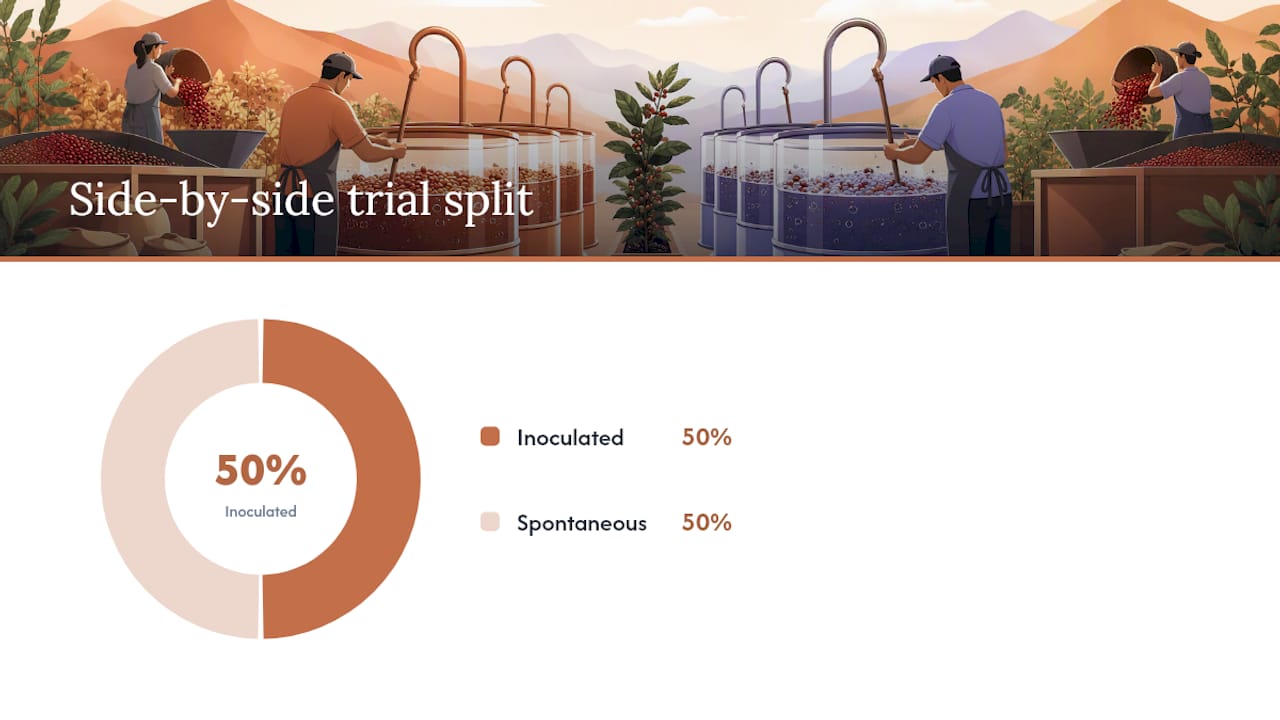
Starter cultures versus spontaneous fermentation is the next decision point. Research comparing natural SIAF against inoculated fermentation using Saccharomyces boulardii found that inoculated batches produced more consistent quality, while natural, spontaneous fermentation generated greater microbial diversity and a wider sensory range. Neither is objectively better; consistency and novelty pull in opposite directions.
Vessel choice matters too. Stainless tanks give tighter control over temperature and pressure but cost far more than GrainPro bags or plastic barrels commonly used for entry-level experiments.
Pro Tip: Run side-by-side trials with identical cherry lots split across two vessels, one inoculated and one spontaneous, at the same temperature and duration. The comparison tells you more about your specific microclimate than any published protocol.
What Can Go Wrong With Anaerobic Fermentation?
Overfermentation is the single biggest risk, and it hides well inside a sealed tank where you can’t smell or see what’s happening until the seal breaks.
- Butyric, cheesy notes usually signal excessive time or temperature that pushed the fermentation into clostridia-favoring territory.
- Solventy or nail-polish-remover aromas point to excessive ester and ethyl acetate buildup, often from ferments run too long or too warm.
- Sharp, vinegary acetic notes suggest oxygen leaked into the tank, letting acetic acid bacteria take over despite the seal.
Controlling these risks means capping fermentation time per method, checking Brix and temperature on a schedule rather than guessing, and keeping experimental lots small enough that a failed batch doesn’t sink the harvest. Drying afterward needs equal care. Overwet or improperly dried anaerobic coffee risks mold growth and can damage embryo viability, which matters for anyone saving seed stock and affects final moisture stability in green coffee regardless.
How Do Roasters and Buyers Judge Anaerobic Lots?
Cuppers evaluating anaerobic coffee look for clarity above all: distinct, clean esters rather than a muddy wall of fermented flavor, balance between the intense process notes and the coffee’s underlying character, and a finish that doesn’t collapse into staleness or harshness.
Roasting decisions follow directly from the chemistry. Lighter roasts with gentle development preserve the volatile esters that define the flavor profile, since heavier roasting drives off many of the same aromatic compounds that make anaerobic processing worth doing in the first place.
Buyers weigh consistency across batches, transparency about the exact protocol used, and how well the coffee’s story pairs with its cup quality. A producer who can explain their tank type, duration, and temperature builds more trust than one selling “anaerobic” as a vague marketing label.
How Moustache Coffee Club Approaches Anaerobic Lots
The company sources single-origin coffees, including anaerobic-processed lots, from various regions and roasts them ultra-light in the Nordic tradition to preserve volatile esters and delicate acidity. Every shipment includes origin reports and brewing guides that explain the specific fermentation method behind that bag, so subscribers can connect what they taste to how the coffee was actually processed. For anyone curious about anaerobic character without sourcing or roasting it themselves, a sampler shipment is the fastest way to taste the difference between a cool, short ferment and a warm, extended one.
Where Anaerobic Fermentation Is Headed
Anaerobic fermentation is a genuinely powerful flavor tool, but it only scales when producers treat it as a measured process, not an art project. Its strongest future is as a limited-release differentiator, paired with honest consumer education about what’s actually in the cup.
— Sean
Taste Anaerobic Coffee Without Running Your Own Fermentation Tank
You don’t need a sealed vessel, a pH meter, or a spare barn to taste what careful anaerobic fermentation actually does to a cup. Moustachecoffeeclub curates single-origin lots, including limited anaerobic and carbonic maceration releases, and roasts them ultra-light specifically to keep those esters and acids intact rather than roasting them flat.

Subscription boxes typically include origin notes explaining the fermentation method, duration, and expected flavor markers, providing tasting context. It’s not a substitute for visiting a farm or running your own trials. It’s the easiest route to a genuinely well-processed anaerobic cup delivered fresh, without gambling on a random bag from an unfamiliar roaster. Head to the coffee subscription page to pick a plan, or start a subscription now and flag anaerobic lots as a preference in your taste profile.
FAQ
Is Anaerobic Coffee Better Than Other Processing Methods?
It’s not universally better, but it produces flavor complexity, ester-forward, wine-like notes, that washed or standard natural processing can’t replicate. Whether it’s “better” depends on whether you prefer that intensity over cleaner, more origin-driven cups.
What Is the 15-15-15 Rule for Coffee Fermentation?
There’s no established, peer-reviewed rule in coffee fermentation science like the “15-15-15”; definitions circulating online vary and aren’t standardized. Treat any version you encounter as informal producer shorthand rather than a proven protocol.
What Is the Difference Between Aerobic and Anaerobic Coffee Processing?
Aerobic fermentation happens in open contact with air, favoring fast-acting acetic acid bacteria and a broad microbial mix. Anaerobic fermentation happens in a sealed, oxygen-limited tank, favoring lactic acid bacteria and yeasts that produce more esters and alcohols.
Is Fermented Coffee Better for You Nutritionally?
Fermentation changes coffee’s flavor chemistry far more than its nutritional profile; there’s no strong evidence that anaerobic processing makes coffee meaningfully healthier than other methods. The real benefit is sensory, not nutritional.
How Long Should Anaerobic Coffee Fermentation Last?
Most protocols run between 24 and 72-plus hours, with shorter ferments preserving subtler origin character and extended ferments building more intense, wine-like complexity. Going much past 72 hours raises the risk of off-notes without tight temperature and Brix monitoring.
