Caffeine in a Cup of Coffee: mg by Drink Type
A standard 8-oz brewed cup of coffee contains roughly 80–100 mg of caffeine, a single 1-oz espresso shot runs about 63 mg, and an 8-oz instant cup lands closer to 30–90 mg. Decaf is not caffeine-free: expect 1–15 mg per cup. Large commercial takeaway drinks can push well past 200 mg in a single serving. Mayo Clinic sets the widely cited safe daily ceiling for most healthy adults at 400 mg, and a 2024 analysis of 299 coffee samples found that roughly 4% of commercial servings exceeded 200 mg per cup.
Quick reference for the most common servings:
- Brewed/drip coffee, 8 oz: ~80–100 mg
- Espresso, single shot (1 oz): ~63 mg
- Espresso, double shot (2 oz): ~125 mg
- Instant coffee, 8 oz: ~30–90 mg
- Cold brew, 8 oz: ~100–200 mg (concentrate runs higher)
- Decaf, 8 oz: ~1–15 mg
- Large commercial takeaway (16–20 oz): often 150–300+ mg
Key Takeaways
An 8-oz brewed cup contains roughly 80–100 mg of caffeine, and most healthy adults should stay under 400 mg per day total from all sources.
| Point | Details |
|---|---|
| Brewed coffee baseline | An 8-oz drip cup averages 80–100 mg; scale linearly for 12-oz and 16-oz servings. |
| Espresso by shot count | A single shot is ~63 mg; total caffeine in lattes and Americanos depends on shot count, not cup size. |
| Daily safety limit | Most healthy adults: up to 400 mg/day; a single serving caution is commonly cited at 200 mg. |
| Commercial variability | Takeaway coffees average roughly three times the caffeine of homemade; some exceed 200 mg per serving. |
| Moustachecoffeeclub advantage | Roasted-to-order single-origin beans give consistent extraction, making per-cup caffeine estimates more reliable. |
Table of Contents
- Caffeine content by coffee type and serving size
- What actually changes how much caffeine is in a cup
- How much caffeine is safe and who should be careful
- How to estimate the caffeine in your own cup
- Does roast level or freshness actually change your caffeine?
- What I’d actually tell you to do
- Fresh beans, predictable caffeine
- Sources
- FAQ
Caffeine content by coffee type and serving size
The numbers above are starting points. Real-world caffeine levels in coffee shift considerably by drink type, serving volume, and preparation. The table below gives practical ranges you can use for quick estimation.
Healthline’s caffeine guide notes that serving size is one of the biggest drivers of total mg, which is why scaling matters more than most people realize.
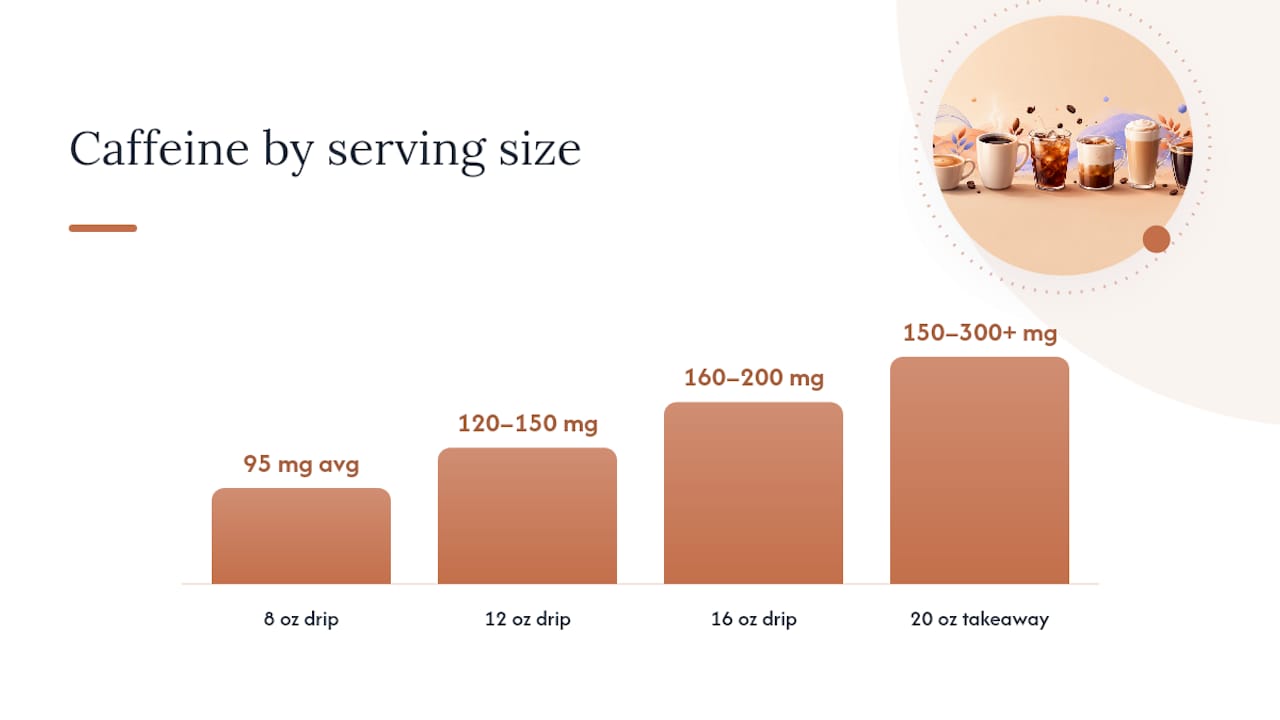
Scaling examples by cup size:
- 8 oz drip: ~80–100 mg (use 95 mg as a working average)
- 12 oz drip: ~120–150 mg (multiply the 8-oz average by 1.5)
- 16 oz drip: ~160–200 mg (two standard cups worth of caffeine)
A 20-oz takeaway coffee at a commercial chain can land anywhere from 150 to 300+ mg depending on the shop’s espresso recipe and brew strength. That single cup can put a moderate coffee drinker close to the 400 mg daily ceiling before lunch.
What actually changes how much caffeine is in a cup
Caffeine content varies because multiple production and preparation factors interact, not because the numbers are inherently unreliable. Here is what moves the needle most:
- Bean species: Robusta beans contain roughly twice the caffeine of Arabica. Most specialty coffee uses Arabica, so specialty cups tend to run lower than commodity blends.
- Roast level: Lighter roasts retain slightly more caffeine by volume than darker roasts, because heat degrades caffeine marginally and darker roasts lose more bean mass. The difference is small, but it flips depending on whether you measure by weight or by scoop (see Section 6).
- Grind size: Finer grinds expose more surface area, increasing extraction rate. A finer grind for the same brew time pulls more caffeine.
- Coffee dose: More grams of coffee per ounce of water means more caffeine, full stop. This is the single biggest lever home brewers control directly.
- Brew time and temperature: Longer contact time and hotter water extract more caffeine. Cold brew compensates with a much longer steep (12–24 hours), which is why it often rivals or exceeds hot-brewed coffee in caffeine despite the lower temperature.
- Serving size: Obvious but frequently underestimated. A 16-oz cup of the same brew is simply twice the caffeine of an 8-oz cup.
- Commercial shop recipes: Café espresso recipes vary by shop. One shop’s “large” may use two shots; another’s may use three. You cannot assume the same caffeine from the same drink name at different venues.
Pro Tip: Weigh your coffee dose instead of scooping it. Pair that with a consistent brew method and your cup-to-cup caffeine becomes genuinely predictable.
How much caffeine is safe and who should be careful
For most healthy adults, Mayo Clinic and the FDA both point to 400 mg per day as the commonly cited upper limit.
Symptoms that suggest you have had too much caffeine:
- Insomnia or disrupted sleep
- Racing heart or palpitations
- Anxiety or jitteriness
- Headache or dizziness
- Nausea or upset stomach
Certain medications interact with caffeine, including some antibiotics (ciprofloxacin, for example), stimulant medications, and some heart drugs. If you take any of these, check with your prescriber before adding more caffeine.
Groups that need lower limits:
- Pregnant or breastfeeding individuals: Most guidelines recommend staying under 200 mg per day during pregnancy. Consult your provider for personalized guidance.
- People with heart conditions or caffeine sensitivity: Even amounts well below 400 mg can trigger symptoms. Start lower and adjust based on how you feel.
- Adolescents: No universally agreed-upon safe limit exists for teens; lower is better.
Track your total daily caffeine from all sources: coffee, tea, energy drinks, chocolate, and some over-the-counter medications. Explore a variety of quality coffee beans and tea to better manage your intake. Mayo Clinic recommends this cumulative view because most people undercount by focusing only on coffee.
How to estimate the caffeine in your own cup
The simplest approach: use a per-ounce rule of thumb for brewed coffee (roughly 10–12 mg per oz for standard drip), then adjust for drink type. Espresso is far more concentrated per ounce (~63 mg per oz) but served in smaller volumes, so a latte’s total caffeine depends almost entirely on shot count, not cup size.
Step-by-step for common scenarios:
- 8-oz drip at home: Assume ~95 mg. If you brew strong, use 110 mg.
- 12-oz takeaway drip: Multiply by 1.5 — roughly 140–150 mg.
- Double-shot latte, any size: ~125 mg regardless of milk volume. The milk adds no caffeine.
- 16-oz cold brew: Expect 150–200 mg; concentrate-based cold brew can run higher.
- 20-oz commercial coffee: Ask the barista how many shots or check the chain’s published nutrition data. Without that info, assume 200–300 mg.
For packaged or branded products, USDA FoodData Central is the most practical free database. Search by product name and you will often find lab-tested caffeine values more precise than any general estimate. Prefer those lab values over rule-of-thumb math when they are available.
Quick-check checklist for a café cup:
- Ask the cup size in ounces, not just “small/medium/large”
- Ask how many espresso shots the drink contains
- Assume higher concentration for Americanos and cold brew
- Add 20–30% to your estimate for large commercial takeaway sizes, given the documented variability in commercial samples
Does roast level or freshness actually change your caffeine?
The short answer: roast level has a real but modest effect, and how you measure matters more than the roast itself. Light roasts contain slightly more caffeine by volume than dark roasts because the roasting process drives off a small amount of caffeine and reduces bean density. Measure by weight, though, and the difference nearly disappears.
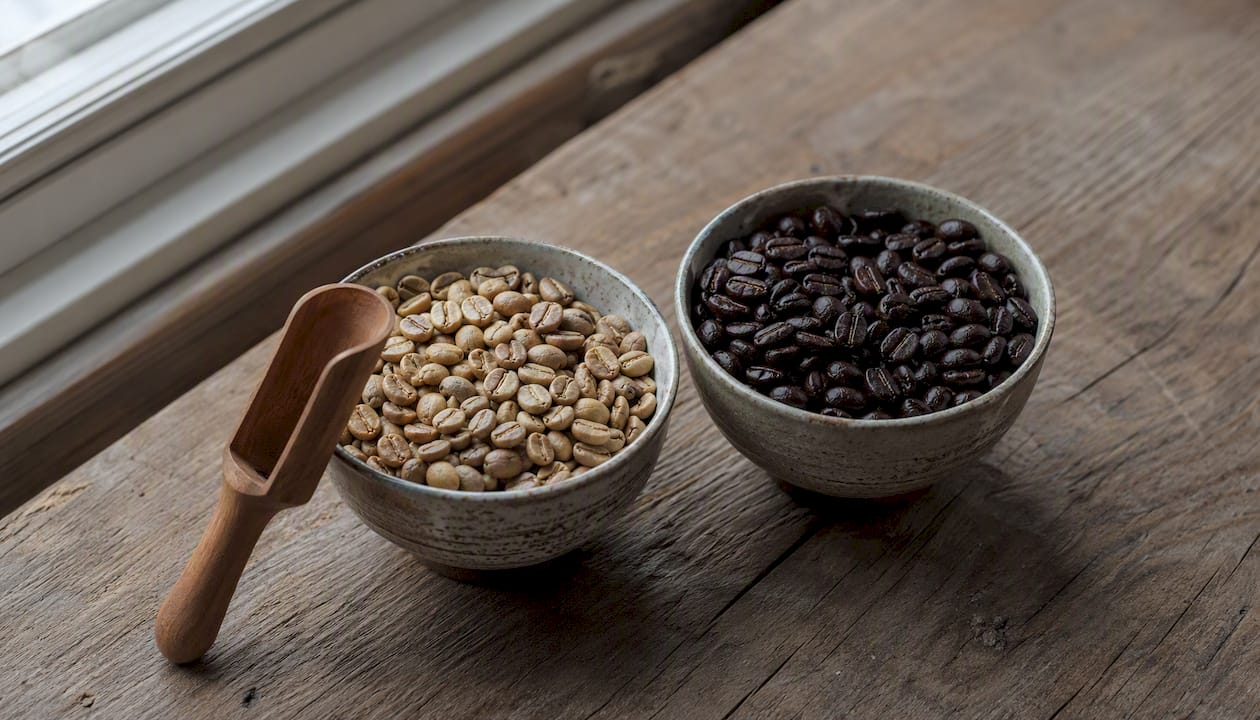
Freshness affects extraction consistency more than caffeine content directly. Stale beans extract unevenly, which means your caffeine per cup becomes less predictable even if the beans themselves haven’t lost meaningful caffeine. Roasted-to-order beans extract more uniformly, giving you a tighter, more repeatable result.
For home brewers who want consistent caffeine levels:
- Measure coffee by weight, not volume
- Use beans roasted within the past two to four weeks
- Keep grind size and brew ratio constant across batches
- Reference Moustachecoffeeclub’s light roast brewing guide for method-specific ratios
Pro Tip: If you are tracking caffeine for health reasons, single-origin beans from a consistent source give you a more stable baseline than blends, which can shift in composition from bag to bag. Consistent origin plus consistent brewing equals consistent caffeine.
What I’d actually tell you to do
Counting cups is a poor proxy for counting milligrams. A single large takeaway coffee can contain as much caffeine as three home-brewed cups, so the only number that matters is total daily mg. Start by estimating your two or three most common drinks using the ranges above, check packaged products on FoodData Central, and weigh your home coffee dose at least once to calibrate your baseline. That one step eliminates most of the guesswork.
Fresh beans, predictable caffeine
Knowing your numbers only helps if your beans are consistent. Moustachecoffeeclub ships single-origin specialty coffee roasted to order, so you get the same origin, the same roast profile, and the same extraction behavior in every bag. That consistency is what makes per-cup caffeine estimates actually reliable at home, rather than a rough guess.
Moustachecoffeeclub’s subscriptions include origin reports and brewing guides so you can dial in your dose and method with confidence. If you want to know what is in your cup, starting with labeled, freshly roasted single-origin beans is the most direct route. Start your subscription and take the variability out of your daily cup. You can still manage intake through measurement and brewing control regardless of where your beans come from.
Sources
When a general range is not precise enough, these are the sources worth checking:
- Caffeine content for coffee, tea, soda and more - Mayo Clinic
- Evaluation of the Caffeine Content in Servings of Popular Coffees in Terms of Its Safe Intake—Can We Drink 3–5 Cups of Coffee per Day, as Experts Advise? - PMC
- Spilling the beans: How much caffeine is too much? - FDA
- FoodData Central - USDA
- How Much Caffeine in a Cup of Coffee? A Detailed Guide - Healthline
- NCBI article summarizing caffeine variability across production and preparation
Prefer lab-tested database values (FoodData Central) for packaged products, published chain nutrition data for commercial drinks, and study-based ranges for home-brewed estimates. Café-provided information is the least reliable because it often reflects an idealized recipe rather than what ends up in your cup.
This article is general information, not a substitute for advice from a qualified doctor. Consult a qualified healthcare professional about your own circumstances before acting on anything here.
FAQ
Is 200 mg of caffeine a lot?
Not for most healthy adults, but it is a useful single-serving caution. Mayo Clinic sets the daily ceiling at 400 mg, so 200 mg represents half that limit in one drink.
How much caffeine is in a 12-oz cup of black coffee?
A 12-oz drip coffee typically contains roughly 120–150 mg of caffeine, scaling from the standard 8-oz average of 80–100 mg.
Is 2 cups of coffee a lot of caffeine?
Two standard 8-oz brewed cups deliver roughly 160–200 mg total, well within the 400 mg daily limit for most healthy adults. The key is what size “cup” you are actually drinking.
Is 600 mg of caffeine a day safe?
Exceeding the 400 mg limit that Mayo Clinic and the FDA cite for most healthy adults raises the risk of insomnia, palpitations, and anxiety. Pregnant individuals, people with heart conditions, and those sensitive to caffeine should stay considerably lower.
Recommended
- Why Light Roast Has More Caffeine: The Real Truth | Blog | The Moustache Coffee Club
- How Coffee Processing Affects Taste: A Flavor Guide | Blog | The Moustache Coffee Club
- Why coffee gifts suit corporate gifting: a buyer’s guide | Blog | The Moustache Coffee Club
- What Does a Balanced Coffee Profile Mean? | Blog | The Moustache Coffee Club