How Coffee Farming Impacts the Environment: What to Know
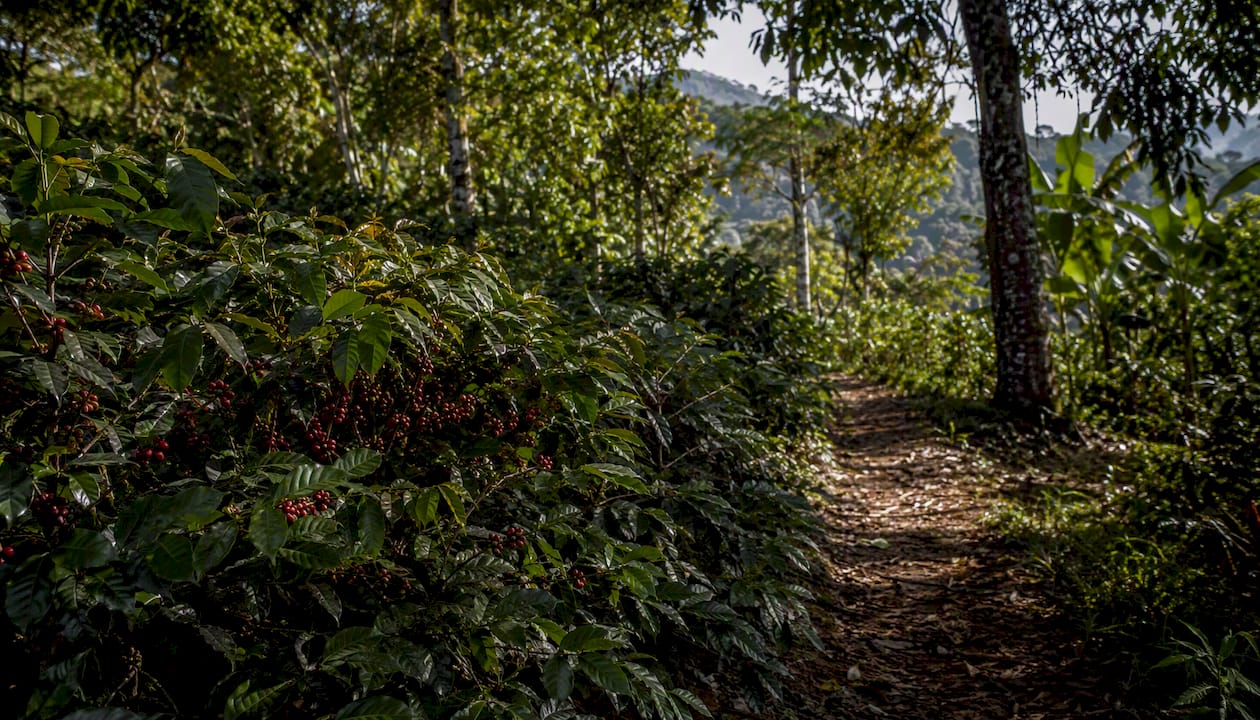
Coffee farming is a measurable driver of deforestation, biodiversity loss, water stress, soil degradation, and greenhouse gas emissions across the tropics — but agroforestry, improved nitrogen management, better wet-processing practices, and demand-side choices from buyers and policymakers can cut most of those harms substantially.
Three levers with the strongest evidence behind them:
- Agroforestry and shade retention: replacing or supplementing sun-grown monocultures with diverse native shade trees sequesters more carbon, supports wildlife, and reduces input dependency.
- Nitrogen management: shifting from synthetic fertilizers toward organic sources and legume-based biological fixation cuts both N₂O emissions and runoff, which together dominate many farms’ carbon footprints.
- Wet-processing reform: closed-loop water systems and eco-pulping reduce the high biochemical oxygen demand (BOD) loads that wet mills discharge into rivers.
Who needs to act: farmers control management decisions on the ground; roasters and buyers shape demand through premiums and sourcing requirements; policymakers set the land-use rules and incentive structures that make sustainable practices economically viable.
Key Takeaways
Coffee farming’s environmental harms are well-documented and largely driven by intensification, shade removal, and synthetic nitrogen overuse, but agroforestry and demand-side changes can reverse most of them.
| Point | Details |
|---|---|
| Agroforestry sequesters 2.5x more carbon | Median carbon dioxide removal is substantially higher for agroforestry systems compared to unshaded systems. |
| Fertilizer drives most farm emissions | Fertilizer manufacture and soil N₂O account for 70–94% of emissions in intensified systems. |
| Wet processing pollutes local waterways | High BOD effluent from wet mills depletes river oxygen and threatens downstream communities. |
| Economic pressure drives sun-grown conversion | Low farmgate prices make shade removal and intensification a rational short-term choice for farmers. |
| Consumer premiums fund better practices | Paying specialty prices and choosing traceable, agroforestry-sourced beans directly supports farm-level change. |
Table of Contents
- How does coffee farming drive deforestation and habitat loss?
- Why simplified coffee landscapes threaten biodiversity
- How does water use and processing pollution affect local ecosystems?
- How does coffee cultivation degrade soils?
- What are coffee’s greenhouse gas emissions and climate vulnerabilities?
- Shade-grown vs sun-grown: which system actually works better?
- Research insights on why farmers convert and how agroforestry sequesters carbon
- What can consumers, roasters, and policymakers actually do?
- How do you measure coffee’s environmental impact reliably?
- A roaster’s perspective on sourcing and environmental trade-offs
- Sources
- FAQ
How does coffee farming drive deforestation and habitat loss?
Coffee expansion clears forest two ways: directly, when growers convert primary or secondary forest to new plantations, and indirectly, when intensification on existing land displaces subsistence crops and pushes smallholders to clear new frontiers. Both mechanisms show up in satellite and remote-sensing data that link agricultural expansion, including coffee in some regions, to measurable forest loss and landscape change.
The geography matters. Latin America, sub-Saharan Africa, and parts of Southeast Asia each have distinct deforestation profiles. In Central America and Colombia, coffee farms sit inside or adjacent to biodiversity hotspots where forest loss has outsized consequences. In Ethiopia, the wild genetic homeland of Arabica, expansion into forest margins threatens the crop’s own genetic diversity. In parts of Indonesia and Vietnam, coffee has been one of several drivers of lowland forest conversion.
The WWF has documented cases where illegally grown coffee has driven habitat destruction for high-conservation-value species including rhinos, tigers, and elephants — a stark illustration of what poorly governed land-use change looks like at the species level.
Shade removal within existing farms is a subtler but widespread problem. When growers strip shade trees to boost short-term yields, the farm stays “coffee” on a land-use map but loses most of its habitat value. A Forest Trends briefing on coffee’s environmental pressure points identifies this within-farm intensification as one of the sector’s most underappreciated risks, precisely because it doesn’t register as deforestation in standard monitoring.
Key drivers of coffee-linked forest loss:
- Low farmgate prices that push growers toward yield-maximizing, shade-free systems
- Weak land-tenure security that discourages long-term investment in tree cover
- Inadequate enforcement of forest-protection rules in frontier regions
- Demand for cheap commodity coffee that rewards volume over ecological stewardship
Why simplified coffee landscapes threaten biodiversity
Monoculture coffee, stripped of shade trees and planted in uniform rows, functions more like a factory floor than a forest. Plant diversity collapses. Bird and insect communities thin out. Soil microbial networks, which evolved under complex canopy cover, lose the organic inputs and structural complexity they need.
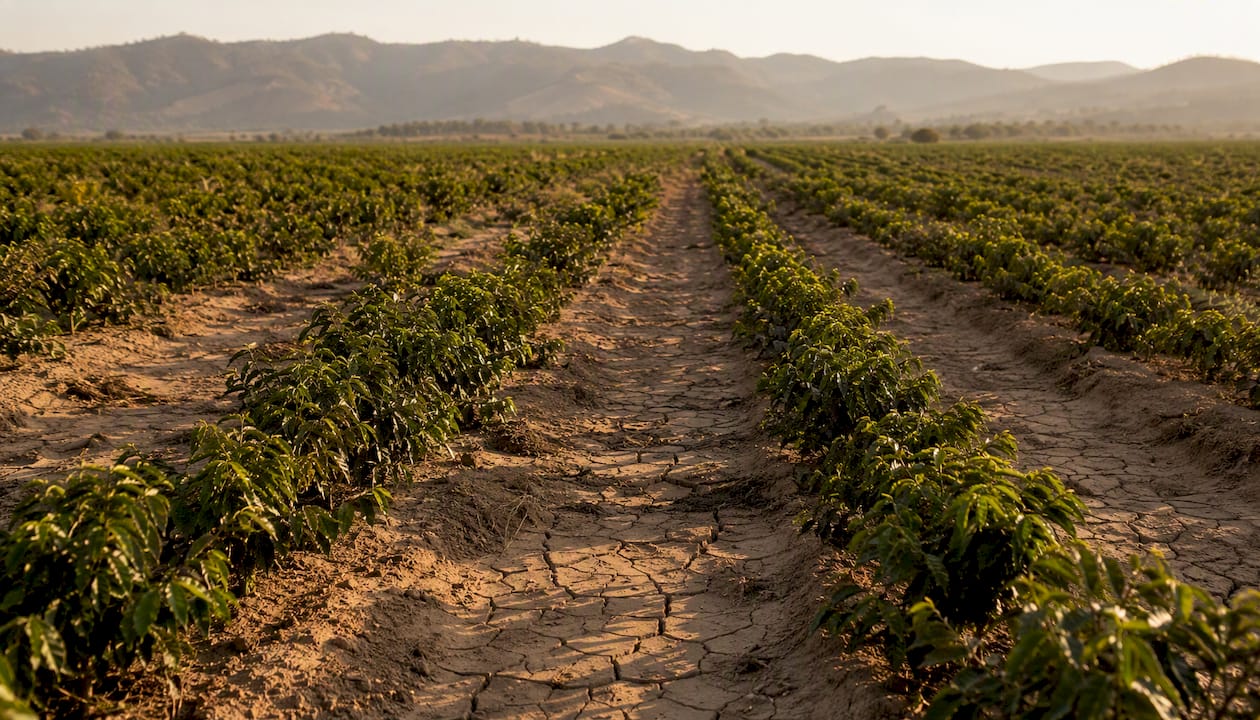
A comprehensive review of 146 studies on coffee farming systems in Latin America found that intensification and shade removal accelerated biodiversity loss alongside deforestation, increased agrochemical use, and water pressures. The review is explicit: the shift to sun-grown systems didn’t just reduce tree cover, it degraded the full suite of ecosystem services those trees provided.
The evidence from agroforestry systems tells the opposite story. A field study in western Ethiopia found that coffee agroforestry retained approximately 56% of forest species richness, with high stem density and basal area compared to adjacent forests. That’s not pristine forest, but it’s a functioning secondary habitat, not a biological desert.
Lost biodiversity isn’t just an ecological problem. When pollinators disappear, fruit set drops. When natural predators of coffee berry borer and leaf rust are gone, pest and disease pressure rises, and chemical inputs fill the gap. A review of 78 studies confirmed that shade-tree diversity positively affects bean size, weight, and organoleptic quality — meaning ecological health and cup quality often move together.
Pro Tip: When evaluating a coffee’s sustainability credentials, ask specifically about shade-tree diversity, not just “shade-grown.” A farm with a single species of non-native fast-growing shade tree offers far less biodiversity value than one with 10 or more native species.
How does water use and processing pollution affect local ecosystems?
Coffee’s water story has two distinct chapters: how much water the crop consumes, and what it puts back into waterways after processing.
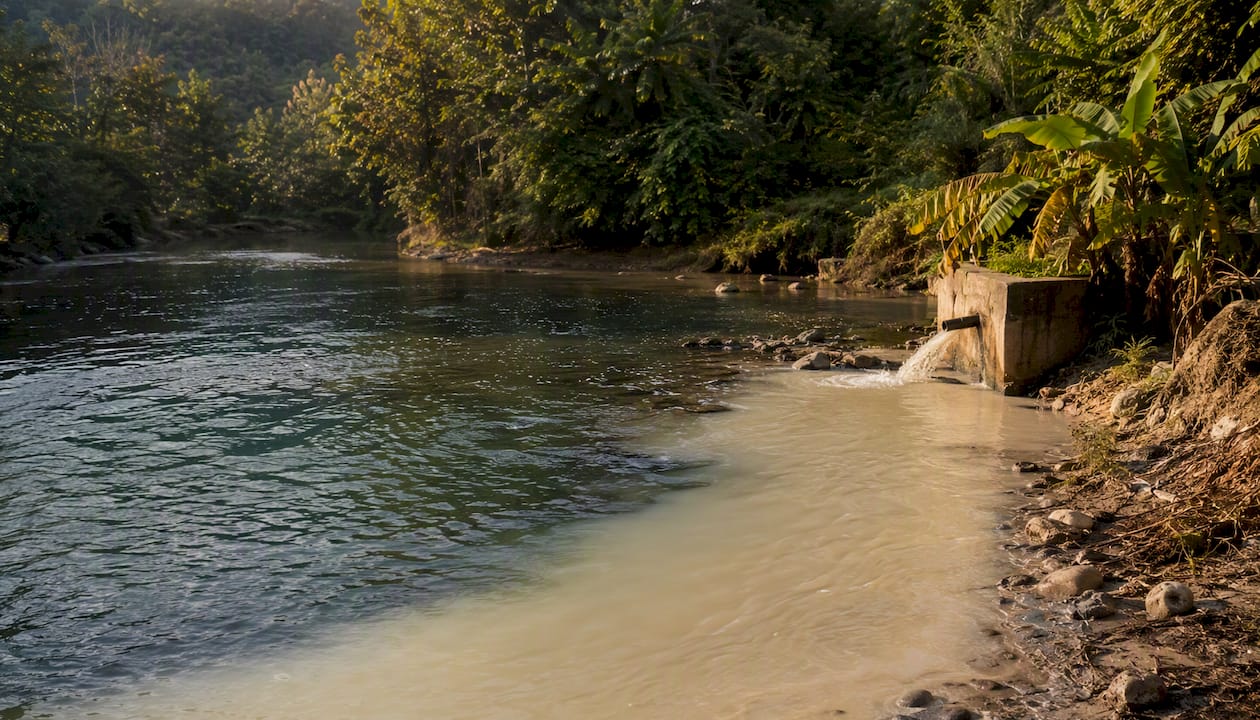
On consumption, coffee has a large green water footprint (rainfall absorbed by the plant) but a more variable blue water footprint (irrigation). Most coffee is rainfed, but irrigated systems in Brazil and parts of Central America can create localized blue-water stress. Wet (washed) processing adds a third dimension: it uses roughly 7.5 cubic meters of water per ton of coffee processed, and the wastewater it generates carries extremely high BOD loads from pulp and mucilage.
| Water impact type | Source | Key concern |
|---|---|---|
| Green water (rainfed) | Crop transpiration | High total volume; less acute than blue water |
| Blue water (irrigation) | Brazil, Central America | Localized stress in dry-season irrigation zones |
| Wet-processing effluent | Washing stations, wet mills | High BOD, nutrient loads, river oxygen depletion |
The wet-processing effluent problem is serious at the local scale. Pulping wastewater discharged untreated into streams depletes dissolved oxygen, kills aquatic life, and contaminates drinking water for downstream communities. Life-cycle assessments and field studies confirm that wet processing is a major contributor to local water pollution, with BOD loads that can overwhelm small river systems in densely farmed valleys.
Practical mitigations that work at farm and mill scale:
- Closed-loop or recirculating water systems at wet mills reduce freshwater draw and concentrate effluent for treatment.
- Constructed wetlands and biotreatment beds can process pulping wastewater before it reaches waterways.
- Eco-pulping and honey/natural processing reduce or eliminate the wet-processing water requirement entirely, though they introduce different quality-management challenges.
- Pulp composting converts a major waste stream into a soil amendment, cutting both pollution and synthetic fertilizer demand.
How does coffee cultivation degrade soils?
Soil degradation under intensive coffee follows a predictable pattern. Shade removal exposes soil to direct rainfall, accelerating erosion on the steep slopes where most coffee grows. High synthetic nitrogen inputs create nutrient imbalances, suppress soil microbial diversity, and generate nitrous oxide (N₂O) emissions that are far more potent than CO₂ as a greenhouse gas. Repeated pesticide applications accumulate residues that affect non-target organisms and, in some cases, farm workers.
The numbers from the Latin America review are striking: N₂O emissions from coffee farms ranged from 0.2 to 12.8 kg N per hectare per year, translating to 94 to 5,995 kg CO₂-equivalent per hectare per year depending on management intensity. That range reflects the difference between a well-managed agroforestry system and a heavily fertilized sun-grown plantation.
Fertilizer manufacture and soil N₂O together account for a large share of total GHG emissions in some intensified coffee systems, according to the MDPI planetary health review.
Pesticide exposure is a human health issue as much as an ecological one. Smallholder farmers in Latin America and Africa frequently apply organophosphates and other chemicals without adequate protective equipment, and runoff carries those compounds into local water supplies. The same review documents these social-environmental linkages as inseparable from the ecological impacts.
On-farm practices that reduce soil risk:
- Cover crops and contour planting slow erosion and build organic matter on sloped terrain.
- Integrated pest management (IPM) reduces pesticide loads by combining biological controls, resistant varieties, and targeted application.
- Optimized fertilization based on soil testing cuts excess N application, reducing both N₂O emissions and input costs.
- Legume intercrops fix atmospheric nitrogen biologically, partially substituting for synthetic fertilizer.
What are coffee’s greenhouse gas emissions and climate vulnerabilities?
Coffee’s carbon footprint is dominated by two sources: fertilizer manufacture and application (including the N₂O released from soil), and land-use change when forest is cleared for new plantations. Transport and roasting contribute, but they’re secondary to what happens on the farm. Lifecycle assessments confirm that the farm stage, not the roastery or the delivery truck, is where most of the footprint is built.
Agroforestry changes that equation significantly. A meta-analytical review reports median CO₂ removal rates of approximately 17,676 kg CO₂ per hectare per year for agroforestry systems, compared to approximately 6,990 kg CO₂ per hectare per year for unshaded coffee. That’s roughly 2.5 times more carbon sequestration per hectare, driven by the biomass and soil carbon stored in shade trees.
| Production system | Median CO₂ removal (kg CO₂ ha⁻¹ yr⁻¹) | Key emissions driver |
|---|---|---|
| Agroforestry (CAFS) | ~17,676 | Lower; shade trees offset fertilizer emissions |
| Unshaded/sun-grown (UCAS) | ~6,990 | Higher; fertilizer N₂O dominates |
Climate change creates a feedback loop that makes this worse. Arabica coffee is temperature-sensitive, and warming projections suggest significant portions of current growing regions will become unsuitable by mid-century. As suitable zones shift upward in altitude and toward higher latitudes, production pressure moves into areas that are currently forested. That land-use feedback could amplify deforestation precisely when the sector needs to be reducing it.
Top mitigation options at the farm level:
- Transition to agroforestry to increase carbon sequestration and reduce input dependency.
- Shift nitrogen sources from synthetic fertilizers to organic matter, compost, and legume-based biological fixation.
- Maintain or restore riparian buffers and forest corridors to protect carbon stocks and biodiversity.
- Adopt zero-deforestation sourcing commitments throughout the value chain.
Shade-grown vs sun-grown: which system actually works better?
The comparison between coffee agroforestry systems (CAFS) and unshaded systems (UCAS) isn’t close on environmental metrics. Agroforestry wins on carbon sequestration, biodiversity, water regulation, and long-term soil health. The trade-off is yield: sun-grown systems produce more coffee per hectare in the short term, which is exactly why economic pressure drives conversion.
Here’s what the two systems look like side by side:
| Factor | Agroforestry (CAFS) | Sun-grown (UCAS) |
|---|---|---|
| Carbon sequestration | ~17,676 kg CO₂ ha⁻¹ yr⁻¹ | ~6,990 kg CO₂ ha⁻¹ yr⁻¹ |
| Biodiversity | High; supports birds, insects, soil biota | Low; simplified species assemblages |
| Water regulation | Canopy reduces erosion and runoff | Exposed soil increases erosion risk |
| Input dependency | Lower; ecosystem services substitute | Higher; pesticides and fertilizers required |
| Short-term yield | Lower per hectare | Higher per hectare |
| Cup quality potential | Often higher; shade slows cherry maturation | Variable; can be high with intensive management |
The yield trade-off is real, and dismissing it doesn’t help farmers. When farmgate prices are low, the math of sun-grown production is compelling: more kilograms per hectare, faster return. The MDPI review is direct about this: the shift to sun-grown systems is primarily an economic response to low prices and the need for short-term yield, not ignorance of the environmental consequences.
One nuance worth knowing: not all shade-grown systems deliver equal biodiversity benefits. Using a single species of non-native fast-growing tree as shade can actually deplete water and reduce biodiversity, functionally mimicking a monoculture. Native tree diversity is what drives the ecological gains, and that requires more management knowledge and often more upfront investment.
Pro Tip: Look for certifications like Rainforest Alliance or Bird Friendly (Smithsonian) when buying coffee. Bird Friendly in particular requires a minimum canopy height, cover percentage, and native tree diversity, making it one of the most ecologically rigorous shade standards available.
Certifications, buyer premiums, and long-term purchase contracts change the economics. When a roaster pays a meaningful premium for agroforestry-grown beans and commits to multi-year purchasing, the yield gap becomes manageable. Without that value-chain support, asking farmers to absorb the yield cost of shade retention is asking them to subsidize environmental benefits they don’t capture financially. Understanding how consumer choices affect coffee farmers is the first step toward closing that gap.
Research insights on why farmers convert and how agroforestry sequesters carbon
The academic literature on coffee’s environmental footprint has converged on a few high-confidence findings that are worth stating plainly.
Why farmers convert to sun-grown systems: The MDPI planetary health review synthesizes evidence from across Latin America showing that low farmgate prices are the primary driver of intensification. When prices fall below the cost of maintaining shade trees, pruning, and managing diverse agroforestry systems, farmers simplify. This isn’t a failure of values; it’s a rational response to price signals that don’t reflect environmental costs.
Quantified carbon benefits of agroforestry: The meta-analytical review published through the University of Toronto’s repository reports median carbon dioxide removal rates of approximately 17,676 kg CO₂ ha⁻¹ yr⁻¹ for agroforestry versus approximately 6,990 kg CO₂ ha⁻¹ yr⁻¹ for unshaded production. The same review identifies fertilizer manufacture and application as the dominant emissions source in many lifecycle assessments, and recommends shifting to organic nitrogen sources and biological fixation as a high-impact mitigation pathway.
| Metric | Agroforestry | Unshaded |
|---|---|---|
| Median CDR (kg CO₂ ha⁻¹ yr⁻¹) | ~17,676 | ~6,990 |
| Primary emissions driver | Lower fertilizer use | Fertilizer N₂O and manufacture |
| Ecosystem service provision | High | Low |
Policy implications from the literature:
- Value-chain reforms that pay farmers for ecosystem services (carbon, biodiversity, watershed protection) are necessary to make agroforestry economically competitive with sun-grown systems.
- Zero-deforestation sourcing commitments from major roasters and retailers create demand-side pressure that complements supply-side regulation.
- Targeted nitrogen-management programs, including soil testing, extension services, and subsidies for organic inputs, can reduce the fertilizer-emission share of coffee’s footprint without cutting yields.
- Payments for ecosystem services (PES) schemes, where farmers receive direct compensation for maintaining shade cover and forest buffers, have shown promise in Costa Rica and Colombia but need broader adoption and reliable funding.
The Global Coffee Platform provides industry-oriented frameworks and tools that translate these research findings into practical programs for roasters, traders, and producer organizations.
What can consumers, roasters, and policymakers actually do?
The environmental effects of coffee farming don’t change because of awareness alone. They change when purchasing decisions, sourcing policies, and regulatory frameworks shift the economics for farmers. Here’s what each actor group can do, in order of impact.
For consumers:
- Buy from roasters who publish origin reports and name specific farms or cooperatives, not just countries.
- Look for Bird Friendly, Rainforest Alliance, or organic certifications as proxies for better land management, while understanding their limits.
- Use an eco-friendly coffee subscription checklist to evaluate whether a subscription service prioritizes traceability, agroforestry sourcing, and reduced packaging.
- Pay the premium. Specialty coffee priced above commodity rates is the primary mechanism by which quality and sustainability get rewarded at the farm level.
- Ask roasters directly: What processing method? What shade system? Is there third-party verification?
For roasters and buyers:
- Offer multi-year purchase contracts that give farmers the income security to invest in agroforestry.
- Pay differentiated premiums for verified agroforestry or shade-grown beans, not just for cup score.
- Provide or fund technical assistance for farmers transitioning from sun-grown to agroforestry systems.
- Publish traceable sourcing information that lets consumers verify claims.
- Adopt zero-deforestation sourcing policies and require supplier documentation.
For policymakers:
- Integrate coffee into national land-use planning and zero-deforestation frameworks.
- Fund payments for ecosystem services programs that compensate farmers for shade retention and forest buffers.
- Regulate wet-processing effluent discharge and support investment in wastewater treatment at cooperative mills.
- Reform fertilizer subsidy structures to favor organic inputs and precision application over blanket synthetic N use.
- Support producer-country extension services that train farmers in agroforestry management and IPM.
Roasters who want to understand how sustainability practices translate to brand commitments will find that transparency and traceability are the two variables that matter most to environmentally conscious buyers.
How do you measure coffee’s environmental impact reliably?
Measuring how coffee cultivation affects wildlife, water, and climate requires specific metrics, not vague claims. Here’s what the standard indicators mean and where to find credible data.
Key metrics:
- CO₂e per hectare (CO₂e/ha): total greenhouse gas emissions or removals per unit of farmed land; useful for comparing management systems.
- CO₂e per ton of green bean: normalizes emissions to output volume; the standard unit for lifecycle assessments (LCAs).
- CDR (carbon dioxide removal, kg CO₂ ha⁻¹ yr⁻¹): measures how much CO₂ a farming system sequesters annually; agroforestry systems score dramatically higher than unshaded systems.
- Blue water footprint (m³/ton): volume of freshwater consumed from rivers and aquifers per ton of coffee produced.
- BOD (biochemical oxygen demand): measures the oxygen-depleting load of processing wastewater; high BOD in rivers indicates serious pollution.
- Biodiversity indicators: species richness, Shannon diversity index, and bird species counts are common proxies for habitat quality in coffee landscapes.
Where to find reliable data:
- The Global Coffee Platform publishes sector-level sustainability frameworks and aggregated data on environmental performance.
- NASA Earth Observatory provides satellite-based deforestation monitoring that can be used to track land-use change in coffee-growing regions.
- Peer-reviewed LCAs in journals like Agronomy for Sustainable Development and Journal of Cleaner Production provide the most rigorous farm-level footprint data.
- The International Coffee Organization (ICO) publishes production statistics and some sustainability indicators.
- Forest Trends and WWF publish accessible briefings that synthesize research for non-specialist audiences.
Evaluating brand claims: Ask for origin reports that name specific farms or cooperatives, not just countries. Ask whether third-party verification covers management practices (shade cover, fertilizer use, water management) or just traceability. A certification logo on a bag tells you a farm met a standard at a point in time; an origin report tells you what the farm actually looks like. The Moustachecoffeeclub coffee education hub explains what to look for in origin documentation and how to interpret sourcing claims.
A roaster’s perspective on sourcing and environmental trade-offs
The research on how coffee farming impacts the environment points in a clear direction: agroforestry works, economic pressure is the obstacle, and the value chain is the lever. What the research doesn’t always capture is how difficult it is to source coffee that genuinely meets these standards at scale, and how much of the burden currently falls on farmers who receive the least financial reward for their environmental stewardship.
At Moustachecoffeeclub, the sourcing approach starts with single-origin traceability, because you can’t verify what you can’t see. Knowing the farm, the processing method, and the management system isn’t just a marketing exercise; it’s the minimum condition for making honest claims about environmental impact. The honest trade-off is this: ultra-light, nordic-style roasting preserves the flavor characteristics that shade-grown, slowly matured cherries develop, which means the quality argument and the sustainability argument point toward the same farms. That alignment isn’t accidental, but it also isn’t universal across the industry. Choosing a specialty coffee subscription that publishes origin reports and pays above commodity prices is one of the most direct things a coffee drinker can do to shift the economics for farmers managing their land well.
Sources
The sources below represent the strongest available evidence on coffee’s environmental footprint, from peer-reviewed meta-analyses to satellite monitoring and NGO field documentation.
- The Planetary Health Impacts of Coffee Farming Systems in Latin America: A Review
- Carbon footprints and CO2 removal in primary production of coffee: a meta-analytical review
- Earthobservatory
- Globalcoffeeplatform
- Wwf
- Forest-trends
FAQ
What are the biggest environmental harms from coffee farming?
Deforestation, biodiversity loss, water pollution from wet-processing effluent, soil degradation from erosion and agrochemical overuse, and greenhouse gas emissions from synthetic fertilizers are the primary harms.
What environment does coffee grow best in?
Arabica coffee grows best in tropical regions with consistent rainfall, moderate temperatures, and well-drained, fertile soils. These conditions overlap heavily with biodiversity hotspots and remaining tropical forest areas, which is why expansion pressure and conservation concerns are so closely linked.
Is coffee farming waste, like spent grounds or pulp, good for plants?
Coffee pulp and spent grounds are rich in nitrogen, potassium, and organic matter, and composted pulp is an effective soil amendment. Uncomposted pulp discharged directly into waterways is the problem; properly managed, it’s a resource that reduces synthetic fertilizer demand on the farm.
What is the “dark side” of the coffee industry environmentally?
The combination of illegal land clearing in biodiversity hotspots, high-BOD wastewater from wet mills discharged untreated into rivers, heavy synthetic nitrogen use that generates potent N₂O emissions, and a commodity pricing structure that economically punishes farmers who maintain shade cover and forest buffers. These pressures are systemic, not incidental.
How does shade-grown coffee differ from sun-grown in environmental terms?
Shade-grown agroforestry systems sequester roughly 2.5 times more CO₂ per hectare annually, support far greater biodiversity, and reduce input dependency compared to sun-grown monocultures. The trade-off is lower short-term yield per hectare, which is why buyer premiums and long-term purchase contracts are necessary to make agroforestry economically viable for farmers.
Recommended
- Coffee Production’s Carbon Footprint: What the Data Shows | Blog | The Moustache Coffee Club
- How Coffee Brands Practice Sustainability in 2026 | Blog | The Moustache Coffee Club
- Why Consumer Choices Affect Coffee Farmers: 2026 Guide | Blog | The Moustache Coffee Club
- How specialty coffee supports farmers: The ethical drinker’s guide | Blog | The Moustache Coffee Club