Receiving Roasted-to-Order Coffee: A Connoisseur’s Guide
Roasted-to-order coffee is defined as coffee roasted specifically after your order is placed, shipped within days, and delivered with volatile aromatic compounds fully intact. This receiving roasted-to-order coffee guide covers every step from unboxing to first sip, because how you handle those first hours and days determines whether you taste the coffee at its peak or squander it. Freshly roasted subscription coffee produces a richer aroma and deeper flavor than grocery store alternatives. Services like Moustachecoffeeclub, Trade Coffee, and Atlas Coffee Club have built their reputations on this freshness advantage, but the beans still need your attention once they arrive.
What to expect when your roasted-to-order coffee arrives
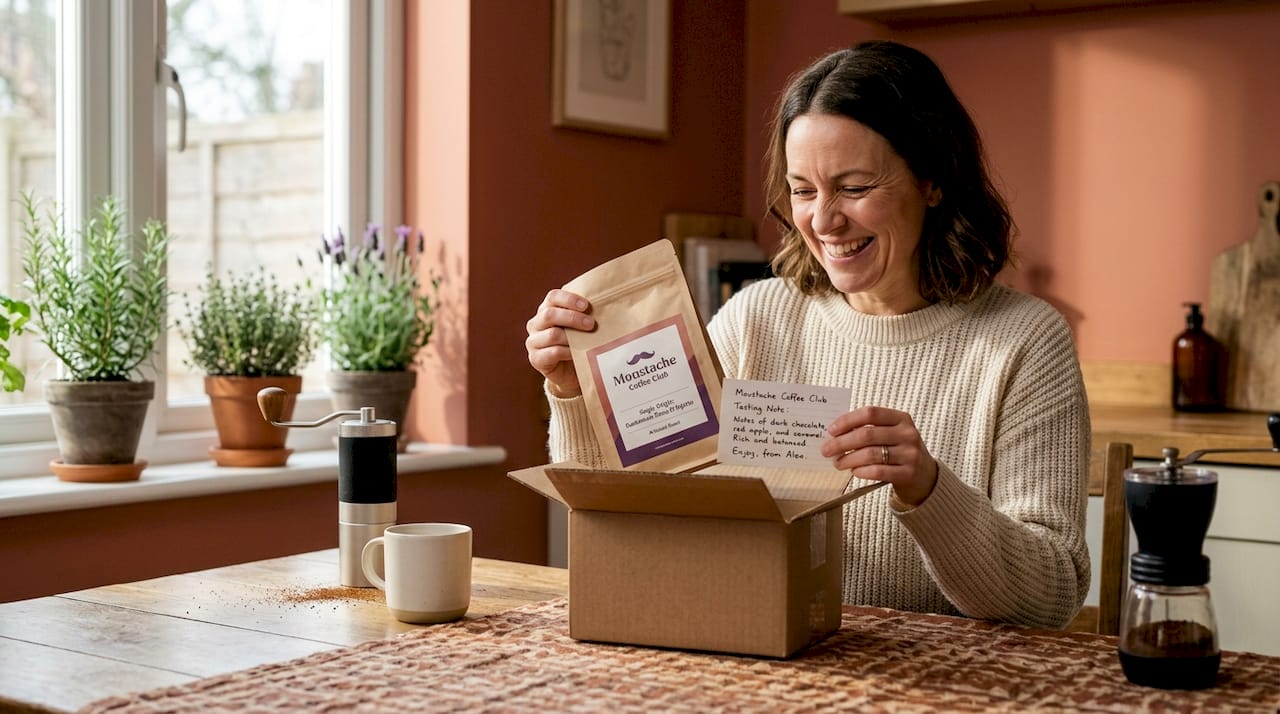
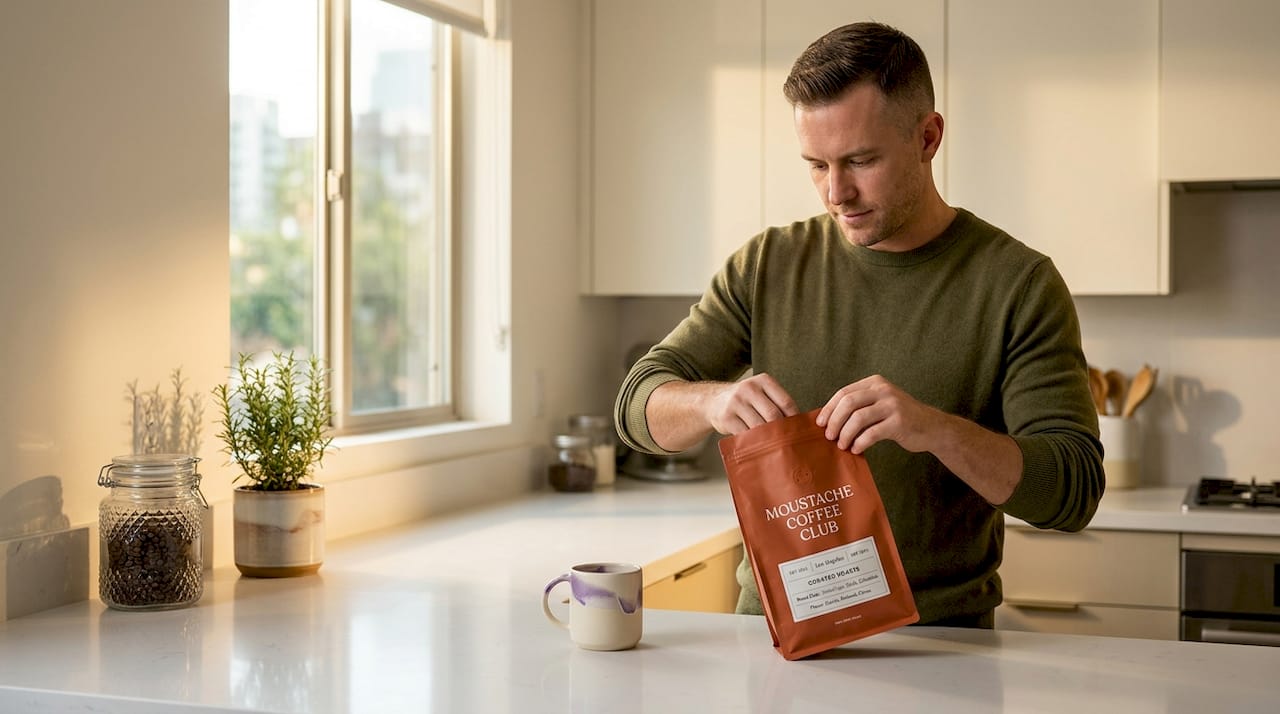
The first thing to check when your package lands on the doorstep is the roast date printed on the bag. This single label tells you exactly where you stand in the freshness timeline. A bag roasted three days ago and a bag roasted three weeks ago require completely different handling strategies.
Reading the roast date label
The roast date is not the same as a “best by” date. It marks the starting point of a flavor arc, not the end of usability. Most specialty roasters, including Moustachecoffeeclub, print the exact roast date so you can calculate your ideal brew window. If the bag shows a “best by” date without a roast date, that is a red flag common with mass-market coffee, not specialty roasted-to-order beans.
Understanding one-way degassing valves
Most freshly roasted coffee is packaged in bags with one-way degassing valves that allow CO2 to escape while blocking oxygen from entering. This matters because freshly roasted beans off-gas carbon dioxide aggressively for the first 24 to 72 hours. If you brew too early, that CO2 creates uneven extraction and a slightly sour, underdeveloped cup. The valve manages this process during transit so the beans arrive in a controlled state.
The resting period after arrival
Plan to rest your beans for two to three days after arrival before brewing, especially if the roast date is within 48 hours of delivery. This is not patience for its own sake. It is the difference between a flat, gassy cup and one where the flavors have settled into clarity. For single-origin lovers, this resting window is where the terroir notes of an Ethiopian Yirgacheffe or a Colombian Huila actually become audible in the cup.
Common mistakes to avoid immediately after unpacking:
- Opening the bag and leaving it unsealed on the counter
- Grinding the entire bag at once to “save time”
- Brewing within hours of a same-day roast date
- Storing the bag near the stove or in direct sunlight
- Ignoring the roast date entirely and brewing by smell alone
Pro Tip: Squeeze the bag gently before opening. A firm, slightly pressurized feel means the beans are still actively degassing and fresh. A flat, limp bag suggests the CO2 has fully escaped and the clock is ticking faster.
How to store your freshly roasted coffee after opening
Oxidation is the primary enemy of fresh coffee. Once oxygen contacts the exposed surface of a roasted bean, the degradation of aromatic compounds begins within minutes. This is not a slow process you can ignore for a week.
Why the original bag is not a permanent solution
Specialty coffee valve bags are effective at preserving freshness before opening, but once you break the seal, the one-way valve loses most of its protective function. The valve controls internal gas pressure during sealed storage. After opening, ambient oxygen enters freely every time you reach in for a scoop. The bag becomes a liability rather than an asset.
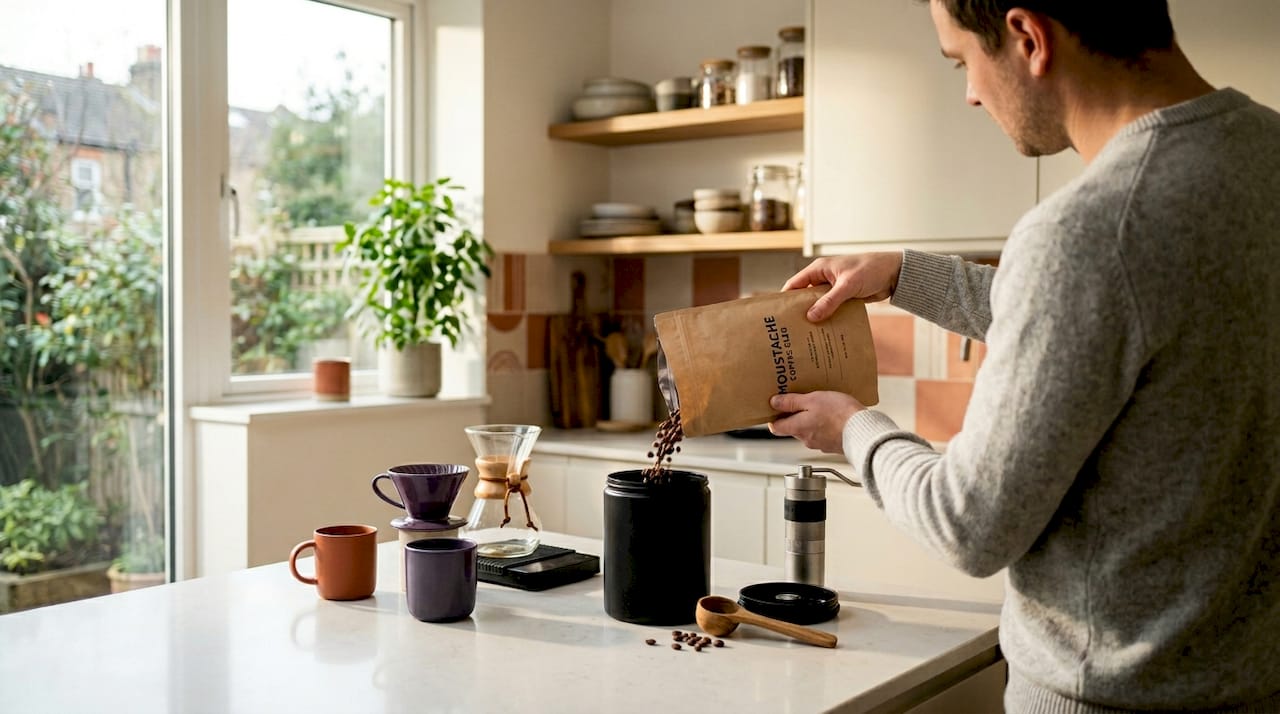
Transferring coffee to an airtight container after opening can slow post-peak decay by about 25%. That difference is measurable in cup quality, particularly for light roasts where delicate floral and fruit notes are the first to fade. Opaque, airtight containers made from ceramic or dark-tinted glass are the standard recommendation among specialty coffee professionals.
Temperature and light considerations
Keep your container away from heat sources, including the top of the refrigerator, which radiates warmth. A cool, dark cabinet or pantry shelf is the correct environment. The freezer is a legitimate option only for long-term storage of sealed, unopened bags. Repeated freeze-thaw cycles introduce moisture and accelerate staling faster than room-temperature storage.
| Storage method | Best use case | Freshness duration |
|---|---|---|
| Original valve bag (sealed) | Before first opening | Up to 4 weeks post-roast |
| Original valve bag (opened) | Short-term, 2-3 days max | Degrades quickly after opening |
| Airtight opaque container | Daily use after opening | Extends peak by roughly 25% |
| Freezer (sealed, unopened) | Long-term reserve stock | Up to 3 months |
Pro Tip: Label your airtight container with the roast date using a small piece of masking tape. You will never have to guess where you are in the freshness window, and it takes ten seconds.
When and how to brew for the best flavor
Coffee reaches peak flavor about 7 to 11 days after roasting, depending on the processing method. Washed coffees tend to open up faster. Natural and honey-processed coffees, with their denser cellular structure from fruit contact, often need the full 11 days. Brewing before day 7 is not wrong, but you are catching the coffee before it has fully expressed itself.
The 15-15-15 rule explained
The 15-15-15 rule guides buying, storing, and brewing for peak flavor: buy beans roasted within the last 15 days, store them correctly, and brew within 15 minutes of grinding. This framework turns abstract freshness advice into a concrete checklist. It also explains why pre-ground coffee from any source, regardless of roast quality, cannot compete with whole beans ground immediately before brewing.
Ground coffee stales 5 to 10 times faster than whole beans. The surface area explosion from grinding exposes hundreds of times more cellular material to oxygen simultaneously. Grinding just before brewing is not a ritual for obsessives. It is the single highest-impact action you can take to protect the flavor compounds your roaster worked to develop.
Brewing methods that benefit most from fresh roasts
Pour-over methods like the Hario V60 and Chemex reveal the most from freshly roasted light roasts because they amplify clarity and individual flavor notes. Espresso requires a slightly longer rest, typically 10 to 14 days post-roast, because the high pressure of extraction magnifies CO2-related sourness more than filter methods do. For a detailed walkthrough of technique, the pour-over brewing guide from Moustachecoffeeclub covers grind size, water temperature, and pour timing in practical steps.
Best practices for brewing freshly roasted coffee:
- Grind only what you need immediately before brewing
- Use water between 195°F and 205°F for light roasts
- Start with a 1:15 coffee-to-water ratio and adjust from there
- Allow a 30-second bloom to release CO2 before the main pour
- Dial in grind size over two or three consecutive brews rather than one session
- Note the roast date on each brew to track how flavor evolves across the freshness window
Common challenges when receiving and using roasted-to-order coffee
Even experienced home brewers run into predictable problems with fresh roasted coffee. Most of them trace back to timing errors rather than technique failures.
-
Overwhelming CO2 smell on opening. A strong, almost fermented aroma when you first open the bag is normal and desirable. It signals active degassing and a very recent roast. Do not confuse this with spoilage. Let the bag sit open for 30 seconds, then reseal and wait another day before brewing.
-
Flat or bitter early cups. If your first brew tastes hollow or sharp, you are likely brewing too soon after roasting. The CO2 is interfering with extraction. Add two more days of rest and brew again before adjusting your grind or ratio.
-
Rapid staling after opening. This almost always comes from improper storage. Leaving the bag folded but not sealed, or storing it near heat, accelerates oxidation dramatically. Transfer to an airtight container immediately after the first use.
-
Shipment delays disrupting your freshness window. Carriers occasionally hold packages for 48 to 72 extra hours. Check the roast date on arrival rather than assuming the coffee is at a specific point in its arc. Adjust your rest and brew schedule from the actual roast date, not the expected delivery date.
-
Running out before the next shipment or over-ordering and wasting beans. Subscription flexibility exists precisely to solve this. Most roast-to-order services allow you to adjust shipment size and frequency. Match your order cadence to your actual weekly consumption rather than an optimistic estimate.
Pro Tip: Track your subscription feedback after each delivery. Noting which roast dates produced your best cups helps you and your roaster dial in the ideal shipment timing for your specific brewing habits.
Key takeaways
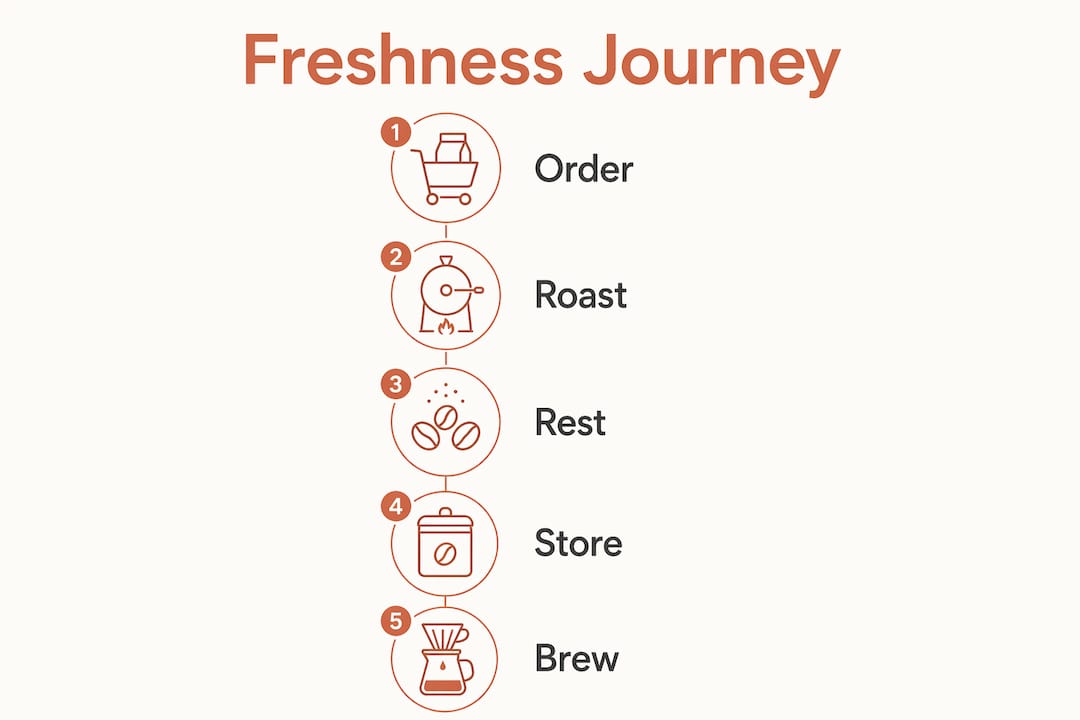
Freshness in roasted-to-order coffee is not automatic. It requires correct timing, storage, and brewing decisions from the moment the package arrives.
| Point | Details |
|---|---|
| Rest before brewing | Allow 2 to 3 days after arrival before your first brew to let CO2 dissipate fully. |
| Peak flavor window | Coffee hits its best expression 7 to 11 days post-roast, varying by processing method. |
| Transfer after opening | Move beans to an airtight opaque container after first opening to slow oxidation by roughly 25%. |
| Grind just before brewing | Ground coffee stales 5 to 10 times faster than whole beans; grind only what you need. |
| Match delivery to consumption | Adjust subscription frequency to your actual usage to prevent staleness and waste. |
What I’ve learned from years of receiving fresh roasted coffee
The detail most people miss when they start ordering roasted-to-order coffee is that the freshness advantage is conditional. You have to earn it through how you receive and handle the beans. I have seen people spend serious money on exceptional single-origin lots and then leave the bag open on the counter for a week, wondering why the cup tastes flat.
The resting period is the hardest habit to build. When a bag of freshly roasted Ethiopian Guji arrives and the whole kitchen smells extraordinary, waiting two days feels unreasonable. But I have brewed the same coffee at day one and day eight, and the difference is not subtle. Day eight wins every time, with the florals and stone fruit notes fully resolved and the acidity balanced rather than sharp.
The other thing I would tell anyone new to roast-to-order coffee: pay attention to how the flavor changes across the freshness window. Brew a cup at day 7, day 10, and day 14 from the same bag. Keep notes. You will learn more about that specific coffee, and about your own palate, than any tasting guide can teach you. The specialty coffee buying guide from Moustachecoffeeclub is a good companion resource for understanding what you are tasting and why.
Roast-to-order coffee rewards attention. Give it the handling it deserves, and it will consistently outperform anything you have ever bought off a shelf.
— Sean
How Moustachecoffeeclub delivers freshness from roaster to cup
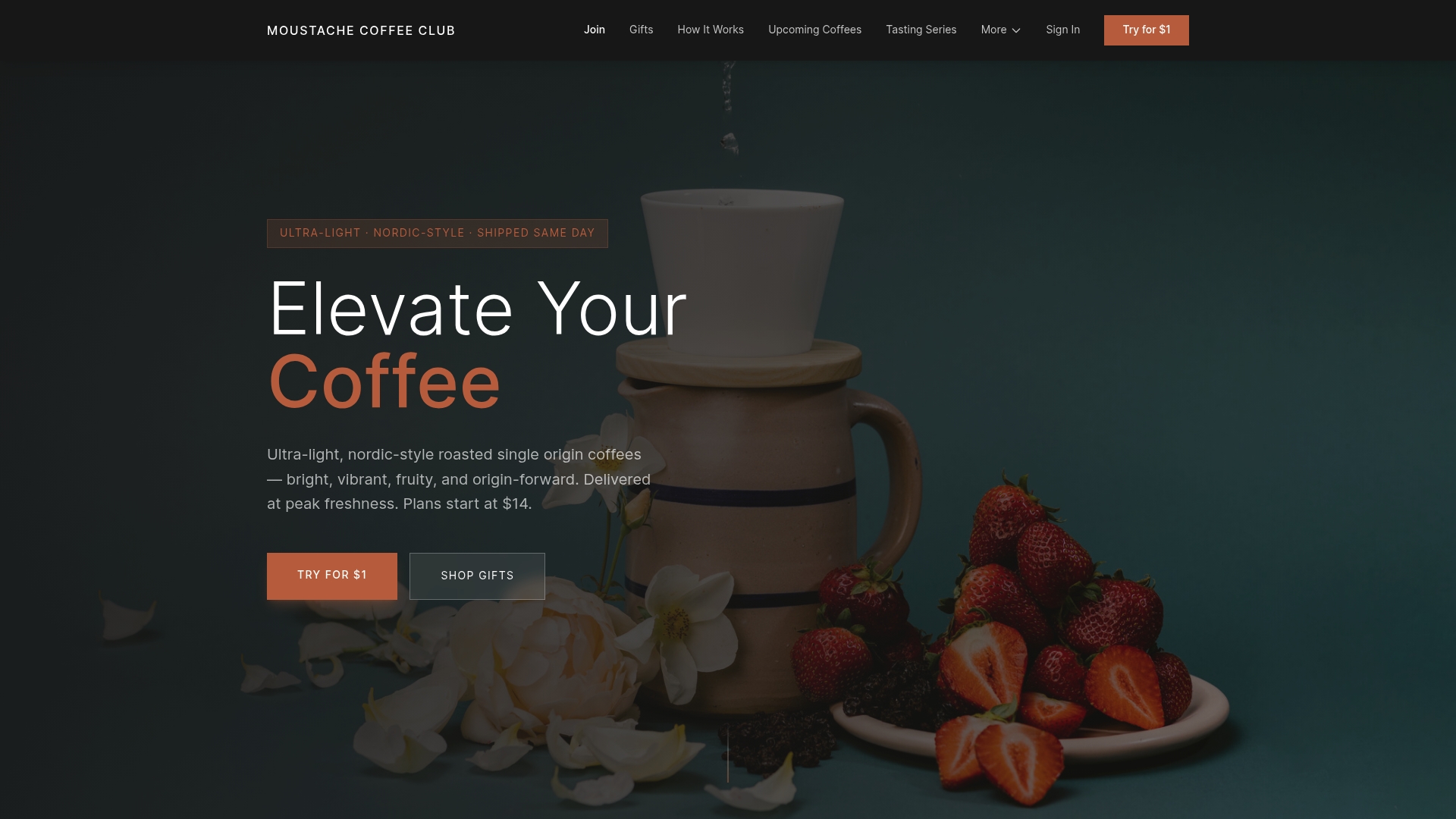
Moustachecoffeeclub roasts every order to order in the ultra-light, Nordic-style tradition, shipping beans within days of roasting so they arrive in their live aromatic state. Each bag carries a clear roast date, and the subscription model lets you set delivery intervals that match your actual consumption pace, not a one-size schedule. The coffee education hub covers brewing guides, origin reports, and freshness timelines so you always know exactly what to do when your order arrives. For connoisseurs who want single-origin beans from Ethiopia, Colombia, and beyond, delivered at peak freshness with full transparency, joining the subscription is the most direct path to a consistently exceptional cup.
FAQ
What is roasted-to-order coffee?
Roasted-to-order coffee is coffee roasted specifically after a customer places an order, then shipped within days. This model preserves volatile aromatic compounds that degrade in pre-roasted, shelf-stored coffee.
How long should I wait before brewing freshly roasted beans?
Rest your beans for 2 to 3 days after arrival to allow CO2 to dissipate. Coffee reaches peak flavor between 7 and 11 days post-roast depending on the processing method.
How should I store coffee after opening the bag?
Transfer beans to an airtight, opaque container immediately after opening. This slows oxidation and can extend peak freshness by roughly 25% compared to leaving beans in the opened original bag.
Why does my fresh roasted coffee taste bitter or flat at first?
Early bitterness or flatness typically signals that the beans are still actively degassing. Add two more days of rest before brewing again, and avoid adjusting your grind or ratio until the CO2 has fully dissipated.
How do I avoid running out of coffee or wasting stale beans?
Match your subscription delivery frequency to your actual weekly consumption. Most roast-to-order services, including Moustachecoffeeclub, allow you to adjust shipment size and interval so you always have fresh beans without excess.
Recommended
- Roast to order coffee: advantages for single-origin lovers | Blog | The Moustache Coffee Club
- How to buy specialty coffee: expert tips for flavor and quality | Blog | The Moustache Coffee Club
- Why freshly roasted beans taste better: a guide | Blog | The Moustache Coffee Club
- How to Dial In Light Roast Coffee for Home Baristas | Blog | The Moustache Coffee Club