Turkish Coffee Grind: Getting Flour-Fine Powder at Home

Turkish coffee grind means powder-fine, finer than any espresso setting, closer in texture to flour or talc than to standard drip grounds. You don’t need exotic equipment to get there, but you do need a grinder built for it. Your fastest paths: a traditional brass mill like Sozen for authenticity, a Comandante C40 or KINGrinder if you want one grinder for multiple brew methods, or a 1Zpresso for stepless precision.
- Authentic route: a handmade brass Turkish mill (Sozen)
- Versatile route: a precision manual burr grinder (Comandante C40, KINGrinder, 1Zpresso)
- Electric route (with caveats): a select few electrics like the Eureka Mignon that can reach fine settings, though most burn out before they get there
Key Takeaways
Reaching authentic Turkish coffee grind requires a manual mill or precision burr grinder with steel conical burrs, patient stepless dialing, and fresh beans ground in small batches.
| Point | Details |
|---|---|
| Target texture | Grind should feel powder-fine like flour or talc, with zero perceptible grit between your fingers. |
| Grinder type matters | Manual mills with steel conical burrs generally reach true fineness more reliably than budget electrics. |
| Grind fresh, in small batches | Grind small single servings right before brewing to avoid stale fines and heat buildup. |
| Verify before you brew | Use the pinch test and settling test to confirm fineness instead of guessing by eye alone. |
| Fresh beans matter as much as grind | Moustachecoffeeclub’s roast-to-order single origins give you a stable base for dialing in your grinder correctly. |
Table of Contents
- What Does True Turkish Grind Actually Look and Feel Like?
- How Do You Grind Turkish Coffee Step by Step?
- What Should You Look for When Buying a Turkish Coffee Mill?
- Which Grinders Actually Reach Turkish Fineness?
- How Should You Store Turkish Ground Coffee?
- Fresh Beans Make Dialing In Turkish Grind Actually Worth It
- Sources
- FAQ
What Does True Turkish Grind Actually Look and Feel Like?
Rub it between your fingers. If you feel any grit at all, it’s not there yet. Turkish grind should disappear into the skin the way flour or confectioner’s sugar does, leaving no individual particles you can distinguish by touch. Espresso grind, by comparison, still feels like fine sand. Hold a pinch up to a window or lamp. Properly ground Turkish coffee looks matte and uniform, with no visible flecks of larger particle, and it clumps slightly under light pressure the way baking cocoa does.
- Pinch test: no gritty sensation between thumb and forefinger
- Light test: uniform, dusty appearance with no visible coarse specks
- Settling test: stir a teaspoon into a glass of water. It should cloud the water almost instantly and settle slowly, leaving a fine silt rather than chunky sediment on the bottom
Pro Tip: Keep a pinch of your current bag’s espresso grind next to the Turkish batch while testing. The side-by-side contrast makes it obvious when your Turkish grind isn’t fine enough, even for a beginner.
How Do You Grind Turkish Coffee Step by Step?
Grind in small batches, ideally single servings of small batches, ideally single servings per demitasse cup. Grinding only what you need matters more here than with any other brew method, since ultra-fine particles left sitting in a hopper or chamber pick up stale, oxidized flavors fast.
- Start coarse, then walk it down. Set your grinder several clicks above your expected fine setting and grind a small amount, using this coffee grinding guide for home baristas for detailed technique tips.
- Run the pinch and settling tests described above. If the coffee still feels grainy or settles in coarse clumps, tighten the setting by one small increment and grind another test batch.
- Log the setting once you hit powder consistency. Most manual grinders capable of Turkish fineness use small, deliberate adjustments here, so write down the click count or dial number the moment it works.
- Taste-test the first brew. If the cup tastes flat or the foam (kaimaki) is thin, tighten the grind slightly before your next cup.
Pro Tip: Let an electric grinder rest for 20 to 30 seconds between bursts. That cooldown window is what keeps thermal drift from quietly coarsening your grind halfway through a session.
What Should You Look for When Buying a Turkish Coffee Mill?
Burr geometry decides almost everything here. Conical steel burrs hold their alignment at extreme fineness better than the flat burrs found in most budget electric grinders, which is why manual mills dominate this category. A technical guide to Turkish grinding also stresses adjustment resolution: stepless designs let you creep toward powder-fine in tiny increments, while stepped grinders often jump from “almost right” to “too coarse” with nothing usable in between.
- Stepless adjustment beats stepped when you’re chasing this level of fineness
- Steel conical burrs outlast and outperform cheap flat burrs at Turkish settings
- Most entry-level electrics overheat or clump before reaching true powder fineness
- A brass mill suits ritual and authenticity; a precision manual suits anyone who also brews pour-over or espresso and wants one tool for both
Budget plays a role too. A well-made brass mill runs modest money and does one job extremely well. A premium manual like the Comandante costs considerably more but earns that price back if you’re grinding for three or four different brew methods across the week.
Which Grinders Actually Reach Turkish Fineness?
Buyer tests consistently point to the same short list of grinders capable of true powder-fine output, and reviewed comparisons back up traditional mills and premium manuals as the most reliable picks.
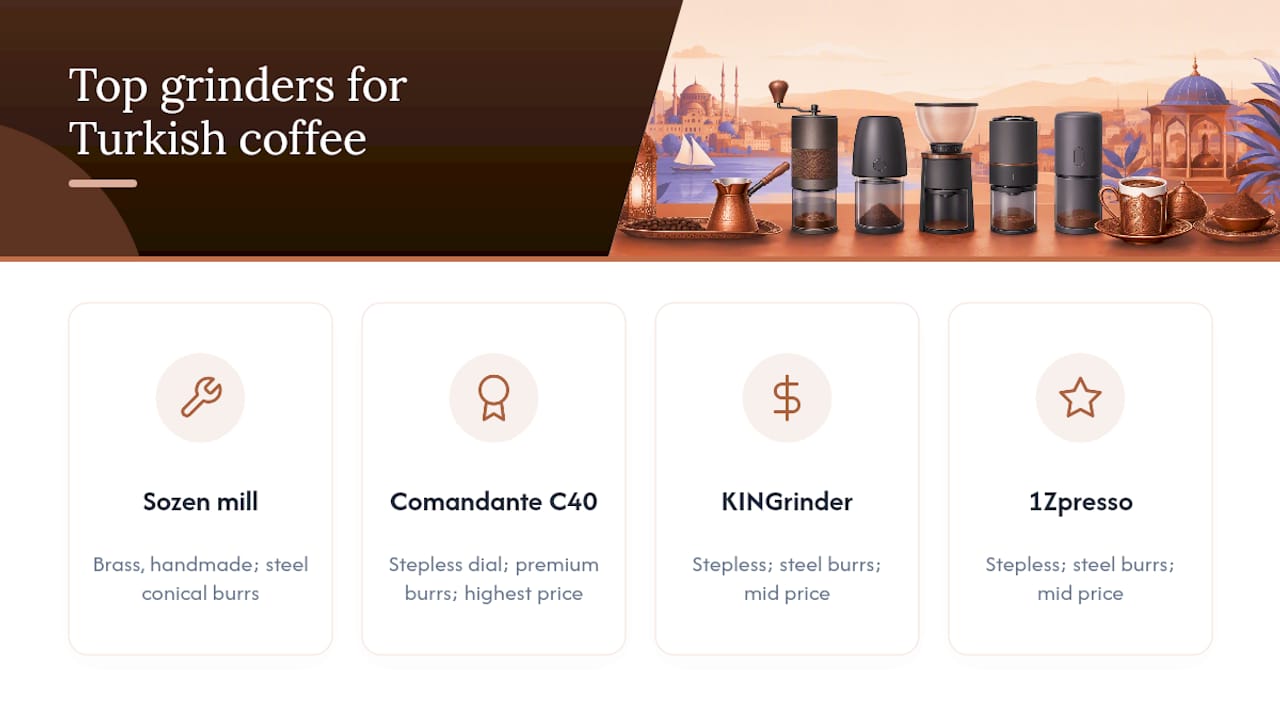
Sozen brass mills are handmade in Turkey and built around the same steel conical burr logic that makes manual grinders the preferred choice for Turkish coffee in the first place. The Comandante C40 costs more than any mill on this list, but its stepless dial and premium burr set make it the rare grinder that handles Turkish, pour-over, and French press without compromise. KINGrinder and 1Zpresso sit in the middle: both are stepless, both use quality steel burrs, and both cost meaningfully less than the Comandante while still reaching genuine powder fineness with patience. An electric like the Eureka Mignon can technically get there, but expect more trial and error, shorter grinding bursts, and closer attention to heat than any manual option demands.
How Do You Season and Maintain a Manual Mill?
Grind and discard two or three small batches the first time you use a new mill. This clears manufacturing dust and helps the burrs seat properly, a step Sozen’s own product guidance recommends for every new unit. After that, dry brush the burr chamber after each use and avoid water on internal metal parts, since moisture invites rust on steel burrs. Deep clean every few weeks by fully disassembling the mill, brushing out compacted fines, and storing it somewhere dry, away from humidity swings. Our equipment cleaning guide walks through the same dry-cleaning approach for burr grinders generally.
- Season new mills with 2 to 3 discard batches before real use
- Dry brush daily, never wash internal burr parts with water
- Deep clean monthly and store somewhere dry
Why Is My Turkish Coffee Static, Muddy, or Missing Foam?
Static and clumping usually mean your beans are too dry or your grinder chamber has residue buildup. A tiny anti-static spray on the beans before grinding, or simply purging a small amount of coffee through the burrs first, clears most of it. If your cup tastes muddy or bitter, you’ve likely over-dosed or boiled too long. If it tastes weak or the foam barely forms, tighten your grind one notch, since thin kaimaki is almost always a grind problem before it’s a technique problem.
- Static: purge grounds first or use a light anti-static spray on beans
- Muddy cup: reduce dose slightly or shorten boil time
- Weak foam: grind finer, since foam depends directly on particle fineness
Pro Tip: Clean out retained fines from your grinder’s chamber before every session. Stale fines from yesterday’s grind mix into today’s fresh batch and turn even a perfect grind muddy.
How Should You Store Turkish Ground Coffee?
Ground this fine, coffee loses aroma fast because its surface area is enormous compared to coarser grinds. Grind only what you’ll brew within a day or two, and keep the rest as whole beans until you need them. If you must store ground coffee, use an airtight, opaque container and keep it somewhere cool and dark, away from your stove or any heat source.
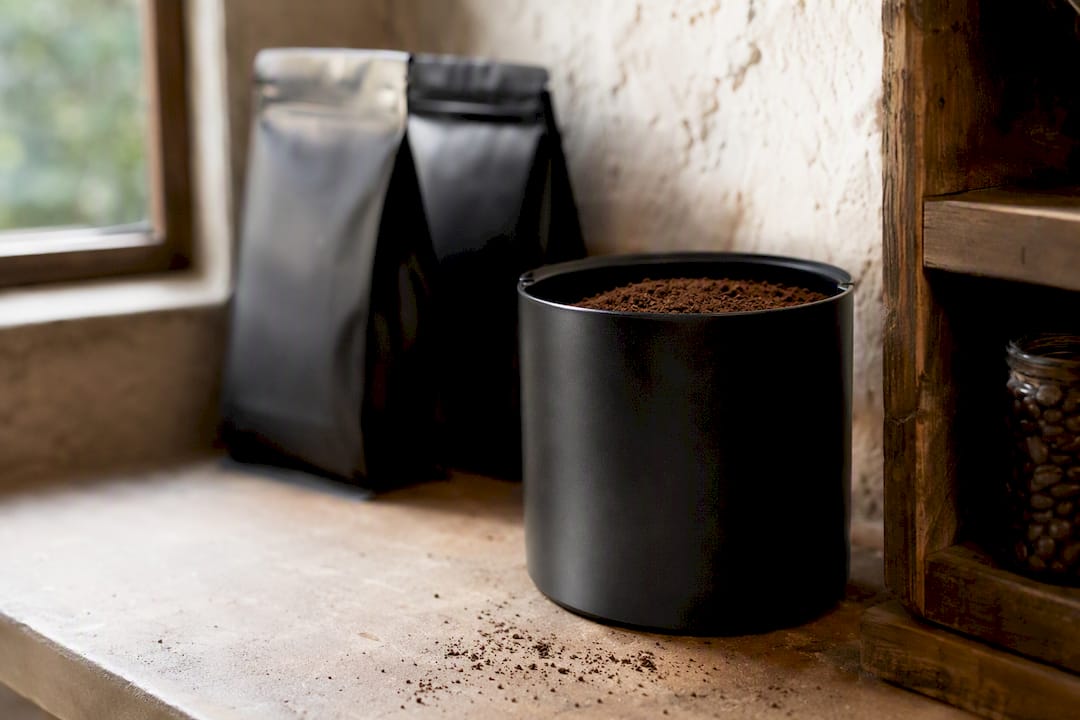
Avoid the refrigerator. Condensation from temperature swings introduces moisture that clumps fine grounds and accelerates staling rather than slowing it. A pantry shelf or a cabinet away from direct sunlight works better than most people expect. Vacuum-sealed containers extend freshness further, since oxygen exposure is the main driver of flavor loss at this particle size.
If you’re grinding fresh for each cup, which is genuinely the better habit for anyone serious about Turkish coffee, storage becomes less of a concern. Keep whole beans sealed, grind single servings right before brewing, and you sidestep the staling problem entirely. This is also where bean freshness upstream matters: beans that were roasted weeks before you bought them are already partway stale before you even touch a grinder.
A Publisher’s Note on Getting This Right
We built our Coffee Grind Chart because grind fineness questions come up constantly from readers dialing in new gear, Turkish included. Getting powder-fine grind right isn’t about buying the most expensive mill. It’s about small, patient adjustments and testing before you commit a whole cup to a guess. If you get stuck, our education hub has more brewing breakdowns worth working through.
Fresh Beans Make Dialing In Turkish Grind Actually Worth It
Here’s the part most grinder guides skip: dialing in flour-fine grind on stale, months-old beans is a waste of effort, because you’re chasing perfect texture on coffee that’s already lost half its aroma. Moustachecoffeeclub roasts to order and ships fresh, ultra-light Nordic-style single-origin coffee, so the beans you’re grinding for Turkish coffee still have their full flavor profile intact when they hit your mill.

Every subscription includes access to our brewing guides and origin reports, useful reference points when you’re trying to figure out whether a flat cup is a grind problem or a bean problem. Because each origin behaves a little differently under extreme fineness, having fresh, single-origin beans to test against makes the whole dialing-in process faster and more reliable than guessing with a bag of unknown age from a grocery shelf. If you’re ready to put a properly dialed grinder to work on beans worth the effort, start a subscription and pick your first origin.
Sources
- STC I Grinder – Copper | Specialty Turkish Coffee
- Turkish coffee grinding: Achieve true ultra-fine consistency | Coffee Grinder Guide
- Top 3 Best Turkish Coffee Grinders 2026 | Tested & Reviewed - KitchnKnife
- How to make the perfect cup of Turkish coffee | Perfect Daily Grind
FAQ
What Grind Should You Use for Turkish Coffee?
Use a powder-fine grind, finer than any espresso setting, with a texture closer to flour or confectioner’s sugar than to sand.
How Do You Grind Turkish Coffee at Home?
Use a manual mill or precision burr grinder with steel conical burrs, dial down gradually in small test batches, and confirm fineness with a pinch test or a settling test in water.
Is Turkish Grind Finer Than Espresso?
Yes. Turkish grind sits well beyond espresso on the fineness scale, since it needs to fully suspend and release flavor during the unfiltered boiling method Turkish coffee uses.
Which Grinder Is Best for Turkish Coffee?
A traditional brass mill like Sozen delivers the most authentic result, while a Comandante C40, KINGrinder, or 1Zpresso gives you Turkish fineness plus versatility for other brew methods. Moustachecoffeeclub’s brewing guides can help you dial in whichever grinder you choose against fresh, single-origin beans.
Recommended
- Coffee Grind Chart: Quick Settings and Dial-In Tips | Blog | The Moustache Coffee Club
- Why Cold Brew Uses Coarse Grind: Home Brewer’s Guide | Blog | The Moustache Coffee Club
- French Press for Light Roasts: A Practical Brewing Guide | Blog | The Moustache Coffee Club
- Dialing in Nordic Style Coffee at Home | Blog | The Moustache Coffee Club