Micro-Lot Coffee Batches: What Specialty Roasters Need to Know
A micro-lot is a small, separately processed and tracked batch of coffee selected to preserve the distinct sensory expression of a single plot, cultivar, harvest day, or processing method. Understanding micro-lot coffee batches means knowing three things upfront:
- Traceability, not a quality guarantee. A micro-lot label signals separation and documentation, not an automatic cup-score floor. Verification matters.
- Price and scarcity are real. Authentic micro-lots command meaningful premiums over commodity and even standard specialty prices, and volumes are genuinely limited.
- Labels vary widely. No universal standard governs the term, so what you see on a bag depends entirely on the producer’s or roaster’s own definition.
Table of Contents
- What do people actually mean by “micro-lot”?
- How micro-lots are created and kept separate
- What does a micro-lot actually taste like?
- How big is a micro-lot, and how do you spot a real one?
- Why micro-lots cost more and sell out fast
- How roasters and consumers use authentic micro-lots
- How Moustachecoffeeclub sources and delivers micro-lot-style coffees
- Key Takeaways
- Why the “micro-lot” label deserves more scrutiny than it gets
- Taste the difference with a Moustachecoffeeclub subscription
- Useful sources
- FAQ
What do people actually mean by “micro-lot”?
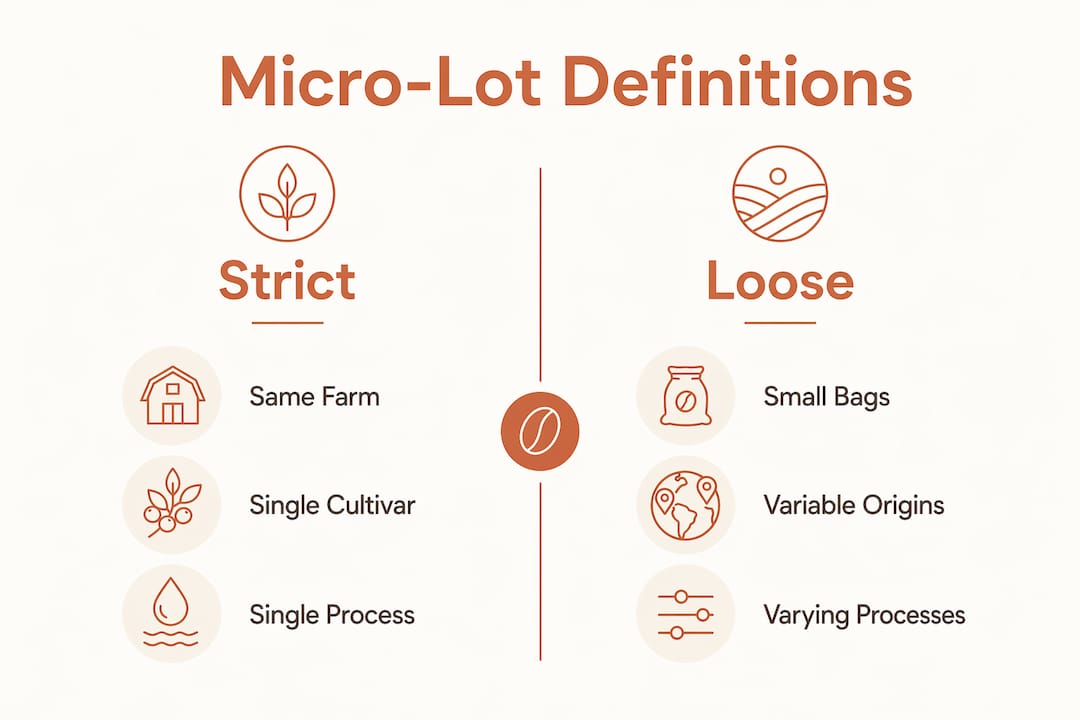
The strictest industry definition ties the term to what practitioners call the smallest divisible collection: coffee from the same farm plot, cultivar, processing method, and harvest day. Anything less specific is, by that standard, a marketing label rather than a technical designation.
In practice, the term gets applied far more loosely. Some roasters use it to mean any small bagged quantity. Others apply it to a single processing experiment. The word “micro-lot” appears on bags ranging from seven kilos to several hundred kilos, processed under wildly different levels of rigor.
Regional definitions add another layer. In some producing regions, including parts of the Democratic Republic of Congo, micro-lot definitions hinge on quantity thresholds under five tonnes and on measurable socio-economic impact rather than a fixed cup-score cutoff. That framing reflects a development-oriented sourcing model rather than a purely sensory one.
Related terms worth knowing:
| Term | Common definition | What to look for on a label |
|---|---|---|
| Micro-lot | Same farm, cultivar, process, harvest day; often a few hundred kilos | Farm/plot name, harvest date, lot code, cultivar |
| Nano-lot | Subset of a micro-lot; typically under ~50 kg; extreme rarity | Auction provenance, importer name, very small bag count |
| Single-farm lot | All coffee from one farm, but may blend plots, cultivars, or harvest days | Farm name; may lack plot or harvest-day specificity |
| Process-specific lot | Separated by processing method (washed, natural, honey) but not necessarily by plot | Processing details; check whether plot and date are also specified |
Pro Tip: When a roaster’s description is thin, ask for the shipping sample reference number or the pre-shipment cupping score sheet. Legitimate micro-lot suppliers maintain these records and share them readily. A supplier who cannot produce either is likely selling a marketing label.
How micro-lots are created and kept separate
The production chain that justifies a micro-lot claim starts well before harvest. At farms like Peralta Coffees in Nicaragua, an agronomist maps individual plots, evaluates microclimate suitability, measures cherry sugar levels with a Brix refractometer, and determines harvest readiness before a single cherry is picked. That pre-harvest assessment is where lot candidates are identified.
- Plot mapping and candidate selection. The agronomist identifies which plots have the microclimate, variety, and ripeness profile to justify separation. Trial lots of 500–1,000 pounds are sometimes processed first; if results are positive, the full lot proceeds.
- Selective hand-picking. Pickers harvest only peak-ripeness cherries on a single day. Mixed-ripeness picking collapses the lot’s sensory distinctiveness immediately.
- Dedicated fermentation. Cherries go into separate tanks, never shared with other lots. Fermentation time, temperature, and method are logged per lot.
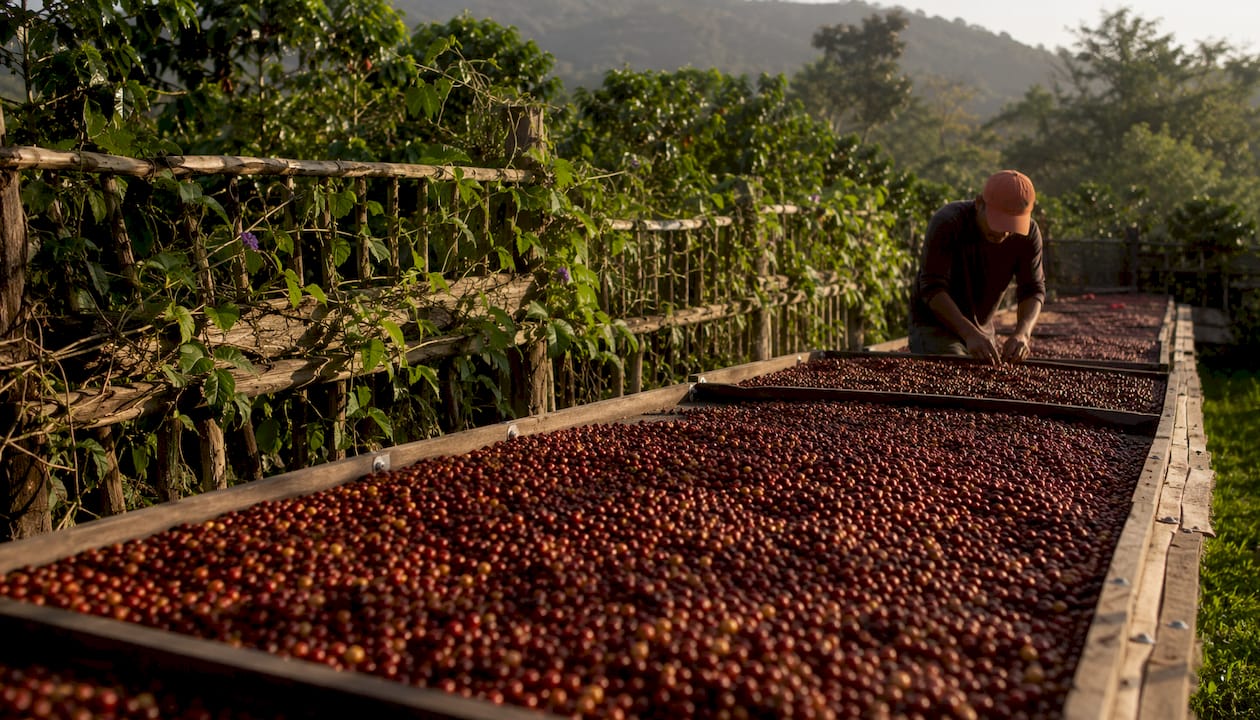
- Separate drying. Lots dry on dedicated raised beds, with drying schedules tracked individually. A honey process lot might dry 12–15 days; a natural, 18–20 days. Beds are labeled throughout.
- Milling and sorting. Each lot mills separately. Lot codes travel with the coffee through sorting, bagging, and storage.
- Pre-export cupping. The lot is cupped multiple times: when it comes off the drying bed, before milling, and again after milling. Cupping at each stage confirms quality consistency and catches any degradation before export.
Cross-contamination is the most common failure point, and it usually happens during drying or milling when volume pressure pushes workers to consolidate. The operational investments that prevent this — dedicated staff, labeled sacks, separate tanks, daily cupping by a Q Grader — are exactly what buyers should ask about.
Pro Tip: Ask your importer or roaster whether the farm employs a dedicated Q Grader or food engineer on-site. That single staffing detail is one of the strongest signals that lot separation is real rather than aspirational.
What does a micro-lot actually taste like?
Micro-lot status implies distinctiveness and traceability, not an automatic quality floor. That said, the production discipline required to maintain true lot separation tends to produce coffees with noticeably higher clarity than blended or bulk single-origin cups. Varietal character comes through cleanly. Process-driven flavors, whether the fruit-forward complexity of a natural or the clean brightness of a washed lot, read more precisely because there is no averaging across plots or harvest days.
Cup scores commonly associated with authentic micro-lots fall in the 85–92 range on the SCA scale, though competition-grade lots can score higher. The score matters less than what it represents: a verified, consistent sensory profile that a buyer can rely on across the lot.
“Constant cupping is crucial: it ensures the buyer’s final lot matches or exceeds the quality of the pre-shipment sample received several months before.” — Peralta Coffees, via Perfect Daily Grind
For home baristas and roasters, a few brewing adjustments help a micro-lot’s clarity come through:
- Grind finer than your usual single-origin setting to increase extraction and surface the varietal notes.
- Water temperature 200–205°F for washed lots; drop to 195–200°F for naturals to avoid amplifying ferment.
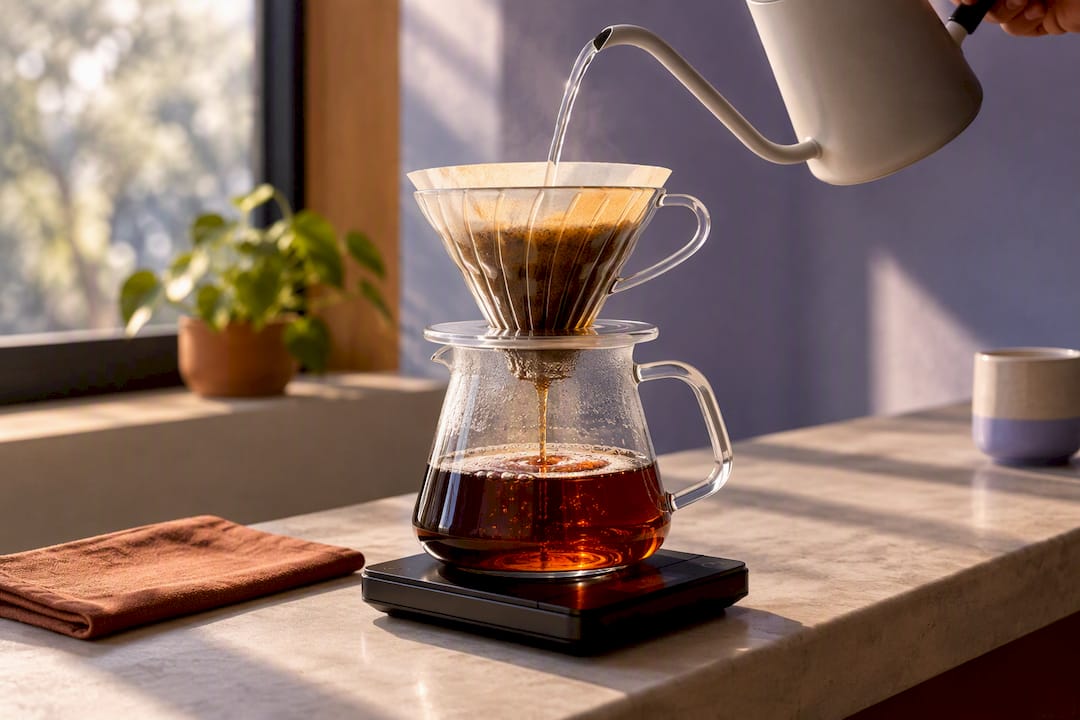
- Brew method: pour-over (V60, Chemex) or AeroPress for clarity; avoid immersion methods that mute delicate florals.
- Dose conservatively (1:16 ratio) to let the coffee speak rather than overwhelm with body.
Nano-lots, those under roughly 50 kg, often show the most extreme sensory profiles precisely because the selection pressure is highest. They are also the most volatile: a single off-day in drying can affect the entire lot. For more on how brew method shapes what you taste, brewing method and flavor is worth reading alongside this.

How big is a micro-lot, and how do you spot a real one?
Size ranges vary considerably. Micro-lots are typically a few hundred kilos at most, though some operations produce very small lots. Nano-lots are very small and usually sold through auctions or exclusive importers. There is no universal weight threshold that defines the category.
Authenticity signals to look for:
- Farm or plot name (not just country or region)
- Harvest date or harvest window
- Cultivar name (Gesha, Bourbon, Typica, SL28, etc.)
- Processing method with specific details (fermentation time, drying method)
- Lot code or reference number
- Availability of a pre-shipment cupping score or shipping sample
Red flags:
- “Small batch” language with no plot, date, or cultivar data
- Roaster-level subdivisions of a larger lot with no producer documentation
- Vague origin (“Central America,” “East Africa”) without farm-level specificity
- No lot code or traceability reference
- Marketing language substituting for production rigor — “artisan,” “exclusive,” “hand-selected” without supporting data
For deeper guidance on reading origin documentation, coffee traceability covers what buyers should expect from a fully transparent supply chain.
Pro Tip: Cross-reference the roaster’s lot description against the importer’s own product listing. Importers who work directly with farms typically publish harvest dates, lot codes, and cupping notes independently. If the roaster’s description matches the importer’s data point-for-point, that’s a strong authenticity signal.
Why micro-lots cost more and sell out fast
Pricing reflects labor, risk, and scarcity. Micro-lots typically sell for $5–15 per pound FOB, compared to commodity coffee trading well below $3/lb. Competition-grade lots scoring 89 and above can reach $50–200+/lb in auction contexts, driven by Cup of Excellence and similar programs.
| Lot type | Typical FOB price range | Volume | Availability window |
|---|---|---|---|
| Commodity coffee | Below $3/lb | Unlimited | Year-round |
| Standard specialty | $3–5/lb | Large | Seasonal |
| Micro-lot (85–92 SCA) | $5–15/lb | Hundreds of kilos | 4–8 months post-harvest |
| Competition-grade micro-lot (89+) | $50–200+/lb | Under roughly 50 kg | Auction-only, single release |
| Nano-lot | $50–200+/lb or higher; typically under 50 kg | Under 50 kg | Extremely limited |
The timeline from selective harvest to roaster inventory typically runs four to eight months. Drying alone takes two to four weeks. Milling, export documentation, and sea freight add two to four months. Air freight shortens that window but adds cost. By the time a micro-lot reaches a roaster’s warehouse, the harvest is months old, which is why roast-to-order matters so much for preserving what the producer worked to create.
For producers, the premium is meaningful. A farmer receiving a substantial premium per pound compared to commodity prices experiences a significantly improved economic outcome. But the costs are real too: extra labor for selective picking, dedicated infrastructure, agronomist oversight, and the risk that a weather event or processing error can destroy a lot’s quality entirely. Sudden rain causing over-ripeness is not a hypothetical; it is a documented production risk that producers plan for explicitly.
How roasters and consumers use authentic micro-lots
Roaster strategies:
- Feature micro-lots as single-batch limited releases with full origin documentation published alongside the offering.
- Build direct-trade relationships with farms or importers who maintain lot-level records, enabling repeat access to the same producer across harvests.
- Use tasting-series formats to introduce subscribers to micro-lot variation across processing methods or cultivars from the same origin.
- Roast to order on micro-lots to minimize time between roast and cup, preserving the clarity that justifies the premium.
Buying checklist for consumers and roasters:
- Request the pre-shipment cupping score or sample before committing to a full purchase.
- Confirm lot code, harvest date, and cultivar are documented and match the importer’s records.
- Ask whether the roaster has a direct relationship with the farm or is purchasing through a spot market.
- For repeat purchases, ask whether the same lot is available next harvest or whether a new lot will require re-evaluation.
Storage and roast-profile notes:
Micro-lots are not forgiving of poor storage. Valve-sealed bags, cool temperatures, and first-in-first-out rotation protect the lot’s clarity. For roast profiling, lighter development windows suit washed and honey micro-lots, where the goal is preserving delicate florals and acidity. Natural-process micro-lots can handle slightly more development to integrate fruit-forward ferment notes without going flat. Roasting to order, rather than holding large roasted inventory, is the single most effective way to deliver the sensory profile the producer built.
For more on ethical sourcing relationships and how they affect lot quality over time, that context is directly relevant to building a reliable micro-lot supply chain.
How Moustachecoffeeclub sources and delivers micro-lot-style coffees
Moustachecoffeeclub’s model aligns closely with the production and sourcing discipline that authentic micro-lots require. The brand focuses on ultra-light, Nordic-style single-origin coffees from regions including Ethiopia and Colombia, roasted to order so beans ship on roast day. That roast-to-order commitment directly addresses the timeline problem: a micro-lot’s sensory clarity degrades with every week it sits roasted in a warehouse.
The subscription model surfaces micro-lot-style offerings through limited-edition drops and tasting series, giving subscribers access to small-volume lots that would otherwise sell out before most consumers know they exist. Origin reports accompany each coffee, providing the harvest and sourcing context that separates a genuine specialty offering from a marketing label.
- Roast-to-order scheduling means each lot is roasted in small batches timed to subscriber demand, not pre-roasted in bulk.
- Origin reports document sourcing details, giving subscribers the traceability data that authenticates a micro-lot claim.
- Ethical sourcing and reduced plastic packaging reflect the producer-relationship investment that makes repeat micro-lot access possible.
- Personalized selection through subscriber feedback allows the platform to match specific lots to palates that will appreciate their distinctiveness.
Pro Tip: When your subscription ships, check the origin report for the harvest date and lot reference. If those details are present and consistent with the roast date, you have a verifiable freshness and traceability chain from farm to your grinder.
Key Takeaways
Micro-lots are only as good as the production discipline and documentation behind them: traceability, lot codes, and cupping records are what separate a genuine specialty batch from a marketing label.
| Point | Details |
|---|---|
| Verify before you buy | Ask for lot codes, harvest dates, cultivar names, and pre-shipment cupping scores before purchasing any micro-lot. |
| Production rigor defines authenticity | True micro-lots require dedicated fermentation, separate drying beds, labeled sacks, and multiple cupping checkpoints from harvest to export. |
| Pricing reflects real costs | Authentic micro-lots typically sell at $5–15/lb FOB; competition-grade lots can reach $50–200+/lb at auction. |
| Availability windows are short | Most micro-lots reach roasters four to eight months post-harvest and sell out within weeks; roast-to-order is the best way to capture peak freshness. |
| Moustachecoffeeclub’s approach | Roast-to-order scheduling, origin reports, and limited-edition drops give subscribers traceable, fresh micro-lot-style single-origin coffees. |
Why the “micro-lot” label deserves more scrutiny than it gets
The specialty coffee world has a complicated relationship with precision. We celebrate traceability, cup scores, and producer relationships in principle, then let “micro-lot” become one of the most abused terms in the category. That gap is worth naming directly.
The production requirements for a genuine micro-lot are not trivial. Dedicated fermentation tanks, daily cupping by a Q Grader, labeled sacks through milling, agronomist oversight at harvest — these are real operational investments that most farms cannot sustain without a committed buyer on the other end. When a roaster subdivides a larger lot into small bags and calls each one a micro-lot, they are not just bending a definition. They are undermining the economic signal that makes micro-lot premiums meaningful to producers who actually do the work.
What I find most underappreciated is the relationship dimension. Roasters that treat micro-lots as core to sourcing — sharing origin reports, maintaining direct producer relationships, returning to the same farm across harvests — are the ones who actually get better coffee over time. The lot improves because the producer has a reason to invest in it. That feedback loop is what the term was always supposed to represent.
The practical takeaway: hold the label to a higher standard than the market currently does. Ask for documentation. Reward roasters who publish it. The term will mean something again when buyers make it costly to use it carelessly.
Taste the difference with a Moustachecoffeeclub subscription
If this guide has you looking for micro-lot-style single-origin coffees you can actually trust, Moustachecoffeeclub delivers exactly that. Every bag ships on roast day, roasted to order in the ultra-light Nordic style that lets a coffee’s origin character come through without roast flavor masking it. Limited-edition drops and tasting series give subscribers first access to small-volume lots from Ethiopia, Colombia, and other origins, with origin reports that document what you’re drinking and where it came from.

This is not a warehouse full of pre-roasted inventory waiting for an order. It is a roast-to-order model built for people who care about the difference between a coffee that tastes like its origin and one that just says it does. Start your subscription and receive freshly roasted single-origin beans matched to your palate, with the sourcing transparency that makes the cup worth paying attention to.
Moustachecoffeeclub is the publisher of this article. The sourcing examples above illustrate the brand’s own process and approach.
Useful sources
- What is a micro-lot in specialty coffee? — Perfect Daily Grind: Covers the strict technical definition versus marketing uses, and explains why the term is frequently misapplied by roasters subdividing larger lots.
- Micro Lot Coffee: How to Limit Risk & Improve Quality — Perfect Daily Grind: Detailed production case study from Peralta Coffees in Nicaragua, covering plot selection, fermentation, drying, cupping protocols, and risk management.
- Understanding single origin, single farm & micro/nano lot coffee — Perfect Daily Grind: Explains the hierarchy from single-origin to micro-lot, with emphasis on logistical complexity and the tools producers use to maintain separation.
- Reviewing the term micro-lot — Intelligence Coffee: Examines how the term is defined across regions and producer contexts, including socio-economic definitions used in parts of Africa.
- Microlot — Gota: Concise glossary definition covering size ranges, nano-lot distinctions, and what separates micro-lots from standard specialty offerings.
- Micro-Lots and Single Origins — BrewFYI: Practical guide covering production steps, pricing benchmarks (FOB ranges and auction-level premiums), and what consumers should look for when buying.
- Micro-lot — Sweet Maria’s Coffee Library: Industry glossary entry explaining how farms and mills pre-cup candidate lots before committing to full separation, with context on verification practices.
FAQ
What exactly is a micro-lot coffee?
A micro-lot is a small, separately processed batch of coffee from the same farm plot, cultivar, harvest day, and processing method, tracked individually to preserve its distinct sensory profile. Authentic micro-lots are typically a few hundred kilos at most.
Does “micro-lot” guarantee a high cup score?
No. Micro-lot status signals traceability and production separation, not a minimum quality threshold. Always ask for a cupping score or pre-shipment sample to verify quality independently.
How much does a micro-lot coffee cost?
Authentic micro-lots typically sell at $5–15 per pound FOB, with competition-grade lots scoring 89 and above—and nano-lots as well—reaching $50–200+/lb through auction programs like Cup of Excellence.
What is a nano-lot, and how does it differ from a micro-lot?
A nano-lot is a subset of a micro-lot, usually under roughly 50 kg, representing the most extreme end of rarity and selectivity. Nano-lots are typically sold through exclusive auctions or specialized importers.
How can I tell if a micro-lot label is genuine?
Look for a farm or plot name, harvest date, cultivar, processing details, and a lot code. Ask the roaster for a pre-shipment cupping score or the importer’s independent listing. Missing any of these details is a red flag.
Recommended
- How to buy specialty coffee: expert tips for flavor and quality | Blog | The Moustache Coffee Club
- How Brewing Method Affects Specialty Coffee Flavor | Blog | The Moustache Coffee Club
- How to Dial In Light Roast Coffee for Home Baristas | Blog | The Moustache Coffee Club
- Last-Minute Specialty Coffee Gift Guide for 2026 | Blog | The Moustache Coffee Club