V60 Grind Size: Your Fast Track to a Balanced Cup
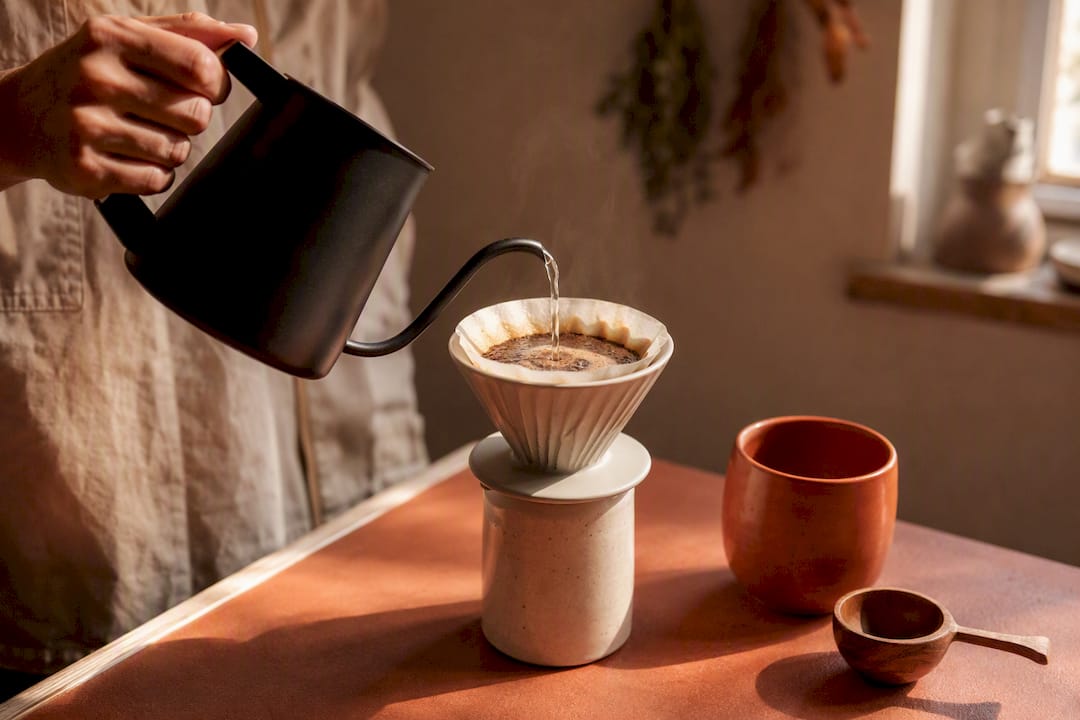
Set your grinder to medium-fine, somewhere in the texture range of granulated sugar or fine sand, and you’re within striking distance of a good V60. That texture usually lands in the 500 to 800 micron range for cone drippers, though some sources narrow it to 400 to 600 microns depending on the coffee and your specific grinder. Neither number is gospel. Every grinder measures its dial or clicks differently, so treat this as a launch point, not a destination.
- Texture target: medium-fine, like granulated sugar or fine beach sand
- Micron guardrail: roughly 500 to 800 µm (some guidance tightens to 400 to 600 µm for cones)
- Final say: your palate and your brew timer, not the dial number
Key Takeaways
Getting a balanced V60 comes down to starting medium-fine, adjusting by taste in small steps, and holding your recipe steady so grind is the only variable changing.
| Point | Details |
|---|---|
| Start medium-fine | Aim for the texture of granulated sugar, roughly 500 to 800 microns as a guardrail. |
| Use grinder-specific starting points | Try Encore 15 to 20, Comandante 18 to 28 clicks, Ode Gen 2 at 4 to 6. |
| Dial in with a binary search | Brew baseline, adjust two clicks based on taste, then narrow to one click. |
| Watch the drawdown window | Target a total brew time of 2:30 to 3:30 as a diagnostic, not the goal itself. |
| Check equipment before blaming grind | Filter thickness, burr wear, and dripper material all shift your effective setting. |
Table of Contents
- What Does “Medium-Fine” Actually Mean for a V60?
- Starting Settings for Common Home Grinders
- How Do You Dial In V60 Grind Size by Taste?
- The V60 Recipe to Pair With Grind Changes
- Common V60 Mistakes and Fast Fixes
- How Equipment Changes Your Effective Grind Setting
- Where to Practice These V60 Grind Settings
- Why Chasing the Perfect Number Misses the Point
- Sources
- FAQ
What Does “Medium-Fine” Actually Mean for a V60?
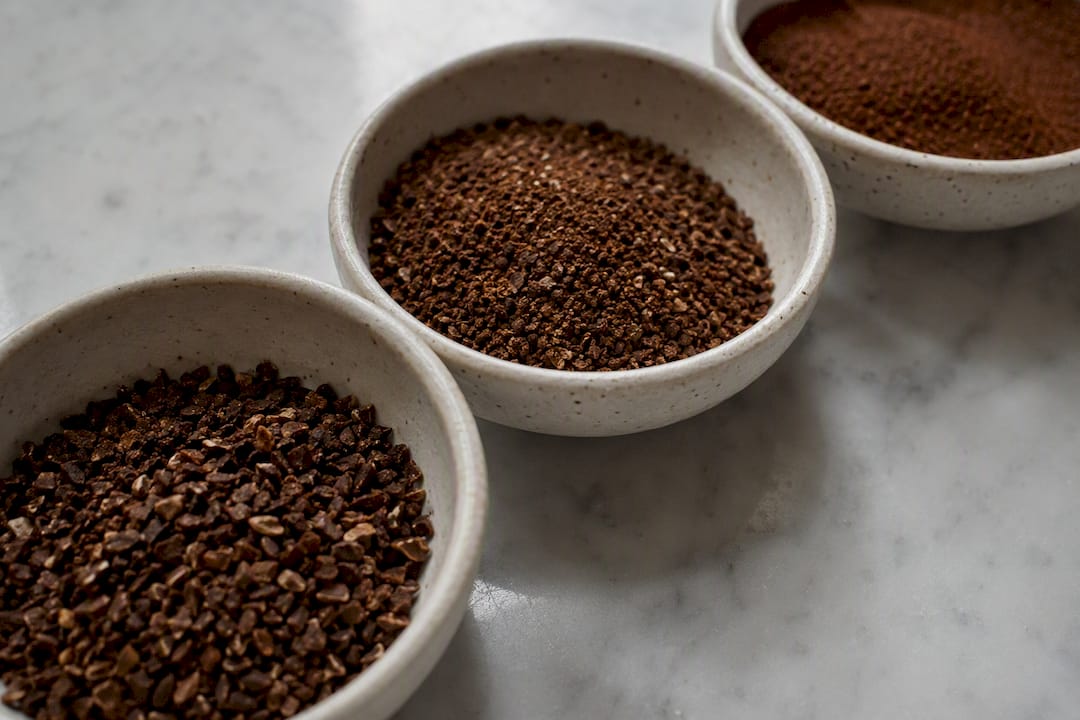
Grind charts love the phrase “medium-fine, like table salt,” but that description alone rarely gets you a great cup on the first try, since texture words mean different things depending on who’s talking and what grinder they own. Two better analogies: think granulated white sugar, or the fine sand you’d find near the waterline at a beach, not the dry powdery stuff further up the dune. That’s a coarser, more consistent particle than espresso grind but finer than what you’d use for a French press.
Micron numbers give you something more concrete to aim for. For cone-style drippers like the V60, a practical guardrail sits near 500 to 800 microns, with some sources tightening that window to 400 to 600 microns specifically for cones. Cone geometry drains faster than flat-bottom brewers, so it tends to need a slightly finer setting to build enough resistance for proper extraction.
Particle size distribution matters as much as the average setting. A grind full of fine dust alongside larger boulders extracts unevenly no matter what number sits on your dial. Cheaper grinders often produce this kind of scattered distribution, which is one reason two people can use “the same” setting and get different cups.
- Coarser particles under-extract and taste thin or sour
- Excess fines over-extract and taste bitter or muddy
- A tighter distribution gives you more control over both
Starting Settings for Common Home Grinders
Every grinder measures grind size on its own scale, so a “20” on one machine means nothing on another. Community and expert calibration data still gives you a real head start instead of blind guessing.
- Baratza Encore: start between 15 and 20 on the dial. Because the Encore is stepped, each click represents a bigger jump in particle size than you’d get on a stepless grinder, so move in smaller perceived increments than the click count suggests.
- Comandante C40: start between roughly 18 and 28 clicks from zero. Hand grinders like this reward patience since fine adjustments take real trial and error.
- Fellow Ode Gen 2: start between 4 and 6 on the dial. The Ode’s flat burr set was built with pour-over in mind, so its numbers cluster tighter than most.
These ranges come from community and expert calibration guides, not a universal standard, so use them as your first guess, then adjust by taste.
| Grinder | Starting Point | Adjustment Style |
|---|---|---|
| Baratza Encore | 15 to 20 on dial | Stepped, larger jumps per click |
| Comandante C40 | 18 to 28 clicks | Stepless, fine manual control |
| Fellow Ode Gen 2 | 4 to 6 on dial | Stepped, tighter pour-over range |
Write down your setting, dose, and total brew time every time you pull the trigger on a new bag. That habit turns guesswork into a searchable log, and it’s the single fastest way to stop repeating the same mistakes brew after brew.
How Do You Dial In V60 Grind Size by Taste?
Start coarser than you think you need. It’s far easier to fix a weak, sour cup by going finer than to rescue a bitter, over-extracted one by going coarser after the fact, and starting coarse avoids that harder correction entirely.
- Brew your baseline recipe and taste it. Note whether it’s sour, flat, bitter, or balanced.
- If it tastes sour, weak, or thin, move two clicks finer and brew again.
- If it tastes bitter, harsh, or the brew stalls out, move two clicks coarser.
- Taste the second cup, then narrow your adjustment to one click in whichever direction improved things.
- Repeat once more if needed. Most home grinders converge on a workable setting within two rounds using this binary-search approach.
Brew time is a useful diagnostic, but it’s a supporting signal, not the goal itself. A stalled, sluggish drawdown often points to too fine a grind or too many fines clogging the filter bed. A brew that finishes too fast, with a thin, watery body, usually means you’ve gone too coarse.
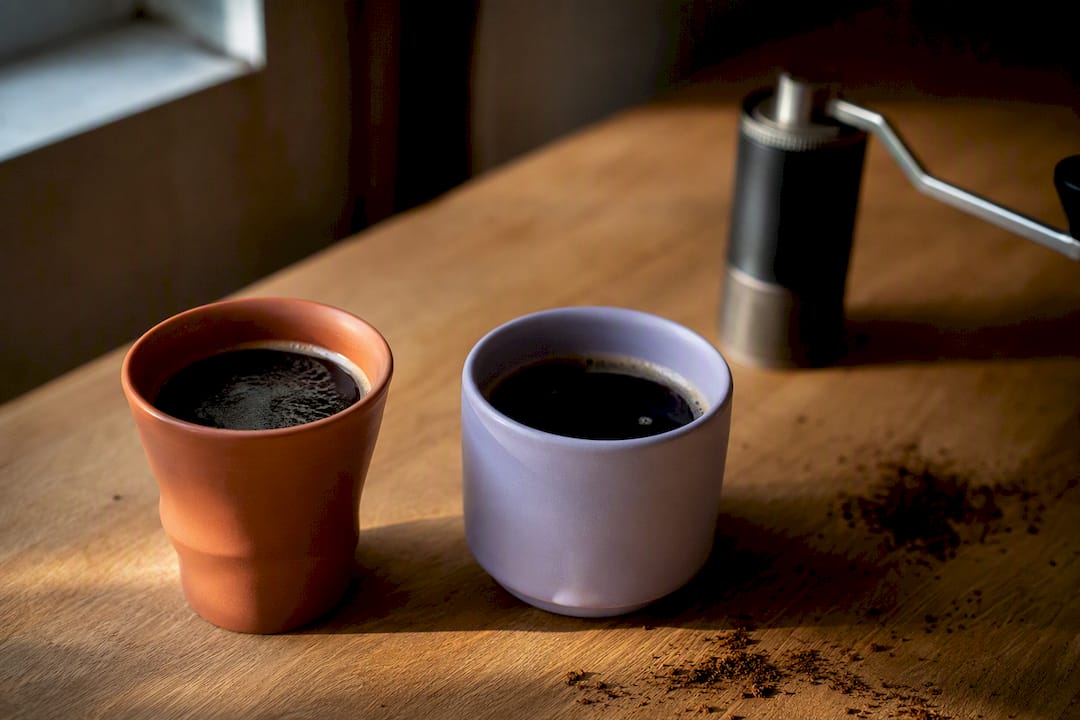
Pro Tip: Brew two cups side by side with a one or two click difference and taste them back to back. Differences that feel subtle sip by sip become obvious the moment you compare them directly.
The V60 Recipe to Pair With Grind Changes
Changing your grind without a fixed recipe is like adjusting a thermostat while someone keeps opening the windows. Lock in your ratio and technique first, then let grind size be the only variable you’re actually testing.
- Dose: 15 to 18 grams of coffee
- Water: roughly 225 to 270 grams, a 1:15 to 1:16 ratio
- Temperature: 94 to 96°C (about 200°F)
- Bloom: 30 to 45 grams of water for 30 to 45 seconds
- Pour: two to three additional pours after the bloom, keeping the bed level
Aim for a total drawdown between 2:30 and 3:30. Faster than that and you’re likely too coarse or your pours are too aggressive; slower, and you’re probably too fine or dealing with excess fines clogging the filter. One detail that trips people up: a deeper coffee bed adds more resistance, so a 15 gram V60 usually wants a slightly finer setting than a 30 gram batch of the same coffee.
Common V60 Mistakes and Fast Fixes
Most bad V60 cups trace back to one of three symptoms, and each one points to a specific fix you can apply on your very next brew.
- Thin and sour: grind is too coarse, or water temperature dropped too low. Move one to two clicks finer next time.
- Slow, stalled, or bitter: grind is too fine, or your pour rate is too aggressive and compacting the bed. Move one to two clicks coarser.
- Uneven, muddy flavor: channeling from an uneven bed or a bloom that didn’t fully saturate the grounds. Slow your pour and stir gently during the bloom.
- Papery or plastic taste: skipped filter rinse. Always rinse with hot water before adding grounds.
Filter choice and pour technique interact with grind more than most people realize, and it’s an easy variable to overlook when you’re only chasing a number on a dial.
How Equipment Changes Your Effective Grind Setting
The same numeric setting behaves differently depending on what’s underneath it. Filter paper thickness matters more than most people assume: thicker, slower-draining papers typically need a coarser grind to keep flow moving, while thin V60 filters drain fast enough to tolerate a finer setting.
- Burr geometry and wear shift what a given number actually produces over time
- Stepless grinders like the Comandante allow finer tuning than stepped models like the Encore
- Dripper material (plastic, ceramic, glass) and how hot you rinse it affects retention and flow speed
If a setting that worked great last month suddenly tastes off, check your filter brand and your grinder’s burrs before you blame the coffee.
Where to Practice These V60 Grind Settings
Dialing in goes faster with a coffee you can trust and a place to track what you learn. Moustachecoffeeclub roasts every order to order in the ultra-light Nordic tradition, so you’re calibrating against a fresh, consistent baseline instead of guessing around stale beans.
- Log your settings and cup notes using the coffee grind chart
- Browse brewing guides built for pour-over specifically
- Try a sample bag and record what setting actually worked for that origin
Why Chasing the Perfect Number Misses the Point
The obsession with finding one correct V60 grind setting misunderstands what’s actually happening in the cone. Roast level, water temperature, dose, and your pour technique all shift what “correct” means for that specific brew, so the number on your dial is only ever half the story.
Where I think most beginner advice goes wrong is treating grind size as an isolated fix. People chase a magic setting instead of locking down a repeatable recipe first. Fix your dose, ratio, and pour rhythm, then treat grind as the one variable you’re testing. That discipline matters more than any chart.
If you take one thing from this, prioritize the binary-search habit over memorizing micron numbers. Two rounds of tasting will teach you more about your specific grinder and coffee than any settings chart ever could, because it accounts for variables no chart can predict, like your particular burr wear or your pouring speed.
— Sean
Sources
- The grind size guide | Barista Hustle
- How to choose a grind setting — Scott Rao
- Coffee Grind Size: Micron Chart with Grinder Settings | JayArr Coffee
- Grinder calibration for pour-over: Dial In V60, Origami & Kalita | Pour Over Timer
FAQ
What Grind Size Is Best for V60?
Medium-fine, similar to granulated sugar or fine sand, works as a starting point. Cone drippers generally land in the 500 to 800 micron range, though your exact setting depends on your grinder and coffee.
What Are Common V60 Mistakes?
The biggest ones are skipping the filter rinse, pouring too aggressively and causing channeling, and reacting to a bad cup by changing too many variables at once instead of adjusting grind alone.
What Grind Size Is Best for Pour Over in General?
Most pour-over methods use a medium to medium-fine grind, but cone-style drippers like the V60 typically need a finer setting than flat-bottom brewers because they drain faster and need more resistance to extract properly.
What Is the Best Grinder for V60?
Burr grinders with consistent particle distribution work best for V60. The Comandante C40 offers stepless precision for hand grinding, while the Fellow Ode Gen 2 was designed with pour-over in mind and gives a tighter, more pour-over-specific range.
Recommended
- Coffee Grind Chart: Quick Settings and Dial-In Tips | Blog | The Moustache Coffee Club
- How To Brew Pour Over Coffee | Step-by-Step Guide | Moustache Coffee Club
- Why Cold Brew Uses Coarse Grind: Home Brewer’s Guide | Blog | The Moustache Coffee Club
- Dialing in Nordic Style Coffee at Home | Blog | The Moustache Coffee Club


