Farm-to-Cup Coffee Explained: How to Spot the Real Thing
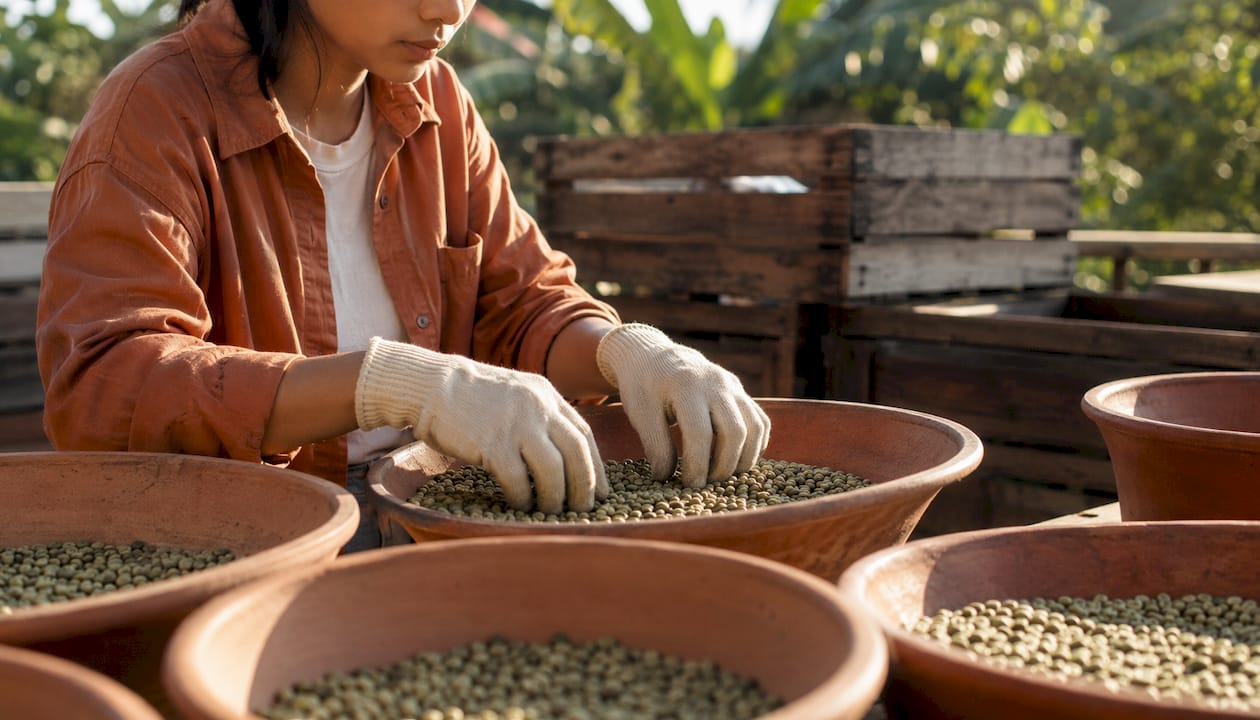
Farm-to-cup means one brand controls the coffee from cultivation through roasting to the final cup, typically by owning or directly operating the farm itself. That definition sounds simple, but the reality is striking: less than 1% of coffee shops and brands actually own the farm where their coffee grows. The phrase gets used far more often than it is earned, which is exactly why understanding it matters before you spend money on it.
Table of Contents
- What does farm-to-cup coffee actually mean?
- Why farm-to-cup can matter for your cup
- How farm-to-cup differs from single-origin and direct trade
- Why many “farm-to-cup” claims are marketing, not literal
- How to verify a genuine farm-to-cup claim before you buy
- How farm-to-cup shortens the timeline from harvest to cup
- How a roast-to-order subscription compresses the chain
- Key Takeaways
- Why transparency is the only honest standard
- Fresh, traceable coffee delivered to your door
- Useful sources for further reading
- FAQ
What does farm-to-cup coffee actually mean?
The term describes a supply chain where a single entity controls the major stages, from growing the plant to serving the finished drink. In practice, that means ownership or direct operation of the farm, not just a sourcing relationship with a farmer. Here is how the full chain breaks down:
- Growing and harvest: Coffee cherries ripen on trees within the Bean Belt, the equatorial band stretching roughly between the Tropics of Cancer and Capricorn. Harvest is typically hand-picked for specialty lots.
- Post-harvest processing: This is where flavor is shaped most dramatically. The three main methods are natural (drying the whole cherry, producing fruity, wine-like notes), washed (removing the fruit before drying, yielding cleaner, brighter cups), and honey (partial fruit removal, landing somewhere between the two). In a true farm-to-cup operation, the brand controls processing on-farm, so these decisions are intentional rather than inherited from a middleman.
- Drying and milling: Dried parchment coffee is hulled to reveal the green bean. Milling quality directly affects how evenly the bean roasts later.
- Green coffee storage and transport: Green beans are bagged, often in GrainPro or burlap, and shipped. Humidity and temperature during this leg affect shelf life.
- Roasting: Heat transforms green beans into the aromatic product you buy. Roast date matters here more than most people realize.
- Brewing and service: The final cup.
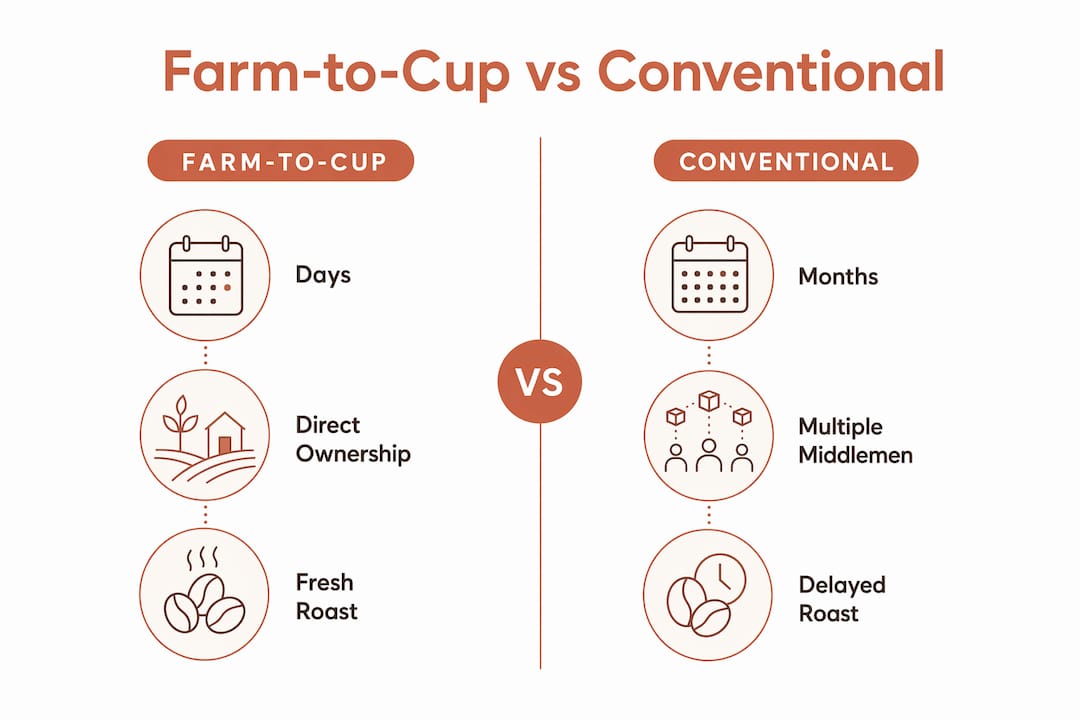
In a conventional supply chain, coffee passes through five or more hands — farmer, middleman, exporter, importer, roaster, retailer — before it reaches you. Each handoff adds time and strips away provenance. Farm-to-cup collapses that chain by keeping ownership in one set of hands.
Why farm-to-cup can matter for your cup
The core benefit is radical traceability paired with fresher flavor. When the same entity controls harvest timing, processing method, and roast schedule, there is no waiting on a commodity broker or sitting in an importer’s warehouse for months.
Compressing the time between harvest, roast, and delivery preserves volatile flavor compounds that degrade with exposure to oxygen, heat, and time. A natural-process Ethiopian coffee, for example, can arrive at your grinder with its characteristic blueberry and jasmine notes still vivid. The same coffee sitting in a conventional chain for eight months tastes flat by comparison.
Less than 1% of coffee shops and brands own the farm where their coffee is grown — meaning the vast majority of “farm-to-cup” claims on packaging describe a sourcing relationship, not literal ownership.
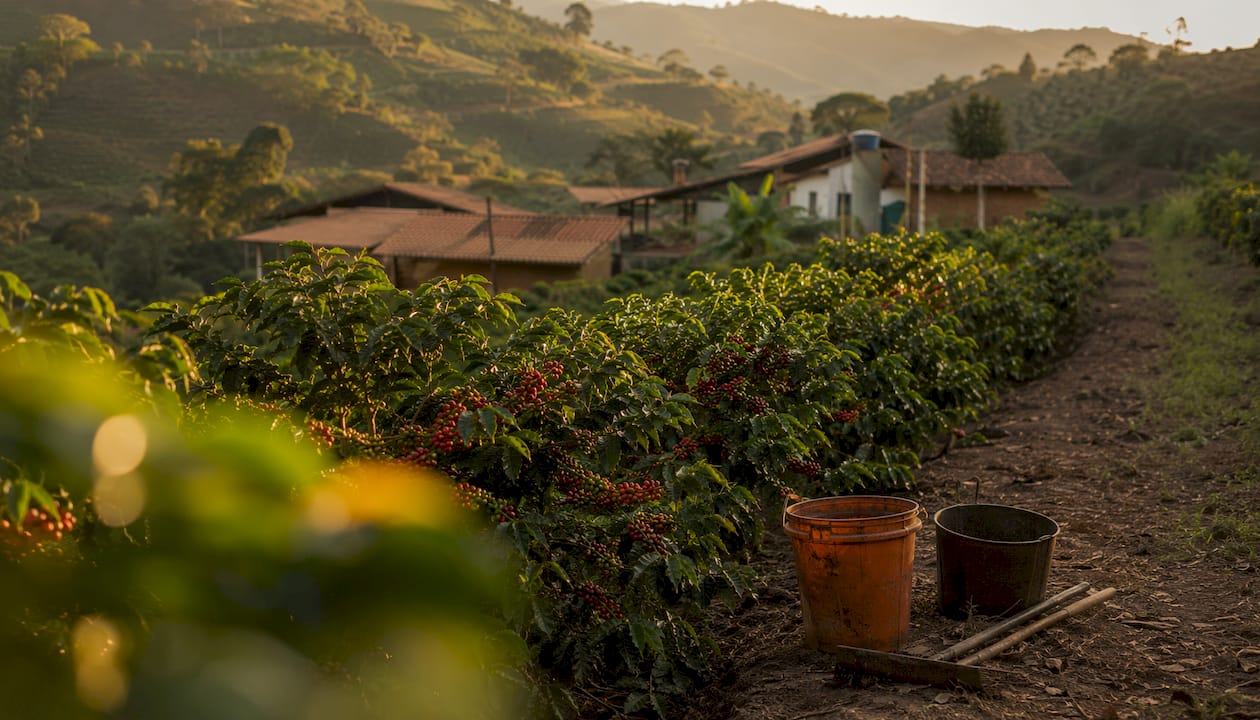
The farmer economics are also meaningfully different. When a brand owns the farm, it bears the agricultural risk directly, which creates a long-term incentive to invest in the land. That often translates into sustainable farming methods like shade-grown systems, which protect biodiversity, and water-recycling wet mills that reduce the environmental load of washed processing. These practices tend to get deprioritized in commodity chains where the buyer and the farmer never meet.
For context on scale: Brazil alone produces a large share of the world’s green coffee beans, making it the largest single producer. The concentration of production in a handful of countries, combined with the complexity of international land ownership, is a big reason why true farm-to-cup operations are so rare. You can also explore how specialty coffee supports farmers economically when sourcing relationships are built with care.
How farm-to-cup differs from single-origin and direct trade
These terms overlap but are not interchangeable, and conflating them is one of the most common mistakes coffee buyers make.
- Single-origin identifies where the coffee comes from, a specific country, region, or farm. It says nothing about who owns what.
- Direct trade describes a sourcing relationship where the roaster buys directly from the farmer, often at above-market prices, without a third-party certifier. Meaningful, but not the same as farm ownership.
- Fair trade is a third-party certification that sets minimum price floors and labor standards. It protects farmers from the worst commodity price swings but does not require the buyer to own or operate the farm.
- Farm-to-cup requires ownership or direct operation across the key stages. The brand assumes agricultural risk and land stewardship, not just a purchasing agreement.
Quick dos and don’ts for buyers:
- Do ask whether the roaster owns the farm or has a documented multi-year sourcing agreement with a named estate.
- Do look for lot numbers, harvest dates, and processing method descriptions on the product page.
- Don’t assume “single-origin” or “direct trade” equals farm-to-cup. They can coexist, but they are separate claims.
- Don’t take a farm name on a bag as proof of ownership. Many “farm” names are actually cooperatives with dozens of contributing growers.
For a deeper look at how direct trade coffee works as a sourcing model, and how it compares to other approaches, that guide breaks it down clearly.
Why many “farm-to-cup” claims are marketing, not literal
Many brands use the phrase loosely. A compelling origin story and a direct-trade relationship are not the same as ownership, and the industry has developed a reliable set of shortcuts that mimic the language without the substance.
Common red flags to watch for:
- Named-farm storytelling without documented ownership: A beautiful photo of a farm and a farmer’s first name on the bag does not mean the roaster owns that land.
- “Farm” names that are cooperatives: Many celebrated “estates” are actually cooperatives pooling coffee from dozens of smallholders. Not inherently bad, but not farm-to-cup.
- Roaming buy agreements: Some roasters travel to origin and buy spot lots each season. Admirable sourcing, but the relationship resets every year.
- “Small-batch” without a roast date: Small-batch roasting is a production choice, not a traceability claim. Without a roast date, you cannot verify freshness.
- Ambiguous origin labels: “Latin America blend” or “Africa sourced” tells you almost nothing about provenance.
Direct trade and single-origin sourcing are genuinely valuable practices. They often produce better coffee and better farmer outcomes than commodity buying. The point is not to dismiss them but to recognize they are not the same thing as literal farm-to-cup ownership.
The honest question to ask any roaster: “Do you own this farm, or do you buy from it?” The answer tells you everything about whether the claim is literal or aspirational.
Pro Tip: Search the roaster’s website for the words “estate” or “farm” alongside a country name and a year. If the same farm appears across multiple harvest years with consistent lot numbers, that is a stronger signal of a real ongoing relationship, or ownership, than a one-time origin feature.
How to verify a genuine farm-to-cup claim before you buy
The easiest proof points are a documented estate name, a printed roast date, lot or traceability numbers, and on-farm processing descriptions or photos. Here is a short checklist you can run through on any product page or in a café:
- Does the bag or page name a specific farm or estate? Not just a region or cooperative, but a named property with an address or GPS coordinates.
- Is there a roast date? A “best by” date is not the same thing. You want to know when it was roasted, not just when it expires.
- Are lot or traceability numbers listed? These allow the roaster, and sometimes you, to trace the coffee back to a specific harvest and processing batch.
- Is the processing method described with specifics? “Washed” is a start. “Washed at the estate’s own wet mill using a 48-hour fermentation” is the real thing.
- Are there farmer or estate photos and profiles? Not stock imagery, but actual documentation of the people and place.
- Can you find origin reports or cupping notes tied to a specific lot? Roasters who control the full chain usually publish these because they have the data to back them up.
Understanding coffee traceability in depth will help you read these signals more fluently when you are shopping.
Pro Tip: Cross-check the roast date against the roaster’s shipping cadence. A roaster who ships within 24–48 hours of roasting will have roast dates that are always recent. If you order in March and the bag says it was roasted in January, something in that chain is not as tight as advertised.
How farm-to-cup shortens the timeline from harvest to cup
Farm-to-cup compresses what can be months of delay in a conventional chain into days or weeks between harvest and roast. Here is what that looks like in practice:
| Stage | Conventional chain | Farm-to-cup model |
|---|---|---|
| Farm to export-ready green | 2–6 months (multiple handoffs) | Weeks (owner controls processing) |
| Green coffee in transit/warehouse | 1–3 months | Days to weeks (direct shipping) |
| Roaster to retail shelf | Weeks to months | Days (roast-to-order) |
| Retail shelf to consumer | Weeks to months | Same day or next day |
A coffee plant takes roughly three to four years to reach full production, and the harvest window for any given lot is just a few weeks per year. In a conventional chain, that coffee then passes through five or more intermediaries, each adding time. By the time it reaches a grocery shelf, the coffee may be 12–18 months past harvest.
The cost premium that comes with farm-to-cup reflects real overhead: owning and operating agricultural land internationally involves land tenure complexity, seasonal labor, ecological compliance, and the full weight of agricultural risk. Small-batch roasting economics add to that. Expect to pay meaningfully more per bag than commodity or even most specialty coffee, because the producer is absorbing costs that a conventional chain distributes across many parties.
How a roast-to-order subscription compresses the chain
Here is a concrete example of how a subscription model can shorten the supply chain, using Moustachecoffeeclub’s publicly stated practices as an illustration. This is not a comparative ranking.
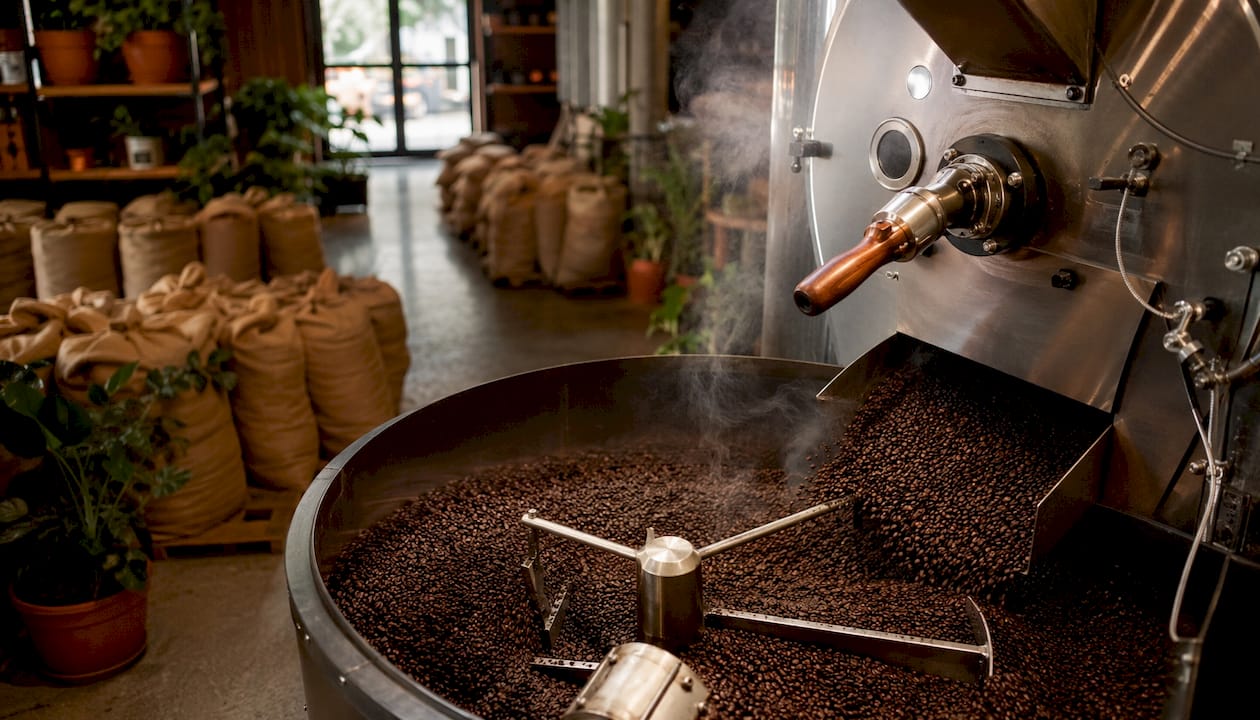
The principle: When a roaster ships beans the same day they are roasted, the roast-to-cup interval shrinks from weeks or months to days. That is the closest most consumers will get to the freshness benefits of a true farm-to-cup model without buying directly from a farm.
Moustachecoffeeclub’s process works roughly like this:
- Origin sourcing: Single-origin lots are selected from specific farms and estates across Ethiopia, Colombia, and other producing regions, with ethical sourcing notes attached to each lot.
- Roast-to-order scheduling: Beans are roasted only after an order is placed, not in advance for warehouse stock.
- Same-day roast and ship: Roasted beans ship the day of roasting, so the roast date on the bag reflects when the coffee was actually made, not when it was packed for a shelf.
- Customer receives: A bag with a printed roast date, an origin report describing the farm or cooperative, the processing method, and tasting notes tied to that specific lot.
The trust signals Moustachecoffeeclub provides, including roast dates, origin reports, and ethical sourcing notes, are the same signals you should look for from any roaster making traceability claims. You can use them to verify freshness (roast date within the last two weeks is a good benchmark) and provenance (origin report names the farm or estate and the processing method).
Key Takeaways
Farm-to-cup is defined by ownership across the supply chain, not by marketing language, and less than 1% of brands can claim it literally.
| Point | Details |
|---|---|
| Ownership is the defining test | True farm-to-cup requires the brand to own or directly operate the farm, not just source from it. |
| Less than 1% qualify | Less than 1% of coffee shops and brands own the farm where their coffee is grown. |
| Traceability signals to look for | A roast date, lot number, named estate, and on-farm processing description are the four key proof points. |
| Expect a price premium | Farm-to-cup carries higher costs due to agricultural risk, land stewardship, and small-batch roasting economics. |
| Moustachecoffeeclub as a model | Moustachecoffeeclub ships roast-to-order with printed roast dates and origin reports, giving customers the traceability signals that matter most. |
Why transparency is the only honest standard
There is a version of this conversation that ends with “just buy whatever tastes good to you,” and I understand the appeal. But I think that framing lets the industry off the hook too easily.
The reason traceability language has proliferated so fast is that it works on consumers. “Farm-to-cup,” “direct trade,” “single-origin” — these phrases move product. And when they are used loosely, they do something worse than mislead: they make it harder for the brands doing the real work to stand out. A roaster who actually owns a farm in Colombia and publishes annual lot reports is competing on the same shelf as a brand that hired a good copywriter.
What I keep coming back to is this: the verification tools exist. Roast dates, lot numbers, origin reports, farm profiles — none of this is proprietary technology. Any roaster who wants to be transparent can be. The ones who are not are making a choice. That is worth remembering when you are reading a bag.
The practical step is simple. Before you buy, ask one question: “When was this roasted?” If the answer is not on the bag, or if the person behind the counter does not know, that tells you something about how much the chain values your ability to verify what you are drinking.
Fresh, traceable coffee delivered to your door
Moustachecoffeeclub competes directly in the specialty coffee subscription space, so take this for what it is: a straightforward description of what the subscription offers and why it fits the conversation above.
Every bag ships the day it is roasted. The roast date is printed on the bag, not buried in fine print. Each lot comes with an origin report that names the farm or estate, the processing method, and the tasting profile for that specific harvest. Subscriptions are flexible, with no long-term commitment required, and the coffee is roasted in an ultra-light, Nordic-inspired style that keeps the origin character front and center rather than masking it with a heavy roast.
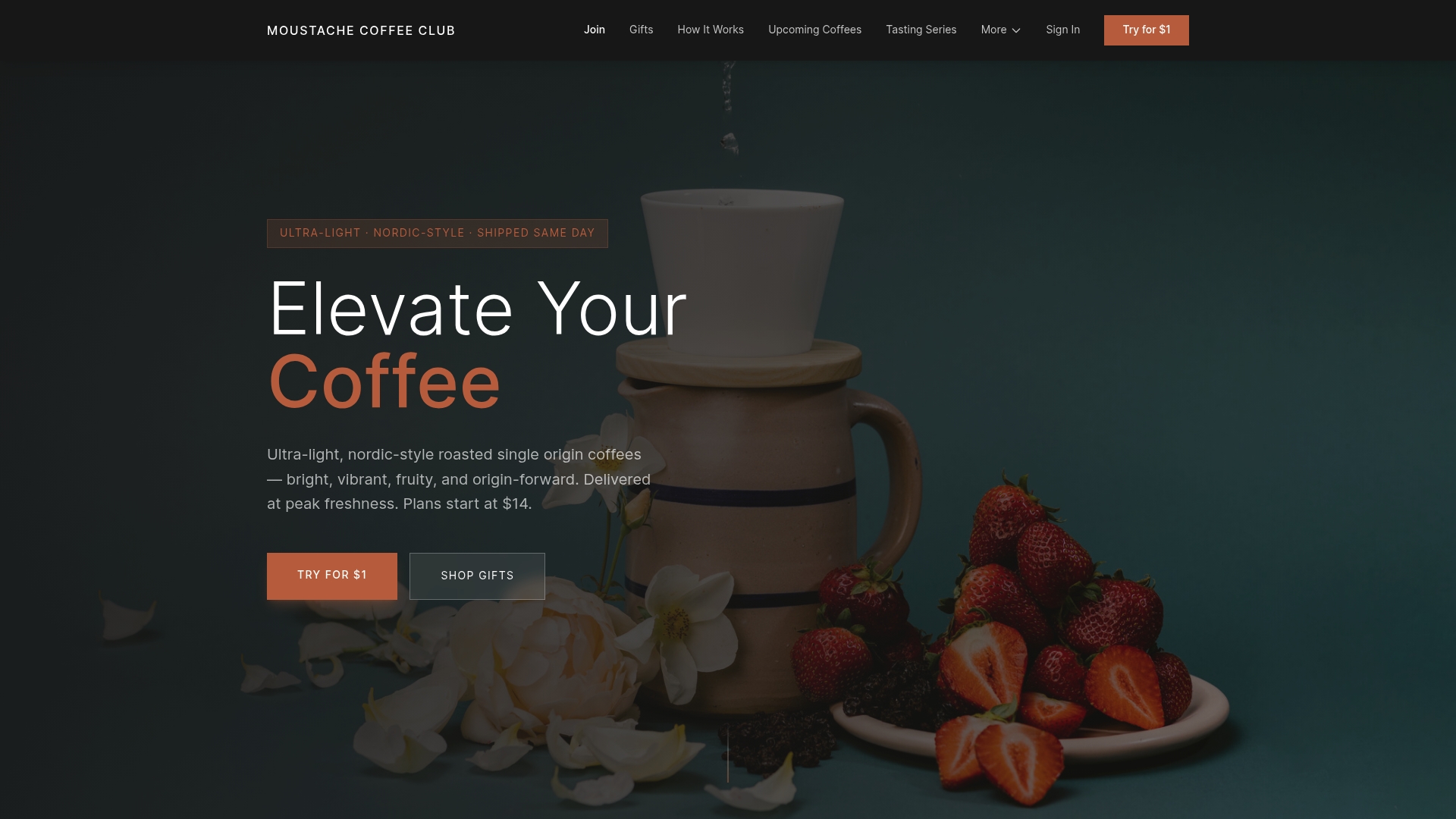
If you want to experience what a compressed supply chain actually tastes like in the cup, the subscription page is the place to start. For brewing guides, origin deep-dives, and traceability resources, the coffee education hub covers the full picture.
Useful sources for further reading
- 787 Coffee: What Farm-to-Cup Actually Means — The clearest definition of the ownership requirement and the source of the less-than-1% statistic.
- Outin: Farm-to-Cup and Sustainability — Covers shade-grown systems, water-recycling wet mills, and energy-efficient roasting practices.
- Good Grounds Coffee: Brazil’s Production Share — Context on global production concentration and why farm ownership is structurally rare.
- Moustachecoffeeclub: How to Source Single-Origin Beans Sustainably — Practical guidance on ethical sourcing criteria and what to look for.
- Moustachecoffeeclub: Single-Origin vs. Blends — Explains how single-origin labeling works and how it differs from farm-to-cup.
- Wild Foodz: Sustainability in Food Services — Operator-level guide to sustainable practices in food and beverage, including wet-mill and energy considerations relevant to farm-level operations.
FAQ
Why is farm-to-cup coffee better?
Farm-to-cup coffee can deliver better traceability and fresher flavor because the same entity controls harvest timing, processing, and roasting, compressing the time between farm and cup. That compression preserves volatile flavor compounds that degrade in longer conventional supply chains.
What makes a farm-to-cup claim genuine?
A genuine claim requires the brand to own or directly operate the farm, not just source from it. Look for a named estate, a printed roast date, lot or traceability numbers, and on-farm processing descriptions as proof points.
What country produces 40% of the world’s coffee?
Brazil produces roughly 40% of the world’s green coffee beans, making it by far the largest single producer. That concentration of supply in a few countries is one reason true farm-to-cup ownership remains structurally rare.
How is farm-to-cup different from direct trade?
Direct trade describes a sourcing relationship where a roaster buys directly from a farmer, often at premium prices, without a third-party certifier. Farm-to-cup requires ownership or direct operation of the farm itself, a meaningfully higher bar.
How does Moustachecoffeeclub approach traceability?
Moustachecoffeeclub ships beans the same day they are roasted and includes a printed roast date and origin report with each order, giving customers the key traceability signals — farm or estate name, processing method, and harvest lot — to verify what they are drinking.
Recommended
- Coffee Traceability Explained: What Buyers Need to Know | Blog | The Moustache Coffee Club
- How to buy specialty coffee: expert tips for flavor and quality | Blog | The Moustache Coffee Club
- How Single Origin Differs from Blends: A Coffee Guide | Blog | The Moustache Coffee Club
- Natural Process Coffee Flavor: What It Is and Why It Matters | Blog | The Moustache Coffee Club