Why Coffee Crema Forms on Espresso: The Science Explained
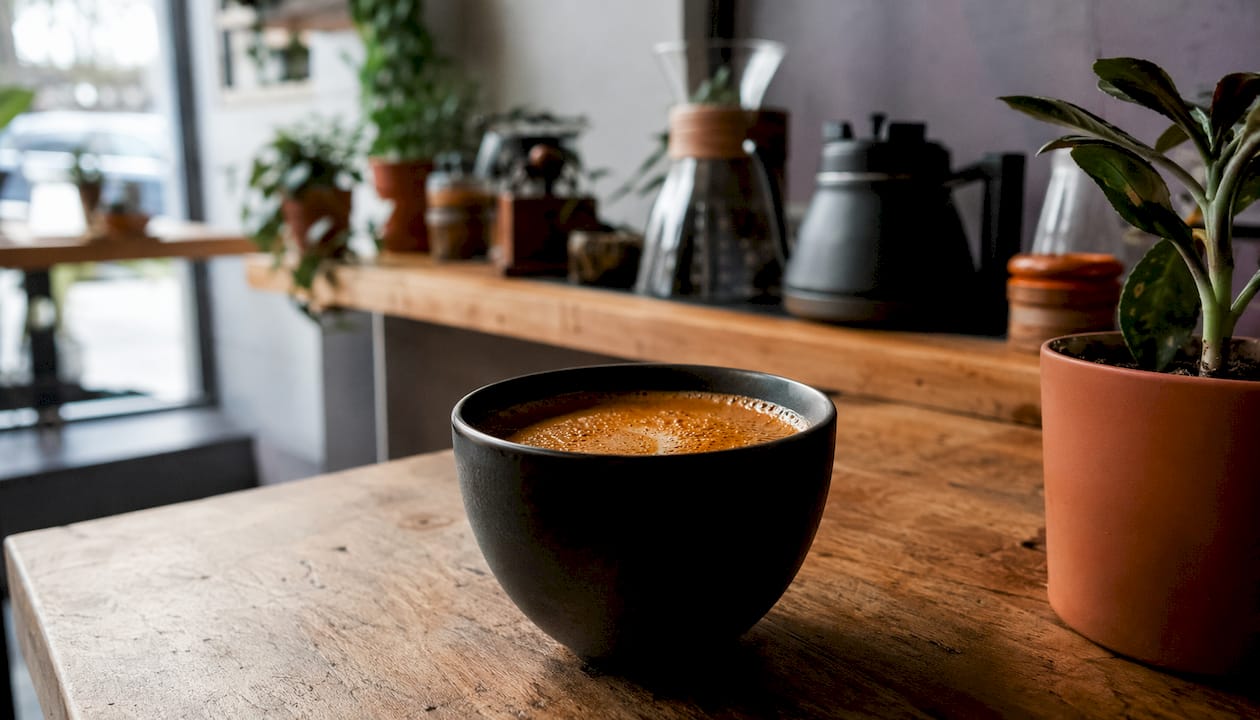
Crema is the dense, reddish-brown foam that crowns a freshly pulled espresso shot. It forms because high-pressure extraction forces CO2 gas out of roasted coffee beans and into the liquid, where it gets trapped as microscopic bubbles stabilized by coffee oils, proteins, and melanoidins. No other brewing method produces it. Pour-over, French press, and cold brew all skip the one ingredient crema requires: pressure around 9 bar.
Here is what crema actually is, broken down to its core components:
- CO2 gas released from roasted beans during extraction
- Coffee oils (lipids) that coat and stabilize bubble walls
- Proteins and melanoidins that form the interfacial film holding bubbles together
- Polysaccharides (mainly galactomannans) that give the foam its lasting structure
- Tiny solid particles from cell walls that act as nucleation sites for bubble formation
Professional espresso standards expect crema to occupy at least 10% of the espresso volume and hold together for at least 2 minutes before breaking down.
Why coffee crema forms on espresso: the physics and chemistry
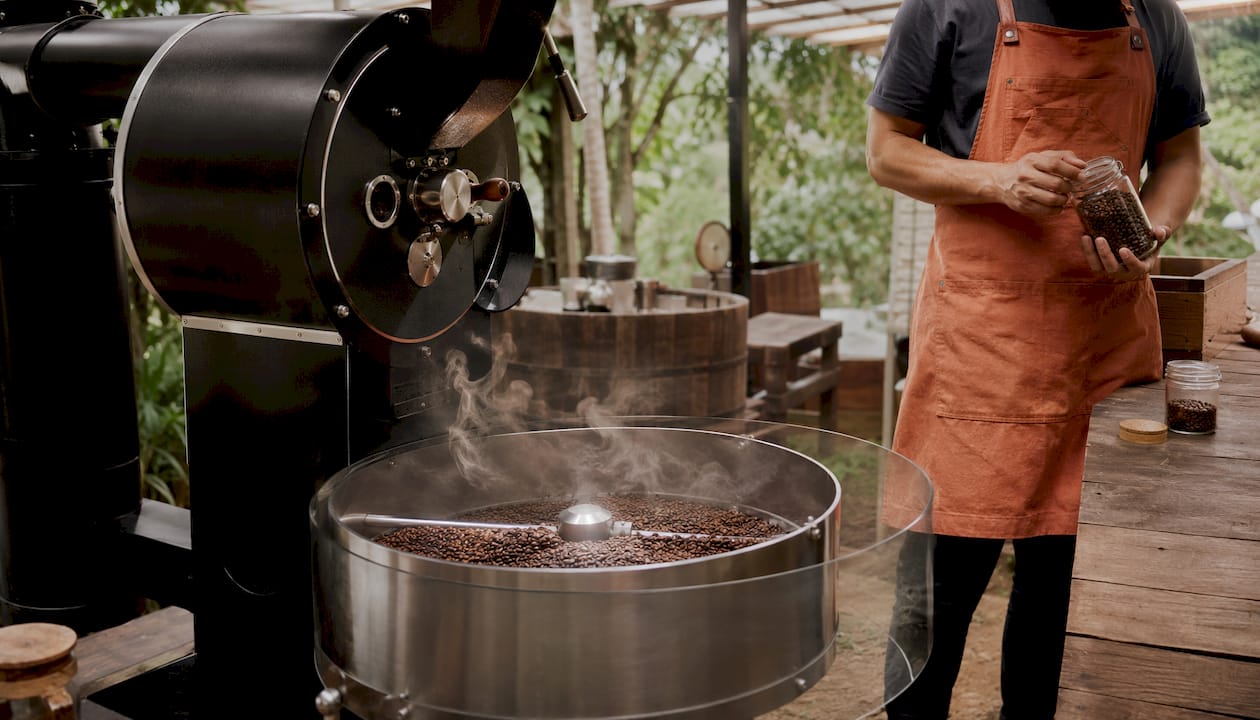
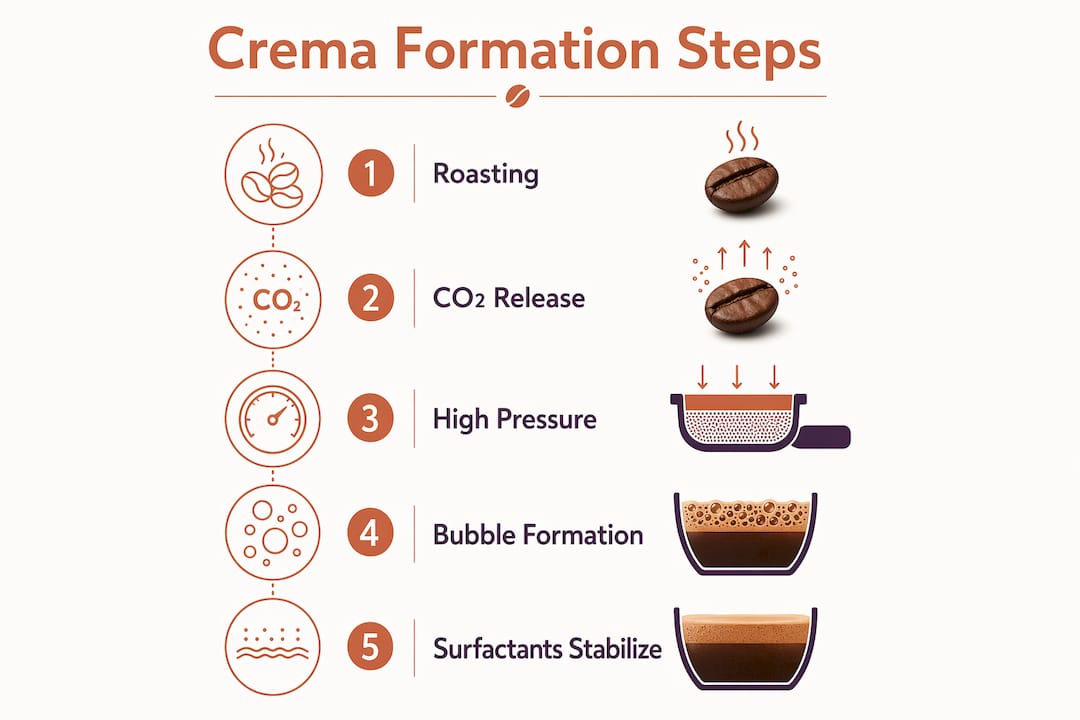
The story starts in the roaster. When green coffee beans are roasted above 200°C, a cascade of chemical reactions, including Maillard reactions, Strecker degradation, and carbohydrate pyrolysis, produces CO2 as the dominant gas. CO2 content in roasted beans ranges from 4.0 to 8.6 mg per gram, averaging 5.7 mg/g. That gas stays locked inside the bean’s cellular structure until brewing.
During espresso extraction, water at roughly 9 bar dissolves that CO2 under pressure. The moment the brewed liquid exits the portafilter basket and pressure drops back to atmospheric, the liquid can no longer hold all that dissolved gas. It comes out of solution as countless tiny bubbles, a process called heterogeneous nucleation, with microscopic cell-wall fragments in the brew acting as nucleation sites. The result is espresso foam formation: a bubbly, liquid foam that quickly develops into the crema layer you see.
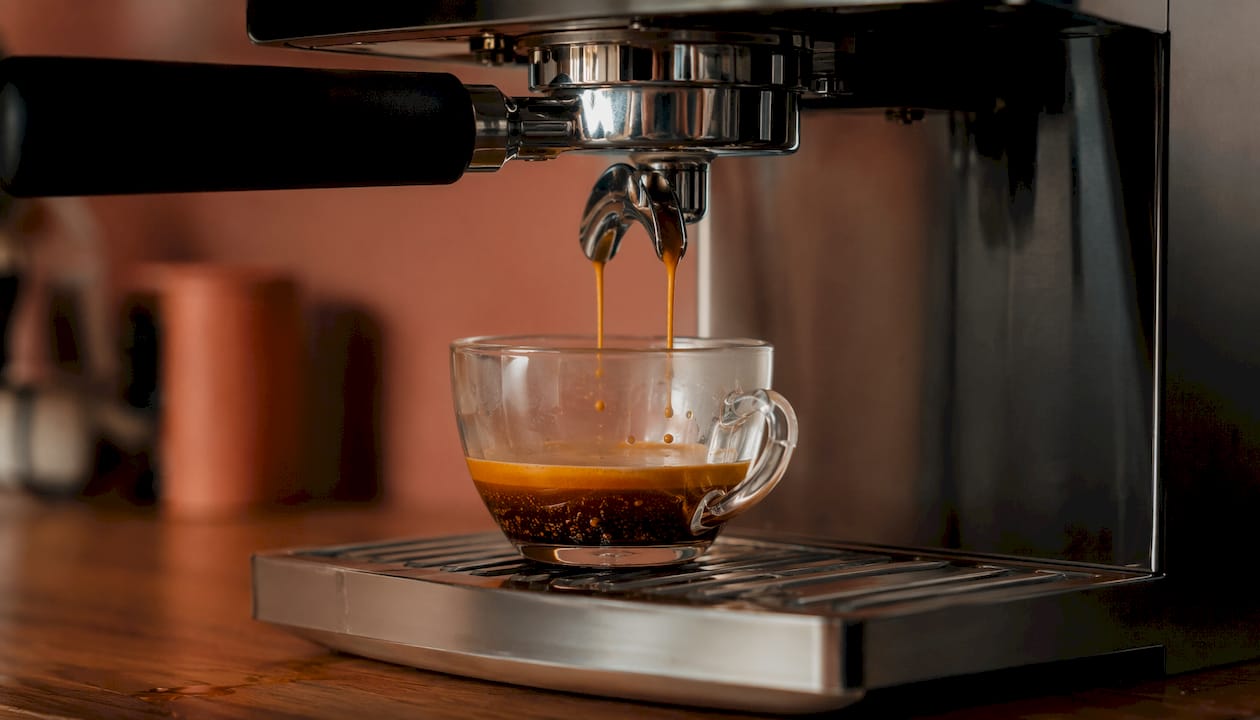
What keeps those bubbles from popping immediately is the chemistry of the liquid surrounding them. Surfactant compounds, specifically coffee oils, proteins, and melanoidins, migrate to the air-liquid interface of each bubble and form a protective film. Polysaccharides extracted during brewing then reinforce that film, giving it viscoelastic properties that resist drainage. Crema stability relies on the interaction between lipids and melanoidins strengthening those interfacial films around every bubble.
The small volume of a standard espresso cup (25–30 mL) also plays a physical role. Bubbles only have about 1.5–2 cm of liquid to rise through before they reach the surface, which constrains bubble size and slows their dissipation. Bigger cups with more liquid depth would let bubbles grow larger and collapse faster.
Pro Tip: Use a pre-warmed espresso cup. A cold cup accelerates the temperature drop in the crema layer, which speeds up drainage and shortens the foam’s lifespan noticeably.
What crema actually tells you about freshness and shot quality
Crema volume is primarily a function of how much CO2 remains in the bean at the time of extraction. Fresher beans carry more dissolved gas and produce more crema. Beans that have been sitting for a longer time have off-gassed significantly and yield a thinner, patchier layer. That relationship makes crema a reasonable freshness signal, but only a rough one.
The bean variety matters too, though not in the way most people assume. Robusta beans contain more CO2 on average (6.9 mg/g) than Arabica (4.6 mg/g), so Robusta-heavy blends tend to produce more crema volume. Arabica, however, has higher lipid content, which produces a more stable, longer-lasting foam. The interplay between CO2 and lipid content is more predictive of crema behavior than species alone.
What crema does NOT reliably tell you:
- Shot flavor quality. A thick crema can come from a poorly extracted dark roast. A thin crema can come from a beautifully balanced light roast.
- Sweetness or acidity. Those flavor attributes live in the liquid below, not in the foam.
- Extraction precision. Crema volume shifts with roast date and variety, not just with your technique.
- Bean quality. Low-grade, dark-roasted commodity coffee can produce dramatic crema.
What crema does tell you:
- Bean gas state. More crema generally means more residual CO2, which points to a fresher roast.
- Roast level. Darker roasts produce more CO2 and typically more crema volume.
- Extraction pressure. No crema at all usually signals a pressure problem with the machine.
Professional espresso standards set the bar at crema persisting for at least 2 minutes. A shot that collapses in under 30 seconds is worth investigating, though the cause could be anything from stale beans to a grind that is too coarse.
How crema shapes the way espresso tastes
Crema does more than look good. It acts as a physical lid over the espresso, trapping volatile aromatic compounds that would otherwise escape into the air within seconds of extraction. Those aromatics are a significant part of what you perceive as flavor, since smell and taste are deeply linked. An espresso without crema loses those top notes faster.
The foam also slows cooling, which extends the window in which the espresso tastes its best. And it contributes a distinct textural quality, a creaminess and body, that changes the mouthfeel of the shot compared to drinking the liquid alone.
Crema’s flavor, though, is worth understanding separately from the espresso beneath it. It tends to taste bitter, sometimes more bitter than the liquid below. Stathis Koremtas, a three-time Greek Brewers Cup champion, put it plainly: “if you separate the crema from the coffee and drink the coffee, it’s going to be sweeter.”
That bitterness creates a real choice for how you drink your espresso:
- Stir the crema in to integrate all layers and get a balanced, unified flavor across the whole shot.
- Skim it off if you prefer a cleaner, sweeter cup with less bitterness.
- Drink it layered to experience the progression from bitter foam to sweeter liquid below.
Consumer research confirms that crema presence raises expectations of quality, smoothness, and premium character before a single sip is taken. That perception effect is real, even when the crema itself contributes bitterness rather than sweetness.
What baristas can actually control to get better crema
Crema is not random. Every variable in the extraction process touches it in some way. Here is where your control actually lives:
Bean freshness. This is the single biggest lever. Beans that are too fresh (under about 5 days post-roast) can produce an unstable, gassy shot that is hard to dial in. Beans that are too old have lost their CO2 and produce thin, patchy crema. The sweet spot for most espresso is roughly 7–21 days after roast, depending on the roast level. Understanding why freshly roasted beans produce better crema comes down to that CO2 window.
Roast level. Darker roasts generate more CO2 during roasting and produce more crema volume. Light roasts, like the Nordic-style single-origin coffees Moustachecoffeeclub specializes in, produce less crema but often more nuanced flavor. Less foam does not mean a worse shot.
Grind size and dose. A grind that is too coarse reduces the pressure drop across the puck, which means less CO2 is forced into solution and less crema forms. Too fine, and you risk channeling and over-extraction. Dose also matters: a properly dosed basket creates the resistance needed for the pressure differential that drives crema formation.
Machine pressure and temperature. Espresso machines need pressure near typical espresso levels and hot water for adequate crema production. Pressure significantly lower than standard can produce little to no crema regardless of bean quality.
Basket size. Research shows that double and triple-shot baskets produce more stable crema than single-shot baskets, likely because larger baskets create more nucleation sites during extraction.
Pro Tip: If your crema is thin and disappears in under a minute, try a slightly finer grind before changing anything else. Grind size affects the pressure differential across the puck more directly than most other variables.
The chemistry behind roasting explains why roast level and freshness interact so strongly with crema. Both variables control how much CO2 is available at the moment of extraction.
Common myths about crema that keep home baristas confused
The coffee world has built a mythology around crema that does not always hold up to scrutiny. A few of the most persistent misconceptions:
Myth: Thick crema means a great shot. Crema thickness correlates more with bean freshness and variety than with shot quality or flavor. A dark-roasted commodity blend can produce a thick, dramatic crown. A well-extracted light roast from a 21-day-old bag might have minimal crema. The foam tells you about the bean’s gas state, not about what is in the cup.
Myth: No crema means bad espresso. Crema requires CO2, and CO2 requires a roast that is recent enough to still hold gas. A properly extracted shot from older beans, or from a very lightly roasted coffee, can taste excellent with almost no visible crema.
Myth: Crema is the best part of the espresso. Crema is actually the most bitter part of the shot. Drinking it straight reveals how intense and sometimes harsh it is on its own. The sweetness and complexity live in the liquid below.
Myth: Robusta always makes better crema than Arabica. Robusta produces more crema volume due to higher CO2 content, but Arabica produces more stable crema due to higher lipid content. Neither species automatically wins. The interplay between CO2 and lipids determines the outcome, and that interplay varies with roast level, freshness, and extraction parameters.
Myth: Crema is a reliable quality metric. Two-time Swedish World Barista Championship winner Steven Moloney said it directly: crema “doesn’t have any direct correlation to how good the espresso will taste.” Tasting the shot is the only reliable quality check.
What coffee science reveals about crema that most guides miss
Crema is classified scientifically as a metastable foam, meaning it exists in a temporary equilibrium that is always moving toward collapse. Three physical processes drive that collapse: drainage (liquid flows downward under gravity, thinning the bubble walls), Ostwald ripening (larger bubbles absorb smaller ones, coarsening the foam), and evaporation (water loss concentrates surfactants unevenly, destabilizing the films). Understanding these processes explains why crema changes texture from a liquid bubbly foam right after extraction to a dry, polyhedral foam within minutes.
The lipid content of the espresso adds another layer of complexity. Arabica espresso contains more total lipids than Robusta, and those lipids can actually destabilize foam by spreading at the air-liquid interface and lowering surface tension. This is why the relationship between Arabica and crema stability is not straightforward: more lipids can mean better interfacial films, but past a threshold, they work against the foam. The physical constraints of the espresso cup limit bubble rise distance to roughly 1.5–2 cm, which keeps bubbles small and slows the collapse process.
The cup itself also matters for crema presentation. Warm stoneware cups, like those designed for espresso service, maintain the temperature gradient in the crema layer more evenly than cold ceramic, which slows drainage. A quality espresso cup is not just aesthetic; it is part of the physical environment that crema lives in.
| Factor | Effect on crema volume | Effect on crema stability |
|---|---|---|
| Bean freshness | Higher CO2 = more volume | Very fresh beans can destabilize foam |
| Roast level (darker) | More CO2 = more volume | Can reduce stability at very dark levels |
| Arabica vs. Robusta | Robusta produces more volume | Arabica produces more stable foam |
| Extraction pressure (~9 bar) | Required for crema formation | Consistent pressure improves uniformity |
| Grind size (finer) | Increases pressure differential, more crema | Smaller bubbles = slower drainage |
| Basket size (larger) | More nucleation sites, more volume | Double/triple baskets outperform single |
| Cup temperature (warm) | No direct effect on volume | Slows drainage, extends lifespan |
Get the freshest beans for every shot you pull
Crema starts with CO2, and CO2 starts with fresh, well-roasted beans. Moustachecoffeeclub roasts single-origin specialty coffees to order in the ultra-light, Nordic style, which means your beans arrive at peak gas content, ready to pull shots with genuine crema and the flavor complexity that light roasts are known for. Explore the coffee education hub for brewing guides built for home baristas, or start a subscription and experience what freshly roasted beans actually do to your espresso.

Key Takeaways
Crema forms on espresso because high-pressure extraction releases CO2 from freshly roasted beans, and that gas is stabilized into foam by coffee oils, proteins, and polysaccharides.
| Point | Details |
|---|---|
| Pressure is non-negotiable | Crema requires around 9 bar; lower-pressure methods cannot produce it. |
| CO2 drives crema volume | Roasted beans hold 4.0–8.6 mg of CO2 per gram, and fresher beans produce more crema. |
| Stability comes from lipids and polysaccharides | Galactomannans and lipid-melanoidin interactions hold bubble walls together after extraction. |
| Crema signals freshness, not quality | Thick crema reflects bean gas state and roast level, not shot flavor or extraction skill. |
| Professional standard is 10% volume, 2 minutes | Crema should occupy at least 10% of espresso volume and persist for at least 2 minutes. |
FAQ
Why does crema form in espresso but not in other coffee?
Crema forms only under the high-pressure environment of an espresso machine, around 9 bar, which dissolves CO2 from roasted beans into the water. When pressure drops as the shot exits the basket, that gas comes out of solution as bubbles stabilized by coffee oils and proteins.
Is thick crema a sign of good espresso?
No. Crema thickness reflects bean freshness and roast level more than shot quality. A dark-roasted, low-quality bean can produce a thick crema, while a well-extracted light roast may have very little.
Why do people like crema on espresso?
Crema traps volatile aromatic compounds that would otherwise escape, enhancing the perceived aroma and flavor of the shot. Consumer research also shows that crema presence raises expectations of quality and smoothness before the first sip.
Why is my espresso mostly crema?
Excessive crema usually means the beans are very fresh (under about 5 days post-roast) and still releasing large amounts of CO2. It can also indicate too fine a grind or too high a dose, both of which increase the pressure differential and push more gas into the shot.
Recommended
- How Roasting Changes Coffee Chemistry: A Science Guide | Blog | The Moustache Coffee Club
- Why Light Roast Has More Caffeine: The Real Truth | Blog | The Moustache Coffee Club
- How to Dial In Light Roast Coffee for Home Baristas | Blog | The Moustache Coffee Club
- Coffee Education Hub | Ultra-Light Nordic-Style Brewing Guides & Origins | Moustache Coffee Club