Why Cold Brew Uses Coarse Grind: Home Brewer’s Guide
Cold brew coffee is defined by one non-negotiable variable: a coarse grind between 800 and 1,400 microns that controls extraction rate during its 12–24 hour steep. Get that wrong, and no amount of good beans or careful timing will save your batch. The science behind why cold brew uses coarse grind comes down to surface area, time, and the chemistry of bitter compounds. This guide breaks down exactly how grind size shapes your cold brew, what goes wrong when you deviate, and how to dial in the right setting for your setup and your beans.
Why cold brew uses coarse grind: the extraction science
Grind size controls how much surface area your coffee exposes to water. More surface area means faster extraction. That relationship is the entire reason coarser grind suits cold brew so well.
Hot brewing methods work fast. Espresso extracts in 25–30 seconds. Pour-over finishes in 3–4 minutes. Cold brew, by contrast, steeps for 12 to 24 hours. That extended contact time changes everything about how you should grind.
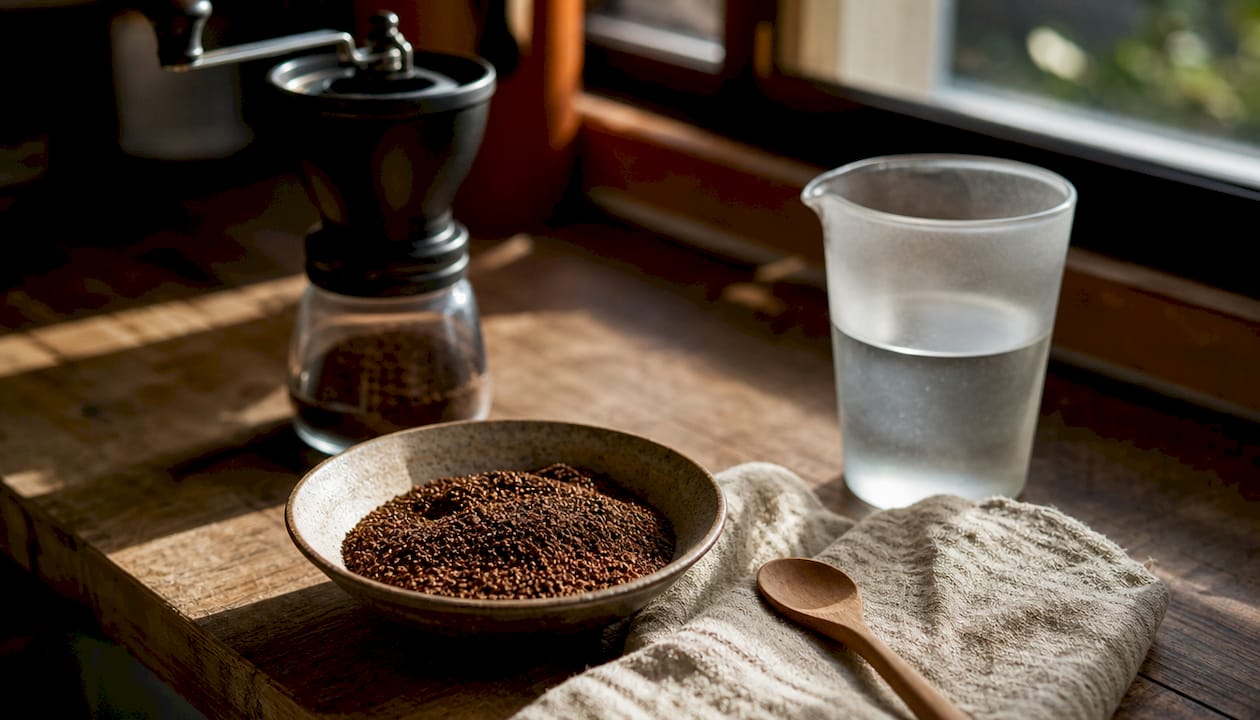
With a fine grind, cold water has 24 hours to pull every compound out of each tiny particle. The first compounds to extract are the desirable ones: sugars, fruity acids, and aromatic oils. But given enough time, water keeps pulling. It reaches the bitter tannins and chlorogenic acids that make coffee harsh. A coarse grind slows that process down by limiting surface area. Water extracts the good stuff and stops before the harsh compounds dominate.
Cold brew also reduces chlorogenic acid extraction by 60–70% compared to hot brewing. That reduction is a structural advantage of cold water. But it only holds when your grind is coarse enough to prevent over-extraction from undoing that chemistry.
Key extraction facts for cold brew:
- Particle size target: 800–1,400 microns for standard cold brew
- Extraction yield shift: Reducing grind size from 1,200 to 800 microns in a 16-hour brew increases extraction yield by 8% but raises bitter compounds by 40%
- Steep time window: 12–24 hours at refrigerator temperature (around 38–40°F)
- Flavor profile: Coarse grind highlights sweetness and smooth body while minimizing astringency
That 40% jump in bitter compounds from a seemingly small grind adjustment shows how unforgiving cold brew is. Grind size is the single most critical variable to control over-extraction in cold brew. No other factor has the same leverage.
What happens when you use the wrong grind size
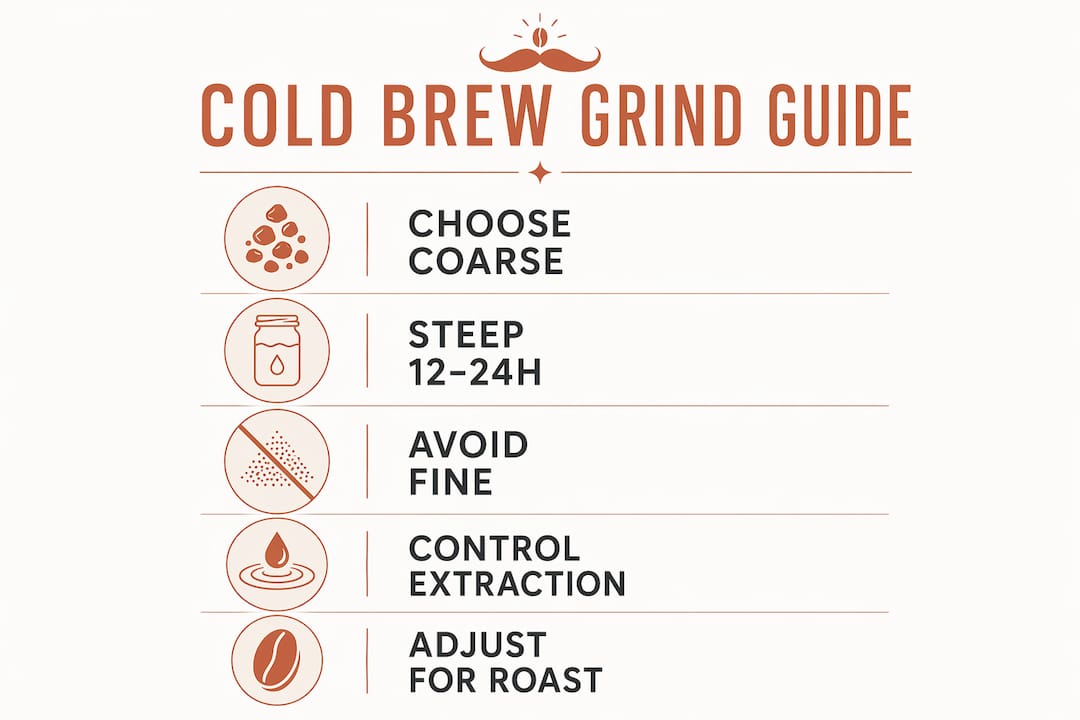
The problems from incorrect grind size fall into two categories: too fine and too coarse. Both ruin your batch, but in different ways.
Problems from grinding too fine
- Bitterness and astringency. Fine grind exposes more surface area, and over a 12–24 hour steep, water extracts bitter compounds for the entire duration. The result is a harsh, drying sensation at the back of your throat.
- Murky, gritty concentrate. Fine particles pass through most filters, including paper and metal mesh. Your cold brew ends up cloudy with a gritty texture that no amount of straining fully fixes.
- Filter clogging. Even particles that don’t pass through filters can pack tightly and slow or stop flow entirely. This is a common problem with finer grinds in concentrate preparation using a 1:4 to 1:5 coffee-to-water ratio.
- Uneven extraction from blade grinders. Blade grinders don’t grind. They chop. The result is a mix of large chunks and fine powder. The powder over-extracts and turns bitter. The chunks under-extract and stay sour. You get both problems in the same cup.
Pro Tip: If your cold brew tastes bitter and looks cloudy, the grind is almost certainly too fine. Start there before adjusting steep time or ratio.
Problems from grinding too coarse
Going too coarse creates the opposite problem. Excessively coarse particles prevent water from penetrating thoroughly even over 24 hours. The result is weak, sour, or flat cold brew that lacks sweetness and complexity. Under-extraction misses the sugars and aromatic compounds that make cold brew worth making. The sweet spot sits between these two failure modes, and finding it requires understanding your specific setup.
How to choose the right coarse grind for your setup
The right cold brew grind size is not a single fixed number. It shifts based on your steep time, roast level, bean origin, equipment, and even the temperature of your environment.
Grind size benchmarks
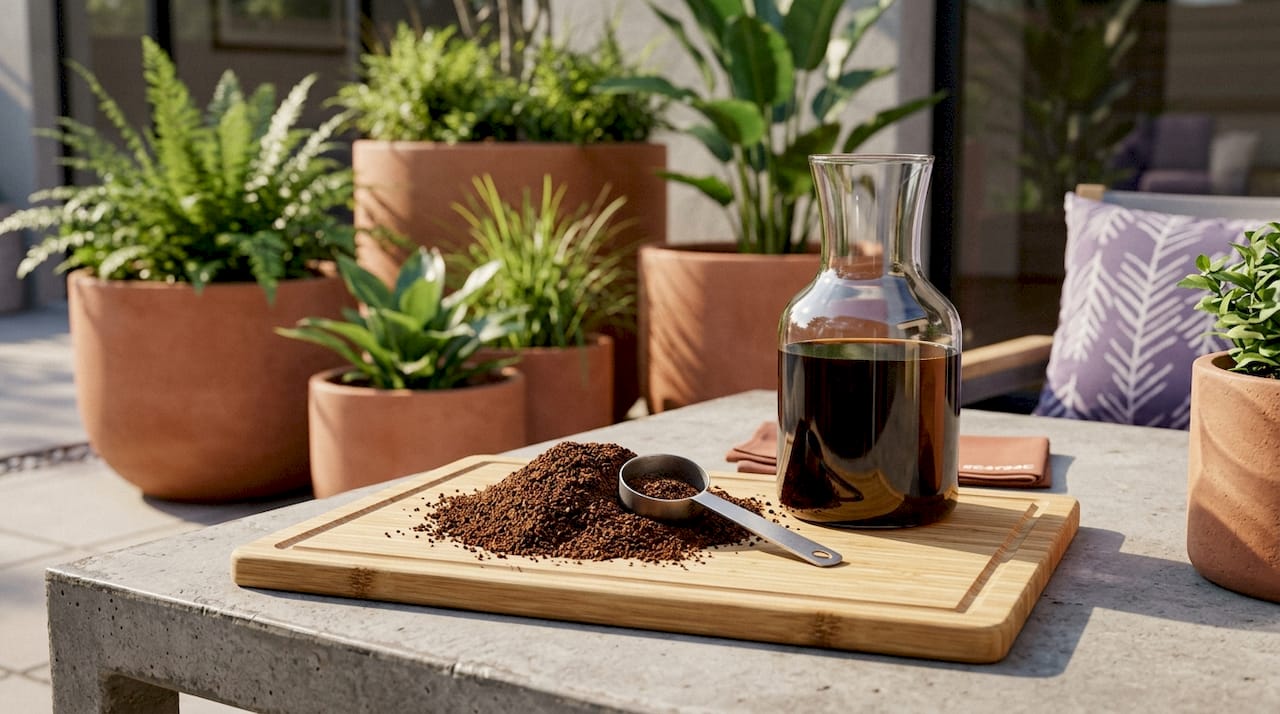
A useful visual benchmark for cold brew grind is coarse sea salt or rough breadcrumbs. Each particle should be clearly visible and distinct. If the grounds clump or feel powdery between your fingers, go coarser. If they feel like small pebbles with no fine dust, you’re in the right zone.
Adjusting for roast and origin
Lighter roasts need finer grinds or longer steep times because their denser cell structure resists extraction. A single-origin Ethiopian light roast from Moustachecoffeeclub, for example, will need either a slightly finer setting or a full 24-hour steep to develop its characteristic fruit and floral notes. A darker roast extracts faster, so you’d push coarser or shorten the steep. Moustachecoffeeclub’s light roast dialing guide covers this adjustment in detail.
Equipment matters more than most brewers realize
Burr grinders are necessary for cold brew. They cut coffee uniformly, producing consistent particle sizes that extract evenly. Blade grinders create a mix of boulders and fine dust. The fines dissolve rapidly and cause muddy, bitter cold brew regardless of how coarse your overall setting looks.
Environmental temperature adjustments
Warmer ambient temperatures accelerate extraction. If you’re brewing in a warm kitchen or during summer months, grind coarser or reduce steep time. Cold brew made at room temperature can finish in 8–12 hours, which means your grind needs to be coarser than a refrigerator brew to avoid over-extraction.
Pro Tip: Track your variables in a simple notebook. Write down grind setting, steep time, water temperature, and your tasting notes. After three or four batches, patterns emerge and you stop guessing.
Key adjustment guidelines:
- Longer steep time: go coarser
- Lighter roast: go slightly finer or extend steep
- Warmer temperature: go coarser or shorten steep
- Coffee-to-water ratio for concentrate: 1:4 to 1:5 by weight
- Coffee-to-water ratio for ready-to-drink: 1:8 by weight
For a full walkthrough of ratios and technique, Moustachecoffeeclub’s cold brew recipe guide covers every variable in one place.
How does cold brew grind compare to other brewing methods?
Cold brew grind size sits at the coarser end of the spectrum compared to every other common brewing method. The reason is always the same: contact time.
French press uses around 1,000–1,200 microns for a 4-minute brew. Cold brew uses 1,200–1,400 microns for a 12–24 hour brew. That extra coarseness compensates for the dramatically longer steep. Pour-over uses a medium grind around 500–700 microns because hot water extracts quickly and contact time is under 4 minutes. Espresso uses 200–400 microns because pressurized hot water extracts in under 30 seconds.
| Brewing method | Grind size (microns) | Contact time | Flavor profile |
|---|---|---|---|
| Espresso | 200–400 | 25–30 seconds | Intense, concentrated |
| Pour-over | 500–700 | 3–4 minutes | Bright, clean, nuanced |
| French press | 1,000–1,200 | 4 minutes | Full-bodied, rich |
| Cold brew | 1,200–1,400 | 12–24 hours | Smooth, sweet, low acid |
The relationship between grind size and steep time is logarithmic, not linear. Halving your grind size does not halve your extraction time. It accelerates extraction far more aggressively than that, which is why small grind adjustments in cold brew have outsized effects on bitterness. Understanding this non-linear relationship is what separates brewers who dial in their cold brew quickly from those who keep making the same bitter batch. You can read more about how brewing method shapes flavor across different techniques.
Key Takeaways
Coarse grind is the single most important variable in cold brew because it controls extraction rate across a 12–24 hour steep, determining whether your cup is smooth and sweet or bitter and murky.
| Point | Details |
|---|---|
| Target grind size | Aim for 1,200–1,400 microns, similar to coarse sea salt, for standard cold brew. |
| Bitterness risk is real | Dropping from 1,200 to 800 microns raises bitter compounds by 40% in a 16-hour brew. |
| Use a burr grinder | Blade grinders create fine dust that causes muddy, bitter concentrate regardless of setting. |
| Adjust for roast and temperature | Lighter roasts and warmer environments both require grind adjustments to avoid over-extraction. |
| Grind-time relationship is logarithmic | Small grind changes have large flavor effects; adjust one variable at a time. |
Sean’s take: the coarse grind is where cold brew begins and ends
Every time I see someone troubleshoot bitter cold brew by adjusting steep time or water ratio first, I want to hand them a burr grinder. The grind is almost always the problem. Steep time and ratio are secondary levers. They matter, but they can’t fix what a wrong grind breaks.
What I’ve learned from years of cold brewing is that consistency beats perfection. A repeatable coarse grind on a quality burr grinder, steeped for the same time at the same temperature, gives you a baseline you can actually improve. Chasing the “perfect” grind setting while changing three variables at once just creates confusion.
The other thing most guides understate: single-origin beans respond differently. An Ethiopian natural process coffee from Moustachecoffeeclub brews very differently from a Colombian washed coffee at the same grind setting. The natural process bean has more soluble compounds and extracts faster. You’ll want to go slightly coarser or pull it at 16 hours instead of 24. That kind of nuance only comes from paying attention to your specific beans, not just following a generic setting.
My honest advice: start at 1,200 microns, steep for 18 hours in the refrigerator, and taste. Then adjust one variable. Write it down. Cold brew rewards the brewers who treat it like a repeatable process, not a guessing game. You can master cold brew at home with a few focused batches and a willingness to track what you’re doing.
— Sean
Fresh beans make every grind setting work harder
The best grind technique in the world can’t rescue stale coffee. Cold brew’s long extraction time amplifies every quality signal in your beans, including staleness.

Moustachecoffeeclub sources ultra-light, single-origin specialty coffees from Ethiopia, Colombia, and other top-producing regions, roasted to order and shipped fresh. When you grind those beans coarse and steep them cold, you get the clean sweetness and smooth body that cold brew is supposed to deliver. A specialty coffee subscription from Moustachecoffeeclub means you always have freshly roasted beans on hand, ground to your spec, ready for your next cold brew batch. Fresh beans, the right grind, and a consistent process are the three things that separate good cold brew from great cold brew.
FAQ
What is the best grind size for cold brew?
The best grind size for cold brew is 1,200–1,400 microns, roughly the texture of coarse sea salt. This range slows extraction during the 12–24 hour steep and prevents bitterness.
Why does cold brew need a coarser grind than French press?
Cold brew steeps for 12–24 hours versus French press’s 4 minutes, so it needs a coarser grind to prevent over-extraction. French press uses around 1,000–1,200 microns; cold brew uses 1,200–1,400 microns.
Can I use a blade grinder for cold brew?
Blade grinders are not recommended for cold brew. They produce inconsistent particle sizes, including fine dust that causes muddy, bitter concentrate regardless of how coarse the overall setting appears.
What happens if my cold brew grind is too fine?
A grind that’s too fine causes over-extraction, bitterness, astringency, and murky concentrate with gritty sediment. Dropping from 1,200 to 800 microns in a 16-hour brew raises bitter compounds by 40%.
Does roast level affect the right cold brew grind size?
Lighter roasts have denser cell structures and extract more slowly, so they benefit from a slightly finer grind or a longer steep time. Darker roasts extract faster and generally need a coarser setting or a shorter steep.
Recommended
- How to Make Cold Brew Coffee | Easy Recipe & Ratio | Moustache Coffee Club
- How To Brew Pour Over Coffee | Step-by-Step Guide | Moustache Coffee Club
- How Brewing Method Affects Specialty Coffee Flavor | Blog | The Moustache Coffee Club
- Coffee Education Hub | Ultra-Light Nordic-Style Brewing Guides & Origins | Moustache Coffee Club