Why Ultra Light Roast Preserves Flavor: The Science Explained
Ultra light roast preserves coffee’s natural flavor because it stops the roasting process before the heat-driven chemical reactions that create roast-derived tastes can dominate. The result is a cup that tastes like the bean’s origin — its soil, altitude, and processing — rather than the roaster’s drum. Here is what that means in practice:
- Chlorogenic acids (CGAs) stay intact. Light roast preserves 60–70% of chlorogenic acids, the compounds most responsible for brightness and complexity. Dark roasts retain only about 10%.
- Volatile aromatics survive. Compounds like linalool and citral, which carry floral and citrus notes, degrade at higher roasting temperatures, so ultra light roasting stays below that threshold.
- The Maillard reaction is curtailed early. It begins around 150°C but is cut short before it generates the roasted, nutty, and bitter flavors that define darker profiles.
- Caramelization is minimal. Sucrose begins to caramelize around 170°C. Ultra light roasting limits this, keeping the bean’s original sweetness without introducing bitterness.
- Caffeine is largely stable. Unlike chlorogenic acids, caffeine is thermally resistant across all roast levels, so caffeine content stays comparable regardless of roast depth.
The flavor payoff: fruitiness, florals, bright acidity, and terroir-specific complexity that darker roasts simply cannot show you.
Table of Contents
- What exactly is ultra light roast coffee?
- How does ultra light roast compare to other roast levels?
- The chemistry behind why ultra light roast preserves flavor
- How ultra light roast affects your brewing and taste experience
- What Moustachecoffeeclub’s approach reveals about ultra light roasting
- How to evaluate the preserved flavors in an ultra light roast cup
- Moustachecoffeeclub delivers ultra light roast the way it should taste
- FAQ
- Key Takeaways
What exactly is ultra light roast coffee?
Ultra light roast sits at the far cool end of the roasting spectrum. Beans are pulled from heat shortly after they begin to dry out and just before or at the very start of first crack, the audible pop that signals the bean’s cell structure is breaking down under pressure. In temperature terms, that typically means finishing below 195°C (383°F), compared to medium roasts that push past 210°C and dark roasts that can reach 230°C or higher.
Visually, the beans are pale tan to light brown with no surface oil. They expand less than darker-roasted beans because the cellular structure has not fully ruptured. Grind them and the dry, almost chalky texture is immediately obvious.
Sensorially, ultra light roast delivers:
- High, juicy acidity — the organic acids formed during the bean’s growth are preserved rather than degraded
- Floral and fruit-forward aromatics — jasmine, bergamot, stone fruit, citrus zest
- Light, tea-like body — less viscosity than medium or dark
- Minimal bitterness — pyrazines and other bitter roast compounds have barely formed
- Terroir transparency — you taste the farm, not the drum
Within the broader roast spectrum, ultra light sits at the cooler end just before or at the start of first crack, whereas standard light roast is pulled just after first crack. That narrow gap makes an enormous difference in the cup.
How does ultra light roast compare to other roast levels?
Roast level is the single biggest variable in how a coffee tastes, more so than brewing method or even bean variety. The table below maps the key sensory and chemical differences across the spectrum.
| Roast Level | Temperature Range | Acidity | Body | Bitterness | Aroma Character | Origin Transparency |
|---|---|---|---|---|---|---|
| Ultra Light | Below ~195°C | Very high | Very light | Very low | Floral, citrus, fruit | Highest |
| Light | 195–205°C | High | Light | Low | Fruit, floral, bright | High |
| Medium | 205°C | Moderate | Medium | Moderate | Caramel, nut, mild fruit | Moderate |
| Dark | 230°C or higher | Low | Full | High | Smoke, chocolate, roast | Low |
Light roasts stopped shortly after first crack show bright, juicy acidity and fruit-floral aromas, while dark roasts produce muted acidity and roast-dominant flavors. The shift is not just sensory — it is chemical. As roasting progresses, the flavor profile moves from origin-driven to roast-driven. The farmer and the terroir are the artists in a light cup; the roaster’s process becomes the dominant voice in a dark one.
Ultra light roast takes origin transparency to its logical extreme. Specialty roasters often choose light profiles for exceptional single origins precisely because a distinctive terroir deserves to be heard, not buried under caramelization and smoke.
The chemistry behind why ultra light roast preserves flavor
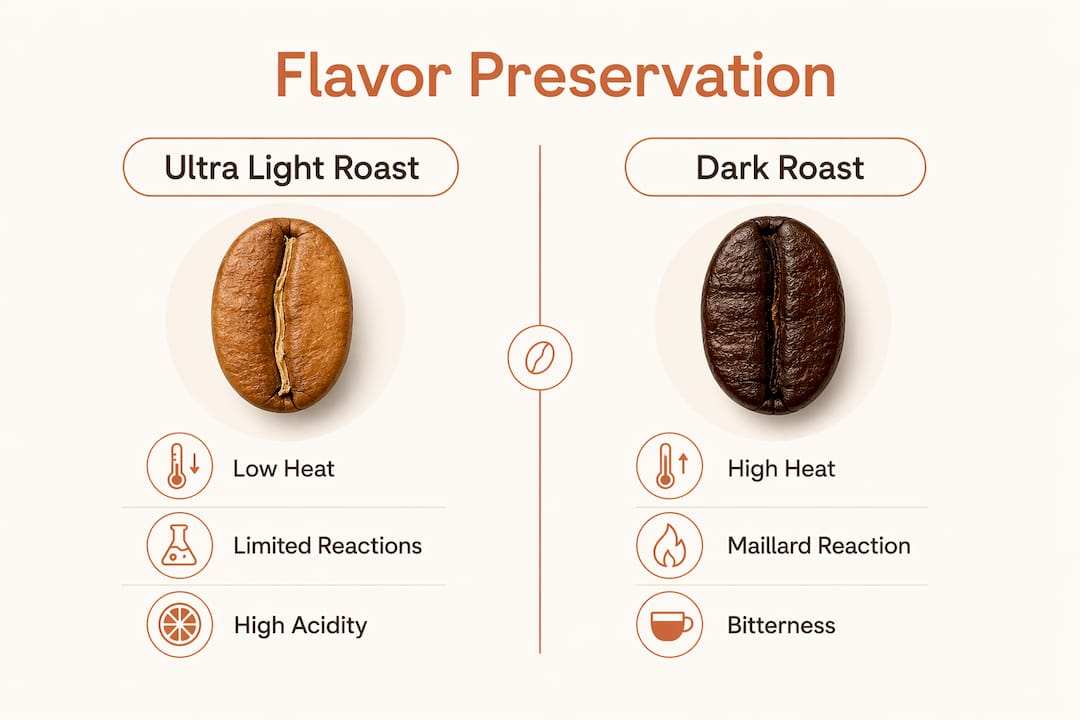
Three major reactions drive flavor development during roasting. Ultra light roasting limits all three.
The Maillard reaction is the most complex. It begins around 150°C when amino acids and reducing sugars react to form hundreds of new aromatic compounds — pyrazines, furans, pyridines — responsible for roasted, nutty, and caramel-like flavors. Limiting this reaction in ultra light roasting keeps the raw bean’s fruit-forward markers prominent instead of burying them under roast-derived notes. Research on roasting conditions confirms that pyrazine concentrations increase dramatically at higher temperatures (around 210°C), and these compounds carry distinctly roasted and bitter odors.
Caramelization starts when sucrose breaks down around 170°C, producing maltol and furanones that add sweetness and caramel character. Ultra light roasting limits this process, which sounds counterintuitive — less caramelization means less sweetness, right? Not exactly. The bean’s original sugars remain largely intact, delivering a cleaner, more delicate sweetness than the heavier caramel notes of a medium roast.
Pyrolysis is the high-heat breakdown of organic molecules that produces the smoky, bitter, and carbon-like flavors of dark roasts. Ultra light roasting never gets close to the temperatures where pyrolysis dominates.
The compounds that survive this restrained process are the ones that make ultra light roast so distinctive:
- Chlorogenic acids (CGAs): Preserved at 60–70% in light roasts versus roughly 10% in dark roasts. These drive brightness, complexity, and a significant portion of coffee’s antioxidant activity.
- Linalool and citral: Thermally fragile volatile compounds that degrade above 210°C. They carry floral (linalool) and citrus (citral) character directly into the cup.
- Organic acids: Malic, citric, and tartaric acids formed during the bean’s growth remain largely intact, contributing to the bright, wine-like acidity ultra light roast is known for.
| Compound | Role in Flavor | Behavior in Ultra Light Roast | Behavior in Dark Roast |
|---|---|---|---|
| Chlorogenic acids | Acidity, complexity | 60–70% retained | ~10% retained |
| Linalool | Floral notes | Preserved (below degradation threshold) | Largely degraded |
| Citral | Citrus notes | Preserved | Largely degraded |
| Sucrose | Sweetness | Minimal caramelization | Fully caramelized/degraded |
| Pyrazines | Roasted, nutty, bitter | Minimal formation | High concentration |
Understanding how roasting changes coffee chemistry at each temperature stage is what separates a roaster who can consistently produce an expressive ultra light cup from one who just pulls the beans early and hopes for the best.
How ultra light roast affects your brewing and taste experience
Ultra light roast demands more from the brewer. The same extraction parameters that work beautifully on a medium roast will often produce a sour, thin, or grassy cup from an ultra light bean. The bean’s denser structure and higher acid content require adjustments.
Preferred brewing methods for ultra light roast:
- Pour-over (V60, Chemex, Kalita Wave): The slow, controlled extraction highlights the delicate aromatics and allows the full acidity to develop cleanly.
- AeroPress with longer steep times: Adds body to compensate for the naturally light mouthfeel.
- Filter/drip at slightly higher temperatures: Ultra light beans benefit from water closer to 96–98°C (205–208°F) to achieve full extraction.
Typical flavor notes you can expect in the cup: bergamot, jasmine, peach, apricot, red currant, lemon zest, hibiscus, and green apple. The specific notes depend heavily on origin — an Ethiopian Yirgacheffe ultra light will taste nothing like a Colombian Huila at the same roast level.
Pro Tip: When dialing in an ultra light roast on pour-over, grind finer than you think you need and slow your pour rate. Ultra light beans are denser and resist extraction; a coarser grind at standard pour speed almost always produces underextraction, which reads as sharp sourness rather than bright acidity.
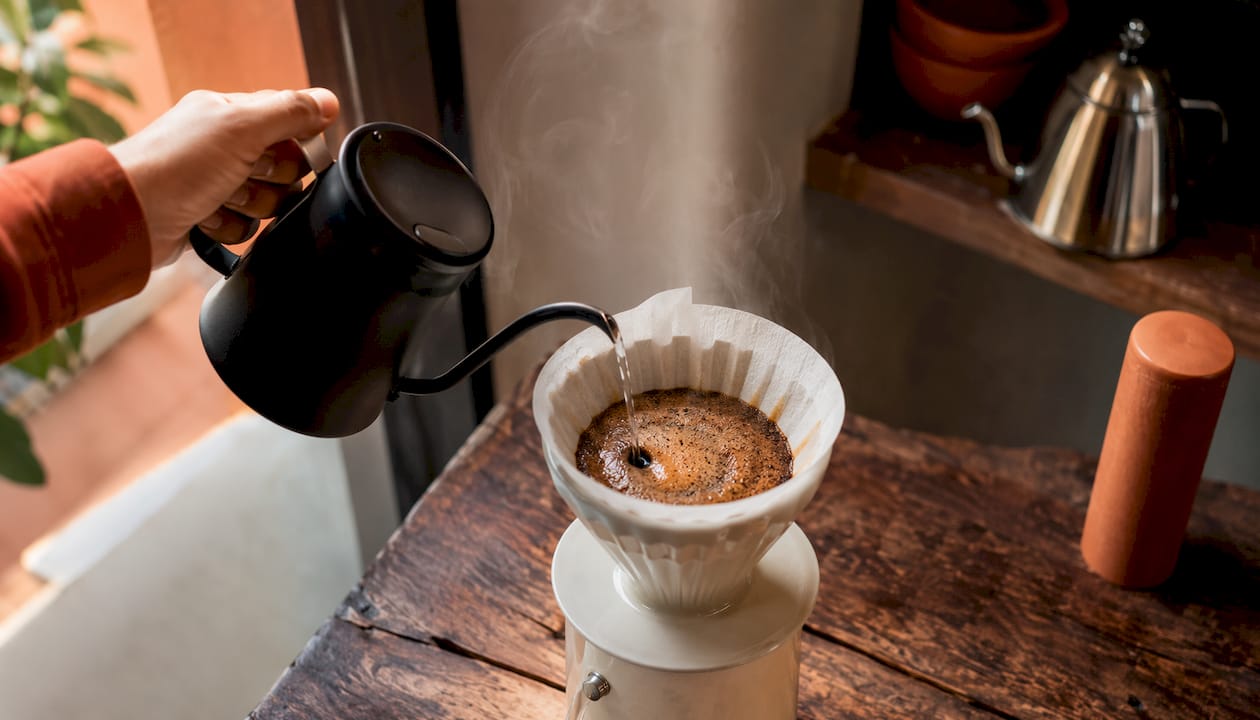
The biggest challenge with ultra light roasting is the narrow margin between underextracted (sour, thin, grassy) and properly extracted (bright, complex, sweet). Dialing in light roast coffee takes more patience than medium or dark, but the payoff is a cup that no other roast level can replicate. For a broader look at which methods suit these beans, the light roast brewing methods guide covers the full range of options for home baristas.
What Moustachecoffeeclub’s approach reveals about ultra light roasting
Moustachecoffeeclub built its entire model around the Nordic roasting philosophy, which treats ultra light roasting not as a trend but as an ethical and economic commitment. The reasoning is direct: if you source a single-origin bean from a high-altitude Ethiopian farm or a Colombian micro-lot at a premium price, roasting it dark is a waste of what you paid for. The terroir, the farmer’s processing decisions, the altitude — all of it disappears under smoke and caramel.
This philosophy shapes every decision Moustachecoffeeclub makes, from bean selection to roast profile to the education resources it publishes. A few principles worth noting:
- Precision over convenience. Ultra light roasting demands surgical precision — there is no margin for error. Defects in bean quality or roasting technique that a dark roast would mask become fully audible in an ultra light cup. Sourcing exceptional green coffee is not optional; it is the foundation.
- Origin transparency as a value. Ultra light roasting is an expression of respect for the supply chain. When the cup tastes like the farm, the farmer’s work is visible. That is the point.
- Education as part of the product. Understanding why coffee has fruity tasting notes or why freshly roasted beans taste better is not supplementary — it is what allows a home brewer to actually taste what the roaster intended.
For home brewers wanting to go deeper, the best coffee brewing techniques resource covers practical preparation methods that complement ultra light roast profiles well.
The economic rationale matters too. Ultra light roasting reflects a philosophy that premium single-origin beans deserve a roast style that justifies their cost — to the farmer, to the roaster, and to the person drinking the cup.
How to evaluate the preserved flavors in an ultra light roast cup
Tasting an ultra light roast well is a skill. The flavors are subtle, layered, and time-sensitive in a way that darker roasts are not. Here is how to approach it.
Start with aroma before you brew. Grind a small amount and smell the grounds immediately. Ultra light roast grounds often smell floral, fruity, or even tea-like. If you get a sharp, vegetal, or hay-like smell, the beans may be underroasted or stale.
Taste in stages as the cup cools. Ultra light roast coffee changes dramatically between 70°C and 40°C. At high temperature, acidity dominates. As it cools, sweetness and fruit complexity emerge. Many of the most interesting flavors in an ultra light cup only appear once the temperature drops below 55°C.
Use the SCA flavor wheel as a reference. The Specialty Coffee Association’s flavor wheel maps the descriptors most common in specialty coffee, from fruity and floral at the lighter end to roasty and smoky at the darker end. Tasting with this framework trains your palate to identify specific preserved compounds rather than just registering “bright” or “acidic.”
Distinguish acidity from sourness. This is the most common confusion among new ultra light drinkers. Acidity is pleasant, juicy, and complex — think of biting into a ripe peach. Sourness is sharp, one-dimensional, and unpleasant. If your cup tastes sour, the issue is underextraction, not the roast level itself.
Assess body and finish. Ultra light roast has a light, almost silky body. The finish should be clean and lingering, with fruit or floral notes that persist for several seconds. A short, flat finish often signals underextraction or stale beans.
Moustachecoffeeclub delivers ultra light roast the way it should taste
Most coffee subscriptions default to medium or dark roasts because they are forgiving to brew and broadly familiar. Moustachecoffeeclub takes the opposite position: every coffee in the subscription is roasted to an ultra light, Nordic-style profile, roasted to order, and shipped fresh so the volatile aromatics that make these beans worth drinking are still intact when they reach you.
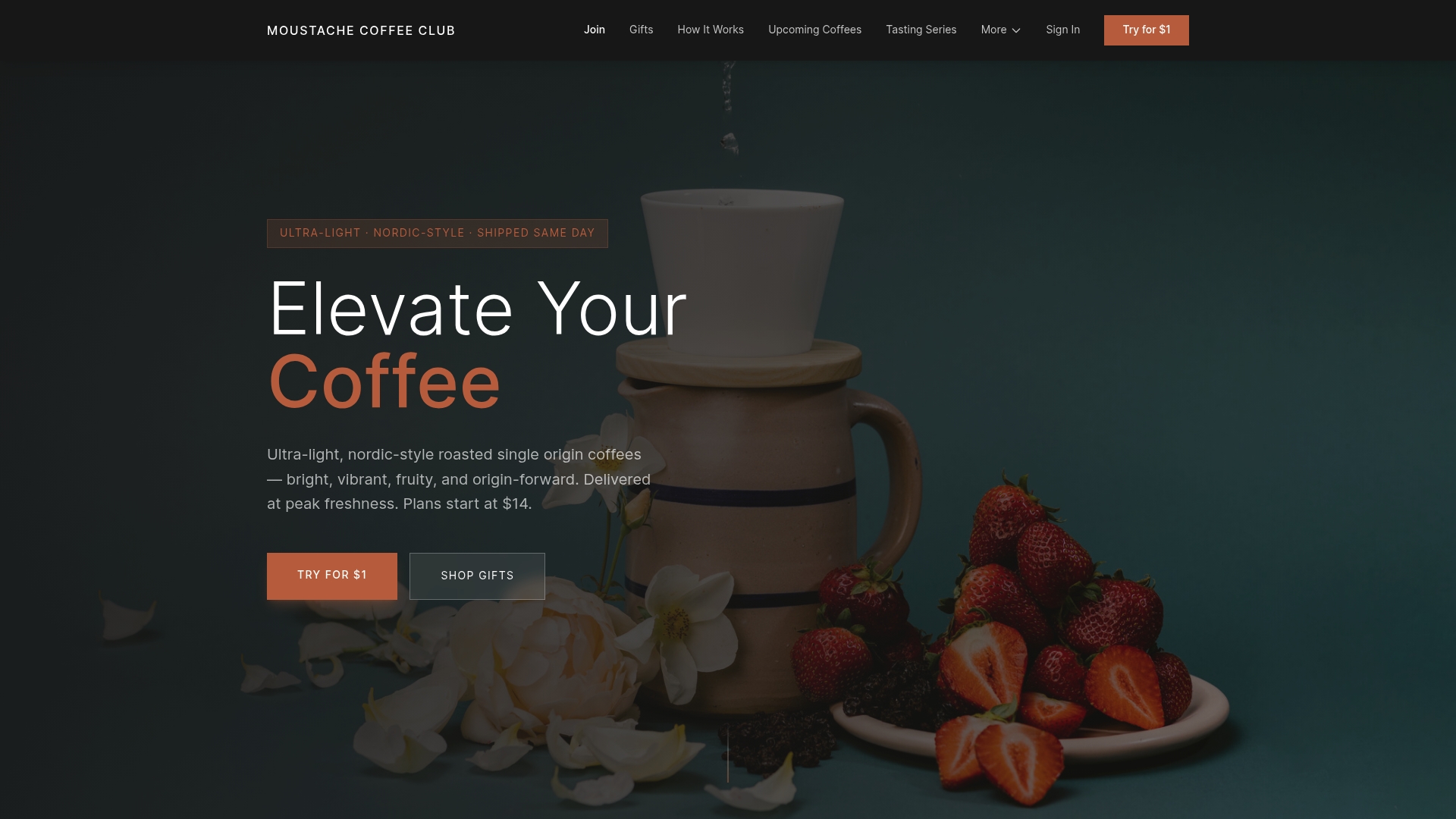
The subscription is built around single-origin beans from Ethiopia, Colombia, and other high-quality growing regions, selected specifically because their terroir is worth preserving. You get origin reports, brewing guides, and the option to give feedback so each shipment gets closer to what your palate actually wants. No filler blends, no dark-roasted commodity coffee dressed up with specialty marketing.
If this article has convinced you that the flavor you have been missing is in the bean, not the brew method, the next step is straightforward: start a subscription and taste what ultra light roasting actually does when it is done right.
FAQ
Why does light roast taste better to specialty coffee drinkers?
Light roast preserves the origin character of the bean — its terroir, processing, and varietal traits — rather than replacing those flavors with roast-derived notes. Specialty coffee drinkers tend to value that transparency because it reflects the actual quality of the green coffee.
What are the drawbacks of ultra light roast coffee?
Ultra light roast is sensitive to extraction errors and requires precise brewing parameters; underextraction produces sharp sourness rather than bright acidity. The roasting process itself also leaves no room for error, meaning bean quality defects that darker roasts would mask become fully apparent in the cup.
Which roast level has the most natural coffee flavor?
Ultra light and light roasts retain the most origin-driven flavor because they preserve 60–70% of chlorogenic acids, volatile aromatics like linalool and citral, and the organic acids formed during the bean’s growth. Dark roasts retain only about 10% of chlorogenic acids and replace these origin compounds with roast-derived notes.
What are the four main enemies of coffee freshness?
The four main enemies of coffee freshness are oxygen, moisture, heat, and light. All four accelerate the degradation of the volatile aromatic compounds that ultra light roast works so hard to preserve, which is why freshness at the point of brewing matters as much as roast level.
Does ultra light roast have more caffeine than dark roast?
Caffeine is thermally stable across all roast levels, so the difference is negligible by weight. By volume, lighter roasts are slightly denser, meaning a scoop of ultra light beans contains marginally more caffeine than the same scoop of dark roast — but the difference is minor in practice.
Key Takeaways
Ultra light roast preserves flavor by limiting heat exposure to retain chlorogenic acids, volatile aromatics, and origin-specific compounds before roast-driven reactions can dominate.
| Point | Details |
|---|---|
| Chlorogenic acid retention | Light roasts preserve 60–70% of chlorogenic acids versus roughly 10% in dark roasts. |
| Volatile compound survival | Linalool and citral degrade above 210°C; ultra light roasting stays below this threshold to keep floral and citrus notes intact. |
| Maillard reaction control | Curtailing the Maillard reaction early prevents roasted, nutty, and bitter pyrazines from masking origin flavors. |
| Brewing precision required | Ultra light roast demands finer grind, higher brew temperature, and slower extraction to avoid sourness from underextraction. |
| Moustachecoffeeclub’s approach | Moustachecoffeeclub roasts single-origin beans to Nordic-style ultra light profiles, shipped fresh to preserve the volatile aromatics the roast is designed to retain. |
Recommended
- Why freshly roasted beans taste better: a guide | Blog | The Moustache Coffee Club
- Why Light Roast Has More Caffeine: The Real Truth | Blog | The Moustache Coffee Club
- How Roasting Changes Coffee Chemistry: A Science Guide | Blog | The Moustache Coffee Club
- How to Dial In Light Roast Coffee for Home Baristas | Blog | The Moustache Coffee Club


