Coffee au Lait: What It Is and How to Make It
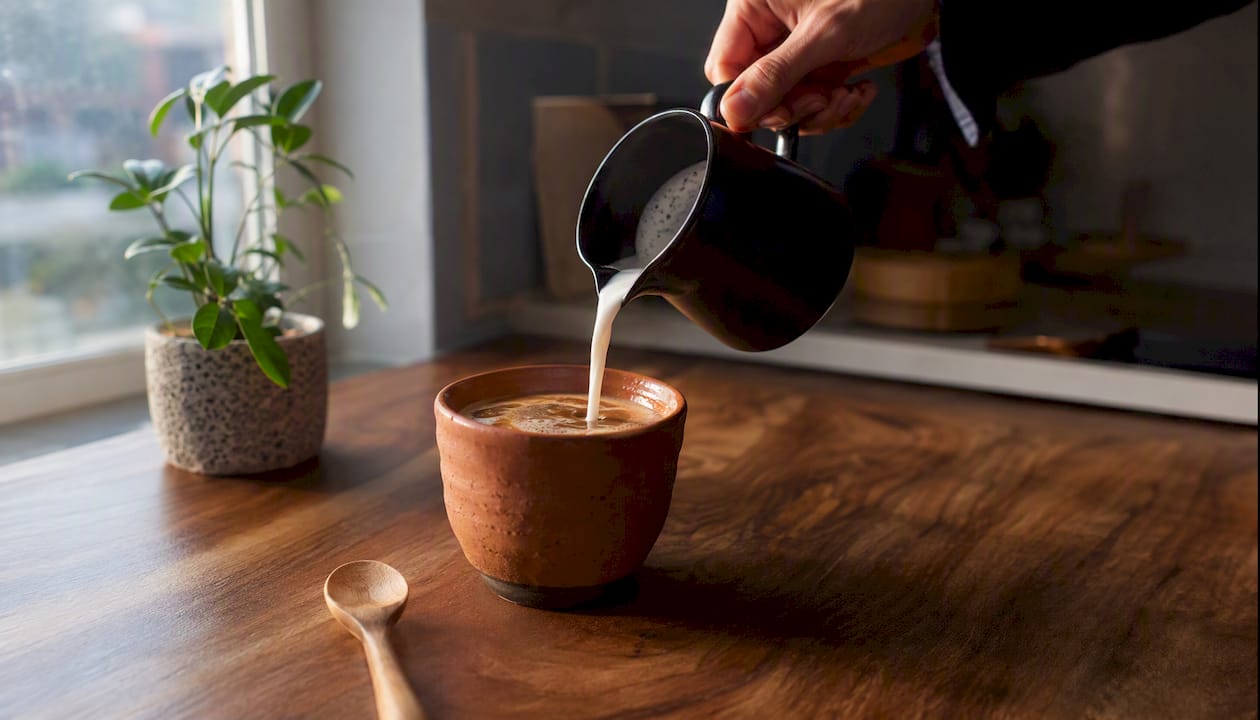
Coffee au lait is brewed coffee mixed with hot milk, usually in equal parts. Say it as kah-FAY oh LAY, and you have already outpaced most people who order it. In IPA, that is /kafe o lɛ/, and the literal translation from French is exactly what it sounds like: coffee with milk.
The classic ratio is 1:1, brewed coffee to hot milk, though home cooks and cafés both bend that rule depending on how strong or milky they like their morning cup. Moustachecoffeeclub sees this drink as one of the easiest ways for a home brewer to get café-quality results without an espresso machine, and the rest of this guide covers exactly how to make one, where it came from, and how it stacks up against a latte or cappuccino.
Key Takeaways
A coffee au lait is brewed coffee and hot milk combined in roughly equal parts, and the coffee’s quality matters as much as the milk technique.
| Point | Details |
|---|---|
| Definition and ratio | Brewed coffee plus hot milk, typically 1:1, no espresso involved. |
| Recipe memory aid | Brew strong, heat milk to about 150°F, pour and combine. |
| Best equipment fit | Pick coffee au lait over a latte if you lack an espresso machine but still want milk coffee. |
| Regional variety | New Orleans uses chicory and scalded milk; café con leche and milchkaffee use local coffee bases. |
| Bean choice matters | A single-origin, ultra-light roast from Moustachecoffeeclub holds its flavor through a 1:1 milk pour better than a generic dark roast. |
Table of Contents
- What Goes Into a Coffee au Lait and How the Ratio Changes It
- How to Make a Basic Coffee au Lait at Home
- How Does Brewing Method Change a Coffee au Lait?
- Regional Names and Variations Worth Knowing
- Coffee au Lait vs Latte vs Cappuccino: What’s the Difference?
- Troubleshooting Your Coffee au Lait
- Where Coffee au Lait Actually Came From
- How Do You Pronounce Coffee au Lait?
- Why Coffee au Lait Deserves a Spot in Your Morning Rotation
- Better Beans Make a Better Coffee au Lait
- Sources
- FAQ
What Goes Into a Coffee au Lait and How the Ratio Changes It
A coffee au lait needs exactly two components: brewed coffee and hot milk. That simplicity is the whole point. There is no espresso, no pressurized shot, no steam wand required, just strong coffee and milk heated until it is warm enough to matter but not so hot it scorches.
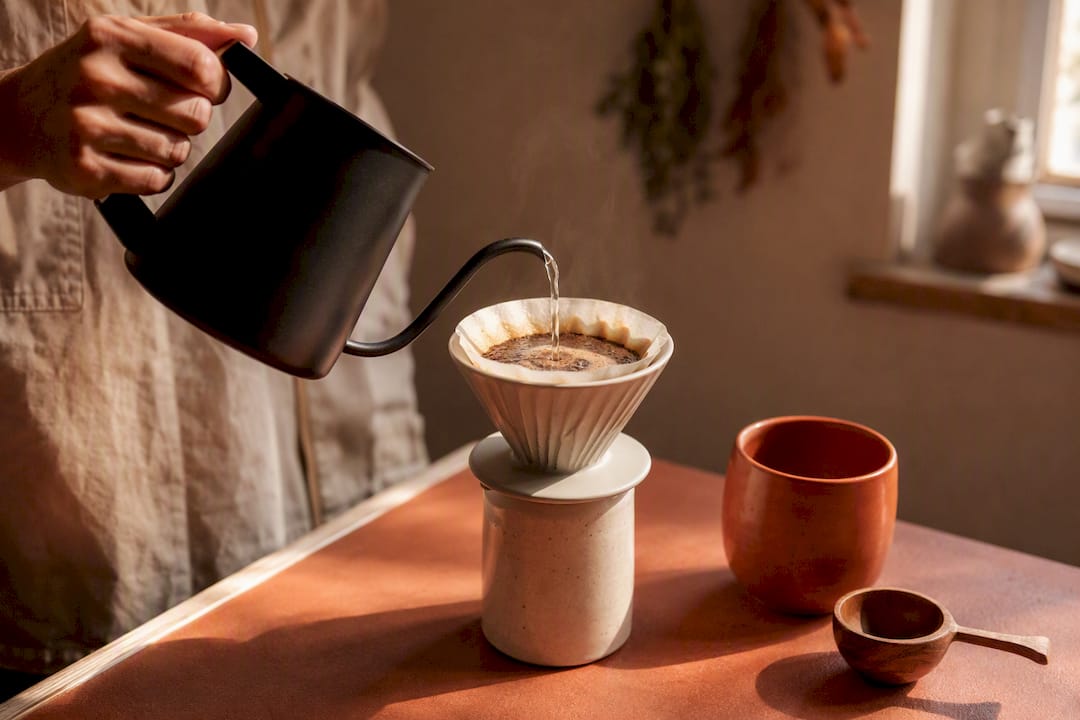
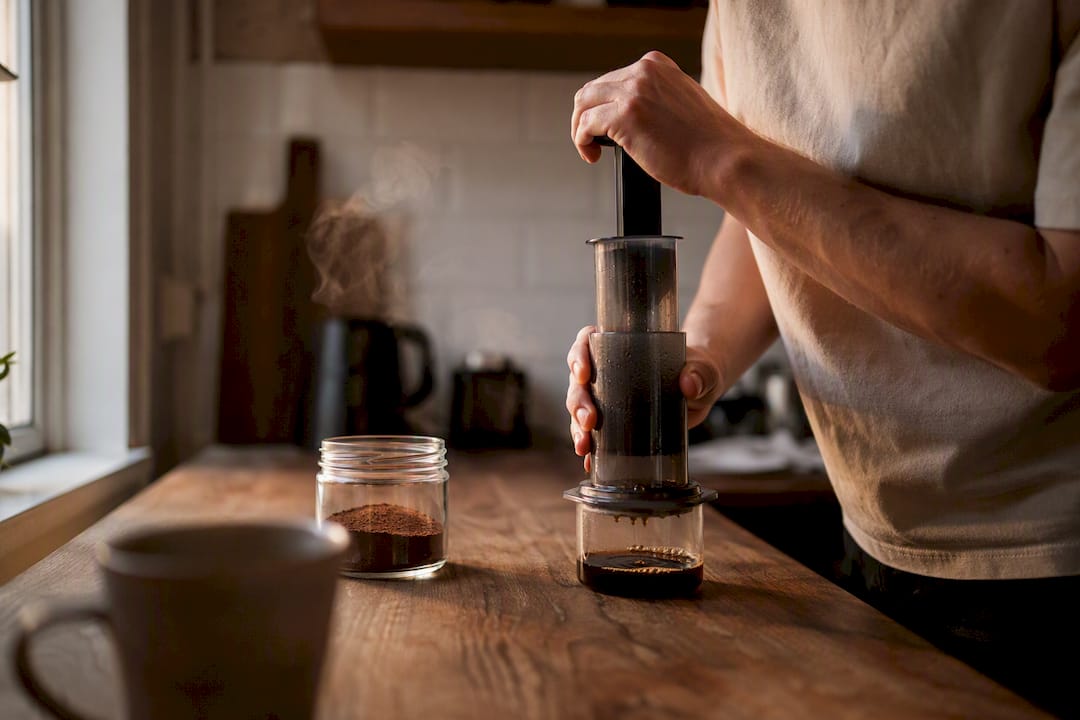
The coffee side usually comes from a drip machine, a pour-over cone, or a French press, brewed at normal or slightly stronger strength. The milk side gets warmed on the stovetop, in a microwave, or with a frother, and it does not need the microfoam a latte demands.
- Coffee base: drip, pour-over, or French press, brewed hot and reasonably strong.
- Milk: whole milk is traditional, but oat, almond, and 2% all work with adjustments to texture and sweetness.
- Ratio: 1:1 is the benchmark; a milkier version runs closer to 1:2, while a bolder cup pushes toward 2:1 coffee to milk.
- Optional additions: sugar, cinnamon, or in the New Orleans tradition, chicory blended into the coffee itself.
Fat content changes the mouthfeel more than most people expect. Whole milk gives you body and a faint sweetness from the natural lactose; skim milk thins the drink out considerably. Oat milk froths well and adds its own mild sweetness, but it can separate or curdle if the coffee is too acidic or too hot, so keep the temperature moderate.
Pro Tip: If you’re using a plant milk that tends to split, add the milk to the coffee rather than the coffee to the milk. The gradual mix reduces the acid shock that causes curdling.
A coffee au lait made with whole milk runs roughly 90 to 100 calories per 12-ounce serving, which is lean compared to a flavored latte loaded with syrup. Swap in a lower-fat milk and that number drops further, though you also lose some of the richness that makes the drink feel indulgent.
How to Make a Basic Coffee au Lait at Home
Here is a standard recipe scaled to a 12-ounce mug, the kind of size most people actually drink from in the morning.
Ingredients:
- 6 oz strong brewed coffee (drip, pour-over, or French press)
- 6 oz whole milk (or your preferred milk)
- Sugar or sweetener, optional
Steps:
- Brew your coffee slightly stronger than usual, since it will be diluted by an equal amount of milk. A finer grind or a higher coffee-to-water ratio both work.
- While the coffee brews, pour the milk into a small saucepan and heat over medium-low, stirring occasionally.
- Watch the milk closely and pull it off the heat around 150°F, well before it simmers or boils. Boiling milk scorches it and kills the natural sweetness.
- Pour the hot coffee and hot milk into your mug at roughly the same time, or pour the milk in right after the coffee. Either method produces the same drink.
- Stir once, taste, and adjust the ratio if you want it stronger or milkier.
For an oat milk version, heat a touch more gently since plant milks scorch faster than dairy. For the New Orleans style, use a coffee blended with chicory and scald the milk rather than just warming it, which gives a slightly different, almost caramelized flavor. If you own a milk frother, use it in place of the saucepan for a bit of extra texture without going full latte foam.
How Does Brewing Method Change a Coffee au Lait?
The coffee half of this drink does more work than people give it credit for, since it makes up half the final cup by volume. A weak or thin brew disappears the moment milk hits it, which is why brewing stronger than usual is one of the most reliable fixes home baristas rely on.
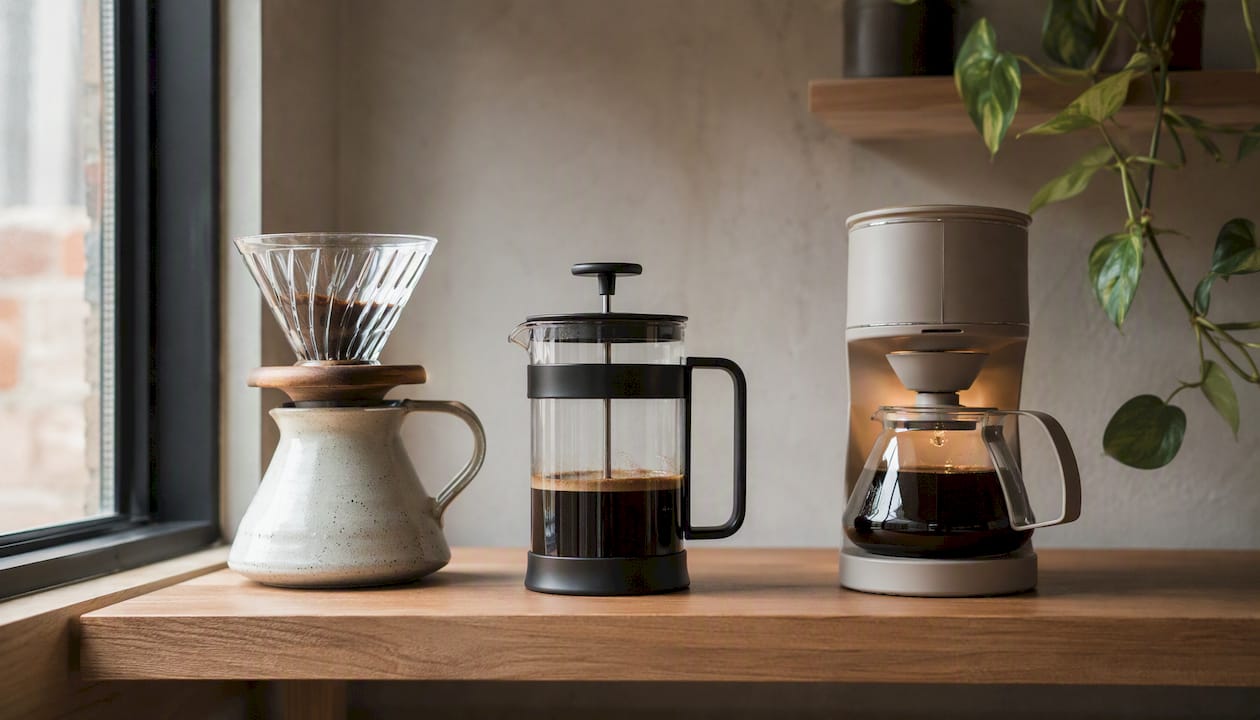
French press delivers the fullest body and the most texture, thanks to the oils that a paper filter would normally trap. Pour-over gives a cleaner, brighter cup that lets a single-origin coffee’s acidity and fruit notes show through, even under milk. Straight drip sits in the middle: convenient, consistent, but usually needing an extra scoop of grounds to hold up against 6 ounces of milk.
Milk technique matters just as much as the coffee side.
| Milk technique | Method | Texture result | Best paired with |
|---|---|---|---|
| Heated (stovetop) | Warm to ~150°F, stir occasionally | Smooth, no foam | Everyday drip or pour-over base |
| Steamed (steam wand) | Espresso machine steam wand | Light microfoam, silky | French press or bold pour-over |
| Scalded | Heated just below boiling, then cooled slightly | Denser, slightly sweeter | Chicory coffee, New Orleans style |
| Frothed (electric) | Handheld or electric frother | Airy, light foam | Any brewed base, especially oat milk |
A handheld or countertop electric frother gives you something close to steamed milk texture without owning an espresso machine, and it takes up far less counter space than a steam wand setup. If you already brew with a pour-over method, pairing it with a frothed milk finish gets you close to café-style results at home.
Pro Tip: To make brewed coffee stand up to an equal pour of milk, increase your dose by about 10 to 15%, or grind slightly finer than you normally would for black coffee. The goal is a concentrate, not your usual cup.
Regional Names and Variations Worth Knowing
Coffee au lait has cousins all over the world, and most of them are the same basic idea with a local accent.
- New Orleans style: brewed coffee blended with chicory root, paired with scalded milk. The chicory tradition dates to Civil War-era supply shortages, when coffee imports were cut off and chicory root stretched limited supplies. It stuck around because people liked the slightly woody, bittersweet flavor it adds.
- Café con leche: the Spanish and Latin American version, typically made with strong espresso or moka pot coffee rather than drip, and often sweetened before serving.
- Café com leite: the Portuguese and Brazilian equivalent, similar in spirit but frequently made milkier and served at breakfast.
- Milchkaffee: the German version, generally closer to a 1:1 ratio and served in a large cup rather than a bowl.
New England has its own distant relative worth a mention: coffee milk, Rhode Island’s official state drink, made with coffee-flavored syrup stirred into milk rather than brewed coffee. It shares a name family with coffee au lait but nothing else, since there is no actual brewed coffee involved.
Café du Monde in New Orleans remains the most famous single venue associated with the chicory version, serving it alongside beignets since 1862. You do not need a trip to Louisiana to replicate the drink, though scalding your milk gets you most of the way to that same dense, slightly sweet texture the New Orleans style is known for.
Coffee au Lait vs Latte vs Cappuccino: What’s the Difference?
The biggest distinction is the coffee base itself. Coffee au lait uses brewed coffee, drip, pour-over, or French press, while a latte and cappuccino both start with espresso. That single difference changes everything downstream: strength, texture, and how much milk the drink can hold before it tastes like flavored milk.
| Drink | Coffee base | Milk ratio | Foam | Typical size | Flavor profile |
|---|---|---|---|---|---|
| Coffee au lait | Brewed coffee | ~1:1 | Little to none | 8 to 12 oz | Mellow, milk-forward, no bitterness edge |
| Latte | Espresso | 1:3 or more milk | Thin microfoam layer | 12 oz | Smooth, milk dominant, subtle coffee note |
| Cappuccino | Espresso | 1:1:1 (espresso, milk, foam) | Thick foam cap | 5 to 6 oz | Strong, bold, foam-forward |
| Flat white | Espresso (often ristretto) | Higher coffee ratio than latte | Very thin microfoam | 5 to 6 oz | Intense, velvety, less diluted than a latte |
| Cortado | Espresso | Roughly 1:1 | Minimal | 4 oz | Espresso-forward, cuts acidity |
| Caffè misto | Brewed coffee | ~1:1 | None | 12 oz | Nearly identical to coffee au lait |

Starbucks calls its version Caffè Misto, half brewed coffee, half steamed milk. It is a branded name for essentially the same drink, proof that the concept survives translation even inside a single coffee chain’s menu.
If you do not own an espresso machine, coffee au lait is the obvious choice: it delivers a milk coffee experience using equipment most kitchens already have. If you want a stronger, more concentrated coffee flavor that still carries milk, a cortado or flat white gets you closer, but both require espresso access. Cost matters here too. A drip coffee maker or French press runs a fraction of the price of a home espresso setup, which makes coffee au lait the more accessible option for most people trying to build a better morning routine without dropping serious money on gear.
Troubleshooting Your Coffee au Lait
Even a two-ingredient drink can go wrong in predictable ways, and most fixes take under a minute.
Watery or flat-tasting cup: your coffee was brewed at normal strength and got diluted by an equal volume of milk. Increase your dose, use a finer grind, or dial in your extraction before adding milk.
Milk curdling, especially with oat or almond milk: the coffee is too hot or too acidic when it meets the milk. Let the coffee cool slightly, or choose a barista-formulated plant milk designed to resist splitting.
Too much foam when you wanted a smooth cup: you are frothing when you should just be heating. Skip the frother and warm the milk gently in a saucepan instead, stirring rather than aerating.
Bitter or harsh coffee flavor: the roast or brew method may not suit the drink. Lighter, single-origin roasts tend to shine here since they carry natural sweetness and fruit notes that survive dilution better than a dark, oily roast built for espresso.
- Use a coffee you would happily drink black, since half the cup is still that coffee.
- Taste your milk before combining; scorched milk ruins the whole drink no matter how good the coffee is.
- Keep a small thermometer on hand if you consistently overheat milk on the stove.
- Try a French press brewed with a light roast if you want more body without extra bitterness.
Pro Tip: Do a taste test on your brewed coffee alone before adding milk. If it tastes slightly too strong or intense on its own, that’s actually the sign you’ve hit the right concentration for a 1:1 milk pour.
Where Coffee au Lait Actually Came From
France gets credit for popularizing coffee au lait as a breakfast staple, tied to the country’s broader coffeehouse culture that took shape in the 17th century as coffee spread across Europe. The bowl-style serving tradition, wide, handleless, and made for dunking, grew directly out of that French breakfast habit.
- 17th century: Coffee arrives in Europe and coffeehouse culture takes hold across France, setting the stage for coffee to become a daily breakfast ritual rather than a novelty.
- Ongoing tradition: French households adopt the practice of serving coffee with hot milk in a bowl, a format practical for dunking bread, croissants, and other breakfast items.
- 1800s, New Orleans: Civil War-era blockades disrupt coffee imports, and Louisiana coffee drinkers begin blending in chicory root to stretch their supply, creating the distinct New Orleans style still served today.
- Modern era: the drink spreads globally under different names, café con leche, milchkaffee, caffè misto, all built on the same brewed-coffee-plus-hot-milk foundation.
The chicory addition in New Orleans was a workaround born of necessity, not a deliberate flavor experiment, yet it became the region’s defining coffee character and outlasted the shortage that created it by more than a century.
How Do You Pronounce Coffee au Lait?
The full phrase is spelled café au lait in French and pronounced /kafe o lɛ/ in IPA. In plain English, that comes out as kah-FAY oh LAY, with the stress landing on the second syllable of “café” and a soft, short “lay” at the end.
Traditional French service uses a wide, handleless bowl rather than a mug or cup. That is not just aesthetic. The wide rim makes it easy to dunk a croissant or a piece of toast directly into the coffee, which is exactly how many French households eat breakfast. American coffeehouses generally serve it in a standard cup instead, since the dunking tradition never fully crossed the Atlantic.
- Classic pairing (France): croissant or baguette with butter and jam, dunked directly into the bowl.
- New Orleans pairing: beignets, dusted with powdered sugar, served alongside a cup of chicory coffee au lait.
- American café version: often paired with a pastry case item, muffin, scone, or biscotti, eaten alongside rather than dunked in.
Some cafés still perform the theatrical simultaneous pour, coffee from one pitcher and milk from another, streamed into the cup at the same time. It looks impressive, but a sequential pour produces an identical drink, so do not worry about mastering the technique at home.
Why Coffee au Lait Deserves a Spot in Your Morning Rotation
Espresso machines intimidate people, and rightfully so. They are expensive, they take real practice to dial in, and a bad shot ruins the whole drink. Coffee au lait sidesteps all of that. It rewards good coffee and careful milk handling, not machine mastery, which makes it one of the more forgiving milk coffee formats a home brewer can master in a single weekend.
What gets overlooked is how much the coffee itself matters here. Because it makes up half the cup, a flat or over-roasted bean has nowhere to hide once milk gets added, unlike an espresso drink where roast flaws sometimes get masked by concentration and crema. That is exactly why Moustachecoffeeclub roasts single-origin beans in the ultra-light, Nordic tradition: those lighter roasts carry the origin character, the citrus in an Ethiopian lot or the stone fruit in a Colombian one, straight through a 1:1 milk pour instead of losing it to char. Try the same recipe with two different origin roasts back to back. The difference is usually more obvious than people expect from something this simple.
Better Beans Make a Better Coffee au Lait
A coffee au lait is only as good as the coffee half of it, and that is where most home versions fall short, not the milk. Moustachecoffeeclub roasts single-origin beans to order and ships them fresh, so the coffee you brew for your morning bowl still carries the origin’s actual flavor instead of a generic dark-roast blur.

The subscription plans let you pick origins and adjust based on feedback, so if a Colombian lot brews too soft for a milk drink, your next bag can lean bolder. Pair that with the coffee education hub for brewing guides that walk through dose, grind, and extraction specific to whatever method you use at home, pour-over, French press, or straight drip. If you have been making coffee au lait with whatever beans were on sale, switching to a fresh, single-origin roast is the single easiest upgrade available. Start a subscription and taste the difference in your next bowl.
Sources
- Café au lait
- Café au Lait Recipe: How to Make Café au Lait at Home - MasterClass
- What Is a Café au Lait? Ratio, History, and Variants
- Café au Lait and Caffè Misto: What They Are, How to Make Them, and How They Differ from a Latte | Barista At Home
FAQ
What Does “Au Lait” Mean in Coffee?
“Au lait” is French for “with milk,” so coffee au lait literally translates to coffee with milk, made by combining brewed coffee with hot milk rather than espresso.
How Do You Pronounce “Au Lait”?
“Au lait” is pronounced “oh LAY,” rhyming with the way an English speaker would say “oh” followed by “lay,” and the full phrase reads kah-FAY oh LAY.
What’s the Difference Between a Latte and a Coffee au Lait?
A latte is made with espresso and a large volume of steamed milk with light foam, while a coffee au lait uses brewed coffee, drip, pour-over, or French press, mixed roughly 1:1 with hot milk and little to no foam.
What Is the Difference Between Coffee au Lait and Cappuccino?
A cappuccino is built on espresso with a thick foam cap in roughly equal thirds of espresso, milk, and foam, while coffee au lait uses brewed coffee and skips the foam almost entirely, making it a milder, milk-forward drink by comparison.
Recommended
- How to Dial In Light Roast Coffee for Home Baristas | Blog | The Moustache Coffee Club
- How to Make Cold Brew Coffee | Easy Recipe & Ratio | Moustache Coffee Club
- French Press for Light Roasts: A Practical Brewing Guide | Blog | The Moustache Coffee Club
- Light Roast Brewing Methods List for Home Baristas | Blog | The Moustache Coffee Club