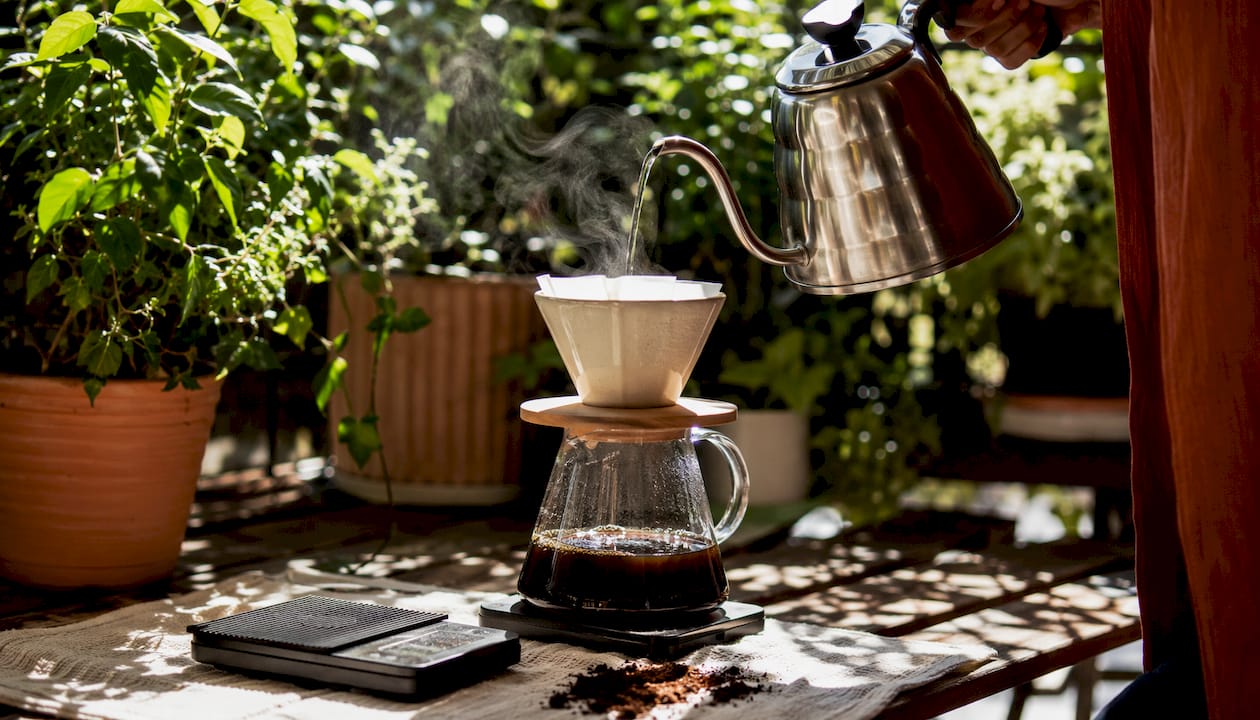
Home Test for Coffee Resting Time: Simple Tasting Protocol for Brewers

Dark roasts hit their stride in 1 to 3 days, medium roasts in 3 to 10, and light roasts in 7 to 21, with espresso generally wanting more coffee resting time than filter brews on the same beans. Treat those windows as starting points, not fixed rules. Every coffee degasses differently, so the real answer comes from tasting it yourself, and the home test further down shows exactly how.
TL;DR:
- Dark roast filter coffee generally needs 1 to 3 days of resting, while espresso requires 2 to 5 days for optimal degassing.
- Light roasts, especially naturals and anaerobic types, often benefit from 10 to 21 days of rest, sometimes extending beyond three weeks.
- Proper storage in airtight, opaque containers at stable room temperature extends freshness and influences optimal resting periods.
- Coffee’s peak flavor depends on individual tasting and can vary based on roast level, processing method, and roaster type, making home testing essential.
- Coffee roasted over four months ago is usually past its peak but can still be drinkable if stored well; sensory evaluation is recommended before discarding.
Table of Contents
- Coffee Resting Time by Roast Level and Brew Method
- Why Coffee Needs to Rest: CO2, Aroma, and Oxidation
- How Roast Level, Roaster Type, and Processing Change the Timeline
- Storage Best Practices While Coffee Rests
- A Simple Home Test to Find Your Coffee’s Peak
- Resting Window vs Staling: How Long Does Roasted Coffee Actually Last?
- How Moustachecoffeeclub Members Actually Use the Resting Window
- Why Testing Beats Guessing on Coffee Resting Time
- Get Roast-Day Beans and Run Your Own Resting Test
- Sources
- FAQ
Coffee Resting Time by Roast Level and Brew Method
The ranges below work as a planning tool, not gospel. They come from a mix of practitioner experience and published tasting guides, and they assume you’re storing beans properly during the wait.
- Dark roast, filter: 1 to 3 days. The roasting process has already broken down a lot of cell structure, so degassing moves fast.
- Dark roast, espresso: 2 to 5 days. Slightly longer than filter because espresso amplifies any instability in the shot.
- Medium roast, filter: 3 to 7 days.
- Medium roast, espresso: 5 to 10 days.
- Light roast, filter: 7 to 14 days, with many coffees still improving out to 3 weeks.
- Light roast, espresso: 10 to 21 days, sometimes longer for very dense, minimally developed beans.
Some light roasts, especially naturals and anaerobic lots, hit an “optimal window” that stretches 2 to 6 weeks past roast date, according to a practical guide from Green Coffee Collective. That’s a wide window because underdeveloped roasts and unusually dense beans simply take longer to release gas and settle into a stable flavor profile.
The exceptions matter as much as the averages. An underdeveloped roast, even a medium one, can behave like a light roast and need extra days. Naturals and anaerobic-processed coffees often carry more residual sugars and volatile compounds, which can push their peak later than a washed coffee from the same origin.
Why Coffee Needs to Rest: CO2, Aroma, and Oxidation
Coffee beans trap carbon dioxide during roasting, and that gas needs somewhere to go before brewing works properly. The Specialty Coffee Association notes that degassing moves fastest in roughly the first 20 days after roast, which is why treating roast date as a starting point for tasting, not an automatic brew date, matters so much.
Too much trapped CO2 causes uneven extraction. It pushes water away from the coffee bed during brewing, creates excessive crema on espresso that masks the actual shot quality, and destabilizes bloom timing on pour-over. That’s why espresso is more sensitive to under-resting than filter coffee: the pressure and shorter contact time expose gas-related instability almost immediately.

Resting and staling are two different clocks running at once. Degassing is CO2 leaving the bean, and it actually protects aroma compounds early on. Staling is oxygen getting in and slowly breaking those same compounds down. You want the first process to finish before the second one does much damage, which is exactly why storage technique determines how much room you have to experiment.
How Roast Level, Roaster Type, and Processing Change the Timeline
Light roasts almost always need more coffee resting time than dark ones. The cell structure stays denser and less fractured, so gas escapes more slowly and evenly through a tighter matrix.
Roasting equipment plays a bigger role than most home brewers realize. Scott Rao, a well known coffee roasting consultant, observes that drum-roasted coffees often need little rest, while air-roasted, fluid-bed coffees and very light “Nordic” style roasts frequently peak later, sometimes 1 to 4 weeks out, depending on development level and the specific machine.
A few practical factors to weigh when you’re guessing at a timeline for a new bag:
- Roaster type: Fluid-bed and air roasters tend to produce slower-degassing beans than traditional drum roasters.
- Development level: An underdeveloped roast, regardless of color, usually needs more patience than a fully developed one.
- Processing method: Natural and anaerobic lots often shift the peak window later due to higher sugar and volatile content.
- Origin and density: High-altitude, dense beans (many Ethiopian and Colombian lots, for instance) typically degas slower than softer, lower-density beans.
None of these variables works in isolation. A dense, naturally processed, air-roasted light roast can easily need three weeks or more before it brews cleanly, while a dense-but-drum-roasted medium from the same origin might be ready in under a week.
Storage Best Practices While Coffee Rests
Storage decisions made in the first hour after your bag arrives determine how much flavor survives to day 21. Get this part wrong and no amount of resting will save the cup.
- Keep whole beans sealed in the original valve bag, or transfer to an airtight, opaque container if the bag doesn’t reseal well.
- Store at stable room temperature, away from direct sunlight, stovetops, or anywhere temperature swings during the day.
- Skip the refrigerator for opened bags. Fridges introduce moisture and odor absorption that do more harm than the cold does good.
- Freeze only vacuum-sealed portions for long-term storage, and thaw them still sealed to avoid condensation hitting the beans directly.
- Divide larger bags into smaller, dated, airtight portions so you’re not repeatedly opening and exposing the whole batch to air.
Pro Tip: Label each portion with the roast date and the day you plan to open it. A simple piece of tape and a marker beats trying to remember which bag is which three weeks in.
For more detail on containers and technique, our storage guide walks through options by kitchen setup.
A Simple Home Test to Find Your Coffee’s Peak
You don’t need lab equipment to find a specific bag’s sweet spot. You need a scale, a consistent recipe, and enough patience to resist brewing the whole bag on day one.
- Divide a fresh bag into four or five dated, airtight portions the day it arrives.
- Brew the same recipe (same grind setting, same dose, same ratio, same brew time) on day 3, then again on day 7, day 14, and day 21.
- Record grind setting, dose, water temperature, total brew time, and yield for every single brew.
- Write sensory notes immediately after tasting: sweetness, acidity, body, and any bitterness or flatness.
- Change only one variable across the whole test, which is the age of the coffee. Everything else stays locked.
Look for flow stability first. If water is channeling or the bloom behaves erratically on early days but smooths out by day 10, that’s your gas telling you it’s not ready yet. Then look for the point where sweetness and acidity feel balanced rather than sharp or muted, and where repeat brews taste consistent rather than random. That consistency point, more than any single tasting note, is usually your answer.
Resting Window vs Staling: How Long Does Roasted Coffee Actually Last?
Resting and staling sit on the same timeline but pull in opposite directions. The SCA’s literature review on shelf life points to rapid change in the first 20 days, with a practical whole-bean freshness window often cited around three weeks under good storage.

Coffee roasted four months ago isn’t automatically undrinkable, but it’s typically well past peak. Aromatics fade steadily once oxidation takes over from degassing, and the cup usually turns flatter and less complex rather than outright bad. A sealed valve bag, cool storage, and minimal air exposure can stretch that usable window noticeably, but none of it reverses the clock once staling sets in.
How Moustachecoffeeclub Members Actually Use the Resting Window
Because Moustachecoffeeclub ships beans the day they’re roasted, subscribers get a real starting line instead of guessing how long a bag already sat on a shelf. That makes scheduling tastings straightforward: divide the bag on arrival, brew on the same recipe at set intervals, and change only one variable, the coffee’s age, between each cup. Small sealed portions and a simple tasting log turn every delivery into its own mini experiment, which is exactly how you build intuition for what a given origin and process actually needs.
Why Testing Beats Guessing on Coffee Resting Time
Most guidance on resting time reads like a rulebook, and that’s the wrong frame. Every bag behaves a little differently depending on density, process, and how it was roasted, so treating any single number as gospel sets you up to either brew too early out of impatience or wait too long out of caution.
The real skill worth building is curiosity paired with a log. Taste the same coffee at three or four ages, write down what changed, and you’ll start noticing patterns specific to roasters and origins you buy often. Over a few months, that turns into something close to a personal calendar of peak windows, which is far more useful than any generic chart.
— Sean
Get Roast-Day Beans and Run Your Own Resting Test
Moustachecoffeeclub ships every order the day it’s roasted, which means the home test above actually starts from day zero instead of day unknown. You’re not guessing how long a bag sat in a warehouse before it reached your kitchen. That single detail is what makes dialing in resting time for espresso or filter actually reliable, since you control the entire timeline from roast to cup.

If you want to try the testing protocol on a single-origin lot, the tasting series is built for exactly that kind of side-by-side comparison. For ongoing testing across multiple origins, browse the subscription plans and pick a schedule that matches how often you brew. Subscription plans start at various prices per week per bag, with options scaling up depending on how many origins you want rotating through your kitchen at once. Start your first roast-day delivery this week and taste the difference a real starting point makes.
Sources
For deeper technical grounding beyond this guide, the SCA’s Coffee Decoded entry on freshness covers degassing mechanics in detail, Scott Rao’s notes on resting by roaster type offer practitioner-level nuance, and the 2025 sensory study in European Food Research and Technology provides peer-reviewed data on how taste perception shifts with post-roast age.
- Coffee Decoded: What is “freshly roasted” coffee? — Specialty Coffee Association
- RESTING ROASTS: IS FRESHER BETTER? — Scott Rao
- How long to rest coffee after roasting: A practical guide — Green Coffee Collective
FAQ
What Is the 15-15-15 Coffee Rule?
There’s no single agreed-upon “15-15-15” standard in specialty coffee, and definitions vary depending on where you encounter the term. If you’ve seen it applied to brewing ratios or timing, treat it as a shorthand some brewers use rather than an industry-wide rule, and rely on the roast-specific resting windows and home test in this guide instead.
Is 7:30 PM Too Late for Coffee?
That’s really a personal caffeine sensitivity question rather than a coffee freshness one. Caffeine has a half-life of several hours in most adults, so a cup in the evening can still affect sleep for people sensitive to it, regardless of how well-rested the beans are.
What Is the 80/20 Rule for Coffee?
This isn’t a standard term in specialty coffee roasting or brewing, so there’s no consistent definition to point to. If you’ve heard it used for a specific brewing ratio, it likely refers to a particular recipe rather than a universal principle worth building resting guidance around.
Is Coffee Roasted Four Months Ago Still Good?
It’s usually past its peak but not necessarily bad. Staling from oxygen exposure has likely dulled some aromatics by that point, though beans stored sealed in a valve bag or airtight container in cool, dark conditions hold up better than beans left open to air. Taste it before writing it off; flat and muted is different from undrinkable.