Stop Guessing: How Specialty Shoppers Read Coffee Labels in 5 Steps
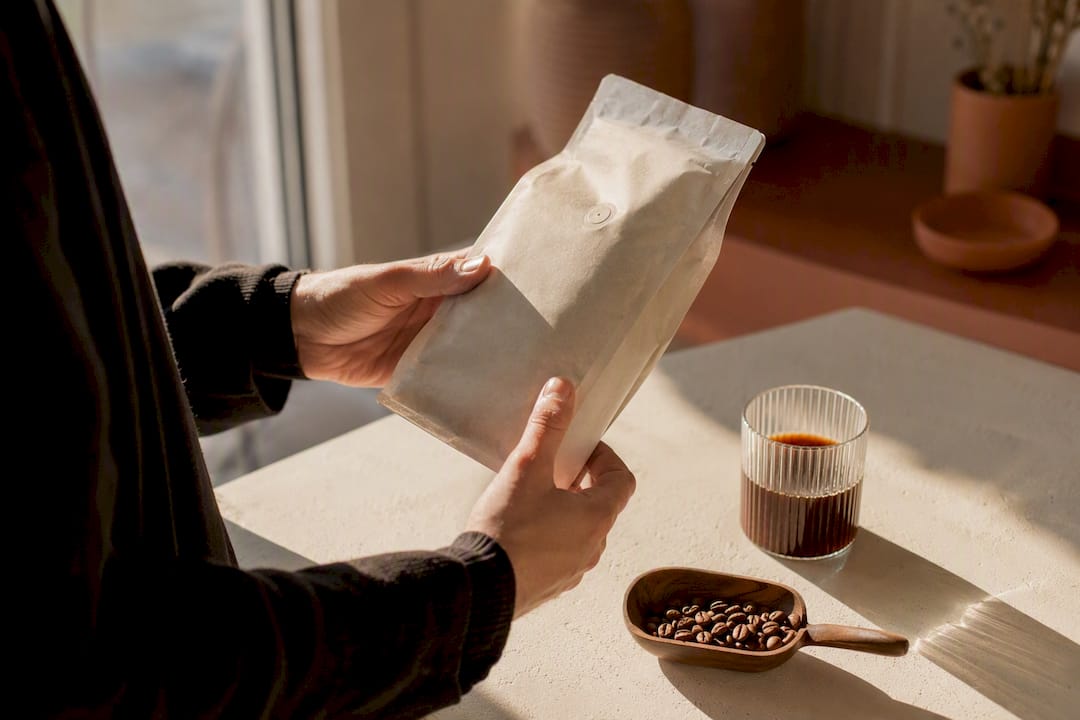
Check three things before you buy: the roast date, the traceability (country, region, farm), and the roast level. If a bag has a real roast date printed on it, names something more specific than “South America,” and tells you whether it’s light, medium, or dark, you’re likely holding a specialty coffee worth the price. If it’s missing all three, put it back.
TL;DR:
- Buyers should prioritize bags with a clear roast date, detailed origin traceability, and specific processing and tasting notes to ensure freshness and transparency.
- Specialty coffee labels with precise origin details and processing methods offer better predictability of flavor and quality compared to vague or generic claims.
- Roast level definitions vary between roasters, but lighter roasts preserve origin flavors and acidity, while darker roasts emphasize roasted flavors; brewing method suitability depends on roast level.
- Certifications like Organic and Fair Trade verify farming practices and producer payments but do not guarantee freshness or flavor quality, which depend on roast date and handling.
- Using a subscription service that guarantees roast-to-order beans with detailed origin reports provides the most reliable way to access fresh, traceable specialty coffee.
Table of Contents
- How Do You Read a Coffee Label for Origin and Traceability?
- What Do Light, Medium, and Dark Roast Actually Mean?
- What Does the Processing Method on a Coffee Bag Tell You?
- Does Arabica or Robusta Matter on a Coffee Label?
- What Does Elevation Mean on a Coffee Label?
- How Do You Interpret Tasting Notes on a Coffee Bag?
- Why Does the Roast Date Matter More Than the Best-By Date?
- What Do Certification Logos on Coffee Bags Actually Guarantee?
- What Marketing Words on Coffee Bags Should You Ignore?
- How Do You Use a Coffee Label to Choose Beans in 5 Steps?
- How Transparent Roasters Label Coffee: A Real Example
- Does Grind Size on a Label Actually Matter?
- How Should You Store Coffee Based on the Bag It Came In?
- What Do Fair Trade and Organic Certifications Really Guarantee?
- What Do Batch Numbers or Lot Codes on Coffee Bags Mean?
- Why Label Transparency Matters
- Get Roast-to-Order Freshness With a Coffee Subscription
- Where to Go for More on Coffee Labeling
- Sources
- FAQ
How Do You Read a Coffee Label for Origin and Traceability?
Origin claims come in tiers, and each tier tells you something different about predictability and quality. A bag that says only “Colombia” is telling you less than one that says “Huila, Colombia” or “Finca El Paris, Huila.” The more specific the claim, the more accountable the roaster is for what’s actually in the bag.
- Country-only: broadest tier, often a blend of many farms, harder to trace back to a source.
- Region or department: narrower, points to a shared climate and processing style.
- Farm, cooperative, or lot: the most traceable tier, tied to one grower or a small group.
- “Single origin” only means something when it’s paired with a real place name. On its own, it’s a marketing term roasters sometimes use loosely to sound artisanal without disclosing much.
Look for a named importer, a cooperative name, or a harvest year. Those details usually mean the roaster actually knows where the beans came from, which is the whole point of buying single origin over a blend.
What Do Light, Medium, and Dark Roast Actually Mean?
Roast names aren’t standardized. One roaster’s “medium” is another’s “medium-dark,” and there’s no regulatory body enforcing consistency between brands. What you can count on is the general direction: lighter roasts preserve more of the bean’s original acidity and origin character, while darker roasts add roast-driven flavors like chocolate and toasted grain that can mask where the coffee came from.
- Light roast: higher acidity, more fruit and floral notes, less body, origin flavor shows clearly.
- Medium roast: balanced acidity and body, a safe starting point if you’re not sure what you like yet.
- Medium-dark to dark roast: lower acidity, heavier body, flavors lean toward caramel, cocoa, and smoke.
For brewing, pour-over and drip methods generally do better with light-to-medium roasts because the extended contact time draws out acidity and clarity. Espresso traditionally leans toward medium-dark, though a growing number of specialty roasters now pull espresso from light roasts for a brighter, more origin-forward shot. If you’re new to specialty coffee, starting at medium and moving lighter or darker from there is a reasonable way to figure out your preference.
What Does the Processing Method on a Coffee Bag Tell You?
Processing method shapes flavor as much as roast level does, sometimes more. It describes how the fruit was removed from the coffee seed before drying, and each method leaves a distinct signature in the cup.
- Washed (wet process): fruit removed before drying, produces a cleaner, brighter cup with more clarity in the acidity.
- Natural (dry process): dried with the fruit still on, produces heavier body and fruit-forward, sometimes wine-like or boozy notes.
- Honey process: partial fruit left on during drying, lands between washed and natural in sweetness and body.
- Wet-hulled: common in Indonesia, produces a lower-acid, earthy, heavy-bodied cup.
- Anaerobic or carbonic maceration: fermented in sealed, oxygen-free tanks, often produces unusual, intense fruit or funky notes.
A label that just says “processed” without naming a method is hiding information a specialty roaster would normally want to show off. That vagueness is itself a signal.
Pro Tip: If a label lists an unusual process like “anaerobic natural” or “extended fermentation,” expect a bolder, more polarizing cup. It’s a fun one to try, but maybe not your daily driver.
Does Arabica or Robusta Matter on a Coffee Label?
Arabica dominates specialty shelves for a reason. It accounts for roughly 60% of global coffee production and is favored for a smoother, more complex flavor profile than Robusta, which tends toward bitterness and a harsher body. Robusta shows up mostly in commercial blends, instant coffee, and some espresso blends where roasters want extra body and caffeine, since it also carries roughly double the caffeine of Arabica in raw form; learn more about caffeine differences and smart dosing with caffeine anhydrous.
Varietal names go a level deeper than species:
- Bourbon and Typica: older, heirloom varieties, often sweeter and more complex but lower yielding.
- Caturra: a Bourbon mutation, common in Central America, reliable and balanced.
- Gesha (or Geisha): prized for intense floral and tea-like notes, usually priced at a premium.
- SL28 and SL34: Kenyan varietals known for bright, berry-driven acidity.
Treat varietal as a helpful cue, not a promise. Growing conditions and processing still do most of the work.
What Does Elevation Mean on a Coffee Label?
Higher elevation generally means slower cherry maturation, denser beans, and more concentrated acidity and complexity in the cup. You’ll usually see this printed as “masl” (meters above sea level).
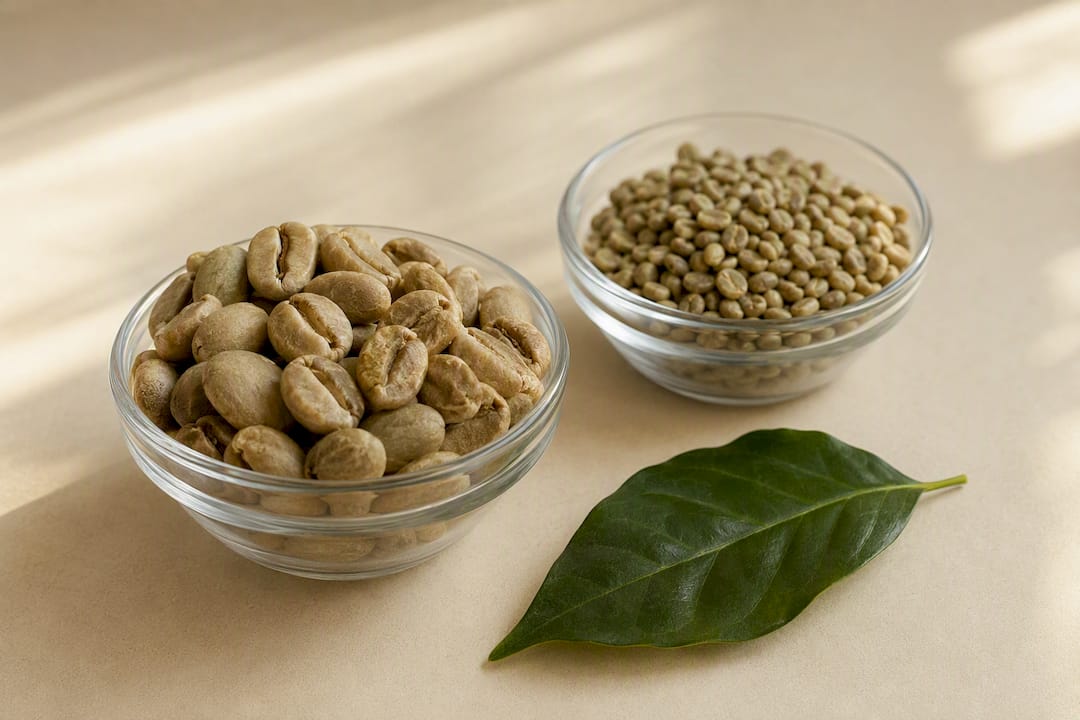
Rough bands: coffee grown below 900 masl tends to be milder and simpler. Between 900 and 1,500 masl is a common specialty range with balanced sweetness and acidity. Above 1,500 masl, expect brighter, more layered cups, often with pronounced fruit or floral character. A single elevation number without a region or process to back it up can be more marketing than substance, so treat it as one data point among several.
How Do You Interpret Tasting Notes on a Coffee Bag?
Tasting notes describe what a trained cupper actually perceived in the cup, not flavors added to the coffee. Nobody is dropping blueberries into your bag. The notes exist to help you predict whether you’ll like the coffee before you brew it, and they usually correlate with origin and processing. A washed Ethiopian coffee showing “jasmine and lemon” makes sense; a natural Brazilian showing “milk chocolate and hazelnut” makes sense too. When notes and process contradict each other, that’s worth a second look.
Specific descriptors are more useful than vague ones. “Jasmine, bergamot, blueberry” tells you more than “smooth” or “balanced,” which could describe almost anything. A short, consistent sensory vocabulary makes those specific notes easier to translate into what you’ll actually taste.
| Term | What it implies |
|---|---|
| Floral (jasmine, lavender) | Light roast, often washed, high-elevation Ethiopian or Kenyan lots |
| Citrus (lemon, bergamot) | Bright acidity, common in washed African coffees |
| Berry or wine-like | Natural process, especially Ethiopian or Central American |
| Chocolate, caramel, nutty | Medium to dark roast, common across Central and South America |
| Earthy, low-acid | Wet-hulled process, typical of Indonesian coffees |
Why Does the Roast Date Matter More Than the Best-By Date?
Roast date and best-by date are not the same thing, and mixing them up is the single most common mistake buyers make. A best-by date can sit a year or more out, telling you nothing about actual freshness. The roast date tells you exactly when the beans left the roaster.
Freshness follows a fairly consistent curve for most home brewing methods:
- Days 1 to 4: beans are off-gassing carbon dioxide, which can make pour-over blooming look erratic.
- Days 4 to 21: the peak window for most brewing, where flavor is most vivid and balanced.
- After 21 to 28 days: flavor starts flattening out, though it’s still drinkable, especially for espresso, which tolerates slightly older beans better than filter methods.
Coffee bought without a printed roast date is a coin flip. Retailers who omit it are usually working with wholesale stock, not freshly roasted lots tracked from roast day forward. If you can’t find a roast date on the bag, ask before you buy, or shop somewhere that prints it every time.
What Do Certification Logos on Coffee Bags Actually Guarantee?
Certification logos verify specific things, not “quality” in general. USDA Organic confirms farming practices, not flavor or freshness. Fair Trade guarantees a minimum price floor to producers, not that the coffee is specialty grade. Rainforest Alliance and Bird Friendly address environmental and habitat standards on the farm. None of them tell you anything about roast date or how the coffee tastes.
Direct trade is not a regulated term. Any roaster can print it, so it’s only meaningful when backed by named farms, prices paid, or an origin report you can actually read.
What Marketing Words on Coffee Bags Should You Ignore?
Words like “premium,” “gourmet,” “smooth,” and “small batch” carry no legal definition and appear on commodity grocery-store coffee just as often as on specialty bags. Ignore them entirely.
- Look instead for the disclosure trifecta: a roast date, a traceable origin, and some form of transparency (price paid, importer named, or an origin report).
- If a bag has adjectives but no roast date and no specific origin, that’s your cue to skip it or ask the retailer directly.
Pro Tip: Flip the bag over. Marketing language lives on the front; the real information, when it exists, is almost always on the back panel.
How Do You Use a Coffee Label to Choose Beans in 5 Steps?
- Check the roast date first. If it’s missing or older than a month, move on.
- Confirm traceability. Look for a country plus region, farm, or cooperative name, not just a country alone.
- Match roast level to your brew method. Light-to-medium for pour-over and drip, medium-to-dark for traditional espresso.
- Read the processing note and tasting notes together. They should tell a consistent story about the cup.
- Scan for certifications and transparency. A named importer or a price-paid disclosure adds confidence even without a logo.
Espresso drinkers can loosen the roast-date window slightly since darker, oilier beans hold up a bit longer. Filter and pour-over fans should stay strict on freshness, since lighter roasts show staleness faster. If a bag is thin on details, ask the roaster directly: “What’s the roast date, what’s the elevation, and who’s the importer?” A roaster with nothing to hide will answer all three without hesitation.
How Transparent Roasters Label Coffee: A Real Example
Moustachecoffeeclub roasts to order and prints the roast date on every bag, so the freshness window starts the day it ships, not weeks earlier off a warehouse shelf. Each coffee comes with an origin report covering farm or cooperative name, elevation, and processing method, the same fields specialty guides flag as the real markers of transparency. Packaging is designed to cut plastic waste without sacrificing the barrier protection beans need to stay fresh. Use this as your benchmark: if another bag can’t match roast date, origin detail, and process transparency, it’s worth asking why.
Does Grind Size on a Label Actually Matter?
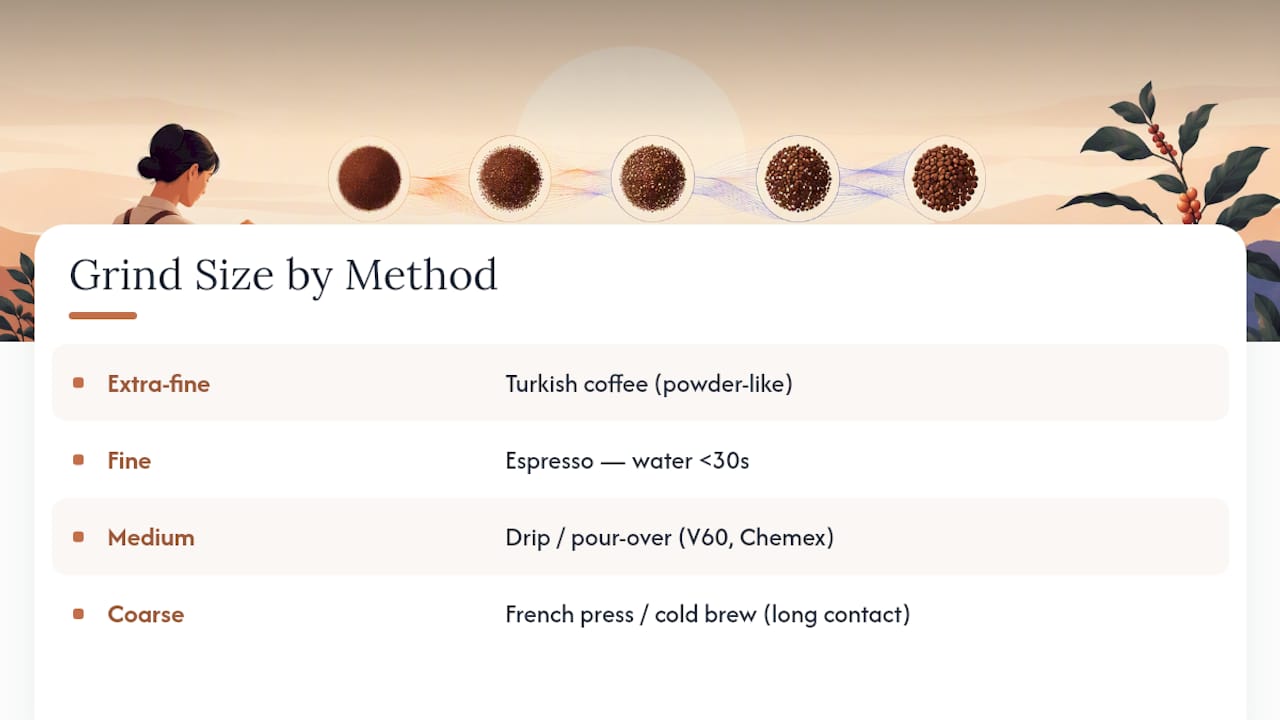
Some bags print a suggested grind size or a brew-method recommendation, usually as a small icon or a line like “recommended for drip” or “suited to espresso.” That note exists because grind size controls extraction rate, and the wrong grind for your method produces either a weak, sour cup or a bitter, over-extracted one.
Coarser grinds suit methods with longer contact time and no fine filter, like French press or cold brew, because a fine grind in those methods over-extracts and turns muddy or gritty. Medium grinds work for drip machines and standard pour-over cones like the Hario V60 or Chemex, balancing extraction speed against surface area. Fine grinds are for espresso, where water passes through in under 30 seconds and needs maximum surface area to pull flavor quickly. Extra-fine, almost powder-like grinds are reserved for Turkish coffee.
A label recommendation is a starting point, not a rule. The same bean roasted light will often need a slightly finer grind than the same bean roasted dark, because darker beans are more porous and extract faster. If a bag says “grind for drip” but you’re using a French press, ignore the label and grind coarser. Buying whole bean and grinding fresh right before brewing also matters more than the specific grind number, since ground coffee loses aromatic compounds within minutes of contact with air. If you only take one thing from a grind recommendation, take it as a hint about which brew method the roaster had in mind when they picked that roast profile, not as an instruction you’re locked into.
How Should You Store Coffee Based on the Bag It Came In?
Packaging type tells you a lot about how seriously a roaster treats freshness. The gold standard is a valve bag, a foil or multi-layer pouch with a one-way degassing valve that lets carbon dioxide escape without letting oxygen in. If your bag has a small raised button on the front, that’s the valve. Bags without one need to be opened and resealed carefully, since every open-and-close cycle pushes oxygen in and speeds up staleness.
Once opened, keep beans in an airtight, opaque container at room temperature, away from direct light and heat. Skip the myth about refrigerating or freezing whole bags for daily use. Repeated temperature swings introduce condensation, and moisture is one of the fastest ways to degrade coffee. Freezing only makes sense for long-term storage of beans you won’t touch for weeks, portioned into small, tightly sealed containers to avoid repeated thawing.
Clear plastic or thin paper bags with no valve, common on lower-cost commodity coffee, are a quiet red flag. They let light and air degrade the beans faster and often signal a roaster that isn’t prioritizing the same freshness standards a specialty buyer expects. If you transfer beans to your own container at home, choose something opaque with a tight seal, and try to buy only as much as you’ll drink within the peak freshness window rather than stockpiling.
What Do Fair Trade and Organic Certifications Really Guarantee?
Certification logos get treated as quality shortcuts, but each one verifies a narrow, specific thing, and understanding the fine print changes how much weight you should give it.
Fair Trade certification guarantees a minimum price floor paid to producer cooperatives, plus a community development premium paid on top of that floor, regardless of market price swings. It says nothing about cup quality or freshness. A Fair Trade bag can be excellent or mediocre; the label only confirms the economic terms behind the purchase.
USDA Organic certification confirms the farm avoided synthetic pesticides, herbicides, and fertilizers for at least three years before certification, verified through annual inspections. It’s a farming-practice standard, not a flavor standard, and organic coffee can taste identical to conventionally grown coffee from the same region.
Rainforest Alliance certification addresses environmental practices like shade-grown canopy preservation, water management, and wildlife habitat protection on the farm, plus some labor standards. Bird Friendly, issued by the Smithsonian, is stricter still, requiring organic certification plus specific canopy cover and shade-tree diversity to protect migratory bird habitat.
None of these logos replace the disclosure trifecta of roast date, traceable origin, and price transparency. A roaster can hold every certification available and still ship six-month-old beans with no roast date, and a small independent roaster with no certifications at all might pay producers well above Fair Trade minimums while publishing full pricing. Certifications matter most when a buyer cares specifically about the practice each one verifies, environmental impact, farming method, or producer economics, rather than as a general quality stamp.
What Do Batch Numbers or Lot Codes on Coffee Bags Mean?
Batch or lot codes are usually small alphanumeric strings printed near the roast date, something like “LOT 24B-0317” or “B240317.” They exist mainly for internal roaster tracking, quality control, and recalls, not as a consumer-facing feature, which is why most shoppers ignore them entirely.
For traceability purposes, a lot code can matter more than it first appears. Roasters working with microlots, small, separately processed batches from a single farm section or a specific harvest day, use lot codes to distinguish one microlot from another when the origin name alone isn’t specific enough. Two bags labeled “Ethiopia Yirgacheffe” from the same roaster might carry different lot codes if they came from different cooperative deliveries or processing days, and the cup can vary noticeably between them even though the front-of-bag description is identical.
If a roaster publishes an origin report or lets you look up a lot code online, that’s a meaningful transparency signal, since it means the coffee’s journey from farm to bag is documented well enough to reference later. Most everyday specialty bags won’t require you to decode the batch number for a good buying decision. But if you’re chasing a specific microlot you loved, or trying to figure out why two bags with the same origin tasted different, the lot code is the detail that actually explains it. Ask the roaster directly if the code isn’t self-explanatory; a transparent operation will tell you exactly what it refers to.
Why Label Transparency Matters
We built our roast-date-on-every-bag policy because we got tired of guessing how old coffee was before we started this. That frustration is exactly why origin reports and processing details are standard on every bag we ship, not an upsell. Full traceability, farm name, elevation, process, and harvest year, should be table stakes, not a premium feature you pay extra to unlock. When roasters hide those details, it’s rarely an accident.
— Sean
Get Roast-to-Order Freshness With a Coffee Subscription
Once you know what to look for on a label, the fastest way to stop hunting bag to bag is a subscription that guarantees the fields matter most: roast date, origin, and process, every single delivery.
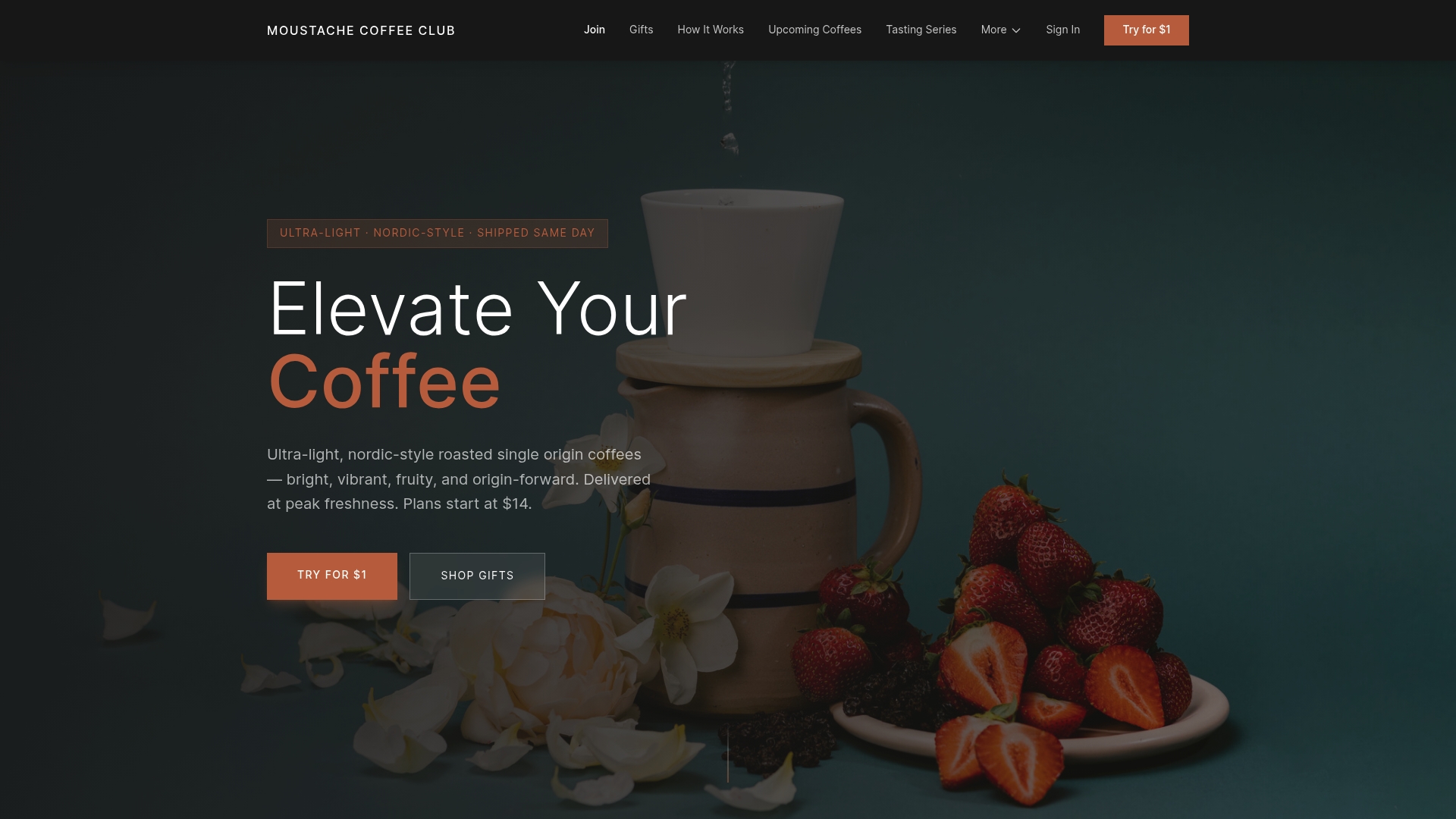
A Moustachecoffeeclub subscription ships beans roasted to order, so the roast date on your bag reflects when it actually left the roaster, not when it left a warehouse. Every coffee comes with an origin report covering farm or cooperative, elevation, and processing method, plus access to the coffee education hub if you want to go deeper on brewing or origin. Packaging is built to cut plastic waste while still protecting freshness in transit. If you’re ready to stop decoding bags at the store and just get the transparency built in, start a subscription and pick the plan that matches how you brew.
Where to Go for More on Coffee Labeling
For deeper reading beyond this guide, the NCA Coffee Product Labeling Guide covers FDA labeling requirements in detail. Pulled’s label guide breaks down the specific fields specialty bags typically carry. Consumer Reports’ coffee buying guide offers a clear sensory vocabulary for tasting notes. The International Trade Centre’s coffee market resource is useful for anyone curious about species, production, and global market context.
Sources
- Pulled — How to read a coffee bag label
- NCA — Coffee Product Labeling Guide
- Consumer Reports — Coffee buying guide
- International Trade Centre — Understanding the coffee market
FAQ
How Do You Read a Coffee Label Step by Step?
Start with the roast date, then check traceability (country, region, or farm), then roast level, then processing method and tasting notes, and finally any certifications or transparency claims.
Is a Dark Roast Stronger Than a Light Roast?
Dark roast tastes bolder and more bitter due to roast compounds, but light roast actually contains slightly more caffeine by volume since less mass is lost during roasting; “strength” depends on whether you mean flavor intensity or caffeine content.
What Country Produces the Best Specialty Coffee?
There’s no single country that produces the “best” coffee. Ethiopia, Colombia, Kenya, and Panama all consistently produce highly rated specialty lots, and the right choice depends on the flavor profile and processing style you prefer.
What Is the 15-15-15 Rule in Coffee Brewing?
There is no standard, widely recognized brewing framework known as the “15-15-15 rule”; if you’ve seen it referenced, it likely refers to a specific brewer’s ratio guideline rather than an industry-wide standard, so treat any claimed version with caution.
Why Doesn’t My Coffee Bag Have a Roast Date?
Coffee without a printed roast date is usually wholesale stock roasted well before it reached the shelf, which is why buying from roasters who print roast-to-order dates, like Moustachecoffeeclub, gives you a clearer freshness guarantee.