How Single Origin Differs from Blends: A Coffee Guide
Single origin coffee is defined as beans sourced from one specific geographic location, while blends combine beans from multiple origins to engineer a consistent, balanced flavor profile. That distinction shapes everything: how the coffee tastes, how you should brew it, what you pay, and what the bag’s label actually tells you. Understanding how single origin differs from blends is the clearest way to stop buying coffee by habit and start buying it with intention.
How single origin differs from blends: sourcing and traceability explained
Single origin coffee operates on a four-tier traceability system: single country, single region, single estate, and single lot. Each tier gets more specific and more flavorful. A bag labeled “Ethiopia” is single country, which is the most common and least precise tier. A bag labeled “Ethiopia, Yirgacheffe, Kochere Washing Station, Lot 14” tells you the exact farm, processing method, and harvest batch. That level of detail is what separates a generic origin claim from genuine traceability.
Terroir drives the flavor in single origin coffee the same way it does in wine. Altitude, soil composition, rainfall patterns, and processing methods (washed, natural, honey) all leave fingerprints in the cup. A washed Ethiopian Yirgacheffe delivers jasmine, bergamot, and bright citrus. A natural-processed Colombian from Huila tastes like blueberry jam and dark chocolate. These are not roaster inventions. They are the direct result of where and how the coffee was grown.
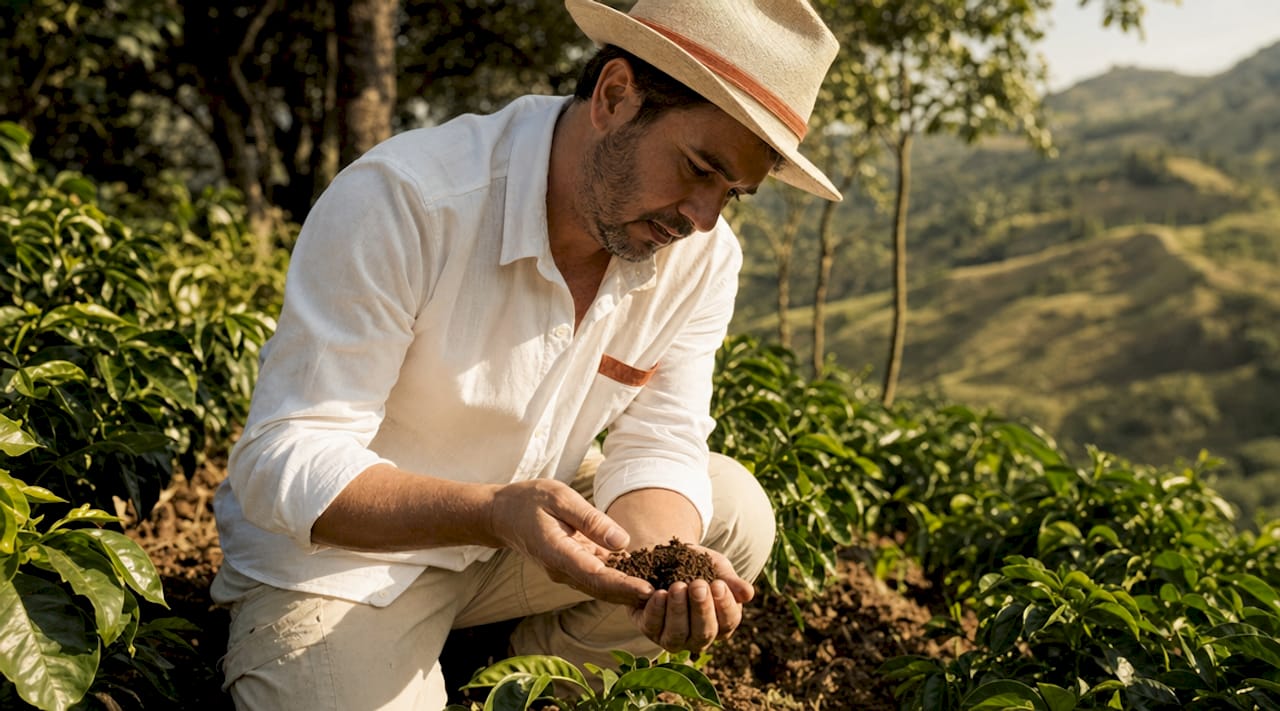
Seasonal variability is the trade-off. Single origin coffees change from harvest to harvest. The same farm in Huila will produce a slightly different cup in 2025 versus 2026 depending on rainfall and fermentation conditions. For exploratory drinkers, that variability is the point. For drinkers who want the same cup every morning, it can feel inconsistent.
Pro Tip: Single origin coffees shine brightest in pour-over brewing, where the slower extraction preserves delicate floral and fruit notes that espresso pressure can flatten.
- Single country: Broadest traceability. Example: “Colombia.”
- Single region: Narrows to a growing zone. Example: “Colombia, Huila.”
- Single estate: Specific farm or cooperative. Example: “Finca El Paraíso, Huila.”
- Single lot: Most precise. Specific harvest batch from one farm.
What makes a coffee blend, and why roasters craft them
A coffee blend combines beans from two to five origins, adjusted in ratio to hit a target flavor profile. Roasters reformulate their blends two to four times annually to compensate for seasonal crop changes, swapping in a Guatemalan component when the Brazilian harvest underperforms, for example. The goal is a cup that tastes the same in January as it does in August.
Blending is a high-skill craft. High-end specialty roasters use blending not to hide defects but as an engineering tool for flavor that single origins cannot maintain year-round. A classic espresso blend might combine a Brazilian natural for body and sweetness, a Colombian washed for brightness, and a Sumatran for earthy depth. Each component does a specific job. Remove one and the profile shifts noticeably.
The persistent myth that blends are lower quality than single origins is wrong. Blends are simply optimized for a different purpose. A well-crafted house blend from a roaster like Intelligentsia or a specialty cafe’s signature espresso base is a deliberate product, not a compromise. Baristas in professional settings rely on blend consistency to pull repeatable espresso shots across hundreds of drinks per day. Variability is the enemy of a good latte program.
Pro Tip: When evaluating a blend, ask the roaster which origins are in it and why. Roasters who can answer that question in detail are treating blending as craft, not cost-cutting.
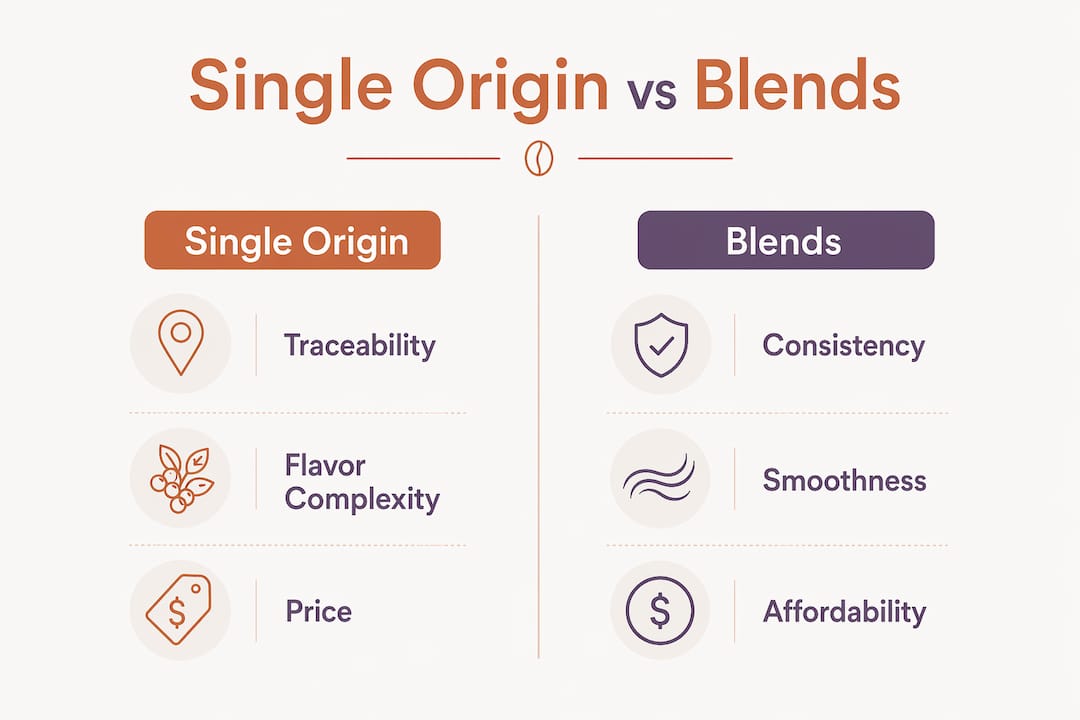
- Consistency: Blends taste the same across seasons because ratios adjust for crop changes.
- Espresso optimization: Balanced acidity, body, and sweetness hold up under pressure and through milk.
- Accessibility: Blends are generally more affordable and available year-round.
- Transparency: Blends rarely disclose full farm-level sourcing, since the final profile is the product.
How flavor profiles and brewing methods shape your choice
The flavor differences between single origin and blended coffee are real and predictable once you know what to look for. Single origin coffees tend toward brightness, complexity, and variability. A light-roasted Ethiopian Sidama might deliver stone fruit, floral notes, and a tea-like body. A Kenyan AA from Nyeri can taste like blackcurrant and tomato. These profiles reward attentive brewing and curious palates.
Blends are built for smoothness and balance. A well-formulated espresso blend delivers chocolate, caramel, and mild fruit with a creamy body that integrates cleanly with steamed milk. That profile does not come from one origin. It comes from the ratio of components working together. Blends are optimized for espresso and milk beverages precisely because their consistency survives the variables of pressure, temperature, and dilution.
| Factor | Single origin | Blend |
|---|---|---|
| Flavor character | Bright, complex, variable | Smooth, balanced, consistent |
| Best brewing method | Pour-over, filter, AeroPress | Espresso, French press, drip |
| Seasonal availability | Limited, harvest-dependent | Year-round |
| Traceability | High (farm to lot level) | Low (proprietary recipe) |
| Ideal drinker | Exploratory, flavor-focused | Routine-oriented, espresso lover |
Grind adjustment matters more with single origins. Because their flavor profiles are more delicate, small changes in grind size, water temperature, or brew ratio produce noticeable shifts in the cup. Learning to dial in light roast coffee is a skill that pays dividends specifically with single origin beans, where the margin between a flat cup and a brilliant one is narrow.
Pro Tip: For single origin pour-overs, try water at 200°F (93°C) and a 1:15 coffee-to-water ratio as your starting point. Adjust grind finer if the cup tastes sour, coarser if it tastes bitter.
What are the economic and practical differences?
Price is the most immediate practical difference between single origin and blended coffee. Single origin coffees typically run $16 to $30 per pound, while blends generally fall in the $12 to $22 range. That gap reflects the economics of sourcing. Single origin lots are small, farm-traceable, and tied to one harvest window. When the crop is gone, it is gone until next year. Blends give roasters sourcing flexibility, allowing them to substitute components and maintain supply without price spikes.
For daily drinkers who go through a pound a week, that price difference adds up. A household running through 52 pounds of coffee per year saves $200 or more annually by choosing a quality blend over a rotating single origin. That is not a reason to avoid single origins. It is a reason to use them strategically, as a weekly or occasional exploration rather than the default daily driver.
Availability also differs in ways that affect purchasing habits. Single origin coffees from farms like Finca El Paraíso in Colombia or the Gedeb cooperative in Ethiopia are seasonal releases. Moustachecoffeeclub’s ethical sourcing approach means working directly with farms and buying within harvest windows, which produces better quality but limits reorder windows. Blends, by contrast, are available continuously because roasters can reformulate around supply gaps.
How to build a coffee routine that uses both
The most practical approach for any coffee enthusiast is to keep two coffees on hand at once. Use a blend as your daily driver for espresso or morning drip. Rotate a single origin through your pour-over or AeroPress on weekends or when you want to taste something specific. This structure gives you consistency where you need it and exploration where you want it.
Here is a practical framework for selecting and using both:
- Identify your daily brewing method. Espresso machine or automatic drip? Start with a blend. Pour-over or AeroPress? Single origin will reward you more.
- Read the label carefully. A bag that says only “Ethiopia” is single country level. Look for region, estate, or lot details to confirm genuine traceability. Labels with precise details indicate higher flavor specificity and better sourcing.
- Match the coffee to the occasion. Morning rush? Blend. Saturday morning with time to brew slowly? Pull out the single origin.
- Track what you like. Keep a simple note of the origin, processing method, and roast level of coffees you enjoy. Patterns emerge quickly, and you will start predicting which single origins will suit your palate before you buy.
- Buy fresh. Both single origins and blends degrade after roasting. Prioritize roasters who provide a roast date and ship within days of roasting. Moustachecoffeeclub’s roast-to-order model is specifically designed to maximize flavor clarity in single origin coffees.
Pro Tip: When buying single origin coffee, look for the processing method on the label. Washed coffees tend toward clarity and brightness; natural-processed coffees lean toward fruit-forward sweetness. Knowing this one detail predicts the cup better than the country of origin alone.
Key takeaways
Single origin and blended coffees serve distinct, complementary purposes: single origin reveals terroir and seasonal character, while blends deliver engineered consistency that no single farm can match year-round.
| Point | Details |
|---|---|
| Traceability tiers matter | Single origin ranges from country-level to single lot; more detail means more flavor specificity. |
| Blends are crafted products | Roasters reformulate blends 2 to 4 times yearly to maintain consistent flavor across seasonal changes. |
| Brewing method drives the choice | Single origin suits pour-over and filter; blends perform best in espresso and milk-based drinks. |
| Price reflects sourcing reality | Single origin runs $16 to $30 per pound; blends typically cost $12 to $22 due to sourcing flexibility. |
| Use both intentionally | A daily blend plus a rotating single origin gives you reliability and exploration without compromise. |
Why the single origin vs. blend debate misses the point
I have tasted thousands of coffees over the years, and the question I get most often is some version of “which is better?” My honest answer is that it is the wrong question entirely. Single origin and blends serve different but complementary purposes, and treating them as competitors is like asking whether a novel is better than a short story.
What I find more interesting is what each style reveals about the roaster behind it. A single origin coffee tells you about a farm, a harvest, a place. A great blend tells you about a roaster’s palate, their sourcing relationships, and their ability to engineer flavor under constraint. Both require skill. Both deserve respect.
The drinkers I have seen get the most out of coffee are the ones who approach both with curiosity. They use their house blend as a baseline and their single origins as a lens. Over time, they develop a vocabulary for what they like and why. That vocabulary makes every cup more interesting, regardless of what is in the bag.
— Sean
Explore single origin and blends with Moustachecoffeeclub
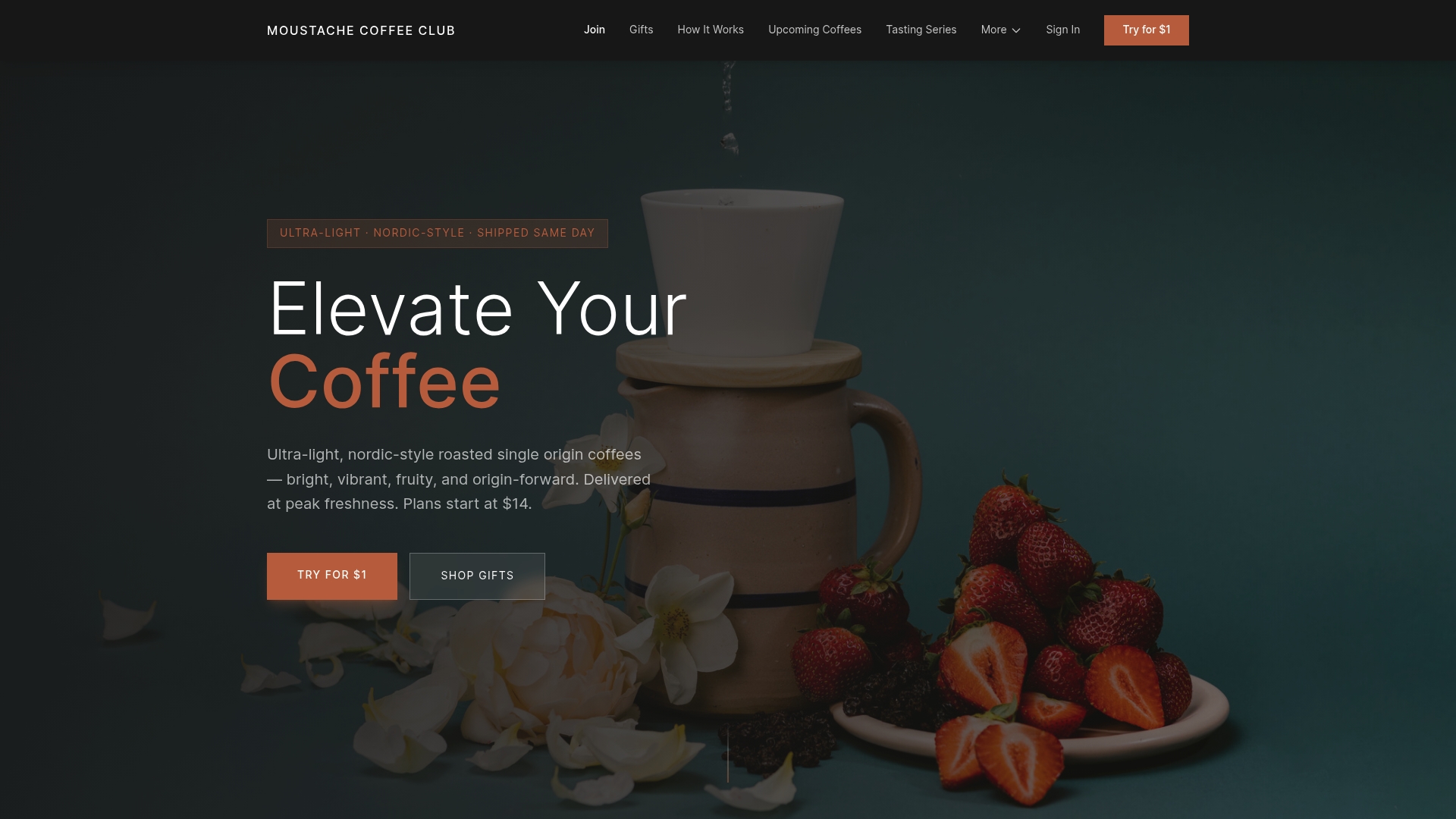
Moustachecoffeeclub specializes in ultra-light, Nordic-style single origin coffees sourced from Ethiopia, Colombia, and other high-altitude growing regions, roasted to order so you receive beans at peak flavor. Every subscription includes detailed origin reports, so you know exactly which farm, region, and processing method produced your coffee. If you are ready to taste the difference that genuine traceability makes, start your subscription and receive freshly roasted single origin beans selected to match your brewing preferences. Each delivery is a direct line from a specific farm to your cup, with nothing in between but a skilled roast.
FAQ
What is single origin coffee?
Single origin coffee is defined as beans sourced from one specific geographic location, ranging from a single country down to a single farm lot. The more precise the location detail on the label, the higher the traceability and flavor specificity.
Are coffee blends lower quality than single origin?
Blends are not lower quality. Specialty roasters use blending as a precision tool to achieve flavor profiles that no single origin can maintain consistently year-round, particularly for espresso and milk-based drinks.
Which coffee is better for espresso: single origin or a blend?
Blends are generally better suited for espresso because their balanced acidity, body, and sweetness hold up under pressure and integrate cleanly with steamed milk. Single origins can work in espresso but require more precise dialing in.
How do I know if a single origin coffee is genuinely traceable?
Check the label for region, estate, lot number, and processing method details. A bag listing only the country of origin is the least specific traceability tier and tells you little about the actual farm or harvest.
Why does single origin coffee cost more than blends?
Single origin coffees cost more because they come from small, farm-specific lots with limited seasonal availability. Blends benefit from sourcing flexibility, allowing roasters to substitute components and control costs across the year.
Recommended
- How to source single origin beans sustainably and ethically | Blog | The Moustache Coffee Club
- Coffee Education Hub | Ultra-Light Nordic-Style Brewing Guides & Origins | Moustache Coffee Club
- How to buy specialty coffee: expert tips for flavor and quality | Blog | The Moustache Coffee Club
- Roast to order coffee: advantages for single-origin lovers | Blog | The Moustache Coffee Club