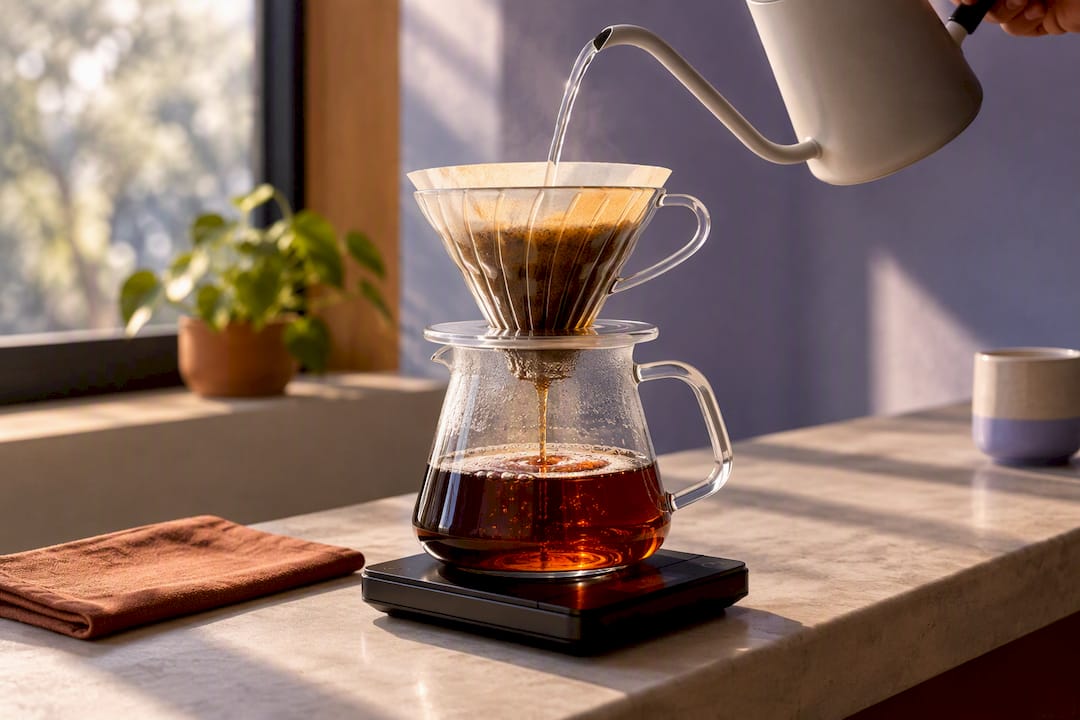
Make Fruit Forward Light Roast Cold Brew in 16–24 Hours
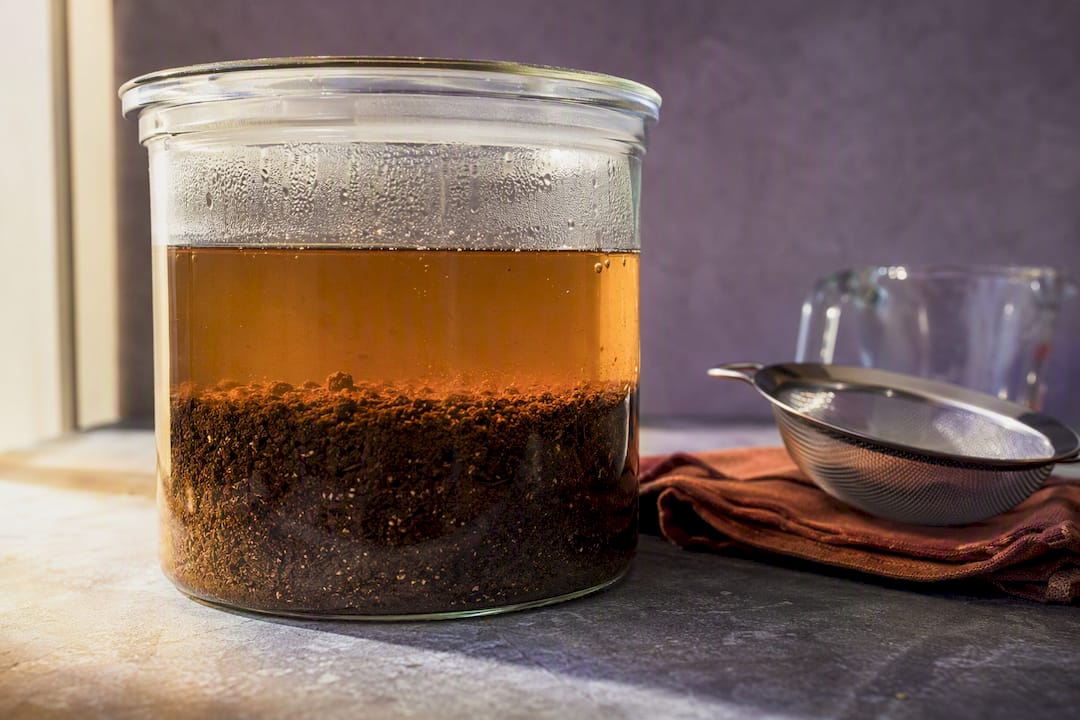
Yes, light roast makes excellent cold brew, but it needs longer extraction and a few targeted adjustments to avoid the sour, thin cup that gives light roast a bad name. Change three things: grind slightly finer than usual, steep four to six hours longer than you would with a medium roast, and taste before you dilute. Get those right and you’ll land on the fruit-forward, tea-like cold brew that light roast is capable of. The recipe and troubleshooting fixes below cover exactly how.
TL;DR:
- Using a finer grind and steeping for 20 to 24 hours in the fridge helps prevent sour, thin, or overly sharp light roast cold brew.
- Freshly roasted beans should rest for 7 to 10 days before brewing to ensure proper degassing and flavor clarity.
- High-quality, washed single-origin beans from Ethiopia, Colombia, or Kenya yield a cleaner, more citrus and floral-forward cold brew with added origin transparency.
- Adjusting steep time and grind size is more critical than ratio or roast level when troubleshooting sour or weak results.
- Light roast cold brew is best for drinkers seeking bright, fruit-forward tastes and should be brewed slow and carefully for optimal flavor.
Table of Contents
- What Does Light Roast Cold Brew Taste Like?
- A Reliable Light Roast Cold Brew Recipe
- Which Beans Work Best for Light Roast Cold Brew?
- Which Brewing Method Fits Your Setup?
- Why Is My Light Roast Cold Brew Sour, Weak, or Bitter?
- Why Trust This Light Roast Cold Brew Guidance?
- What the Conventional Advice Gets Wrong
- Get Fresh Light Roast Beans Without the Guesswork
- Sources
- FAQ
What Does Light Roast Cold Brew Taste Like?
Done right, light roast cold brew tastes closer to iced tea than to the syrupy, chocolate-forward cold brew most people expect. Expect citrus, stone fruit, and floral notes riding on a lighter body, with acidity that reads as brightness rather than sharpness. Clarity is the whole point: you’re tasting the coffee’s origin, not the roast.
That makes it the better call for drinkers who take their coffee black and want to taste where the beans came from. It’s a worse fit for anyone building an iced latte around a heavy pour of milk, where a darker roast’s body and roasted-sugar notes hold up better against dairy.
Freshness matters more here than with darker roasts. Light roasts hold more density and more raw plant sugars going into the brew, and beans that are too fresh haven’t finished degassing, which throws off extraction and reads on the palate as sourness. A short technical explainer from Britannica on cold versus hot extraction chemistry lays out why roast degree changes how coffee behaves in cold water at all.
Who should reach for light roast cold brew:
- Drinkers who sip coffee black and want the origin’s character to come through
- Anyone chasing citrus, floral, or stone-fruit notes over chocolate and caramel
- Home brewers willing to steep longer for a cleaner, lighter-bodied cup
A Reliable Light Roast Cold Brew Recipe
Two ratios cover almost every use case: a ready-to-drink batch you can pour over ice immediately, and a concentrate you stretch further with water or milk.
- Ready-to-drink. Combine coarsely ground coffee with cold, filtered water in a ratio suitable to preserve the volatile aromatics that a stronger concentrate tends to mute, according to Homebaristaguide. This ratio preserves the volatile aromatics that a stronger concentrate tends to mute, according to Homebaristaguide.
- Concentrate. Use coffee and water in a ratio that creates a concentrate which you then dilute with water or milk to taste, roughly equal parts, based on common practical guidelines.
- Grind medium-coarse, a touch finer than what you’d use for a medium roast batch. Light roast beans are denser, so water needs a slightly larger surface area to work with.
- Steep 16 to 20 hours at room temperature, or 20 to 24 hours in the fridge. Light roasts extract more slowly than dark roasts, and Coffeescan backs a longer window as the standard fix, not a workaround.
- Taste before diluting. Pull a spoonful at the 16 hour mark. If it tastes thin or sharp, give it another two to four hours before straining.
- Filter in two passes. Strain through a metal mesh first to catch grounds, then run the liquid through a paper filter or cloth for a clean, sediment-free finish that reads almost like tea.
- Store in airtight glass in the fridge. Ready-to-drink batches hold their flavor for a typical duration in the fridge; concentrate keeps longer, but both gradually lose freshness and clarity over time.
Pro Tip: Brew a small side batch (300 grams water) alongside your main pitcher using the same grounds and timing. Taste it hourly after the 14 hour mark and you’ll pinpoint your personal sweet spot without wasting a full batch on trial and error.
For the full step-by-step on ratios and equipment beyond light roast specifically, the cold brew coffee ratio and recipe guide walks through the fundamentals this recipe builds on.
Which Beans Work Best for Light Roast Cold Brew?
Origin and processing decide more of your final cup than most people assume, sometimes more than the roast itself. Washed single-origin lots from Ethiopia, Colombia, or Kenya are the safest bet, because washed processing strips away the fruit pulp before drying, leaving a cleaner cup that lets citrus and floral notes come through without competing flavors muddying the picture. Varietals like Bourbon and Typica tend to reward that clarity even further.
Naturally processed coffees can still work, but they arrive with more inherent fruitiness and sugar, which in a long cold-brew steep can tip into overripe or fermented flavors if you’re not watching your timing closely. If you want to understand that trade-off before you buy, how coffee processing affects taste breaks down washed versus natural in more depth, and the piece on why coffee has fruity tasting notes explains where that fruit character actually comes from.
Roast date matters just as much as origin:
- Buy beans roasted recently, and check for a printed roast date, not just a “best by” stamp. Let beans rest several days after roasting before cold brewing; too fresh means unfinished degassing leading to undesirable flavor. Avoid beans roasted long ago, as light roasts lose aromatic complexity more quickly once stale.
Which Brewing Method Fits Your Setup?
Immersion, slow-drip, and hybrid brewing all produce different results from the same beans, and light roast tends to show those differences more clearly than darker roasts do.
Immersion (a mason jar, a French press, or a Toddy-style system) is the most forgiving and the easiest place to start. Grounds sit in water the whole steep, which is exactly what dense light roast beans need. Slow-drip towers produce a noticeably cleaner, more tea-like cup because water drips slowly through the grounds rather than sitting static, but they take more setup and patience, and a too-fast drip rate under-extracts light roast even worse than immersion does. Hybrid methods, where you finish an immersion batch with a short room-temperature rest after fridge steeping, can speed up extraction on days when you’re impatient for a finished cup.
Tweaks by method:
- Immersion: grind medium-coarse, steep the full 16 to 24 hour window, agitate gently once at the halfway mark
- Slow-drip towers: slow the drip rate further than you would for medium roast, since light roast needs more contact time per drop
- Hybrid: steep 12 hours cold, then finish 3 to 4 hours at room temperature to nudge extraction over the finish line
If you’re working with basic gear, a mason jar and a nut-milk bag will get you most of the way there. The light roast brewing methods guide covers equipment options and method-specific recipes in more detail.
Why Is My Light Roast Cold Brew Sour, Weak, or Bitter?
Almost every bad batch traces back to one of four causes, and each has a specific fix.
- Sour or sharp: usually under-extraction, either from too-fresh beans or too short a steep. Tasting Table’s reporting on light roast iced coffee points to bean density as the culprit: water simply hasn’t had time to fully penetrate the grounds. Fix it by extending the steep 4 to 6 hours, or grinding slightly finer next batch.
- Weak or watery: low coffee dose or over-dilution. Fix by moving toward the 1:5 concentrate ratio, or cutting your ready-to-drink batch with less water.
- Bitter or harsh: grind too fine, steep too long, or too much agitation during the brew. Fix by coarsening the grind a notch and cutting steep time by two to three hours.
- Gassy or flat with off aromas: beans brewed too soon after roasting. Fix by resting future batches 7 to 10 days post roast before brewing.
Pro Tip: Change one variable per batch and write it down. Adjust grind this week, steep time next week. Changing two things at once means you’ll never know which one actually fixed the problem.
Why Trust This Light Roast Cold Brew Guidance?
This guide draws on beans specifically selected for the kind of clarity it aims to highlight. That’s a narrower, more demanding lane than general roasting advice, and it shapes every ratio and grind suggestion above.
A few resources worth bookmarking if you want to go deeper:
- The coffee education hub covers brewing guides and origin reports beyond what fits in one article
- Why ultra-light roast preserves flavor explains the roasting science behind the clarity this recipe depends on
- Natural process coffee flavor is worth reading before you buy naturals for cold brew
A day-of-roast subscription removes one variable entirely: guessing how old your beans actually are. When you know the roast date, you can rest beans exactly 7 to 10 days and brew with confidence instead of trial and error.
What the Conventional Advice Gets Wrong
Most cold brew advice treats roast level as an afterthought, one line buried under grind size and steep time, when it should be the first decision you make. The conventional wisdom says light roast is “too acidic” or “too weak” for cold brew, and that’s backwards. What’s actually happening is that people brew light roast with dark roast parameters and blame the beans for their own timing mistake.
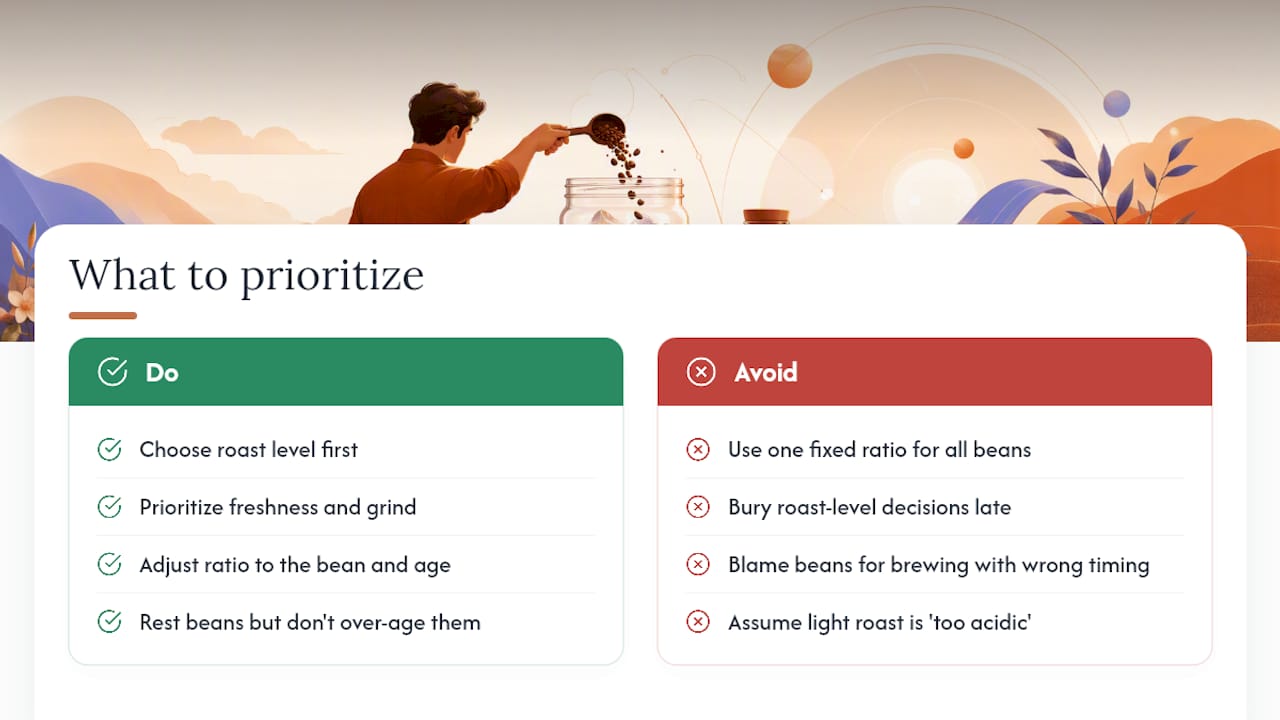
The bigger miss is that most guides treat cold brew as one recipe with one ratio, when it’s really a spectrum you adjust based on what’s in the bag. A washed Ethiopian at day 8 post roast behaves nothing like a natural Colombian at day 25. Readers who internalize that will out perform anyone following a single fixed ratio.
If you take one thing from this guide, prioritize freshness and grind before you touch the ratio. A perfect 1:7 brew with beans that are three weeks stale will still taste flat. A slightly imperfect ratio with beans at their peak, rested but not tired, will taste better every time. Origin clarity isn’t something you brew into the coffee. It’s something you preserve, or lose, before the water ever touches the grounds.
— Sean
Get Fresh Light Roast Beans Without the Guesswork
The single biggest variable in light roast cold brew isn’t your ratio or your steep time. It’s whether you actually know your beans’ roast date, and most bags on a store shelf give you no way to check. Some specialty coffee services ship beans roasted to order, so instead of guessing whether a bag has degassed enough to brew, you can know the exact date and rest it the recommended 7 to 10 days before your next batch.

Certain subscriptions feature ultra-light, Nordic-style single-origin lots from origins like Ethiopia and Colombia, sourced to highlight bright, fruit-forward clarity. Some services allow customers to pick preferences and receive personalized selections over time, reducing uncertainty about a bag’s freshness. If you’re ready to stop guessing at freshness, start a subscription and pick your first light roast origin today.
Sources
- Homebaristaguide
- Tastingtable
- Coffeescan
- Using chemistry: difference between cold & hot brew coffee — Britannica
FAQ
Does light roast mean weak coffee?
No. Light roast has a lighter body than dark roast, but “weak” usually means under-extraction, not the roast level itself. Fix it with a longer steep and a slightly finer grind rather than switching roasts.
Which roast level is best for cold brew?
It depends on how you drink it: light roast gives the brightest, most origin-driven cup for black coffee drinkers, medium roast is the most forgiving all-purpose choice, and dark roast holds up best against milk, according to Coffeescan.
What’s a good light roast cold brew recipe?
Use coffee and water ratios suitable for either a ready-to-drink batch or a concentrate, and steep 16 to 24 hours depending on temperature.
What’s the difference between light and medium roast for cold brew?
Light roast beans are denser and extract more slowly, so they need a longer steep and often a slightly finer grind than medium roast to avoid tasting sour or thin.
How long should light roast cold brew steep?
Room temperature steeps are generally shorter, while fridge steeps typically require a longer time, because light roast’s density slows extraction compared to darker roasts.