Aim for 18–22% Extraction: How to Brew Light vs Blonde Roast
Blonde roast is usually just a marketing name for a light roast, and there’s often no consistent technical line between the two. Flavor differences come down to roast development, not the label on the bag, and caffeine differences are small and depend more on your brew method than your roast choice. The practical move: check the roast date, read the roaster’s tasting notes, and adjust your grind and water temperature rather than choosing based on the word “blonde” alone.
TL;DR:
- Blonde and light roasts often overlap in color, but roasting development time after first crack has a greater impact on flavor than color labels.
- Light and blonde roasts typically deliver bright, floral, and citrusy flavors with higher acidity, but body can decrease at very dark levels due to bean structure changes.
- Brewed caffeine levels depend on extraction yield and dose, not roast color, with darker roasts sometimes exhibiting lower caffeine for the same weight of beans.
- Adjusting grind size, brew temperature, and contact time is crucial for optimizing flavor extraction from light and blonde beans, especially for popular methods like pour-over and Aeropress.
- Freshness, roast date, and origin details offer more reliable guidance than labels, as roast descriptions vary widely and do not guarantee specific flavor or caffeine content.
Table of Contents
- Light Roast vs Blonde Roast: How Roasters Define Each Term
- Flavor, Acidity, and Body: What Light and Blonde Roasts Taste Like
- Caffeine: What the Research Actually Shows
- Adjusting Your Brew Recipe for Light and Blonde Coffee
- What to Check on the Bag Before You Buy
- Why Moustachecoffeeclub Roasts Ultra-Light and Ships Fresh
- Who Should Actually Drink Light or Blonde Roast
- Sources
- FAQ
Light Roast vs Blonde Roast: How Roasters Define Each Term
“Light roast” has been part of coffee vocabulary for decades, with older names like cinnamon roast, half city, and light city describing roughly the same territory. These roasts stop shortly after “first crack,” the audible popping stage when beans first release moisture and expand, usually somewhere between 356°F and 401°F internal bean temperature. Development time, the minutes spent roasting after that crack, matters as much as the stopping temperature.
“Blonde” is newer, and it’s a retail invention rather than a roasting standard. The Specialty Coffee Association has pushed for color measurement tools like Agtron and CIELAB precisely because roast names vary so much from one roaster to the next. One company’s blonde roast might land at the same color reading as another’s light roast, or even creep toward light-medium.
A few things to know before you buy:
- Blonde almost always overlaps with light, but roasters apply it inconsistently.
- Agtron and CIELAB measure reflected light off ground beans, giving a numeric color value that doesn’t rely on marketing language.
- Development time after first crack shapes flavor more than the stopping color alone.
Flavor, Acidity, and Body: What Light and Blonde Roasts Taste Like
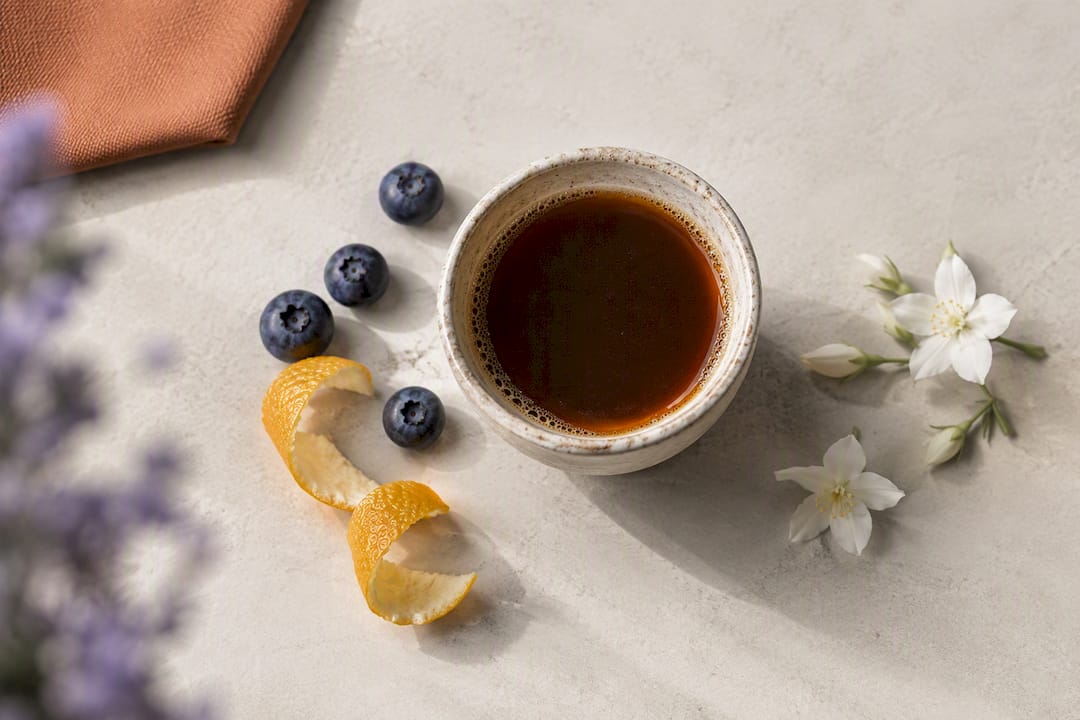
True ultra-light roasts tend to taste bright, floral, and citrus-forward, with a lighter body and pronounced acidity that reads as lively rather than sour when the coffee is developed properly. Origin character shows up loudest here. A washed Ethiopian at a light roast can taste like blueberry and jasmine; the same bean roasted darker loses most of that.
Body doesn’t move in a straight line as roast increases. Research on roast development, documented by the SCA, describes a “hump” effect: body tends to build from light through medium roasts, then can actually decrease again at very dark levels as cell structure breaks down and oils escape faster than they develop. So “darker equals fuller body” isn’t a reliable rule past a certain point.
Watch for these common faults, which usually signal a brewing or roasting problem rather than an unavoidable trait of light coffee:
- Grassy or vegetal notes — often underdevelopment, meaning the roast was pulled too early after first crack.
- Hollow, thin flavor — frequently under-extraction at the brewing stage, not the roast itself.
- Harsh, sharp sourness — can be either an underdeveloped roast or coffee brewed with water that’s too cool or a grind that’s too coarse.
Pro Tip: If a light or blonde roast tastes sour rather than bright, don’t write off the whole category. Try a finer grind first. That single change resolves more sourness complaints than switching roasts ever does.
Caffeine: What the Research Actually Shows
The idea that light roast automatically has more caffeine is one of the most repeated claims in coffee, and the evidence doesn’t back a universal rule. Caffeine differences appear when you compare beans by count instead of weight, but that gap tends to shrink or disappear when you’re comparing coffee by weight or by finished cup.
A 2024 study in Scientific Reports tested 30 combinations of roast level, variety, and brew time, and found that brewed caffeine depends on both roast degree and extraction yield together, not roast alone. Under identical brewing conditions, dark roasts often showed lower brewed caffeine than light roasts. But when researchers matched extraction yields instead, dark roasts sometimes came out higher. Roast changes the bean’s density and porosity, and that affects how easily caffeine dissolves into your water.
Other work backs the “no consistent roast effect” side. An MDPI study measuring 15 Arabica samples found neither processing nor roasting significantly affected caffeine content, even though roasting clearly changed color and chlorogenic acid levels. A separate 15-sample analysis reported light roast beans at 6.42 mg/g caffeine versus 2.63 mg/g for dark, yet the authors themselves cautioned that roasting did not significantly affect caffeine across their full sample set. Numbers like these are study-specific, not a rule you can apply to every bag of beans.
What this means practically:
- Measure coffee by weight (grams), not by scoop count, since bean density shifts with roast.
- Focus on dose and extraction if caffeine content matters to you, not the roast label.
- Expect small, brewing-dependent differences rather than dramatic swings between light and blonde.
For a deeper breakdown of how grind and brew method interact with roast to change your caffeine intake, Moustachecoffeeclub’s guide on caffeine and light roast walks through the variables in more detail.
Adjusting Your Brew Recipe for Light and Blonde Coffee
Light and blonde beans are generally denser than dark roasts, so water can extract flavors differently from them. That’s why the same recipe that works fine on a medium roast often produces a thin, sour cup with a light roast. The fix usually involves grinding finer, brewing slightly hotter, or extending contact time, changed one variable at a time so you actually know what fixed the problem.
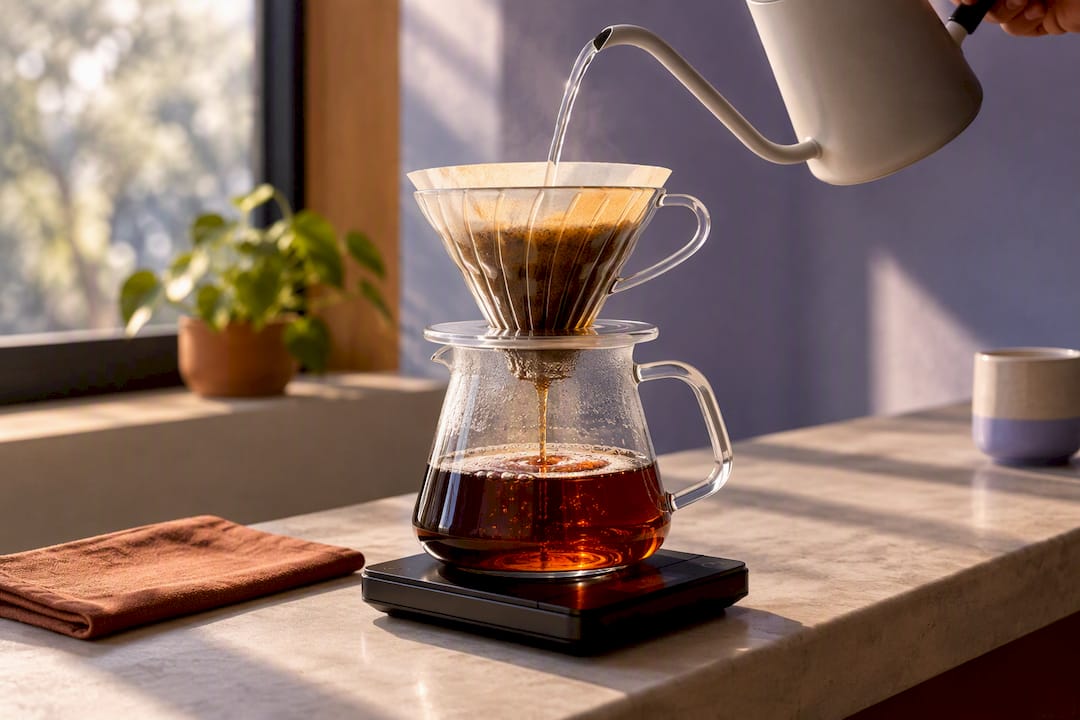
- Pour-over (V60): Start with a slightly finer grind than you’d use for medium roast and water around 205°F. A roaster-tested V60 recipe scaled from 15g to 240g gives a solid starting ratio.
- Aeropress: Use a shorter, hotter brew with more agitation. This method forgives light roasts well since pressure helps compensate for slower extraction.
- French press: Coarsen the grind slightly and extend steep time by 30 seconds to a minute to pull more body from a naturally lighter cup.
- Espresso: Expect to grind finer and possibly pull a longer shot than you would for darker beans, since light roasts resist extraction more.
Aim for an extraction yield around 18 to 22 percent as a general target, adjusting based on taste rather than chasing an exact number. Freshness changes the math, too. Beans brewed the day after roasting behave differently than the same beans a week later, so recipes need to shift as coffee degasses. For a fuller method comparison, see Moustachecoffeeclub’s guide to light roast brewing methods.
What to Check on the Bag Before You Buy
A few details on the packaging tell you more than the word “blonde” ever will:
- Roast date — freshness affects flavor more than almost any other variable; look for coffee roasted within the last two to four weeks.
- Development notes — some roasters state development time or use descriptors like “light, fully developed” instead of vague color words.
- Suggested brew method — a roaster that recommends a specific method usually roasted with that extraction style in mind.
- Origin and processing — washed, natural, or honey processing changes flavor as much as roast level does.
At home, look at the bean surface. Light and blonde beans stay dry with minimal oil sheen, while darker roasts show visible oils. A quick crush test between your fingers gives a rough sense of density; lighter roasts feel firmer and less brittle. If a fresh bag tastes overly sharp or gassy right out of the roaster, give it two or three more days to degas before judging it.
Why Moustachecoffeeclub Roasts Ultra-Light and Ships Fresh
Moustachecoffeeclub focuses on ultra-light, Nordic-style single-origin coffee because that roast profile preserves the flavor character each origin is known for, and it ships beans the day they’re roasted rather than letting them sit in a warehouse. Freshness and roast development work together. A perfectly roasted light bean brewed three weeks late will taste flatter than a slightly aggressive roast brewed fresh.
A few practical starting points from the roaster-tested recipe library:
- The V60 recipe scaled from 15g to 240g is built specifically to avoid the thin, sour result many home brewers get with light roasts.
- Aeropress recipes lean on shorter contact time and more agitation to compensate for the density of lightly roasted beans.
- Anyone wanting to understand the chemistry behind why light roasts brew differently can read how roasting changes coffee’s chemical structure.
Many guides explain that under-extraction is the single biggest reason people give up on light roasts before giving them a fair shot.
Who Should Actually Drink Light or Blonde Roast
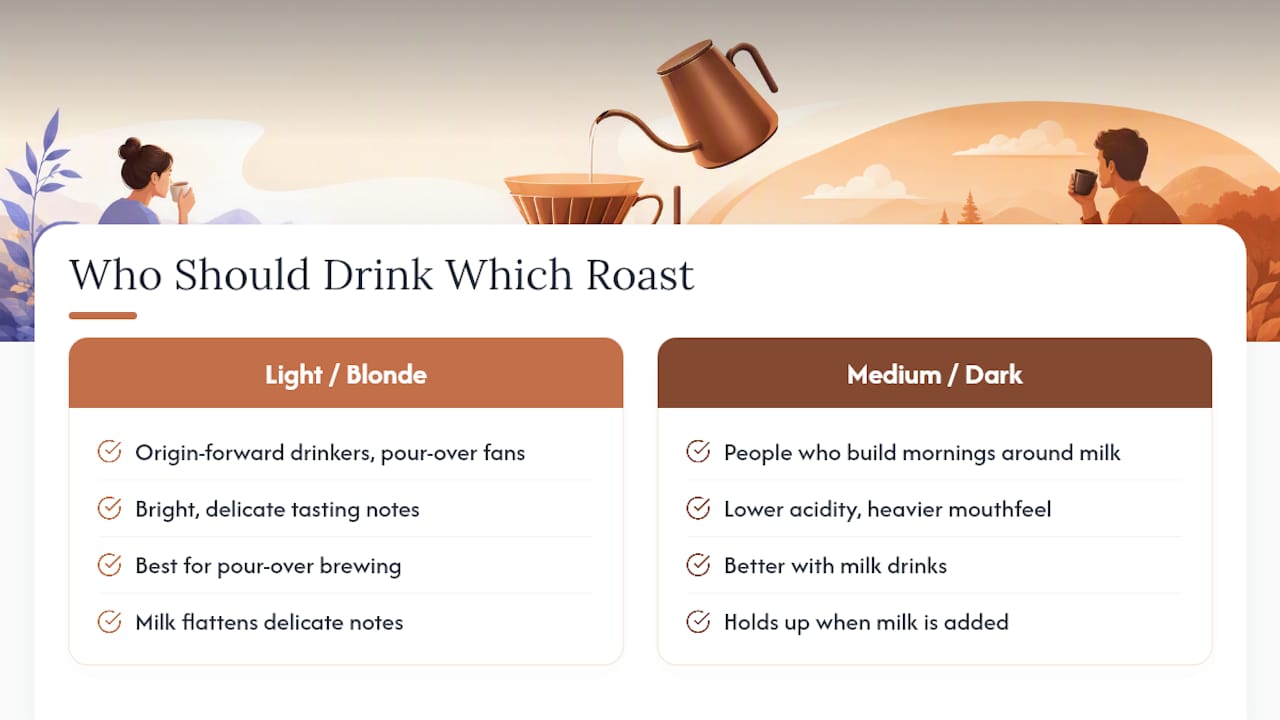
Origin-forward drinkers and pour-over fans get the most out of light and blonde roasts. If you like tasting the difference between a Colombian and an Ethiopian coffee, lighter roasting is what lets that distinction survive the roaster. If you build your mornings around milk drinks or prefer a lower-acid, heavier mouthfeel, a medium or dark roast will serve you better; milk tends to flatten the bright, delicate notes that light roasts are built around.
Before picking your next bag, check three things: the roast date, whether the roaster specifies development notes or just uses “blonde” as a marketing word, and whether the suggested brew method matches equipment you actually own.
— Sean
Sources
- What color is your coffee? | 25, Issue 21 — Specialty Coffee Association
- Caffeine content in filter coffee brews as a function of degree of roast and extraction yield | Scientific Reports
- Effects of Different Processing Methods of Coffee Arabica on Colour, Acrylamide, Caffeine, Chlorogenic Acid, and Polyphenol Content
- PubMed entry summarizing roasting effects on caffeine (study of 15 Arabica samples)
FAQ
What Are the Drawbacks of Light Roast Coffee?
The main drawbacks are preparation-related rather than inherent to the roast: light roasts show higher perceived acidity if under-extracted, have a lighter body than darker roasts, and demand more precise grind and brew control. Properly developed light roast shouldn’t taste grassy; that flavor usually points to underdevelopment during roasting.
Is Blonde Roast the Strongest Coffee?
No. “Strongest” usually refers to flavor intensity or bitterness, and blonde roast is typically milder and brighter than medium or dark roast, not stronger. Caffeine content doesn’t reliably track with roast color either, since brewed caffeine depends heavily on extraction yield, not just how light or dark the beans look.
Which Coffee Roast Is the Smoothest?
Medium roasts are often described as the smoothest because they balance body and acidity, while light and blonde roasts lean brighter and more acidic, and dark roasts lean heavier and more bitter. “Smooth” is subjective, and a well-developed light roast can taste just as balanced as a medium roast to someone who prefers clarity over heaviness.
Which Roast Is Strongest at Coffee Chains?
At most major chains, dark roast is marketed as the boldest-tasting option, while blonde roast is positioned as the mildest. That distinction describes flavor intensity, not caffeine content, since roast level alone doesn’t reliably predict how much caffeine ends up in your cup.