Home Brewers: Pick Light or Medium Roast by Method, Fresh Roast Options
Pick light roast when you want bright, fruit-forward cups that show off exactly where the beans came from, and you don’t mind dialing in your grinder. Pick medium roast when you want a forgiving, versatile everyday coffee with balanced sweetness across whatever brew method you have on hand. Either way, check the roast date before the roast name. A bag roasted three weeks ago beats a “perfect” roast level every time.
TL;DR:
- Light roast beans are best for highlighting origin-specific flavors like citrus, berries, or floral notes, with a narrower extraction window requiring precise brewing.
- Medium roast offers a more forgiving profile with balanced sweetness and fuller body, making it suitable for a wider range of brewing methods and beginner drinkers.
- A bag roasted three weeks ago generally provides a better cup than a “perfect” roast level that is several months old.
- Light roasts preserve origin character better due to less Maillard reaction, but are more sensitive to grind size and temperature adjustments.
- Caffeine content is the same per gram across roast levels, but light beans are denser, so scooping can lead to higher caffeine intake if not weighed properly.
Table of Contents
- Light vs Medium Roast: A Side-by-Side Comparison
- Why Roasting Changes Flavor, Acidity, and Body
- Does Light Roast Really Have More Caffeine?
- How to Brew Light and Medium Roast for Best Results
- How Do You Choose Between Light and Medium Roast?
- What Roast-to-Brew Testing Actually Looks Like
- Try Fresh Ultra-Light Roasts Without the Guesswork
- Sources
- FAQ
Light vs Medium Roast: A Side-by-Side Comparison
The clearest way to see the difference between light roast and medium roast is to line up what happens in the roaster and what lands in your cup.
Light roast beans stop at or just past first crack, usually in the neighborhood of 180 to 205°C (356 to 401°F). The surface stays dry, the color runs tan to light brown, and the acidity reads bright and lively, often with citrus, berry, or floral notes depending on origin. Medium roast pushes further, roughly 210 to 220°C (410 to 428°F), landing somewhere between first and second crack. That extra time and heat mellows the acidity, thickens the body, and builds a rounder sweetness with notes like caramel, toasted nut, or brown sugar.
- Roast temperature: Light, about 180 to 205°C; Medium, about 210 to 220°C
- Bean color: Light, tan to light brown; Medium, medium brown
- Surface oils: Light, dry; Medium, faint sheen starting to appear
- Acidity: Light, high and bright; Medium, moderate and rounded
- Body: Light, lighter and tea-like; Medium, fuller and creamier
- Best methods: Light suits pour-over and Chemex; medium handles drip, French press, and espresso well
Extraction is where the real practical gap shows up. Light roast has a narrower window for getting it right, so grind size and water temperature matter more. Medium roast tolerates a wider range of settings, which is why it shows up as the default recommendation for home brewers figuring out their gear.
Why Roasting Changes Flavor, Acidity, and Body
Roast level is really a chemistry timeline, and where you stop that timeline determines what ends up in your cup. Early in the roast, chlorogenic acids, the compounds responsible for coffee’s sharp, citric brightness, start breaking down. Stop the roast early, near first crack, and a lot of those acids survive, which is why light roasts taste so vivid and origin-driven.
Push past that point and the Maillard reaction takes over, the same browning reaction that happens when you sear meat or toast bread. It builds melanoidins, the compounds behind body, sweetness, and that rounder, toastier flavor medium roasts are known for. The tradeoff is that Maillard byproducts also start smoothing over the sharper edges that made the origin distinctive in the first place.
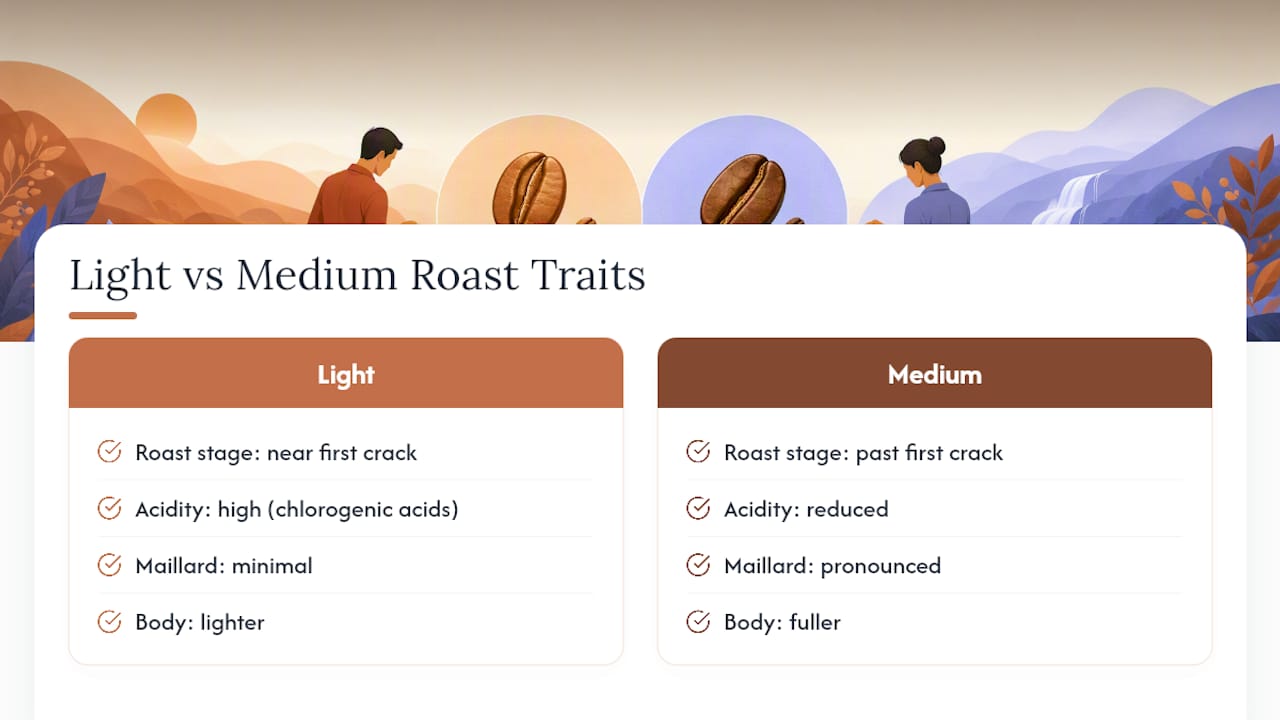
That’s the real reason light roasts preserve origin character better than darker ones. An Ethiopian natural roasted light can taste like blueberries and wine. Push the same bean to medium, and you still get a good cup, but the roast itself starts contributing more flavor than the farm did.
Does Light Roast Really Have More Caffeine?
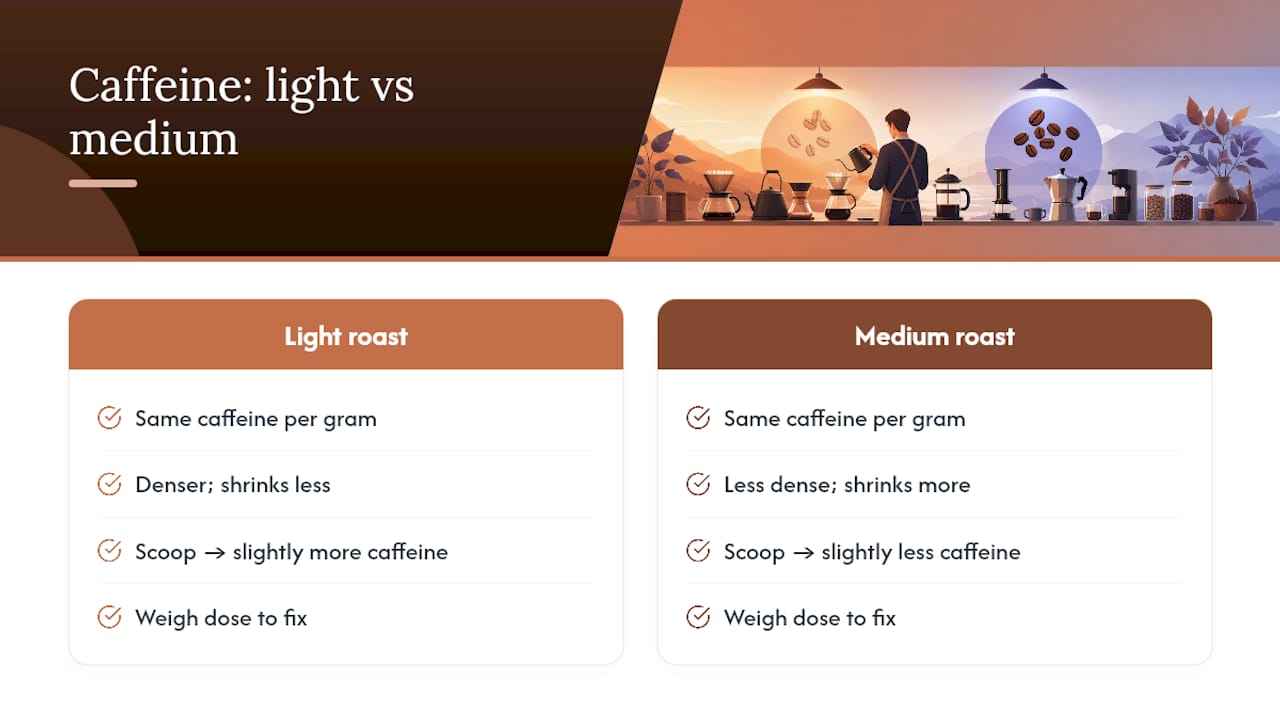
No, not per gram, and this is where most kitchen-counter debates go wrong. Caffeine is thermally stable through the roasting process, so a gram of light roast and a gram of medium roast contain essentially the same amount of caffeine. The myth that dark roast has more punch, or that light roast is somehow “weaker,” comes from measuring by volume instead of weight.
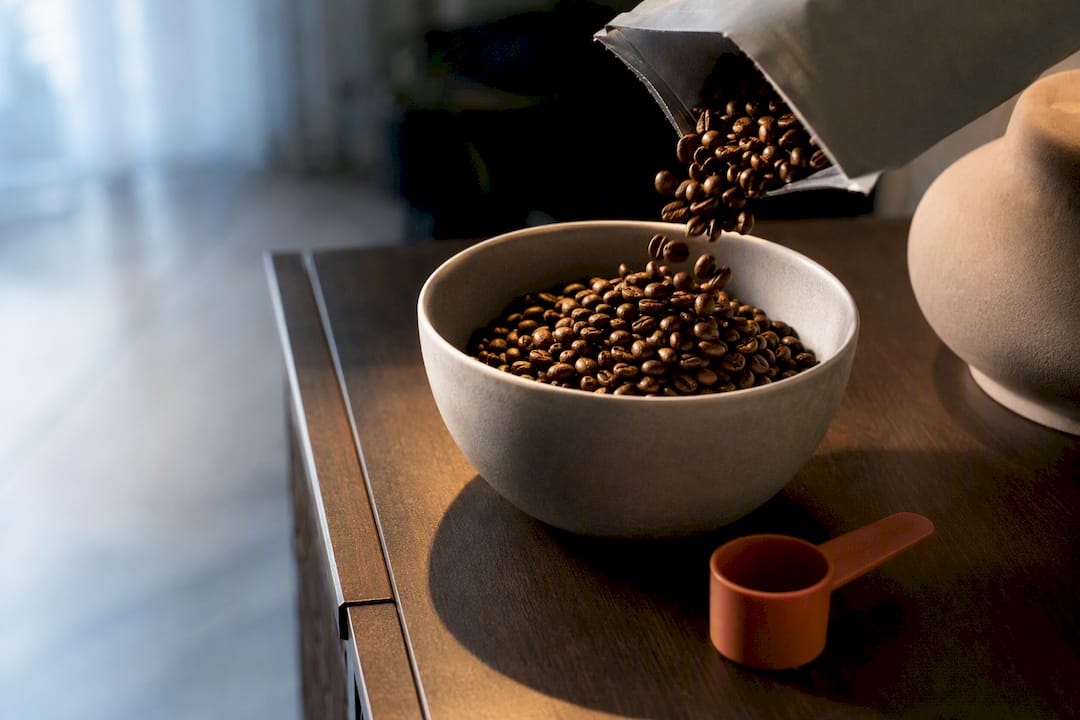
Here’s the catch: light roast beans are denser and shrink less during roasting, so a scoop of light roast packs in more beans, and slightly more caffeine, than the same scoop of medium roast. If you measure coffee with a spoon instead of a scale, switching roasts without adjusting your dose is exactly how you end up with an inconsistent cup. Weighing your dose instead of scooping is the fix, and it works the same way regardless of roast level.
How to Brew Light and Medium Roast for Best Results
Light roast rewards precision. Medium roast forgives a little sloppiness. Adjust accordingly.
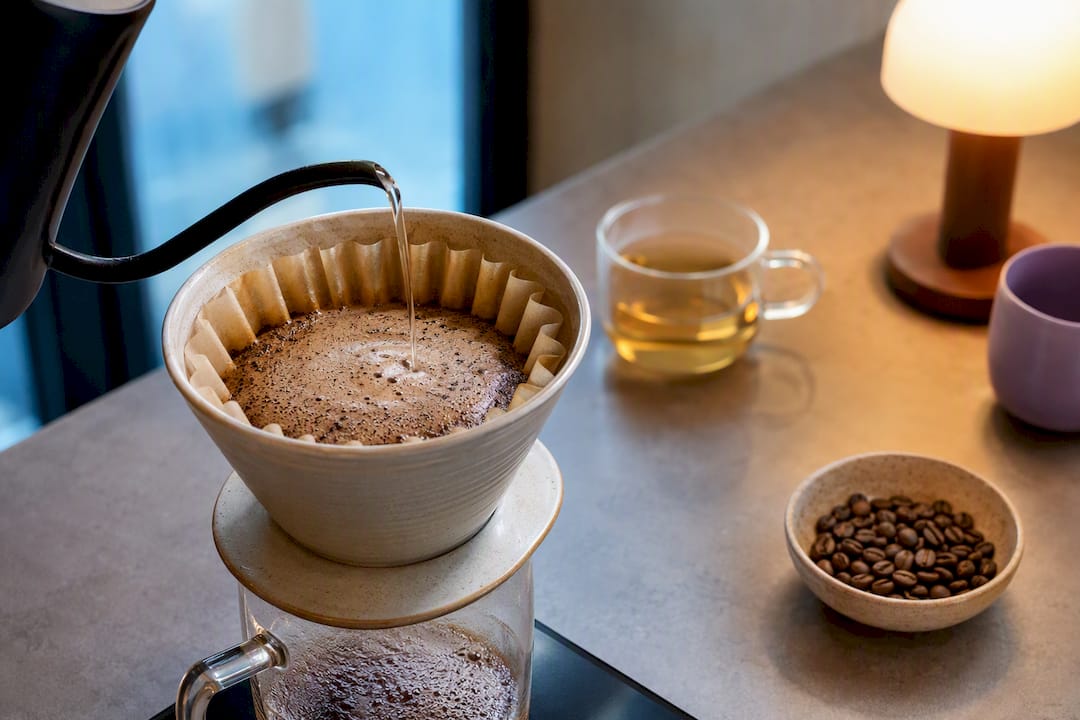
- Pour-over, V60, or Chemex with light roast: Use hotter water, around 205°F, a finer grind than you’d guess, and let contact time run slightly longer to pull sweetness out from behind that bright acidity.
- AeroPress with light roast: Push your steep time up by 15 to 30 seconds compared to a medium roast recipe, since light roast has a narrower extraction window and needs a nudge to fully develop.
- Drip or French press with medium roast: Standard settings work fine. Medium roast’s wider tolerance means you can be a little loose with grind size and still get a balanced cup.
- Espresso with medium roast: Start around 200°F and a standard fine grind. Medium roast’s built-in sweetness buffers minor dialing-in mistakes better than light roast does.
Pro Tip: If your cup tastes sour or thin, go finer on the grind or hotter on the water first, before you touch the dose. If it tastes bitter or harsh, the fix is usually the opposite: coarsen the grind or pull the temperature down a few degrees.
Full method-by-method recipes, including light roast brewing techniques and steps for dialing in light roast coffee, are worth bookmarking if you’re switching roast levels for the first time.
How Do You Choose Between Light and Medium Roast?
Run through a short checklist before you buy your next bag. What do you brew most often, and does that method reward precision or forgive inconsistency? Do you want a cup that tastes like a specific farm and altitude, or one that tastes like a reliably good cup of coffee? How much fiddling with grind and temperature are you actually willing to do on a Tuesday morning? And if multiple people in your house are brewing, does everyone want the same experience, or does the routine need to flex?
Once you’ve answered that, check the bag itself for a few things:
- Roast date, which matters more than the roast name printed above it
- Tasting notes, since they tell you what the roaster is actually going for
- Roast-level naming, understanding that labels vary widely between roasters with no fixed standard
- Suggested brew method, when the roaster includes one
If you’re genuinely unsure, start with medium roast. It’s the safer bet for a first attempt at a new coffee, a new grinder, or a busy morning. Once you’ve got your footing, try a light-roast single-origin through a pour-over. That’s where the differences between light and medium roast stop being theoretical and start tasting like something specific.
What Roast-to-Brew Testing Actually Looks Like
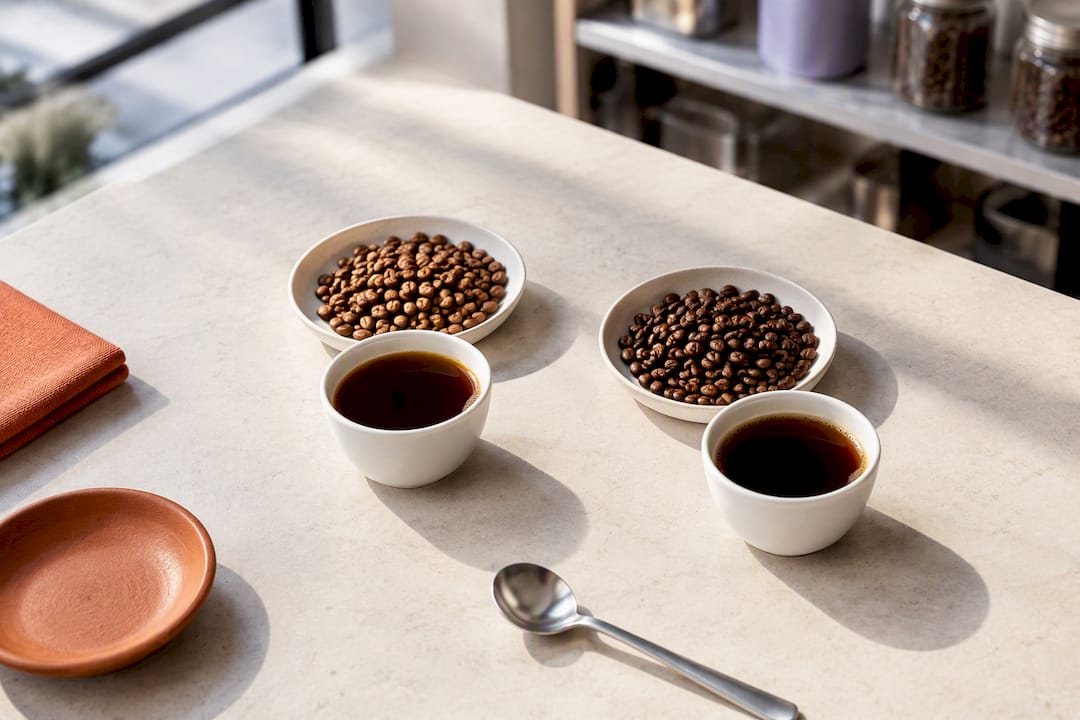
Comparing light and medium roast fairly means brewing the same origin at both roast levels, back to back, with the grind and water temperature adjusted for each one rather than held identical. That’s the only way to isolate what the roast itself is doing versus what your brewing technique is doing.
Some specialty coffee roasters build their approach around the light end of that spectrum, roasting Nordic-style, single-origin coffee and shipping it the day it’s roasted so the origin character described above hasn’t had time to fade. For readers who want to understand the mechanics further, the breakdown of why ultra-light roast preserves flavor goes deeper into the chemistry than a buying guide can.
— Sean
Try Fresh Ultra-Light Roasts Without the Guesswork
Moustachecoffeeclub exists for readers who like everything above about light roast but don’t want to manage sourcing, roast dates, or grinder settings on their own. Some coffee subscriptions ship single-origin beans roasted to order from various regions, so the bag in your hands was roasted days, not months, before it arrived.
Plans include ongoing deliveries with brewing guides and origin reports built in, so you’re not just getting beans, you’re getting the context to brew them well. The Custom plan runs $49 per week per bag for readers who want to fine-tune their own rotation, while the Duet plan runs $24 per week per bag if you’re sharing with a partner or want a lighter delivery cadence. If you’d rather test the waters first, the Tasting Series offers a lower-commitment way to sample the ultra-light approach, and the gift subscription is worth a look if you’re buying for someone who’s curious about origin-driven coffee but hasn’t found the right entry point yet. Check the full plan lineup to find the cadence and price that fits your routine.
Sources
- Coffee Roast Levels: Light vs Medium vs Dark — Complete Guide (2026)
- Light vs Medium vs Dark Roast: Flavour, Caffeine, Facts — Coffee Studies
- Coffee Roast Levels Explained | Seattle Coffee Gear
FAQ
What Is Stronger, Light Roast or Medium Roast?
Neither is objectively “stronger” in caffeine, since caffeine per gram stays nearly the same across roast levels. What people usually mean by “stronger” is flavor intensity, and that’s a matter of taste: light roast delivers sharper, brighter intensity, while medium roast delivers a heavier, more rounded intensity.
What Roast of Coffee Tastes the Best?
There’s no single best roast, since it depends on what you’re brewing and what flavor you’re chasing. Light roast wins for readers who want a fruit-forward, origin-specific cup, while medium roast wins for readers who want balanced sweetness and consistency across brew methods.
What Are the Drawbacks of Light Roast Coffee?
Light roast has a narrower extraction window, which means small mistakes in grind size or water temperature show up more clearly in the cup than they would with medium roast. It can also taste sour or thin if brewed with water that’s too cool or a grind that’s too coarse, so it rewards a little more attention and a decent grinder.
What Is Light Roast Coffee Best For?
Light roast is best for readers who want to taste the specific origin of a coffee, its farm, altitude, and processing method, rather than flavors added by the roast itself. It shines in pour-over and other manual methods where you control temperature and contact time closely, and it’s the roast Moustachecoffeeclub builds its entire single-origin lineup around.