What Does Roast to Order Mean for Coffee Freshness?
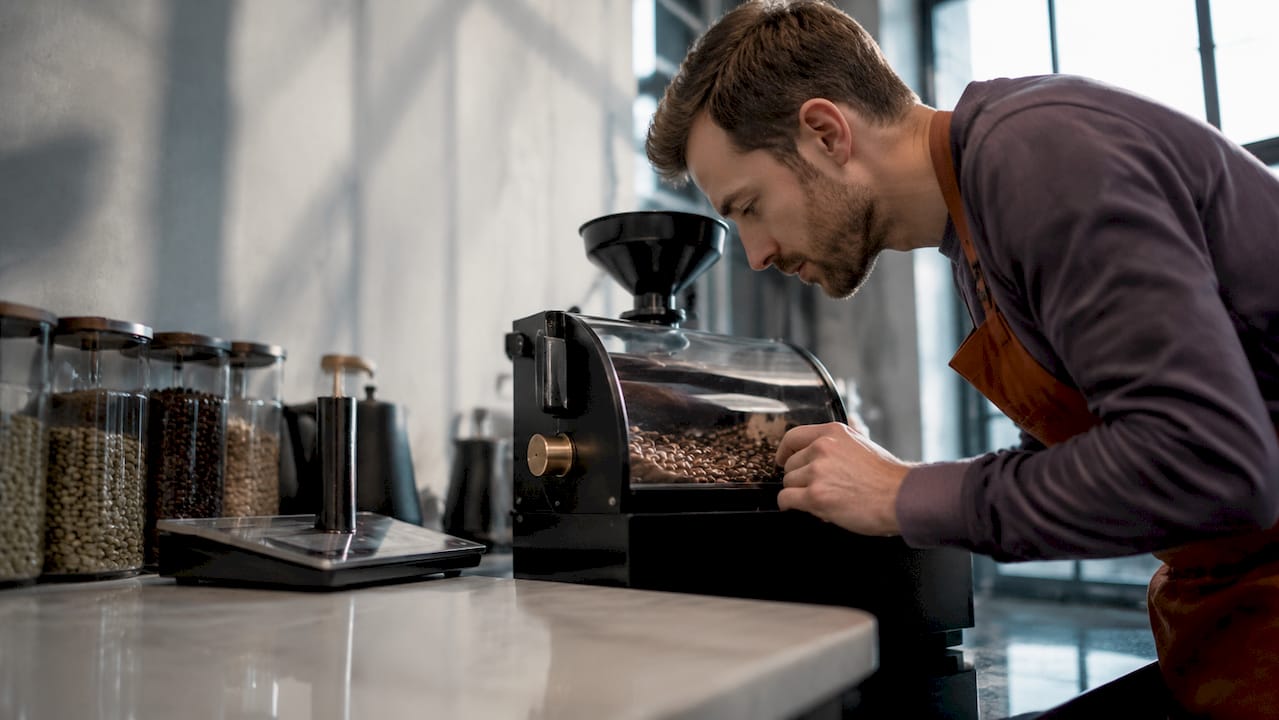
Roast to order is defined as the practice of roasting coffee beans only after a customer places an order, then packaging and shipping them immediately. This approach stands in direct contrast to mass-produced coffee, which is roasted in bulk, warehoused, and sold weeks or months later. The result is a cup with measurably better aroma, more complex flavor, and a freshness that pre-roasted grocery store coffee simply cannot match. If you have seen the phrase on a specialty coffee site and wondered what it actually guarantees, this article breaks down the chemistry, the practical differences, and what to look for when you buy.
What does roast to order mean, exactly?
Roast to order means your coffee is roasted only after placement of your order, then quickly packaged and shipped. No sitting in a warehouse. No guessing how long the bag has been on a shelf. The roaster fires up the drum specifically for your batch.
The industry term you will also see is “made to order roasting” or simply “fresh roast shipping.” Both describe the same model. The key distinction is timing: roasting happens in response to demand, not in anticipation of it. This eliminates the inventory lag that makes most commercial coffee stale before you ever open the bag.
Moustachecoffeeclub operates on exactly this model. Every subscription order triggers a fresh roast of single-origin beans from places like Ethiopia and Colombia, shipped directly to your door. The freshness is not a marketing claim. It is a structural feature of how the business works.
How does roast to order affect coffee aroma chemically?
Coffee freshness is a chemistry problem, not just a calendar problem. The aroma you love in a great cup comes from volatile organic compounds that begin breaking down the moment roasting ends.
The most important of these is 2-furfurylthiol, the compound most responsible for the classic roasted coffee smell. It is extraordinarily potent at low concentrations but also extraordinarily fragile. Research shows that grinding 60 minutes before brewing causes an 84% loss of this compound. That number is not a minor quality dip. It represents most of what makes specialty coffee smell and taste special.
Beyond 2-furfurylthiol, coffee freshness can be tracked through the ratio of sulfur compounds like methanethiol (MeSH) and dimethyl disulfide (DMDS). As chemical markers shift after roasting, they signal distinct freshness stages. This means a roast date on the bag tells only part of the story. How the coffee was stored, how quickly it was shipped, and how long it sat before grinding all affect what ends up in your cup.
Roast to order aligns the roasting event as closely as possible with the brewing event. That alignment is the entire point. The shorter the gap between roast and cup, the more of those volatile compounds survive to deliver flavor.
Pro Tip: Light roasts, like the nordic-style coffees Moustachecoffeeclub specializes in, tend to retain more delicate floral and fruit compounds. These are the first to degrade, which makes roast to order especially important for ultra-light roast profiles.
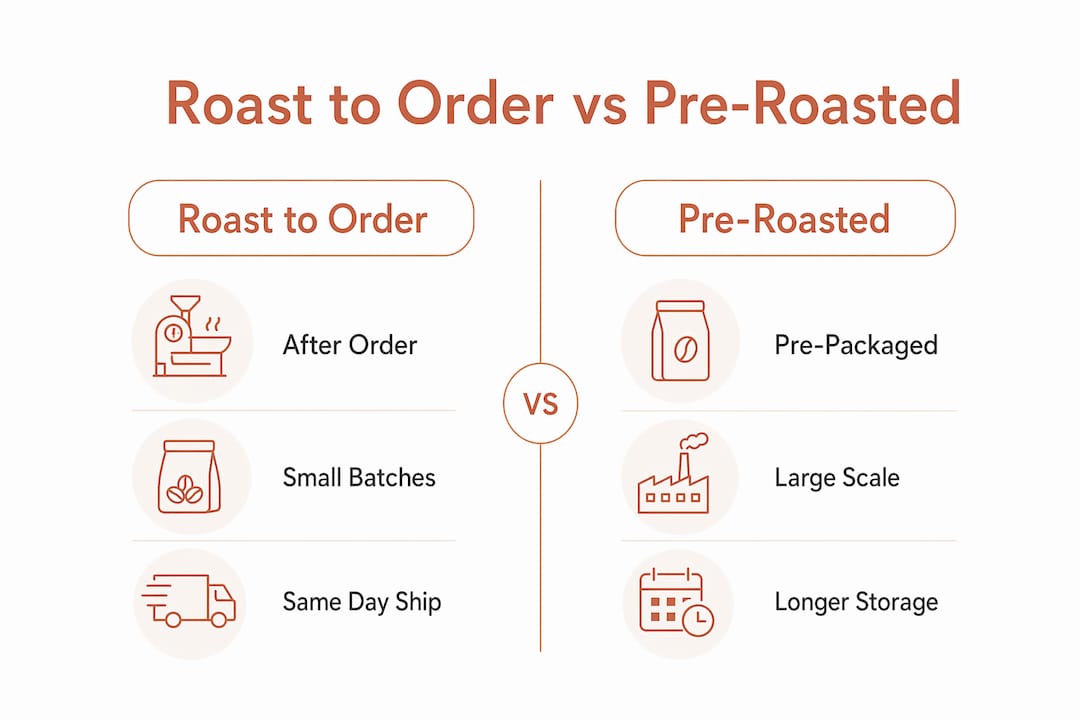
Roast to order vs. pre-roasted coffee: key differences
The practical gap between roast to order and traditional pre-roasted coffee is wider than most people expect. Pre-roasted bags on grocery store shelves may be months old by the time you buy them. Roasting, warehousing, distribution, and shelf time stack up fast.
Roast to order operations like Moustachecoffeeclub roast in small batches and ship the same day or within 24–72 hours. That means the coffee arriving at your door is often still releasing CO2, a sign it was roasted very recently. Pre-roasted coffee has long since finished that off-gassing process, and with it, much of its aromatic potential.
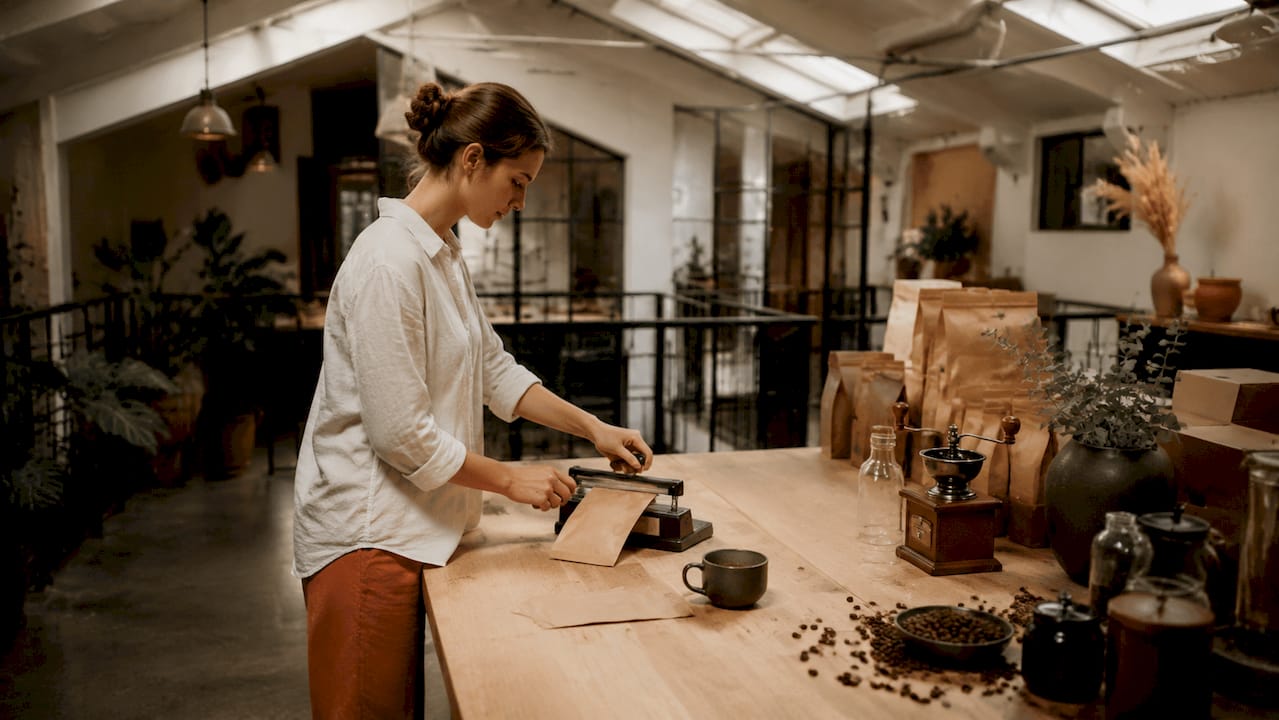
Roast date transparency is another dividing line. Specialty roasters practicing true roast to order print the exact roast date on every bag. Many mass-market brands print only a “best by” date, which tells you nothing about when the coffee was actually roasted.
Here is a direct comparison of the two models:
| Factor | Roast to Order | Pre-Roasted / Shelf Coffee |
|---|---|---|
| Timing of roast | After order placement | Before distribution |
| Time from roast to cup | Days | Weeks to months |
| Aroma compound retention | High | Low to moderate |
| Roast date transparency | Printed on bag | Rarely disclosed |
| Batch size | Small, controlled | Large, mass production |
| Flavor complexity | Preserved | Diminished over time |
The table makes the trade-offs clear. Pre-roasted coffee offers convenience and lower cost at scale. Roast to order delivers a fresher, more flavorful product at the cost of a slightly longer wait before shipping.
How to get the most out of freshly roasted coffee
Receiving a bag of freshly roasted coffee is only the beginning. How you store and brew it determines whether you actually taste the difference.
Follow these practices to protect what the roaster worked to deliver:
- Store in an airtight container away from light, heat, and moisture. A ceramic canister with a one-way valve is ideal. Avoid the refrigerator, which introduces humidity and absorbs odors.
- Wait 2–4 days after delivery before brewing. Freshly roasted beans release CO2 actively, which can interfere with extraction. A short rest lets the gas dissipate without sacrificing aroma.
- Grind immediately before brewing. The 84% loss of 2-furfurylthiol from grinding an hour early is reason enough to keep beans whole until the moment you brew.
- Use a burr grinder, not a blade grinder. Consistent particle size extracts flavor evenly and lets you taste what the roast actually offers.
- Match your brew method to the roast profile. Pour-over methods like Hario V60 or Chemex highlight the clarity and brightness that single-origin coffees preserve best when roasted fresh.
Pro Tip: Proper storage and preparation after receiving roast to order coffee are just as important as the roast itself. A great roast stored poorly will taste worse than a decent roast handled well.
Coffee freshness peaks roughly 2–4 weeks after roasting for most coffees, then degrades steadily. That window is your target. Roast to order gets you into that window immediately. Pre-roasted shelf coffee often arrives after it has already closed.
What to look for when buying roast to order coffee
Not every brand that uses the phrase “roast to order” actually practices it rigorously. Knowing what to look for protects you from marketing language that does not match reality.
Here are the indicators of a genuine roast to order operation:
- An exact roast date on the bag. Not a “best by” date. The actual date the coffee was roasted. This is the single most reliable signal of transparency.
- Small batch language. Hand-roasted small batches allow precise control over roast profiles. Large-scale operations cannot replicate this level of quality control per order.
- Same-day or next-day shipping. A roaster that ships within 24 hours of roasting is structurally committed to freshness. Anything longer suggests pre-roasted inventory.
- Single-origin sourcing information. Roast to order preserves nuanced flavor profiles in single-origin coffees better than pre-roasted blends. A roaster who invests in fresh roasting usually invests in sourcing transparency too.
- Subscription customization options. The best roast to order services let you specify grind size, roast level, and even provide feedback to refine future selections. Moustachecoffeeclub builds this feedback loop directly into its subscription model.
For gifting, roast to order coffee is a genuinely premium choice. A freshly roasted coffee gift arrives at peak flavor, which is something a grocery store bag cannot offer. Gift subscriptions from roasters practicing true roast to order mean the recipient gets fresh coffee every delivery, not just the first one.
Watch out for vague claims like “freshly roasted” without a date, or “small batch” without specifics on batch size or roasting frequency. These phrases are common in marketing copy and mean nothing without supporting evidence.
Key takeaways
Roast to order is the most direct way to guarantee that volatile aroma compounds survive from the roaster to your cup.
| Point | Details |
|---|---|
| Core definition | Coffee is roasted only after an order is placed, then shipped immediately. |
| Chemistry matters | 2-furfurylthiol, the key aroma compound, degrades rapidly after roasting and grinding. |
| Freshness window | Coffee peaks 2–4 weeks post-roast; roast to order puts you in that window from day one. |
| Grind timing is critical | Grinding 60 minutes early causes an 84% loss of the primary aroma compound. |
| What to verify | Look for an exact roast date, small batch sourcing, and same-day shipping as proof of genuine practice. |
Why roast to order changed how i think about coffee
I spent years buying coffee the way most people do: grabbing whatever bag looked interesting at the grocery store, checking the “best by” date, and assuming that was good enough. The first time I brewed a bag that arrived two days after roasting, I genuinely thought something was different about the beans. The aroma was sharper. The cup had a brightness I had not tasted before.
What I eventually understood is that I had not been drinking bad coffee before. I had been drinking coffee that had already lost most of what made it interesting. The volatile compounds responsible for floral notes, fruit brightness, and that deep roasted smell are not stable. They leave. Roast to order is simply the practice of making sure they are still present when you brew.
The part that surprised me most was how much grinding timing matters. I assumed the roast date was the only variable. Learning that grinding an hour early causes an 84% loss of the primary aroma compound changed my entire morning routine. I grind immediately before brewing now, every single time.
For anyone considering roast to order for the first time, my honest advice is this: do not just buy one bag. Brew it correctly, with whole beans ground right before brewing, and compare it back to back with something from your usual shelf source. The difference is not subtle. You will taste exactly what the chemistry predicts.
— Sean
Experience roast to order coffee with Moustachecoffeeclub
If you want to taste the difference that fresh roasting actually makes, Moustachecoffeeclub makes it straightforward. Every subscription delivers single-origin beans from Ethiopia, Colombia, and other top-tier growing regions, roasted in the ultra-light nordic style and shipped immediately after roasting.
There is no pre-roasted inventory sitting in a warehouse. Your order triggers the roast. The beans ship the same day and arrive while the aroma compounds are still at their peak. You can also provide feedback after each delivery to refine your selections over time. For a gift or for yourself, the fresh roast subscription is the most direct way to experience what roast to order actually delivers in the cup.
FAQ
What does roast to order mean in simple terms?
Roast to order means coffee beans are roasted only after a customer places an order, then packaged and shipped immediately. No pre-roasted inventory is involved, which keeps the coffee as fresh as possible.
How long after roasting should i brew roast to order coffee?
Most coffees taste best 2–4 days after roasting, once the initial CO2 off-gassing settles. The freshness window typically peaks around 2–4 weeks post-roast, so brewing within that range captures the best flavor.
Does grinding time really affect roast to order coffee that much?
Yes. Research shows grinding 60 minutes before brewing causes an 84% loss of 2-furfurylthiol, the primary aroma compound in roasted coffee. Grinding immediately before brewing is the single most impactful step you can take.
Is roast to order coffee a good gift idea?
Roast to order coffee is one of the strongest gift options for coffee lovers because it arrives at peak freshness. A freshly roasted gift subscription delivers that quality with every shipment, not just the first one.
How do i know if a brand truly practices roast to order?
Look for an exact roast date printed on the bag, same-day or next-day shipping policies, and small-batch sourcing details. Vague “freshly roasted” claims without a specific date are not reliable indicators of genuine roast to order practice.
Recommended
- Roast to order coffee: advantages for single-origin lovers | Blog | The Moustache Coffee Club
- Receiving Roasted-to-Order Coffee: A Connoisseur’s Guide | Blog | The Moustache Coffee Club
- Why freshly roasted beans taste better: a guide | Blog | The Moustache Coffee Club
- Why Freshly Roasted Coffee Makes the Best Gift | Blog | The Moustache Coffee Club