What Is a Tasting Note in Coffee? A 2026 Guide
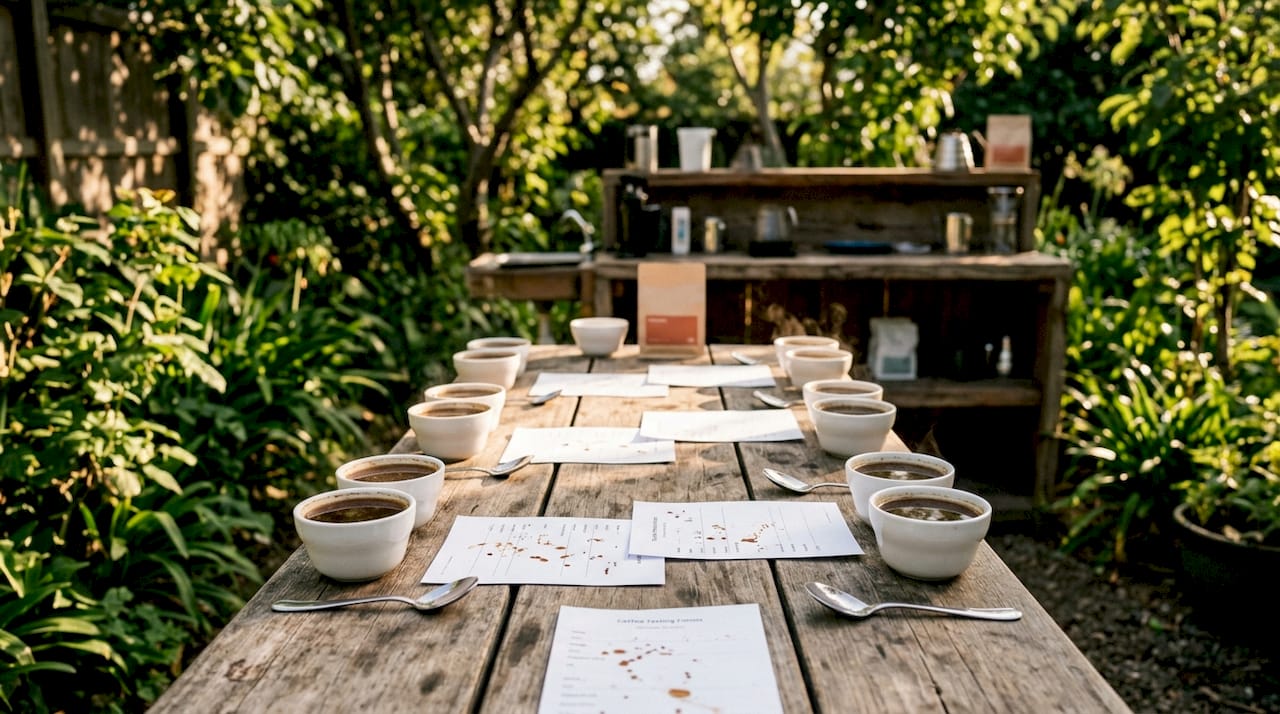
A tasting note in coffee is a sensory descriptor that captures the naturally occurring flavors and aromas found in a brewed cup, not a list of added ingredients. These notes reflect a coffee’s origin, varietal, processing method, and roast level. The Specialty Coffee Association formalized this language through the Coffee Taster’s Flavor Wheel, giving professionals and enthusiasts a shared vocabulary. Understanding what coffee tasting notes are helps you choose beans with confidence, adjust your brewing, and build a sharper palate over time.
What is a tasting note in coffee, exactly?
A coffee tasting note is a descriptive label for a sensory experience, not a recipe. When a bag reads “blueberry, dark chocolate, and cedar,” those flavors were never added to the beans. They arise naturally from aromatic and flavor compounds developed during the plant’s growth, fermentation, drying, and roasting stages. The note tells you what the coffee resembles, not what it contains.
The industry term for this practice is sensory evaluation, and tasting notes are its output. Specialty coffee professionals use cupping sessions, standardized water temperatures, and controlled grind sizes to identify these descriptors. The result is a flavor profile that communicates the coffee’s character before you ever brew a cup. Think of a tasting note as a directional signal, not a guarantee.
Tasting notes also carry practical weight for purchasing decisions. A coffee labeled “jasmine, peach, and honey” signals a delicate, floral Ethiopian profile. One labeled “walnut, brown sugar, and tobacco” points toward a heavier, earthier cup. Understanding these notes helps you match a coffee to your mood, your brewing method, and your palate.
How are coffee tasting notes developed and standardized?
Professional tasting notes come from a structured process called cupping. Trained Q graders and roasters evaluate coffee in controlled lab environments, using identical water temperatures, grind sizes, and brew ratios across every sample. This removes variables so that flavor differences reflect the coffee itself, not the brewing setup.
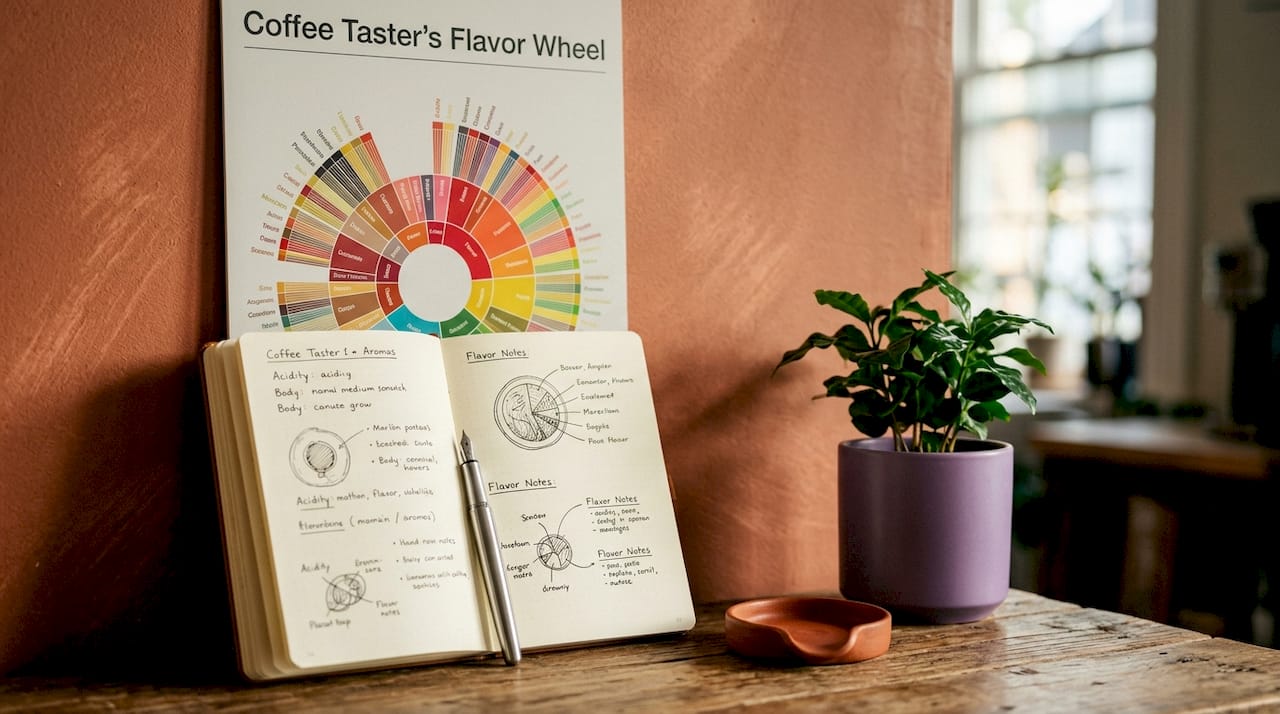
The primary vocabulary framework is the Coffee Taster’s Flavor Wheel, developed and maintained by the Specialty Coffee Association. It organizes flavor descriptors into 9 primary categories: Fruity, Floral, Sour/Fermented, Green/Vegetative, Roasted, Spices, Nutty/Cocoa, Sweet, and Other. Each category branches into more than 80 specific descriptors. A cupper might start with “Fruity” and narrow it down to “Stone Fruit” and then to “Peach.”
The Flavor Wheel also aligns terminology internationally, so a Q grader in Ethiopia and one in Norway describe the same coffee using the same reference points. Each term on the wheel has a defined sensory anchor, which reduces subjective drift and improves communication accuracy. That consistency is what makes tasting notes useful across roasters, buyers, and consumers worldwide.
Pro Tip: When reading a bag of coffee, match the listed notes to the Flavor Wheel’s primary categories first. If you see “lemon verbena,” locate it under Floral. This trains your brain to group flavors before chasing individual descriptors.
| Flavor Wheel Category | Example Descriptors |
|---|---|
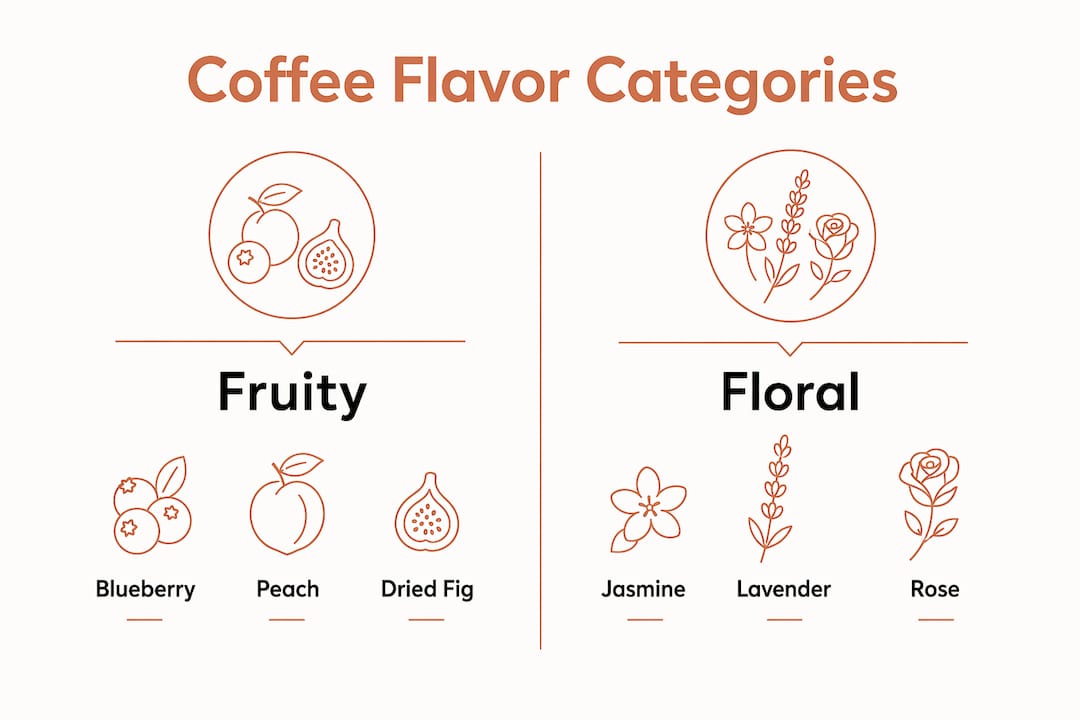
| Fruity | Blueberry, peach, dried fig |
| Floral | Jasmine, rose, chamomile |
| Nutty/Cocoa | Almond, dark chocolate, hazelnut |
| Roasted | Tobacco, cedar, smoky |
| Sweet | Brown sugar, honey, vanilla |
What sensory attributes do professionals evaluate?
Five key attributes form the backbone of any professional coffee evaluation: aroma, flavor, acidity, body, and finish. Each one captures a distinct dimension of the cup, and together they build the full flavor profile.
- Aroma is the smell of both dry grounds and the wet coffee after hot water is added. It is often the first and most immediate impression of a coffee’s character.
- Flavor is the combined experience of taste and aroma once the coffee is in your mouth. It is the broadest attribute and where most tasting notes live.
- Acidity describes the brightness or liveliness in the cup. A high-acidity Ethiopian coffee feels crisp and almost citrusy. A low-acidity Sumatran coffee feels flat and earthy by comparison.
- Body refers to the texture and weight of the coffee on your palate. A full-bodied coffee feels thick, like whole milk. A light-bodied coffee feels closer to water.
- Finish is the lingering aftertaste after you swallow. A long, clean finish is a mark of quality. A short or harsh finish often signals over-extraction or lower-grade beans.
Professionals recommend comparing two coffees side-by-side using the same brewing method to make these differences tangible. When you taste a washed Colombian next to a natural Ethiopian, the contrast in acidity and body becomes immediately clear.
Pro Tip: Evaluate aroma before adding anything to your cup. Smell the dry grounds, then smell again right after you pour hot water. The shift between those two moments reveals a lot about the coffee’s processing and origin.
Common misconceptions about coffee tasting notes
The biggest misunderstanding about tasting notes is that they describe added flavors. They do not. Tasting notes represent “family resemblances” to familiar aromas and tastes, produced entirely by natural compounds in the bean. A coffee that tastes like raspberry got that quality from fermentation and drying, not from fruit.
A second misconception is that tasting notes are objective facts you should taste exactly as written. They are not. Roasters develop notes in controlled cupping labs using conditions that differ significantly from home brewing. Your French press, your water quality, and your grind size all shift what you perceive. Bag notes are potential flavor roadmaps, not flavor guarantees.
A third issue is that enthusiasts sometimes dismiss their own perception when it differs from the bag. That dismissal is unnecessary. Your sensory experience is valid even when it diverges from what the roaster detected. Keeping a personal tasting log builds palate confidence over time and helps you recognize patterns in what you enjoy.
Here is what to watch for when reading tasting notes:
- Vague terms like “fruity” or “sweet” signal a broad flavor family. They are a starting point, not a complete description.
- Specific terms like “raspberry jam” or “dark caramel” anchor a precise sensory memory. These are more useful for purchasing decisions.
- Processing-driven notes like “fermented,” “winey,” or “tropical” often indicate a natural or honey-processed coffee. They reflect how coffee processing affects taste more than origin alone.
- Roast-driven notes like “dark chocolate,” “cedar,” or “smoky” appear when roast development dominates the cup’s character.
Roasters also tend to highlight the loudest, most marketable flavor traits to differentiate their coffees. The subtler notes often require a trained palate and ideal brewing conditions to detect. Knowing this prevents frustration when your cup tastes simpler than the label suggests.
How to use tasting notes for better brewing and buying
Tasting notes are a practical tool for both selecting coffee and improving how you brew it. Using notes to choose beans that match your preferred flavor profile removes guesswork from purchasing. If you consistently enjoy chocolatey, low-acid cups, look for notes like “cocoa,” “walnut,” and “brown sugar” on Colombian or Brazilian coffees.
- Match notes to your brewing method. High-acidity coffees with floral or citrus notes perform well in pour-over methods like the Chemex or V60, which preserve brightness. Full-bodied coffees with nutty or chocolatey notes suit immersion methods like the French press or AeroPress.
- Use acidity cues to adjust grind size. If a coffee tastes sour or sharp beyond what the notes suggest, your grind is likely too coarse. Finer grinding increases extraction and softens acidity. If it tastes bitter, go coarser.
- Track your own notes after each brew. Write down what you taste, the brewing variables you used, and whether the result matched the bag. Recording your impressions builds palate confidence and reveals patterns in your preferences.
- Reference the Flavor Wheel when stuck. If you cannot name what you taste, start at the outermost ring of the Flavor Wheel and work inward. The structure guides you from broad families to specific descriptors.
- Communicate preferences to your roaster. Tasting notes bridge communication between roaster and consumer. Telling a roaster “I want something with stone fruit and low bitterness” gives them far more to work with than “I want something good.”
| Brewing goal | Note cue to look for |
|---|---|
| Bright, tea-like cup | Floral, citrus, or berry descriptors |
| Rich, chocolatey cup | Cocoa, walnut, or caramel descriptors |
| Balanced, everyday cup | Brown sugar, apple, or almond descriptors |
| Bold, heavy body | Tobacco, cedar, or dark fruit descriptors |
Key Takeaways
A coffee tasting note is a sensory descriptor for naturally occurring flavors, not added ingredients, and the Coffee Taster’s Flavor Wheel provides the standardized vocabulary professionals use to communicate those flavors consistently.
| Point | Details |
|---|---|
| Tasting notes are not ingredients | They describe natural compounds from origin, processing, and roasting, never added flavors. |
| The Flavor Wheel structures vocabulary | The Specialty Coffee Association’s wheel organizes 80+ descriptors into 9 primary categories. |
| Five attributes define a profile | Aroma, flavor, acidity, body, and finish together build a complete sensory picture. |
| Bag notes are roadmaps, not guarantees | Home brewing conditions differ from cupping labs, so your perception may vary from the label. |
| Personal notes build your palate | Keeping a tasting log tracks preferences and improves both brewing decisions and purchasing choices. |
Why I stopped treating tasting notes as a test
The first time I read “jasmine and bergamot” on a bag of Ethiopian coffee, I brewed it, tasted it, and felt nothing but confusion. I got something vaguely floral and a lot of brightness. I assumed I was doing something wrong. That assumption cost me months of productive tasting.
The shift came when I stopped treating tasting notes as a pass-or-fail test and started using them as a compass. If the bag says “peach and honey,” I am not hunting for a peach. I am looking for something soft, round, and slightly sweet in the finish. That reframe changed everything. Specificity matters more than accuracy. Writing “tastes like the inside of a ripe plum, slightly tannic” in my tasting log is more useful than writing “fruity.” The more specific your language, the sharper your sensory memory becomes.
My practical advice for beginners: taste two coffees from different origins on the same morning, using the same method. The contrast does more for your palate than any amount of reading. A coffee sampler set is one of the fastest ways to build this kind of comparative experience at home. Curiosity beats expertise every time. You do not need to taste jasmine on the first try. You just need to keep showing up to the cup.
— Sean
Fresh coffee that makes tasting notes come alive
Tasting notes only reveal themselves fully in fresh coffee. Stale beans flatten flavor compounds and make even a well-described profile taste dull and one-dimensional.

Moustachecoffeeclub sources single-origin specialty coffees from Ethiopia, Colombia, and other high-altitude regions, roasting each batch to order in the ultra-light Nordic style that preserves the natural flavor compounds behind every tasting note. Each delivery includes origin reports and brewing guides that connect the notes on the bag to what you taste in the cup. If you want to put your tasting knowledge to work with coffees that actually deliver on their flavor profiles, a Moustachecoffeeclub subscription gives you a new origin to explore every month.
FAQ
What does a tasting note in coffee actually mean?
A tasting note describes the natural flavors and aromas present in a brewed coffee, produced by compounds developed during growing, processing, and roasting. It is a sensory descriptor, not a list of added ingredients.
Why don’t I taste what the bag says?
Roasters develop notes in controlled cupping labs using conditions that differ from home brewing setups. Your water quality, grind size, and brewing method all affect what you perceive, so bag notes are a flavor guide rather than a precise prediction.
What is the Coffee Taster’s Flavor Wheel?
The Coffee Taster’s Flavor Wheel is a standardized vocabulary tool developed by the Specialty Coffee Association. It organizes more than 80 flavor descriptors into 9 primary categories to help professionals and enthusiasts describe coffee consistently.
How do I start developing my own palate for coffee notes?
Taste two coffees from different origins side-by-side using the same brewing method. Write down what you notice in each cup, even if your language feels imprecise. Repetition and comparison build sensory memory faster than any other method.
Are floral or fruity coffee notes a sign of added flavoring?
No. Floral and fruity notes are entirely natural. They come from aromatic compounds in the coffee bean itself, shaped by the plant’s growing environment, fermentation process, and roast level, not from any added fruit or flavoring agent.
Recommended
- Specialty Coffee Tasting Notes Guide for Enthusiasts | Blog | The Moustache Coffee Club
- How Coffee Processing Affects Taste: A Flavor Guide | Blog | The Moustache Coffee Club
- What Is Included in a Coffee Tasting Box? | Blog | The Moustache Coffee Club
- What Is a Coffee Sampler Set? A Taster’s Guide | Blog | The Moustache Coffee Club