Carbon Footprint of Coffee Delivery Subscriptions
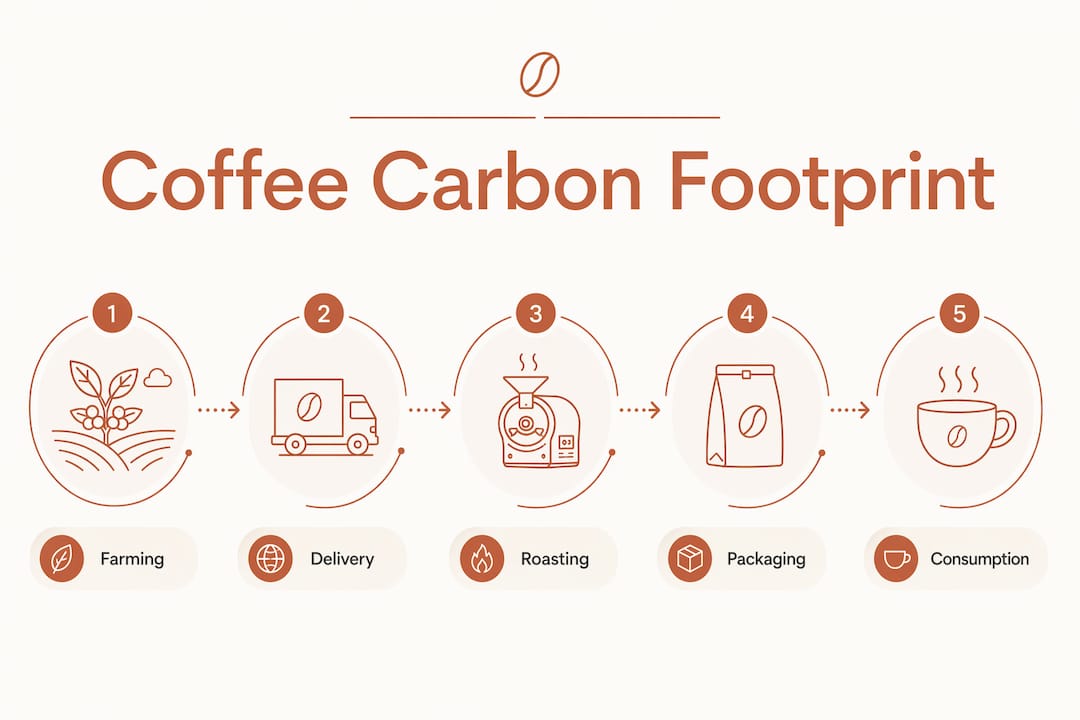
The carbon footprint of coffee delivery subscriptions is defined as the total greenhouse gas emissions generated across every stage of getting coffee from a farm to your door, including farming, roasting, packaging, distribution, and last-mile delivery. The global coffee trade emits roughly 135–178 million tonnes CO2e annually, representing about 1% of all food-sector emissions. That number puts the stakes in perspective. Farming accounts for the largest share of those emissions, while packaging contributes about 3%, distribution and shipping 5%, and roasting 4–6% of a coffee product’s lifecycle total. For environmentally conscious coffee lovers, understanding where emissions come from is the first step toward choosing subscriptions that actually reduce them.
What are the main contributors to the carbon footprint of coffee delivery subscriptions?
Coffee’s emissions are spread across five lifecycle stages, and they are not equal. Farming is by far the largest contributor, driven by synthetic fertilizers, land-use change, and water-intensive cultivation. The remaining stages, including roasting, packaging, distribution, and last-mile delivery, each add smaller but meaningful shares.
Emissions by lifecycle stage
| Lifecycle Stage | Approximate Emission Share | Key Driver |
|---|---|---|
| Farming | Largest share (majority) | Fertilizers, land-use change |
| Roasting | 4–6% | Energy consumption |
| Packaging | ~3% | Material production and waste |
| Distribution and shipping | ~5% | Freight transport |
| Last-mile delivery | High intensity per unit | Frequent small parcel trips |
Last-mile delivery deserves special attention in subscription models. Frequent small shipments raise total emissions significantly, even when individual routes are optimized. A subscriber receiving a small bag of coffee every week generates more delivery emissions than one receiving a larger bag every month. The math is straightforward: more trips equal more fuel burned per pound of coffee delivered.
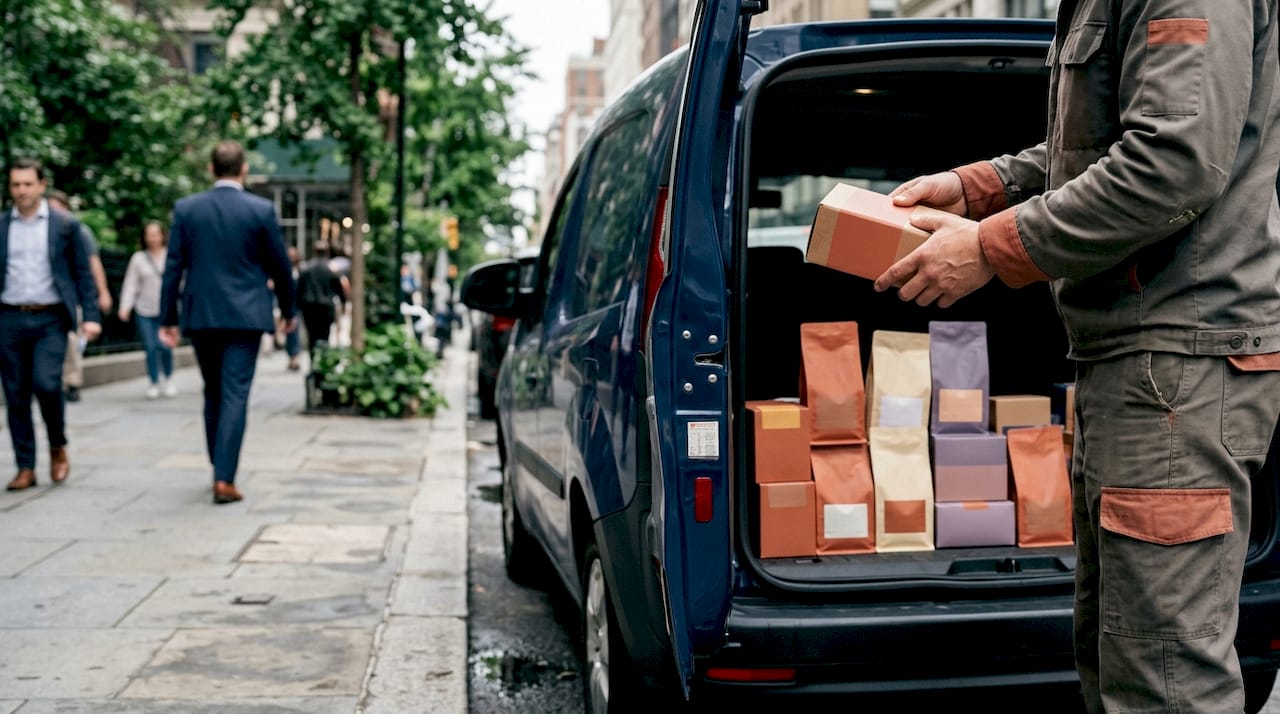
Roasting and packaging emissions are smaller in percentage terms, but they compound across millions of subscribers. A subscription service shipping to tens of thousands of customers each week multiplies even a 3% packaging share into a substantial absolute tonnage. Reducing emissions at every stage matters, but the order of priority should follow the size of each stage’s contribution.
How can packaging choices reduce the carbon footprint in coffee subscriptions?
Packaging is the most visible sustainability signal in a coffee subscription, but its actual carbon impact depends on material choices, not just appearances. Switching from multi-material laminate pouches to monomaterial flexible packaging can cut packaging carbon footprint by 50%, according to lifecycle assessment research following ISO 14040/44 standards. That is a significant reduction for a stage that affects every single shipment.
The freshness trade-off
Monomaterial packaging reduces carbon footprint but may shorten coffee shelf life. This trade-off matters because wasted coffee carries all the emissions of its production with none of the benefit of consumption. A subscription that ships in perfectly sustainable packaging but delivers stale coffee that gets thrown away has a worse net footprint than one using slightly less sustainable packaging with superior freshness protection.
The best packaging solutions balance both goals. Lightweight, recyclable, or compostable materials reduce the carbon cost of production and disposal. Letterbox-friendly flat packaging eliminates failed delivery attempts, which are a hidden source of last-mile emissions. Smaller, denser packages also improve shipping efficiency by fitting more units per delivery vehicle.
Pro Tip: When evaluating a coffee subscription’s sustainability claims, ask specifically whether their packaging is monomaterial and whether it is curbside recyclable in your area. “Recyclable” on a label does not always mean your local facility accepts it.
Moustachecoffeeclub addresses this directly by using reduced-plastic packaging designed to protect freshness while minimizing material waste. You can review their eco-friendly subscription checklist to see how packaging decisions stack up against 2026 sustainability benchmarks.
What delivery practices affect the carbon footprint of coffee subscriptions?
Last-mile delivery is the most carbon-intensive segment of coffee subscription shipping on a per-unit basis. The problem is structural: residential deliveries involve many stops, low drop sizes, and frequent failed attempts when no one is home. Subscription models that default to weekly small-bag deliveries amplify this inefficiency.
How order frequency and size change the math
Bulk shipments lower emissions compared to frequent small parcels, even when the total coffee volume is identical. A single monthly delivery of 12 ounces generates fewer transport emissions than four weekly deliveries of 3 ounces each. The vehicle miles traveled per ounce of coffee drops sharply as package size increases.
Practical steps to reduce your delivery-related emissions:
- Choose monthly or bimonthly delivery cadences over weekly options whenever your consumption allows it.
- Order larger quantities per shipment to reduce the number of individual deliveries per year.
- Select carbon-neutral shipping programs when your subscription service offers them, since these fund verified offset projects.
- Consolidate orders by timing coffee purchases alongside other household deliveries to reduce total vehicle trips.
- Use letterbox-compatible packaging subscriptions to eliminate redelivery attempts, which double the transport emissions of a single parcel.
Pro Tip: Switching from weekly to monthly delivery on a typical coffee subscription can reduce your delivery-related emissions by a meaningful margin without any change in the coffee you drink. Check your subscription settings today.
Food and beverage operators are applying similar logic at scale. Strategies for mitigating last-mile emissions increasingly center on consolidated routing and reduced delivery frequency, principles that translate directly to consumer subscription choices.
How does sourcing and farming influence the overall carbon footprint?
Farm-level emissions dominate coffee’s total carbon footprint, making sourcing the single highest-impact decision a coffee subscription can make. Supporting regenerative farms reduces lifecycle emissions more than any packaging or shipping improvement alone. This is the finding that most subscription marketing ignores, because packaging is visible and farming is distant.
Key factors that determine a farm’s carbon impact:
- Synthetic fertilizer use: Nitrogen fertilizers produce nitrous oxide, a greenhouse gas roughly 265 times more potent than CO2 over a 100-year period.
- Land-use change: Converting forest to coffee farmland releases stored carbon. Shade-grown and agroforestry systems preserve tree cover and sequester carbon instead.
- Water management: Wet-process coffee mills use large volumes of water and generate organic waste that can produce methane if not managed properly.
- Soil health practices: Regenerative and organic farms build soil organic matter, which actively sequesters carbon rather than releasing it.
Transparency in sourcing is the consumer’s primary tool here. A subscription that publishes origin reports, names specific farms or cooperatives, and discloses farming practices gives you the information needed to assess its real footprint. Vague claims like “ethically sourced” without specifics are not sufficient. The benefits and challenges of local and traceable sourcing are well documented, and traceability consistently correlates with lower farm-level emissions because it creates accountability.
Reducing emissions comprehensively requires addressing farm-level inputs alongside improvements in roasting, packaging, and shipping. No subscription can claim genuine sustainability while remaining opaque about where and how its coffee is grown.
How to evaluate sustainable coffee delivery subscriptions in 2026?
Choosing a lower-impact coffee subscription requires looking beyond marketing language. The criteria that actually matter are packaging type, delivery frequency options, sourcing transparency, and verified carbon programs.
Key evaluation criteria
| Criterion | Lower Impact | Higher Impact |
|---|---|---|
| Packaging material | Monomaterial, recyclable, or compostable | Multi-layer laminate, non-recyclable |
| Delivery frequency | Monthly or bimonthly | Weekly small parcels |
| Sourcing transparency | Named farms, origin reports, regenerative claims | Generic “ethically sourced” language |
| Carbon programs | Verified carbon-neutral shipping, offset certification | No program or unverified claims |
| Roasting energy | Renewable energy roasters | No disclosed energy source |
Certifications worth recognizing include USDA Organic, Rainforest Alliance, and Regenerative Organic Certified. These are not perfect proxies for carbon footprint, but they correlate with lower farm-level emissions because they restrict the most carbon-intensive inputs. Carbon-neutral shipping claims are only meaningful when backed by a recognized offset standard such as Gold Standard or Verified Carbon Standard.
Sustainable coffee subscriptions that combine circular packaging, carbon-neutral logistics, and optimized delivery routes deliver genuinely lower emissions. Subscriptions that check only one box while ignoring the others provide limited net benefit. You can see how leading brands approach this across multiple dimensions in Moustachecoffeeclub’s overview of how coffee brands practice sustainability in 2026.
Key Takeaways
Reducing the carbon footprint of coffee delivery subscriptions requires addressing farming, packaging, and delivery frequency together, not in isolation.
| Point | Details |
|---|---|
| Farming dominates emissions | Farm-level inputs like fertilizers and land-use change account for the largest share of coffee’s carbon footprint. |
| Packaging material matters | Switching to monomaterial flexible packaging can cut packaging emissions by 50% per lifecycle assessment data. |
| Delivery frequency is critical | Monthly bulk shipments generate significantly fewer transport emissions than weekly small parcels. |
| Sourcing transparency is non-negotiable | Named farms and published origin reports are the clearest signal of genuine low-impact sourcing. |
| Combine strategies for real impact | Subscriptions that integrate sustainable packaging, carbon-neutral shipping, and regenerative sourcing deliver the lowest net emissions. |
The inconvenient truth about “sustainable” coffee subscriptions
I have spent a lot of time reading sustainability claims from coffee subscription services, and the pattern is consistent: most of them lead with packaging. A compostable bag is easy to photograph and easy to market. What is harder to communicate is that the bag is responsible for roughly 3% of the total footprint, while the farm where the coffee was grown may account for the majority.
The subscriptions I find genuinely credible are the ones that publish uncomfortable specifics. They name the farm. They describe the farming method. They tell you whether the roastery runs on renewable energy. They offer monthly delivery as the default, not the premium option. That level of transparency is rare, and when you find it, it is worth paying for.
My honest recommendation is to stop optimizing your subscription around packaging aesthetics and start asking harder questions about sourcing. Switch your delivery to monthly if you have not already. That single change costs you nothing and reduces your delivery emissions more than any packaging upgrade a brand can make on your behalf.
Moustachecoffeeclub’s approach to recurring delivery setup reflects this thinking, with options designed to consolidate shipments rather than default to maximum frequency.
— Sean
Moustachecoffeeclub’s approach to lower-impact coffee
Moustachecoffeeclub sources single-origin specialty coffees from Ethiopia, Colombia, and other producing regions, roasting each batch to order in the ultra-light Nordic style that preserves the bean’s natural character. The subscription is built around transparency: origin reports, named sourcing regions, and reduced-plastic packaging designed to protect freshness without unnecessary material waste.
For environmentally conscious coffee lovers who want quality and accountability in the same bag, the Moustachecoffeeclub subscription is worth a close look. Delivery cadence options let you consolidate shipments, and the roast-to-order model means nothing sits in a warehouse generating waste before it reaches you. Fresh coffee, lower impact, and full sourcing transparency are the standard, not the exception.
FAQ
What is the carbon footprint of a typical coffee delivery subscription?
The carbon footprint spans farming, roasting, packaging, distribution, and last-mile delivery, with farming generating the largest share and last-mile delivery being the most carbon-intensive per unit shipped.
Does packaging type really affect a coffee subscription’s carbon footprint?
Yes. Switching from multi-material laminate to monomaterial flexible packaging can reduce packaging-related emissions by 50%, according to lifecycle assessment research following ISO 14040/44 standards.
How does delivery frequency affect coffee subscription emissions?
Frequent small deliveries generate more transport emissions per ounce of coffee than consolidated monthly shipments. Choosing monthly or bimonthly delivery is one of the most effective steps a subscriber can take.
What certifications indicate a lower-carbon coffee subscription?
USDA Organic, Rainforest Alliance, and Regenerative Organic Certified correlate with lower farm-level emissions. Carbon-neutral shipping claims are only credible when backed by Gold Standard or Verified Carbon Standard offsets.
Is sourcing or packaging more important for reducing coffee subscription emissions?
Sourcing is more important. Farm-level emissions from fertilizers and land-use change dominate coffee’s total carbon footprint, making regenerative and transparent sourcing a greater lever than any packaging improvement alone.
Recommended
- Eco Friendly Coffee Subscription Checklist for 2026 | Blog | The Moustache Coffee Club
- Setting Up Recurring Coffee Gift Delivery in 2026 | Blog | The Moustache Coffee Club
- Best Coffee Subscription | Fresh Roasted Single Origin | Moustache Coffee Club
- Comparing Coffee Subscription Plan Tiers: 2026 Guide | Blog | The Moustache Coffee Club