Specialty Coffee Tasting Notes Guide for Enthusiasts
Specialty coffee tasting notes are defined as the natural flavors and aromas produced by a coffee’s chemistry, not by added ingredients or artificial flavoring. These notes emerge from over 800 aromatic compounds naturally present in coffee beans, shaped by origin, altitude, variety, processing, and roast. The Specialty Coffee Association’s Coffee Taster’s Flavor Wheel is the global standard for organizing this vocabulary into a structured framework. Learning to read and use this framework turns every cup into a richer, more intentional experience.
1. What are the major flavor categories in specialty coffee?
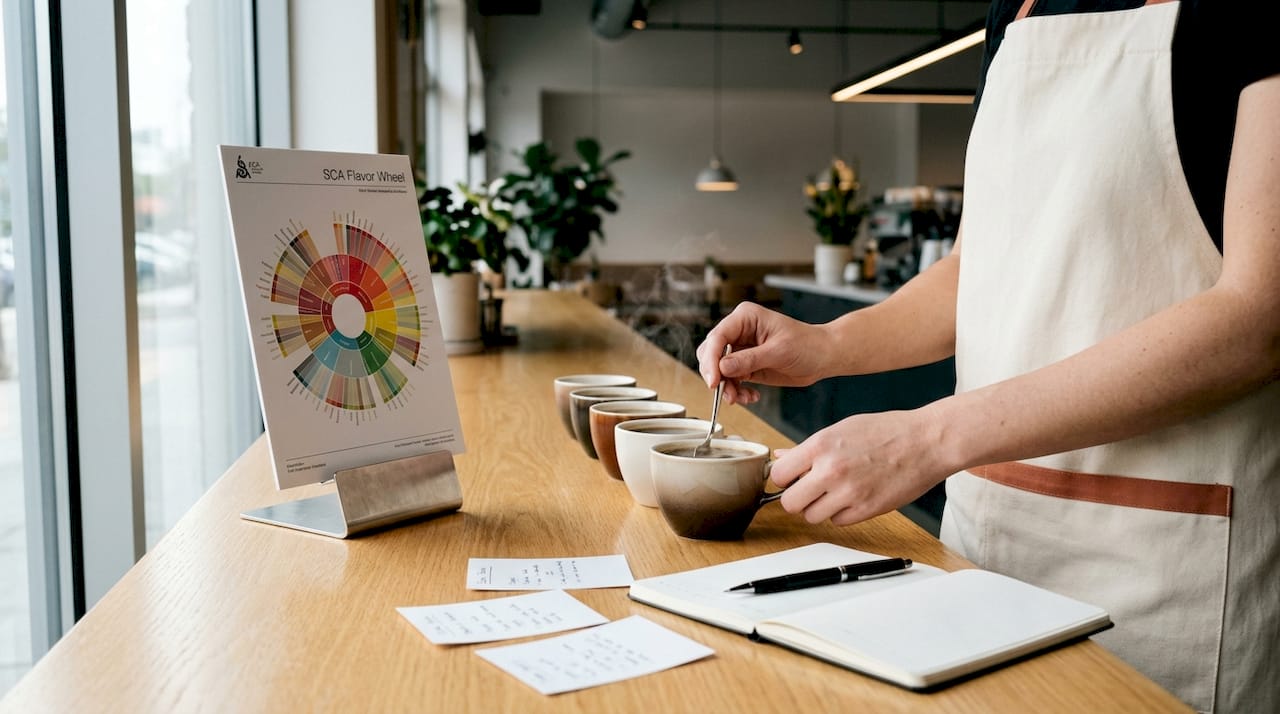
The SCA Coffee Taster’s Flavor Wheel organizes coffee flavor into 9 primary categories, each branching into dozens of specific notes. Knowing these categories gives you a map before you start tasting. You stop guessing and start recognizing.
Here are the 9 major categories with common examples:
- Fruity. Berries, citrus, stone fruit, tropical fruit. Common in Ethiopian and Kenyan coffees.
- Floral. Jasmine, rose, chamomile, elderflower. Often found in light-roasted, high-altitude coffees.
- Nutty/Cocoa. Almond, hazelnut, dark chocolate, cocoa powder. Typical in Brazilian and Colombian naturals.
- Spices. Clove, cinnamon, pepper, anise. More common in Indonesian and some natural-processed coffees.
- Sweet. Brown sugar, caramel, honey, vanilla. A baseline quality marker in well-processed specialty coffee.
- Roasted. Smoky, tobacco, cedar, dark caramel. Increases as roast level darkens.
- Sour/Fermented. Wine-like, vinegar, fermented fruit. Can signal intentional anaerobic processing or a defect, depending on intensity.
- Green/Vegetative. Grass, hay, raw peanut, herb. Usually indicates underdevelopment or a very light roast.
- Other. Chemical, papery, rubbery. These are typically off-flavors and signal processing or storage issues.
Origin drives which categories appear most prominently. Ethiopian coffees lean fruity and floral. Brazilian coffees lean nutty and chocolatey. Processing method and roast level then shift the intensity of each category, which is why the same bean can taste very different depending on how it was handled.
2. How to taste coffee like a professional
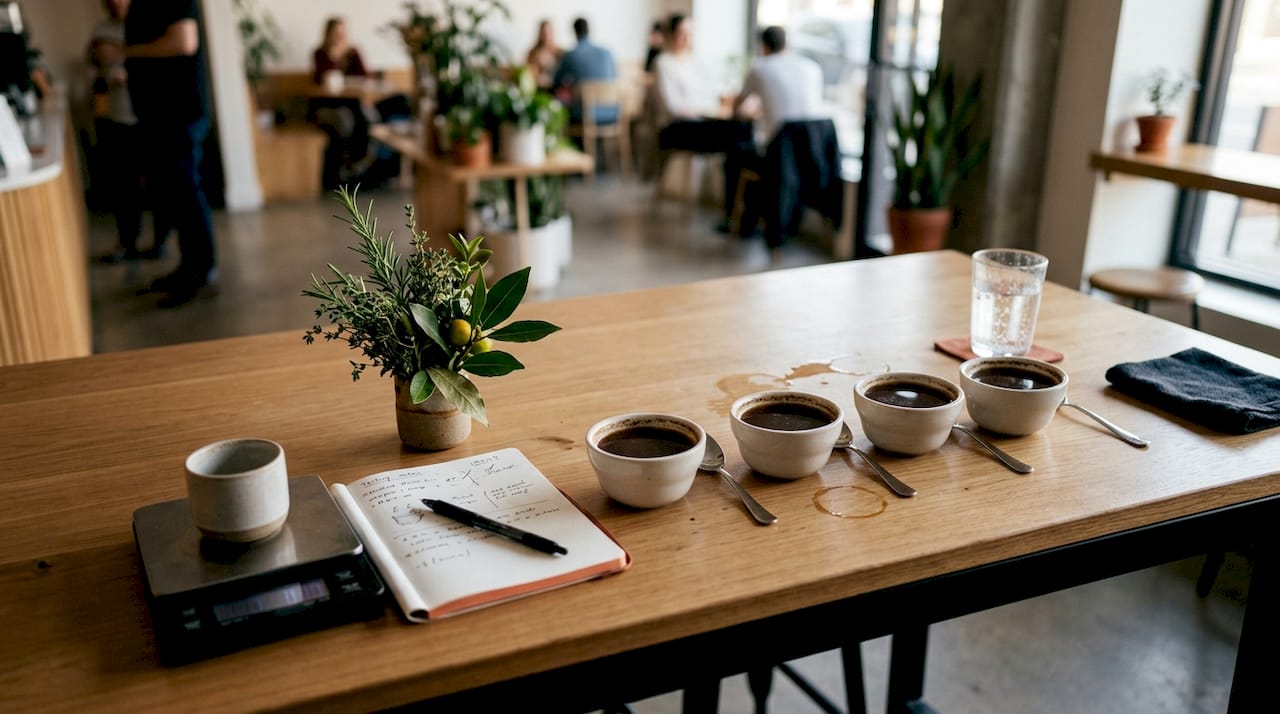
Professional coffee tasting, called cupping in the industry, follows a structured sensory method. Coffee tasting involves five evaluation dimensions: aroma, flavor, aftertaste, acidity, and body. Evaluating all five gives a full picture that goes far beyond “does this taste good.”
Follow these steps to taste coffee with intention:
- Smell the dry grounds. Before adding water, inhale deeply over the grounds. Dry aroma reveals volatile compounds that disappear once heat is applied.
- Smell the wet grounds. Pour hot water and wait 30 seconds. Break the crust of grounds and inhale again. Wet aroma is often more complex and reveals fruity or floral notes clearly.
- Slurp the coffee. Use a spoon and slurp loudly. This sprays the coffee across your entire palate and forces it into your nasal passage, which is where most flavor perception happens.
- Evaluate each dimension. Note the aroma first, then the flavor on your tongue, then the aftertaste as it lingers. Assess acidity (brightness or tartness) and body (weight and texture in your mouth).
- Let it cool. Flavor notes shift as coffee cools. A cup that tastes roasty at 170°F may reveal berry notes at 130°F.
Smell-first evaluation is the single most critical skill in this process. Aroma accounts for the majority of what you perceive as flavor. Skipping the smell step means missing most of the coffee’s story.
Pro Tip: Keep the SCA Flavor Wheel open while you taste. Start at the center of the wheel with a broad category, then work outward to narrow down the specific note. This prevents you from getting stuck on vague impressions.
3. Decoding tasting notes on coffee bags accurately
Flavor notes on bags represent roasters’ cupping findings, not a guarantee of what you will taste in your kitchen. Roasters identify these notes under controlled cupping conditions with calibrated palates. Your home brew will differ based on grind size, water temperature, brewing method, and your own sensory baseline.
Reading coffee tasting notes accurately means understanding what the language actually signals:
- Aroma notes (jasmine, bergamot) describe what you smell before and during brewing.
- Flavor notes (peach, brown sugar) describe what registers on the palate while drinking.
- Acidity descriptors (bright, juicy, crisp) describe the tartness or liveliness of the cup.
- Body descriptors (silky, full, light) describe the texture and weight of the liquid.
- Finish notes (clean, lingering, chocolatey) describe what remains after swallowing.
A single coffee may legitimately show berry, jasmine, and peach notes at different tasting moments. This is not marketing exaggeration. It reflects the genuine complexity of a well-grown, carefully processed bean.
Roast level shapes which notes survive. Light roasts highlight origin notes like fruity and floral. Dark roasts push those notes out and replace them with smoky, bitter, and roast-driven flavors. If a bag lists “blueberry and jasmine” but the roast looks dark, expect those notes to be faint or absent.
Pro Tip: Focus on flavor families first, not specific descriptors. If a bag says “blueberry, raspberry, hibiscus,” your goal is to detect “fruity and floral,” not to identify each fruit individually. That’s a realistic and rewarding target for any home brewer.
4. How origin, variety, processing, and roast shape flavor notes
Four factors determine which tasting notes appear in any given coffee. Understanding them lets you predict what a coffee will taste like before you brew it.
Origin and altitude set the baseline flavor profile. High-altitude growing regions produce denser beans with more complex acidity and aromatic potential. Ethiopian coffees from Yirgacheffe are famous for jasmine and bergamot. Colombian coffees from Huila often show red fruit and caramel. You can learn more about how origin shapes flavor to build predictive tasting knowledge.
Coffee variety (the plant genetics) determines the ceiling for aromatic complexity. Heirloom Ethiopian varieties carry a wider range of aromatic compounds than many commercial varieties. Colombian varieties like Castillo and Caturra each express flavor differently even when grown in the same region. The Colombian coffee varieties list shows how dramatically variety shifts the flavor profile.
Processing method has a major impact on the final cup:
- Washed (wet) process: Removes fruit before drying. Produces clean, bright, origin-forward notes. Expect clear acidity and floral or citrus notes.
- Natural (dry) process: Dries the whole cherry. Produces fruity, wine-like, and sometimes fermented notes. Body is heavier.
- Honey process: Removes skin but leaves some fruit mucilage. Sits between washed and natural. Expect sweetness and mild fruit.
- Anaerobic process: Ferments the cherry in sealed tanks. Produces intense, unusual notes like tropical fruit, wine, or spice.
Roast level is the final filter. A skilled roaster uses heat to either preserve or transform origin notes. Ultra-light roasts, like those used by Moustachecoffeeclub, preserve the most origin character. This is why a Moustachecoffeeclub Ethiopian coffee can genuinely taste like blueberry and jasmine, not because anything was added, but because the roast protected those natural compounds.
5. Practical tips for sharpening your tasting skills
Building a better palate takes practice, but the practice itself is enjoyable. Sampling fruits, spices, chocolates, and teas outside of coffee sessions accelerates your ability to recognize those same notes in the cup. Eat a fresh apricot, then taste a washed Ethiopian coffee. The connection becomes obvious.
Here are the most effective habits for developing your coffee palate:
- Practice home cupping. Home cupping requires minimal equipment: coffee, hot water, a cup, and a spoon. Steep grounds for four minutes, break the crust, skim the grounds, and slurp. This method removes brewing variables and lets you taste the coffee directly.
- Taste the same coffee multiple ways. Brew it as a pour-over, then as a French press. The flavor notes shift. This teaches you how brewing method affects what you detect.
- Avoid chasing every listed note. Identifying the flavor family is a genuine skill. Recognizing “this is fruity and bright” is more useful than straining to find a specific berry.
- Adjust your brew to highlight notes. Lower water temperature (around 195°F) and a finer grind tend to bring out acidity and fruit. Higher temperature and coarser grind emphasize body and sweetness.
Pro Tip: Keep a tasting journal. Write down the coffee name, origin, roast date, and three words that describe what you taste. After six months, you will see clear patterns in what you enjoy and what your palate detects most reliably.
Key takeaways
Understanding tasting notes as natural flavor indicators, organized by the SCA Flavor Wheel, is the most direct path to appreciating and selecting specialty coffee with confidence.
| Point | Details |
|---|---|
| Tasting notes are natural | They reflect aromatic compounds in the bean, not added flavors or artificial ingredients. |
| Use the SCA Flavor Wheel | Start with broad categories and narrow down to specific notes for accurate identification. |
| Smell first, always | Aroma drives most flavor perception; inhale dry and wet grounds before every sip. |
| Roast and processing matter | Light roasts and washed processing preserve origin notes; dark roasts mask them. |
| Practice builds the palate | Home cupping, a tasting journal, and sampling reference flavors accelerate skill development. |
What I’ve learned from years of tasting specialty coffee
The most common mistake new coffee enthusiasts make is treating tasting notes as a test they need to pass. They read “peach, jasmine, brown sugar” on the bag and then feel like they failed when they taste “just coffee.” That frustration is completely unnecessary.
Tasting notes are directional. They point toward a flavor family, not a specific ingredient. When I started tasting seriously, I could not identify a single specific note. What I could do was recognize that one coffee tasted brighter and more alive than another, or that one had a heavier, richer texture. Those are real observations. They are the foundation.
Smell is where the real work happens. I spent years focusing on what I tasted on my tongue and almost ignoring the aroma. Once I shifted my attention to the dry grounds and the wet bloom, everything changed. The fruity and floral notes that seemed invisible suddenly became obvious. Your nose is doing most of the work. Trust it.
Patience is the only requirement. Tasting the same coffee weekly for a month teaches you more than tasting 30 different coffees once. Repetition builds recognition. Recognition builds vocabulary. Vocabulary builds genuine enjoyment. Treat every cup as a low-stakes sensory experiment, and the whole process becomes something you look forward to rather than something you feel you need to master.
— Sean
Specialty coffee worth tasting, delivered to your door
Moustachecoffeeclub sources single-origin coffees from Ethiopia, Colombia, and other high-altitude regions, then roasts them in the ultra-light, Nordic style to preserve every natural flavor compound. Each delivery includes detailed tasting notes and origin information so you can practice reading and identifying flavors with real context.

Every coffee in the Moustachecoffeeclub lineup is roasted to order, which means the aromatic compounds are at their peak when the bag arrives. The coffee education hub pairs with each subscription to help you understand what you are tasting and why. If you are ready to put this guide into practice with coffees that genuinely reward attention, the Moustachecoffeeclub subscription is the most direct way to start.
FAQ
What are specialty coffee tasting notes?
Specialty coffee tasting notes describe the natural flavors and aromas produced by a coffee’s chemistry, including origin, variety, processing, and roast. They are not added ingredients. They reflect compounds already present in the bean.
Why can’t I taste the notes listed on the bag?
Flavor notes on bags come from controlled cupping sessions by trained roasters, not home brewing conditions. Extraction variables like grind, temperature, and water quality all affect which notes you detect. Identifying the flavor family rather than the specific note is a realistic and valid goal.
What is the SCA Coffee Taster’s Flavor Wheel?
The SCA Coffee Taster’s Flavor Wheel is the global industry standard for describing coffee flavor. It organizes tasting vocabulary into 9 primary categories that branch into dozens of specific notes, giving tasters a shared language.
How does roast level affect tasting notes?
Light roasts preserve origin-driven notes like fruit and flowers. Dark roasts replace those with roast-driven notes like smoke, bitterness, and dark chocolate. The roast level is the single fastest way to predict which flavor category will dominate a cup.
How do I start developing my coffee palate?
Begin with home cupping using basic equipment, keep a tasting journal, and sample reference flavors like fresh fruit, spices, and chocolate outside of coffee sessions. Focus on broad flavor families before chasing specific descriptors.
Recommended
- How to buy specialty coffee: expert tips for flavor and quality | Blog | The Moustache Coffee Club
- How Brewing Method Affects Specialty Coffee Flavor | Blog | The Moustache Coffee Club
- Specialty Coffee Certifications Types: A Professional Guide | Blog | The Moustache Coffee Club
- What Is a Coffee Sampler Set? A Taster’s Guide | Blog | The Moustache Coffee Club