Why Ethiopian Coffee Tastes Floral: A Full Explanation

Ethiopian coffee tastes floral because it contains volatile aromatic compounds, specifically linalool and geraniol, that are preserved by high-altitude growing conditions, indigenous heirloom genetics, and careful processing. These are the same compounds found in jasmine and rose oils. No other coffee origin combines all three factors at the same intensity. Understanding why ethiopian coffee tastes floral means understanding how altitude, genetics, processing, and roast level each protect or destroy these delicate aromatics. Moustachecoffeeclub sources Ethiopian single-origin coffees roasted ultra-light in the Nordic tradition precisely to keep these compounds intact from farm to cup.
Why Ethiopian coffee tastes floral: the core science
Ethiopian coffee’s floral character is defined by volatile organic compounds like linalool and geraniol that accumulate during slow cherry maturation at elevation. These compounds are the chemical backbone of jasmine, bergamot, and rose scents. They are fragile. Heat, oxygen, and time all degrade them, which is why the growing environment matters so much before a single bean is harvested.
Floral notes are not just pleasant. Floral aromas signal top-tier specialty quality, separating competition-grade lots from commercial-grade arabica. When you smell jasmine in your cup, you are detecting a real chemical marker of exceptional coffee, not a subjective impression.
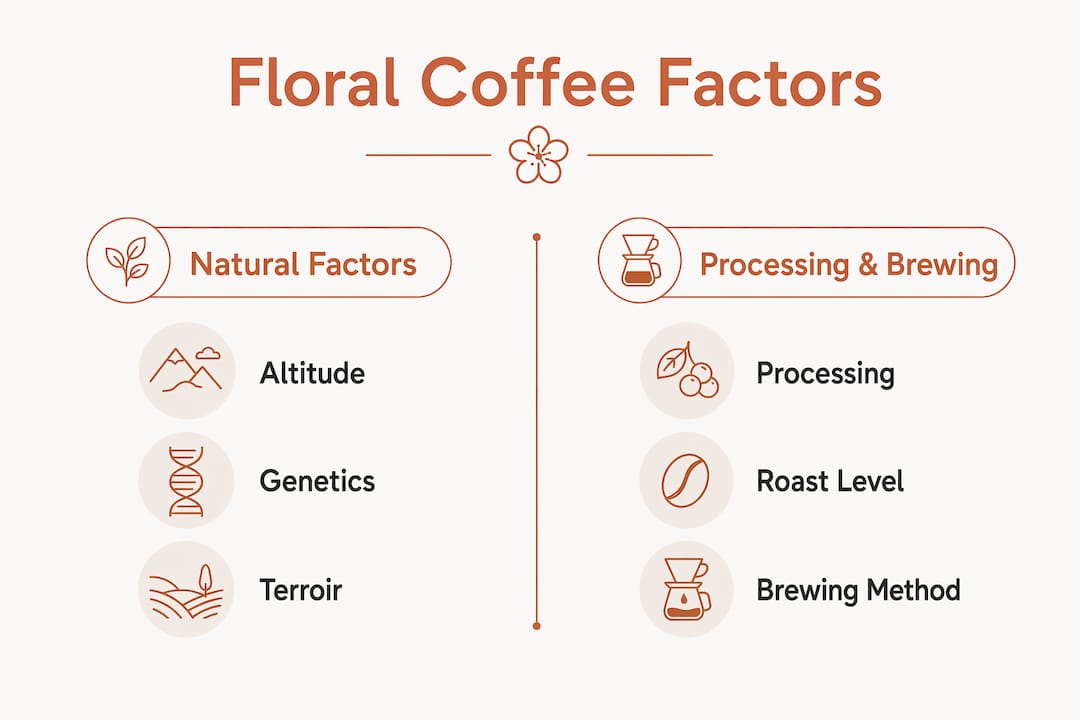
The Ethiopian coffee flavor profile is the product of three interlocking systems: terroir, genetics, and processing. Remove any one of them and the floral character weakens. All three working together is what makes Ethiopian coffee unique among all origins.
How does Ethiopia’s altitude shape floral flavor?
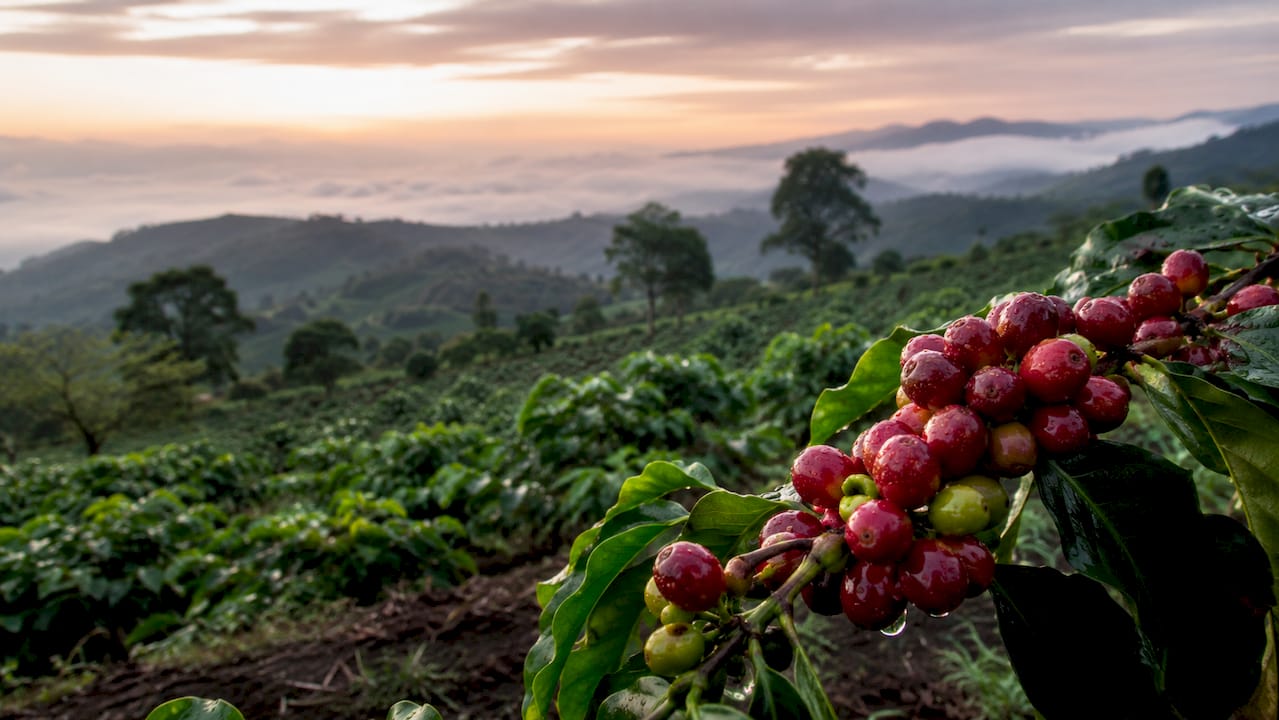
Ethiopia grows its finest coffees at elevations of 1,700–2,200 meters above sea level. That range is not arbitrary. Cooler mountain air slows the maturation of coffee cherries, giving aromatic precursor compounds more time to develop inside the fruit. The result is a denser, more complex bean with higher sugar and acid content.
The Yirgacheffe region is the clearest example of this effect. Its volcanic, mineral-rich soil and shade-grown microclimate create layered complexity that flat, low-altitude farms simply cannot replicate. Shade slows photosynthesis, which extends cherry development further. Rainfall patterns in the region add another variable that shapes the final cup.
| Growing factor | Effect on floral aroma |
|---|---|
| Elevation 1,700–2,200m | Slows maturation, increases aromatic compound accumulation |
| Volcanic soil | Promotes balanced acidity and aromatic development |
| Shade-grown microclimate | Extends cherry development, deepens flavor complexity |
| Seasonal rainfall | Regulates sugar concentration and fermentation conditions |
Altitude is not a marketing term here. It is a physical mechanism. The lower the temperature during cherry development, the more linalool and geraniol the bean retains when it reaches the roaster.
What role do Ethiopian heirloom genetics play?
Ethiopia is the birthplace of Arabica coffee, and its genetic diversity is unparalleled among all coffee-growing nations. Thousands of indigenous heirloom varietals grow across the country, many of them never formally cataloged. Each varietal carries a distinct set of aromatic precursor compounds that no commercial cultivar can replicate.
This matters because most of the world’s coffee is grown from a narrow set of hybrid cultivars bred for yield, disease resistance, and uniformity. Those traits come at a cost. Breeding for productivity tends to reduce the genetic complexity that produces nuanced flavor. Ethiopian heirloom varietals were never subjected to that trade-off.
Key points about Ethiopian coffee genetics:
- Aromatic precursors are genetic. The compounds that become linalool and geraniol during roasting are encoded in the plant’s DNA. Ethiopian heirlooms carry more of them.
- Diversity creates complexity. A single farm in Yirgacheffe may contain dozens of distinct varietals growing side by side, each contributing different notes to the final blend.
- No other origin replicates this. Commercial cultivars grown elsewhere lack the aromatic precursor density found in Ethiopian heirlooms.
- Wild genetics still exist. Parts of Ethiopia’s Kaffa forest contain wild Arabica plants that have never been cultivated, representing an untapped reservoir of flavor potential.
The fruity and floral complexity you taste in a Yirgacheffe is not an accident of processing. It starts in the seed.
How does processing affect floral tastes in Ethiopian coffee?
Processing is where floral notes are either protected or lost. The two dominant methods in Ethiopia are washed and natural, and they produce dramatically different results.
Washed processing removes the fruit pulp from the coffee cherry before drying. This creates a clean fermentation environment that highlights the bean’s intrinsic aromatics. Washed Yirgacheffe is the global benchmark for jasmine, bergamot, and lemon floral notes. The absence of fruit pulp during fermentation means nothing competes with or masks the delicate floral compounds.
Natural processing leaves the cherry intact during drying. The fruit sugars ferment around the bean, producing winey, berry-forward flavors. Those fruit notes are delicious, but they sit on top of the floral character and often obscure it. A natural Ethiopian coffee will taste more like blueberry jam than jasmine tea.
| Processing method | Primary flavor result | Floral note clarity |
|---|---|---|
| Washed | Clean, bright, tea-like | High: jasmine, bergamot, lemon |
| Natural | Fruity, winey, berry-forward | Lower: florals often masked |
The impact of processing on flavor is chemical, not cosmetic. Fermentation changes the bean’s surface chemistry and affects which volatile compounds survive into the roasted cup.
Pro Tip: If you want the clearest expression of floral notes in Ethiopian coffee, always choose washed process over natural. The label will say “washed” or “wet process” on the bag.
Why does roast level matter for floral aroma?
Roast level is the final filter between a floral coffee and a flat one. Linalool and geraniol are volatile. They degrade under heat. The longer and hotter the roast, the more of these compounds evaporate before the coffee reaches your cup.
Studies of 157 coffees confirm that floral and fruity notes appear predominantly in light and light-medium roasts. Medium-dark roasts rarely exhibit them. Dark roasts replace floral and citrus notes with roasted, bitter, and smoky flavors that have nothing to do with the bean’s origin character.
Practical guidance for getting floral notes from Ethiopian coffee:
- Choose light or light-medium roast. This is non-negotiable if floral notes are your goal.
- Check the roast date. Floral aromatics fade after roasting. Beans roasted within the past two weeks deliver the most intense floral experience.
- Avoid pre-ground coffee. Grinding accelerates oxidation and destroys volatile compounds within minutes.
- Use a pour-over method. The bloom phase of pour-over brewing releases floral aromatics in a concentrated burst that immersion methods cannot match.
Pro Tip: Brew your Ethiopian light roast at 195–200°F rather than a full boil. Slightly lower water temperature preserves delicate floral volatiles in the cup and prevents over-extraction that flattens the aroma.
The brewing method you choose shapes how much of the floral aroma reaches your nose. Pour-over and Chemex consistently outperform French press for floral clarity because they use paper filters that remove oils that can mute aromatics.
What is the chemistry behind floral coffee aroma?
The origin of floral coffee flavors is a specific group of volatile organic compounds. Four are most significant: linalool, geraniol, benzyl acetate, and indole. Linalool smells like lavender and coriander. Geraniol smells like rose and geranium. Benzyl acetate contributes jasmine notes. Indole, at trace levels, adds depth and makes the aroma feel alive rather than synthetic.
Floral aroma compounds are most volatile during the dry and wet aroma phases of cupping, not during the taste phase. This explains a phenomenon every serious coffee drinker has noticed: the smell of freshly ground Ethiopian coffee is more intensely floral than the brewed cup itself. The compounds evaporate quickly once water is added and again as you swallow. The bloom is the peak.
Indole deserves special attention. At low concentrations, it enhances aromatic depth and complexity. At high concentrations from poor fermentation, it produces off-notes that smell fecal or barn-like. Controlled fermentation is critical to keeping indole in the range where it adds complexity rather than ruining the cup. This is why producer skill and processing discipline matter as much as genetics and altitude.
The synergy between these compounds is what makes the aroma feel layered. No single compound creates the full floral experience. They interact, and the ratio between them shifts depending on altitude, varietal, fermentation time, and roast level.
Key Takeaways
Ethiopian coffee tastes floral because volatile compounds like linalool and geraniol, produced by heirloom genetics and preserved by high-altitude growing, washed processing, and light roasting, combine to create a sensory profile found nowhere else in the coffee world.
| Point | Details |
|---|---|
| Altitude drives aromatics | Elevations of 1,700–2,200m slow cherry maturation and allow floral compounds to accumulate. |
| Heirloom genetics are irreplaceable | Ethiopian varietals carry aromatic precursors that commercial cultivars bred for yield do not. |
| Washed processing clarifies florals | Removing fruit pulp before drying creates a clean fermentation that highlights jasmine and bergamot notes. |
| Light roast protects volatile compounds | Floral notes appear in light roasts; darker roasts degrade linalool and geraniol before they reach the cup. |
| Aroma peaks before the sip | Floral compounds are most intense in the dry and wet aroma phases, so always smell your grounds before brewing. |
Sean’s take: what most people get wrong about Ethiopian florals
Most coffee drinkers who say they “don’t taste the florals” in Ethiopian coffee are making the same mistake: they bought a medium roast, brewed it in a French press, and drank it a month after the roast date. Every one of those choices actively destroys the compounds they were hoping to taste.
The floral character in a washed Yirgacheffe is not subtle when everything is done right. It hits you in the dry aroma the moment you open a fresh bag. It blooms when hot water first touches the grounds in a pour-over. It shows up as a clean, tea-like brightness in the finish. When people tell me Ethiopian coffee tastes “just like regular coffee” to them, I know exactly where the chain broke down.
My honest recommendation: buy from producers who publish their roast dates and processing method on the bag. If that information is missing, the roaster is not prioritizing freshness. A washed Yirgacheffe roasted within ten days and brewed as a pour-over at 198°F will convert almost anyone who thinks they don’t like floral coffee. The chemistry is there. You just have to stop cooking it away.
Storage matters more than most people realize. Keep your beans in an airtight container away from light and heat. Don’t refrigerate them. The condensation cycle destroys volatile aromatics faster than room temperature storage does. Grind immediately before brewing, every time.
— Sean
Ethiopian floral coffees, roasted to order at Moustachecoffeeclub
Ethiopian coffees with genuine floral character require a roaster who treats roast level as a flavor decision, not a default setting.

Moustachecoffeeclub roasts single-origin Ethiopian coffees ultra-light in the Nordic tradition, the approach that keeps linalool and geraniol intact from roaster to your cup. Every bag ships roasted to order, so you receive beans at peak aromatic freshness, not sitting in a warehouse for weeks. The subscription is built around feedback: you tell Moustachecoffeeclub what you taste, and the next selection moves closer to your ideal floral profile. Start your subscription and receive a freshly roasted Ethiopian single origin as your first bag.
FAQ
Why does Ethiopian coffee smell more floral than it tastes?
Floral compounds like linalool and geraniol are most volatile during the dry and wet aroma phases. They evaporate quickly once brewed, so the fragrance of fresh grounds is always more intensely floral than the liquid in your cup.
What is the most floral Ethiopian coffee region?
Yirgacheffe is the benchmark. Its combination of high elevation, volcanic soil, shade-grown microclimate, and washed processing produces the clearest jasmine, bergamot, and lemon floral profile of any Ethiopian region.
Does roast level affect floral notes in Ethiopian coffee?
Yes, directly. Light and light-medium roasts preserve the volatile floral compounds that degrade under heat. Medium-dark and dark roasts replace floral and citrus notes with roasted and bitter flavors.
Are floral notes a sign of good coffee quality?
Floral aromas are reliable indicators of specialty-grade quality. Descriptors like jasmine and bergamot signal top-tier lots and distinguish them from commercial-grade arabica.
What brewing method brings out floral notes best?
Pour-over methods like a Chemex or V60 produce the clearest floral expression. The bloom phase concentrates aromatic compounds, and paper filters remove oils that can mute delicate florals.
Recommended
- Why Coffee Has Fruity Tasting Notes Explained | Blog | The Moustache Coffee Club
- How Coffee Processing Affects Taste: A Flavor Guide | Blog | The Moustache Coffee Club
- Why Coffee Origin Impacts Flavor Complexity | Blog | The Moustache Coffee Club
- Why Colombian coffee is widely loved: a complete guide | Blog | The Moustache Coffee Club