Colombian Coffee Varieties List: 2026 Definitive Guide
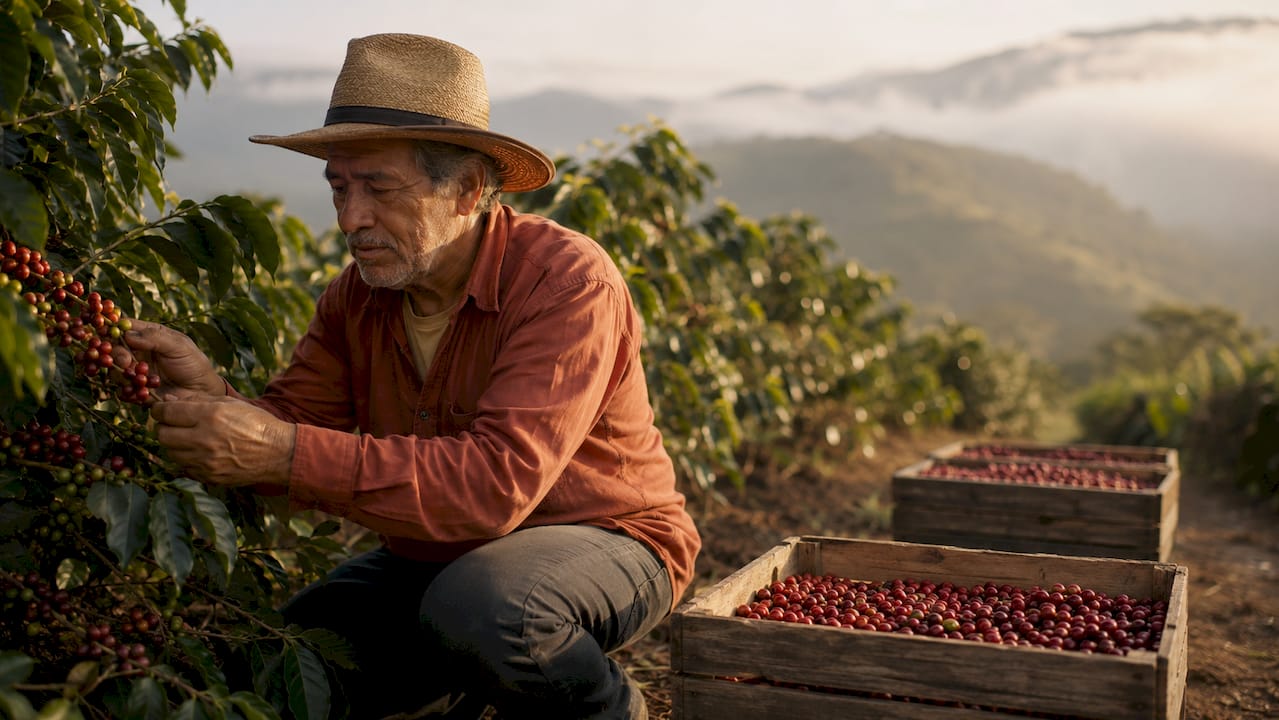
Colombian coffee is defined as an almost exclusively Arabica-based origin, with 100% Arabica exports enforced by the Federación Nacional de Cafeteros across more than 540,000 growers. The full Colombian coffee varieties list splits into two clear groups: heritage cultivars like Typica, Bourbon, and Caturra that built Colombia’s reputation for nuanced, complex cups, and modern disease-resistant hybrids like Castillo and Colombia variety that now dominate the fields. Knowing which variety is in your bag changes how you brew, what flavors you expect, and which farms you choose to support.
1. Colombian coffee varieties list: the heritage classics
The oldest Colombian Arabica varieties arrived with Spanish missionaries and spread through the Andean highlands over centuries. These cultivars define what most coffee lovers picture when they think of classic Colombian flavor profiles.
Typica is the original Colombian coffee plant, tracing its lineage directly to the Arabian Peninsula through Dutch and French colonial trade routes. It produces a cup with delicate floral notes, bright acidity, and a clean finish that few modern hybrids can match. The trade-off is real: Typica yields roughly 30% less fruit per tree than Caturra and carries high susceptibility to coffee leaf rust, which is why Typica and Bourbon now occupy only small shares of Colombian farms, predominantly at elevations above 1,800 meters.
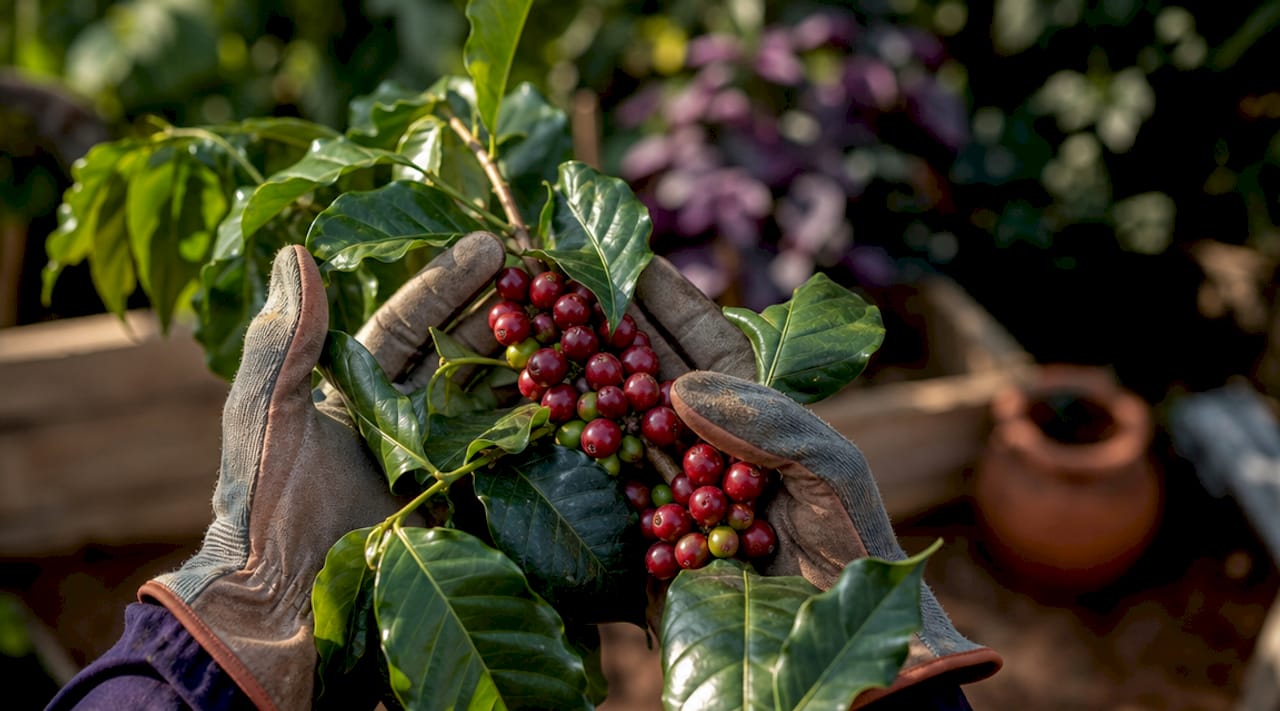
Bourbon arrived in Colombia via Réunion Island and offers a sweeter, more rounded profile than Typica, with notes of brown sugar, stone fruit, and mild citrus. It thrives at altitude but shares Typica’s rust vulnerability. Pink Bourbon is a naturally occurring color mutation of Bourbon that has become a darling of the specialty market. Its cup delivers tropical fruit sweetness, hints of lychee and passionfruit, and a syrupy body that commands premium prices at auction.
Caturra is a natural dwarf mutation of Bourbon discovered in Brazil and widely adopted in Colombia during the 1960s. Its compact size makes it easier to harvest on steep Andean slopes, and it produces more fruit per tree than its parent. Cup quality is solid but rarely exceptional, landing in the bright, citrus-forward range that works well for washed processing.
Pro Tip: If you find a bag labeled Typica or Bourbon from a Colombian farm above 1,800 meters, buy it. These varieties are increasingly rare, and the cup quality at high altitude justifies the premium every time.
2. Modern hybrid varieties that dominate Colombian cultivation
Colombia’s coffee sector faced near-collapse in the 1980s and 2000s due to coffee leaf rust outbreaks. Cenicafé, the national coffee research center, responded with a breeding program that reshaped the entire Colombian coffee varieties landscape.
Castillo is the most planted variety in Colombia at approximately 40% of plantations, bred by crossing Caturra with the Timor Hybrid, a natural cross between Arabica and Coffea canephora. It carries strong rust resistance, high yield, and a cup profile that ranges from clean and balanced to genuinely complex depending on altitude and farm management. Critics once dismissed Castillo as a commodity variety, but well-grown Castillo from Huila or Nariño regularly scores above 85 on the Specialty Coffee Association scale.
Colombia variety is an older Cenicafé hybrid released over 40 years ago and still common on farms across Antioquia and Caldas. It accounts for roughly 10% of sampled Colombian coffee plants in recent genetic studies. Its cup is clean and mild, making it a reliable base for blends and commercial roasters.
Cenicafé 1 represents the next generation of Cenicafé breeding, developed specifically for climate adaptability and resistance to coffee berry borer in addition to rust. It produces a cup with more complexity than Colombia variety and performs well at mid-range altitudes where temperature fluctuations are increasing due to climate shifts.
Tabi is a newer hybrid that combines Typica, Bourbon, and Timor genetics. It was designed to capture the cup quality of the heritage varieties while adding disease resistance. Tabi cups often show floral and fruity notes closer to Bourbon than to Castillo, making it a favorite among specialty-focused Colombian farmers.
A 2021 to 2023 study analyzing 1,110 coffee samples across 12 Colombian departments found that 98.11% were rust-resistant varieties, with Castillo accounting for 85.02% of those samples. This data confirms that heritage varieties, while celebrated, represent a small fraction of what actually grows in Colombian fields today.
| Variety | Rust resistance | Cup quality potential | Prevalence |
|---|---|---|---|
| Castillo | High | 83 to 87 SCA | ~40% of farms |
| Colombia variety | High | 80 to 84 SCA | ~10% of farms |
| Cenicafé 1 | High | 83 to 86 SCA | Growing |
| Tabi | Moderate to high | 84 to 88 SCA | Specialty farms |
| Typica / Bourbon | Low | 85 to 90 SCA | Rare, high altitude |
Pro Tip: When buying Colombian coffee, check if the producer notes the specific Castillo line, such as Castillo El Tambo or Castillo Naranjal. Cenicafé released regional Castillo lines optimized for specific microclimates, and these regional variants can show noticeably different flavor profiles.
3. Lesser-known and experimental varieties worth seeking out
Beyond the mainstream Colombian coffee types, a growing number of farms are cultivating rare and experimental varieties that attract serious specialty buyers and curious home brewers alike.
Geisha (also spelled Gesha) originated in Ethiopia and gained global fame through Panamanian producers. Colombian farmers in Huila and Cauca have adopted it with impressive results. The cup is unmistakable: jasmine, floral, and bergamot notes with a tea-like clarity that no other variety replicates. Colombian Geisha is still rare and expensive, but it represents the country’s ambition in the specialty tier.
Maragogipe is a natural mutation of Typica with unusually large beans, sometimes called “elephant beans.” The cup is mild and low in acidity, with a soft, almost buttery texture. It grows well in Colombia’s warmer, lower-altitude zones and appeals to drinkers who find high-acidity coffees difficult to enjoy.
Wush Wush is an Ethiopian landrace variety that a handful of Colombian farms in Cauca have begun cultivating. It produces a cup with intense berry and floral complexity that rivals Geisha at a lower price point. Availability is extremely limited, but specialty roasters like those sourcing for Moustachecoffeeclub actively seek it out.
Sidra is a variety whose genetic origins are still debated, with some researchers linking it to Bourbon and others to Ethiopian landraces. Colombian Sidra cups show red fruit, tropical sweetness, and a long finish. It has become a competition favorite at events like the World Barista Championship.
- Pink Bourbon: tropical fruit sweetness, lychee, passionfruit, syrupy body
- Geisha: jasmine, bergamot, floral clarity, tea-like finish
- Maragogipe: mild, buttery, low acidity, soft texture
- Wush Wush: intense berry, floral complexity, limited availability
- Sidra: red fruit, tropical sweetness, long finish
Farm management and terroir shape these varieties as much as genetics do. A Geisha grown at 1,600 meters with inconsistent fermentation will underperform a well-managed Castillo at 1,900 meters. The variety sets the ceiling; the farmer determines how close you get to it.
4. How altitude, processing, and farm management shape the cup
Variety alone is an imperfect predictor of what ends up in your cup. Altitude, processing, and farm management influence flavor outcomes as significantly as genetics, and sometimes more so. This is the most underappreciated fact in the Colombian coffee region differences conversation.
Altitude affects the rate at which coffee cherries develop. At elevations above 1,600 meters, slower maturation concentrates sugars and organic acids, producing the bright acidity and sweetness that define Colombia’s best cups. Below 1,200 meters, development is faster, flavors are flatter, and body tends toward heavy rather than refined.
Processing method is the second major variable. Washed coffees, where the fruit is removed before drying, produce clean, transparent cups that let varietal character shine. Natural and honey-processed coffees retain fruit contact during drying, adding sweetness, body, and fermentation-driven complexity that can either elevate or mask the underlying variety. Post-harvest practices are directly linked to sensory defects, meaning that even genetically superior varieties can produce disappointing cups when fermentation or drying is mismanaged.
Farm management covers everything from pruning schedules and fertilization to cherry selection at harvest. Selective hand-picking, practiced on most Colombian specialty farms, ensures only ripe cherries enter processing. This single practice separates specialty-grade Colombian coffee from commodity-grade material regardless of variety.
- Altitude above 1,600 meters: higher acidity, more sweetness, greater complexity
- Washed processing: clean, varietal-transparent, bright
- Natural processing: fruity, sweet, full-bodied, fermentation notes
- Selective hand-picking: reduces defects, improves consistency
- Consistent fermentation control: preserves genetic potential of any variety
Understanding these factors helps you read a specialty coffee bag more accurately. When a bag lists Castillo from Nariño at 1,900 meters, washed, you are looking at a very different cup than Castillo from Tolima at 1,400 meters, natural. The freshness of the roast adds another layer, since even the best Colombian variety loses its character within weeks of roasting if stored poorly.
5. How to use a Colombian coffee varieties list when buying and brewing
Reading the Colombian coffee varieties list on a specialty bag is a skill that pays off every time you brew. Most specialty roasters now print the variety on the label, and knowing what to expect from each one lets you dial in your brew method before you even open the bag.
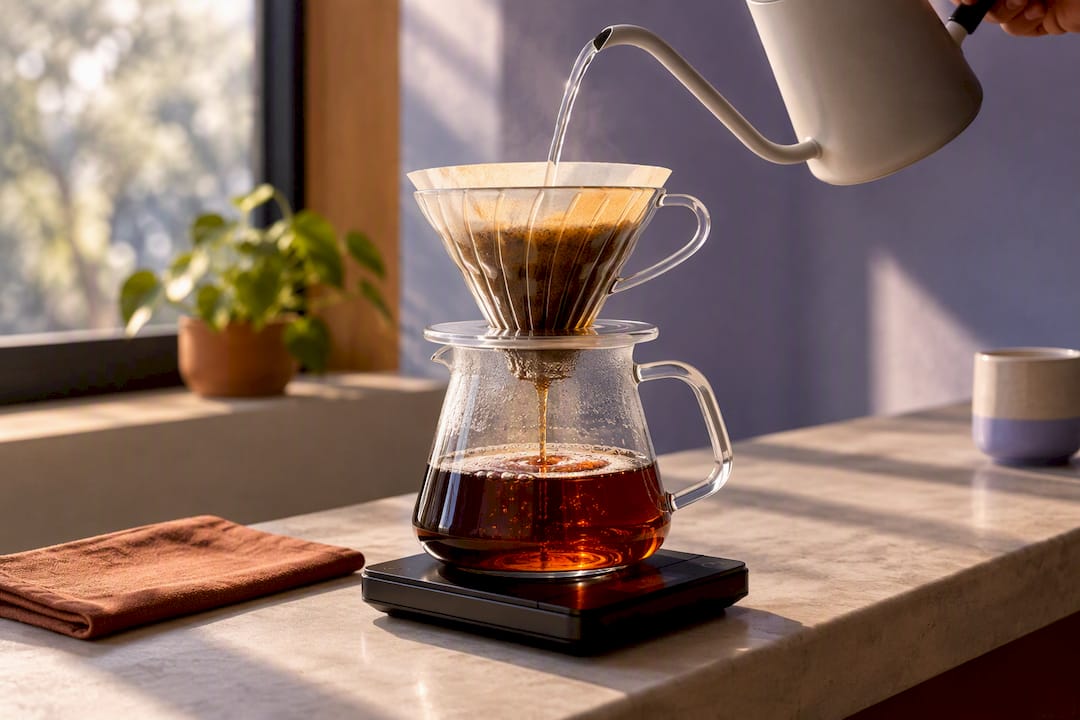
- Match variety to brew method. Typica and Bourbon reward slow, low-temperature brewing methods like pour-over with a Hario V60 or Chemex, which preserve their delicate floral and fruit notes. Castillo and Colombia variety are more forgiving and perform well across espresso, AeroPress, and batch brew.
- Use variety as a starting point, not a guarantee. Check altitude and processing alongside the variety name. A Pink Bourbon at 2,000 meters, washed, from Huila will taste dramatically different from a Pink Bourbon at 1,500 meters, natural, from Tolima.
- Seek out rare varietals intentionally. Geisha, Wush Wush, and Sidra from Colombia appear in limited releases from specialty roasters. Buying these when available is the fastest way to expand your sensory reference library.
- Understand disease resistance as a quality signal. Farms growing rust-susceptible Typica or Bourbon at high altitude are making an economic sacrifice for cup quality. That commitment usually shows in the cup and justifies the higher price.
- Support farms that name their varieties. Transparency about variety is a marker of specialty-grade sourcing. Farms and roasters that list variety, altitude, and processing are investing in traceability, which correlates with better quality control throughout the supply chain. Learning how to buy specialty coffee gives you a framework for evaluating these details confidently.
Pro Tip: Keep a simple tasting journal. Note the variety, altitude, processing, and roast date for each Colombian coffee you try. After ten entries, patterns emerge that make every future purchase more informed.
Key takeaways
Colombian coffee quality depends on variety, altitude, processing, and farm management working together, not on any single factor alone.
| Point | Details |
|---|---|
| Heritage varieties are rare but exceptional | Typica and Bourbon occupy a small share of Colombian farms, mostly above 1,800 meters, and deliver the highest cup quality potential. |
| Castillo dominates Colombian fields | Castillo covers roughly 40% of Colombian plantations and produces specialty-grade cups when grown at altitude with good management. |
| Altitude shapes flavor more than variety | Coffees grown above 1,600 meters develop more acidity, sweetness, and complexity regardless of which variety is planted. |
| Rare varieties are worth seeking | Geisha, Wush Wush, and Sidra from Colombia offer unique flavor profiles that expand any enthusiast’s tasting experience. |
| Processing is the hidden quality variable | Post-harvest practices directly affect sensory outcomes, meaning even top varieties underperform with poor fermentation or drying. |
Why Colombian varietal diversity deserves more attention than it gets
I have tasted Colombian coffees from the same farm, same harvest year, but two different varieties side by side, and the difference is genuinely startling. A Tabi and a Castillo grown at identical altitude with identical processing can taste like they come from different countries. That experience changed how I read coffee bags permanently.
What impresses me most about Colombia’s coffee sector is the Cenicafé breeding program and its commitment to developing variety families rather than single cultivars. The regional Castillo lines are a perfect example: the same base genetics adapted to the specific climate of Nariño, Huila, or Antioquia. That level of precision is rare in any agricultural sector.
My honest prediction is that Tabi and Cenicafé 1 will become the next Castillo in terms of market share over the next decade, as climate variability pushes farmers toward more adaptable genetics. At the same time, Pink Bourbon and Sidra will continue climbing in specialty auction prices as roasters compete for limited lots. The Colombian coffee varieties list you know today will look different by 2030, and that is genuinely exciting for anyone paying attention.
The practical takeaway is simple: stop treating Colombian coffee as a single flavor category. Explore the Colombian coffee education resources available to you, buy varietally specific lots, and taste with intention. The diversity is already there. You just need to go looking for it.
— Sean
Explore Colombian coffee varieties with Moustachecoffeeclub
Moustachecoffeeclub sources single-origin Colombian coffees that showcase specific varieties, altitudes, and processing methods, roasted to order in the ultra-light Nordic style that preserves every nuance of the bean.

Each coffee in the subscription arrives with full origin details including variety, farm, altitude, and processing notes, so you can connect what you read here directly to what you taste in your cup. The coffee education hub includes brewing guides tailored to specific Colombian varietals, from pour-over parameters for delicate Bourbon lots to espresso recipes for high-yield Castillo. If you are ready to taste the difference that variety, altitude, and freshness make together, start your subscription and let the Colombian coffee varieties come to you.
FAQ
What are the main Colombian coffee varieties?
The main Colombian coffee varieties include heritage types like Typica, Bourbon, Pink Bourbon, and Caturra, alongside modern disease-resistant hybrids like Castillo, Colombia variety, Cenicafé 1, and Tabi. Castillo is the most widely planted, covering approximately 40% of Colombian coffee farms.
What makes Castillo different from Typica or Bourbon?
Castillo is a Cenicafé-bred hybrid of Caturra and Timor Hybrid, offering strong rust resistance and reliable yields, while Typica and Bourbon are heritage varieties with higher cup quality potential but lower yields and greater disease susceptibility. Altitude and processing can close the quality gap between them significantly.
How do Colombian coffee regions affect variety selection?
Colombian coffee region differences influence which varieties thrive, since high-altitude regions like Nariño and Huila favor rust-susceptible heritage varieties and specialty hybrids like Tabi, while lower-altitude zones suit hardier varieties like Colombia variety and Cenicafé 1. Regional Castillo lines are specifically bred for the microclimates of individual departments.
Is Colombian coffee always Arabica?
Yes. Colombian coffee exports are effectively 100% Arabica, a standard enforced by the Federación Nacional de Cafeteros. This Arabica-only policy is a core reason Colombian coffee maintains consistent quality recognition in global markets.
What are the best Colombian coffee varieties for home brewing?
For pour-over and filter brewing, Typica, Bourbon, and Tabi deliver the most nuanced flavor. For espresso and AeroPress, Castillo and Colombia variety offer balance and consistency. Matching brew method to variety, alongside checking altitude and processing, produces the best results at home.
Recommended
- Why Colombian coffee is widely loved: a complete guide | Blog | The Moustache Coffee Club
- How to buy specialty coffee: expert tips for flavor and quality | Blog | The Moustache Coffee Club
- Last-Minute Specialty Coffee Gift Guide for 2026 | Blog | The Moustache Coffee Club
- Coffee Education Hub | Ultra-Light Nordic-Style Brewing Guides & Origins | Moustache Coffee Club