How Much Coffee to Use in a Coffee Maker
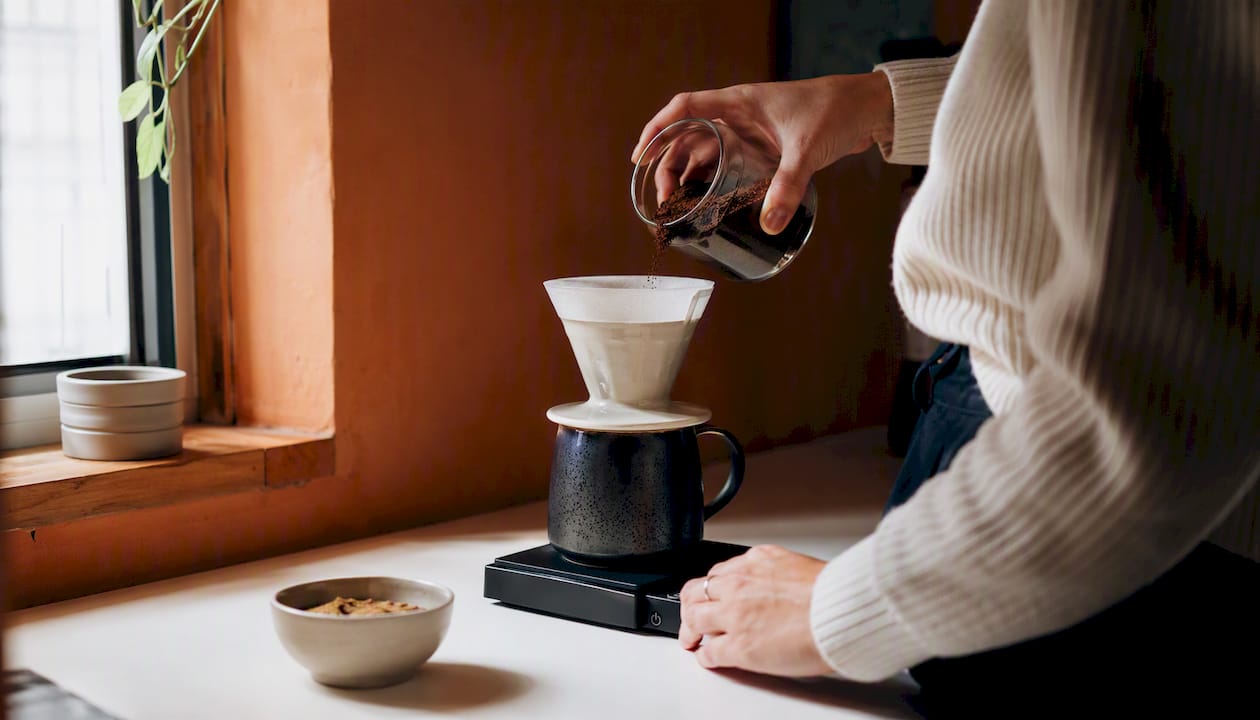
Start here: the standard starting point for drip coffee is a 1:16 ratio, meaning one gram of coffee for every 16 grams of water. In tablespoon terms, that works out to roughly 1 to 2 level tablespoons per 6 fl. oz. of water, or about 2 tablespoons per 8 fl. oz. if you’re filling by the cup. For a quick weight check at 1:16, an 8 fl. oz. cup needs approximately 15 grams of coffee. JayArr Coffee’s ratio guide recommends this 1:16 default for filter and drip brewing, with a 1:15–1:17 range for strength adjustments.
One thing to know before you fill the reservoir: most drip coffee makers define one “cup” as 5 fl. oz., not the standard 8 fl. oz. measuring cup. That gap throws off a lot of home brewers.
- Default ratio: 1 g coffee per 16 g water (1:16)
- Tablespoon rule: 1–2 level tbsp per 6 fl. oz. water
- Quick weight: ~15 g coffee per 8 fl. oz. water at 1:16
- Machine “cup” caveat: 1 machine cup ≈ 5 fl. oz. brewed
Key Takeaways
The most reliable drip coffee starts at 1:16 (one gram of coffee per 16 grams of water), measured by weight, with fresh beans and filtered water.
| Point | Details |
|---|---|
| Default ratio | Use 1:16 (1 g coffee per 16 g water); adjust to 1:15 for stronger, 1:17–1:18 for lighter. |
| Grams per 8 fl. oz. | Weigh out approximately 15 g of coffee for a single 8 fl. oz. cup at 1:16. |
| Machine-cup caveat | Most drip makers define 1 cup as 5 fl. oz., not 8 fl. oz.; adjust your tablespoon count accordingly. |
| Use a scale | A kitchen scale removes gram-level variance that tablespoons and scoops cannot avoid. |
| Moustachecoffeeclub | Fresh, roasted-to-order single-origin beans make the 1:16 ratio repeatable and flavorful every brew. |
Table of Contents
- What’s the right amount of coffee for your machine size?
- How should you measure coffee: scoop, tablespoon, or scale?
- How to brew drip coffee with consistent results every time
- How do you adjust strength and fix weak or bitter coffee?
- Why grind size, water quality, and bean freshness change how much coffee you need
- Does roast level change how much coffee you should use?
- What consistent measuring actually teaches you
- Fresh beans make every measurement work harder
- Sources
- FAQ
What’s the right amount of coffee for your machine size?
The chart below uses the machine-cup definition (1 machine cup = 5 fl. oz.) and the 1:16 ratio. Mr. Coffee’s brewing guidance and manufacturer measurement charts both support these values as practical starting points.
| Machine cups | Water (fl. oz.) | Coffee (level tbsp) | Coffee (grams at 1:16) |
|---|---|---|---|
| 4 | 20 | 4–5 | 38 g |
| 6 | 30 | 6 | 55 g |
| 8 | 40 | 8 | 74 g |
| 10 | 50 | 10 | 92 g |
| 12 | 60 | 12–13 | 110 g |
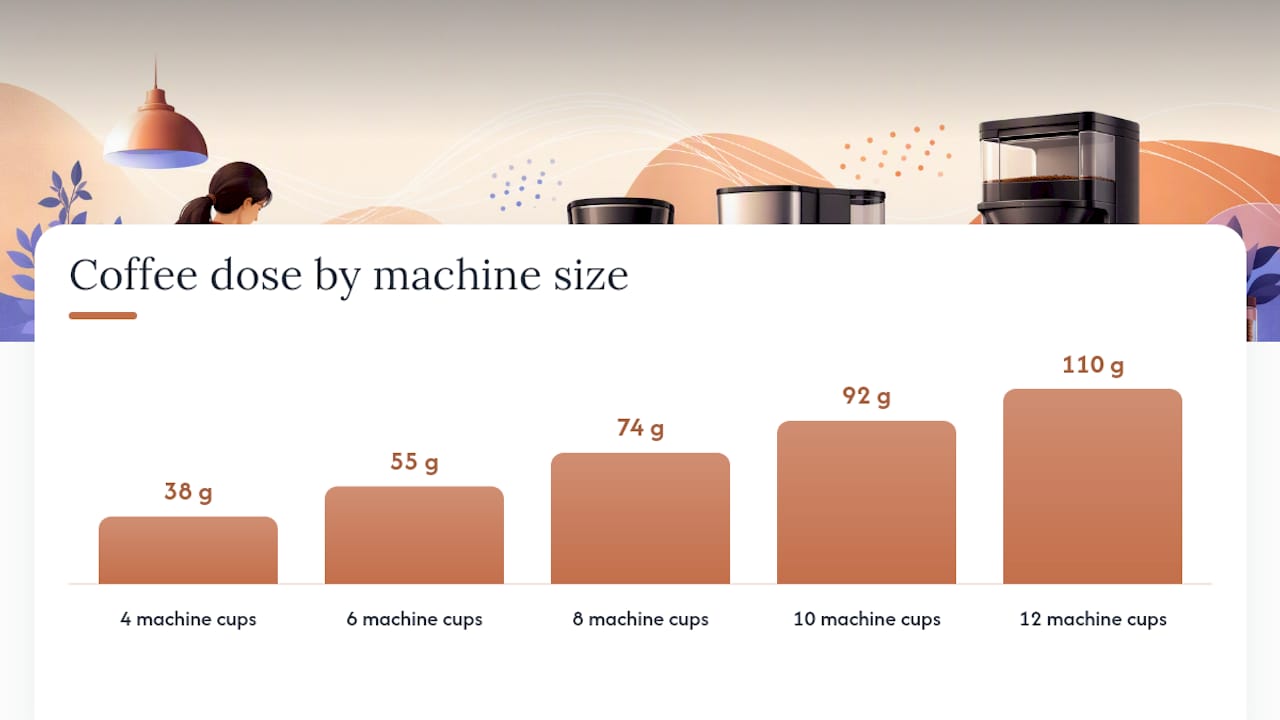
For a full 12-cup pot, that’s about 12–13 level tablespoons or 110 grams of ground coffee. Mozza Roasters’ tablespoon-to-gram chart and Sunbeam’s appliance manual both publish similar per-cup tables as reference.
Grounds absorption: Coffee grounds soak up some water during brewing, so your carafe will always hold slightly less liquid than the water you poured in. A 12-cup reservoir won’t yield a full 12 cups in the carafe.
Pro Tip: Write your preferred dose on a sticky note and put it on the machine. One less thing to remember at 6 AM.
How should you measure coffee: scoop, tablespoon, or scale?
Three tools, three levels of precision. Here’s how they compare.
A standard coffee scoop holds about 2 level tablespoons, which is roughly 10–12 grams depending on roast and grind. A kitchen tablespoon runs 5–8 grams per level measure. A kitchen scale gives you the exact gram weight every time, regardless of how fluffy or dense the grounds are.
That variability in tablespoon weight matters more than it sounds. The Coffee Calculator’s ratio guide warns that volume measures vary widely and recommends weight-based ratios for repeatable results. Serious Eats confirmed that measuring by volume can introduce several grams of variance per brew, enough to shift the flavor noticeably.
Conversion quick reference
| Measure | Approximate weight | Notes |
|---|---|---|
| 1 level tablespoon | 5–8 g | Varies by roast and grind |
| 1 standard coffee scoop | 10–12 g | Equal to ~2 level tbsp |
| 1:16 ratio, 8 fl. oz. cup | ~15 g coffee | Weigh water too for precision |
Example: Brewing one 8 fl. oz. cup at 1:16? Use 237 ml (8 fl. oz.) of water and weigh out 15 grams of coffee. No math needed after the first time.
Pro Tip: A basic digital kitchen scale costs under $15 and removes all the guesswork. The scale doesn’t care.
How to brew drip coffee with consistent results every time
Follow this sequence and you’ll get the same cup every morning.
- Step 1: Fill the carafe to the desired machine-cup line, then pour into the reservoir. Or weigh the water directly if you’re using a scale.
- Step 2: Weigh your coffee grounds (or measure by tablespoon using the chart above). Use a medium grind for standard drip machines.
- Step 3: Place a paper or reusable filter in the basket. Add grounds and level them gently.
- Step 4: Start the brew cycle. Don’t lift the carafe mid-brew if your machine has a pause-and-pour feature, as it can disrupt extraction.
- Step 5: Let the brew finish completely before pouring. If your machine has a warming plate, pour within 20 minutes to avoid bitterness from heat.
Pro Tip: Rinse a paper filter with hot water before adding grounds. It removes the papery taste and warms the basket, which helps maintain brew temperature.
How do you adjust strength and fix weak or bitter coffee?
The 1:16 ratio is a starting point, not a rule carved in stone. Shift the ratio by a gram or two and the cup changes meaningfully.
| Taste problem | Likely cause | Adjustment |
|---|---|---|
| Too weak / watery | Too little coffee or too coarse a grind | Move to 1:15; add 2–3 g more coffee |
| Too bitter | Over-extraction or too fine a grind | Move to 1:17–1:18; coarsen the grind |
| Sour / sharp | Under-extraction or water too cool | Check brew temp; try a slightly finer grind |
| Flat / stale | Old beans or poor water | Use fresher beans and filtered water |
A common mistake is assuming the machine’s cup markings match a standard 8 fl. oz. cup. They don’t. If you fill to “8 cups” on the reservoir and use 8 tablespoons expecting 8 standard cups, you’ll end up with a weaker brew than intended because you’re actually working with 40 fl. oz. of water, not 64. Coffee Stack Exchange home-brewer discussions flag this machine-cup confusion as one of the most common sources of inconsistent drip coffee.
Pro Tip: Taste the coffee black at the midpoint of the brew (if your machine allows pause-and-pour). That early cup is stronger and tells you quickly whether the dose is in the right neighborhood before you commit to the full pot.
Why grind size, water quality, and bean freshness change how much coffee you need
These three variables don’t just affect flavor. They change how efficiently your coffee extracts, which means the same gram weight can produce a very different cup depending on them.
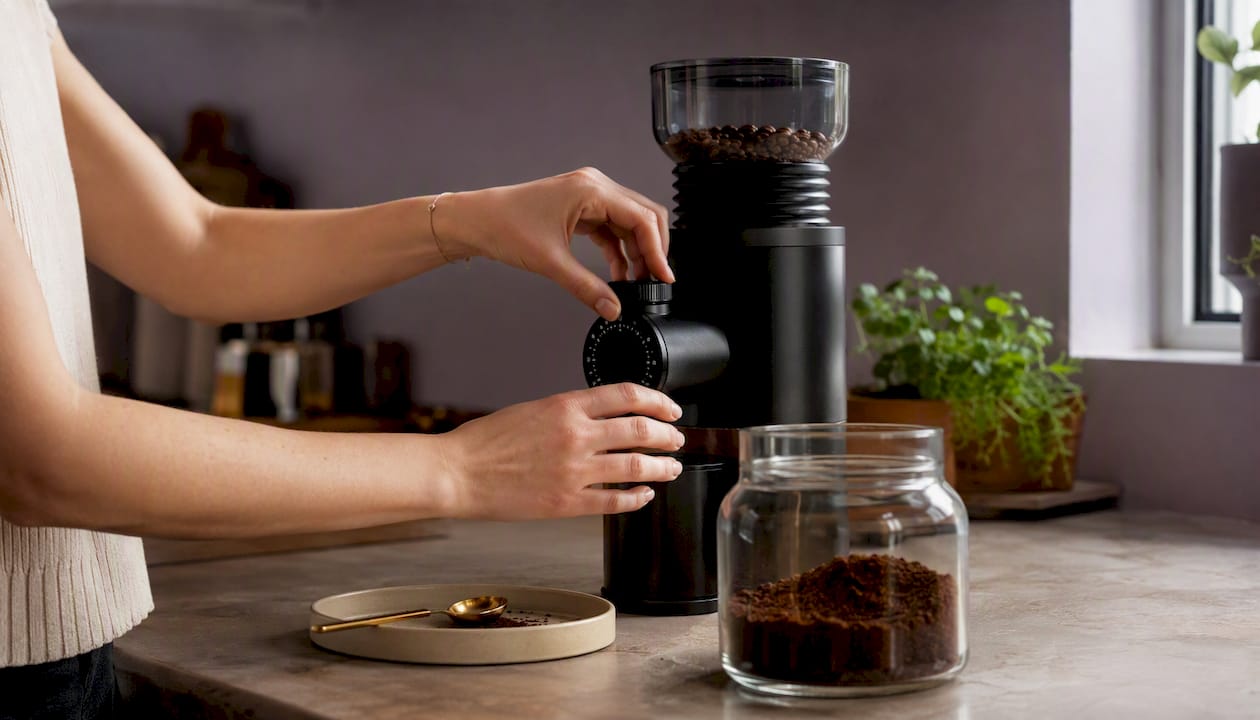
Grind size controls how fast water moves through the grounds. A coarser grind slows extraction, so you may need slightly more coffee or a longer contact time to hit the same strength. A finer grind extracts faster and can turn bitter quickly. For drip machines, a medium grind is the target. Understanding how brewing method affects specialty coffee flavor helps explain why grind consistency matters as much as grind size.
Water quality is underrated. Filtered water works well; softened water (which replaces minerals with sodium) tends to produce flat-tasting coffee. Brew temperature matters too: most drip machines target 195–205°F, and water that’s too cool under-extracts regardless of dose.
Bean freshness affects both flavor and density. Freshly roasted beans release CO₂ (you’ll see the bloom when hot water hits them), which means they extract differently than stale beans. Stale coffee often tastes flat even at the correct dose, leading brewers to add more grounds without fixing the real problem.
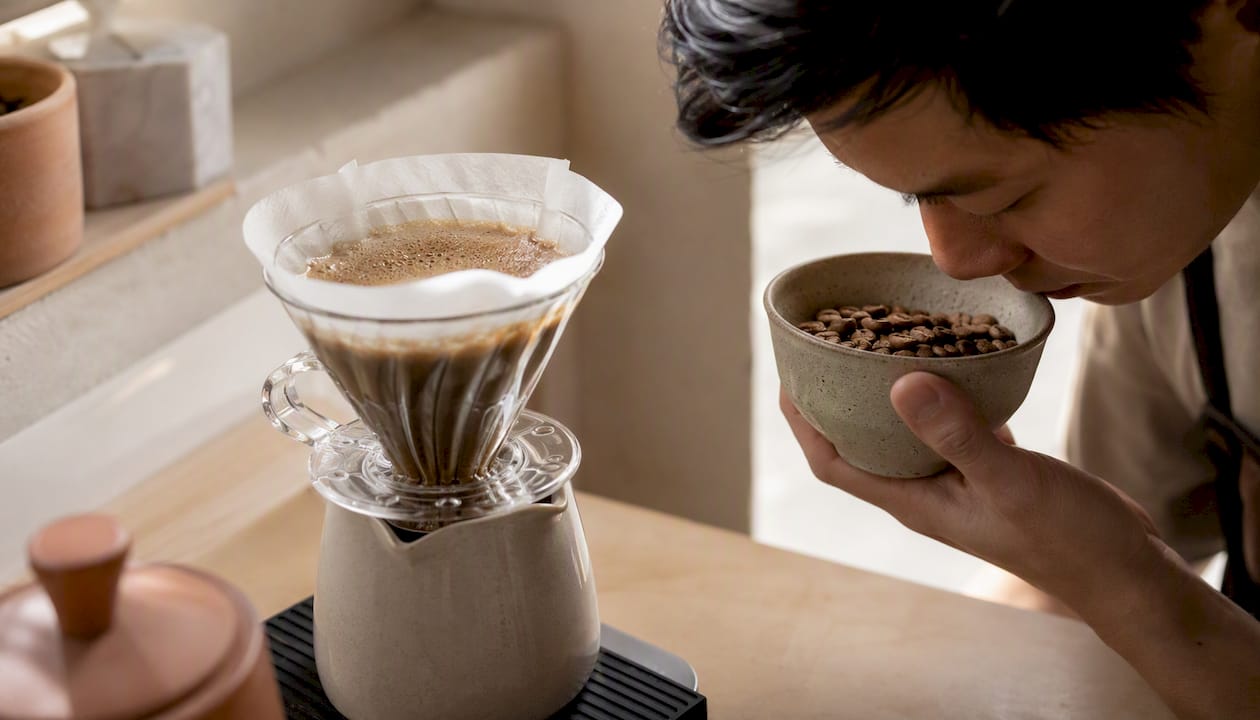
Simple home checks: smell the beans (fresh coffee smells bright and distinct), watch for a bloom when brewing, and store beans in an airtight container away from light and heat. Buying in smaller quantities more often beats buying a large bag that sits for weeks.
Does roast level change how much coffee you should use?
Yes, and the difference is physical, not just a matter of taste preference.
Light roasts are denser. The beans haven’t expanded as much during roasting, so a tablespoon of light roast grounds weighs more than the same tablespoon of dark roast. Dark roasts are more porous and lighter by volume. That means if you measure by tablespoon, you’re actually using less coffee by weight with a dark roast than with a light one, even though the scoop looks the same.
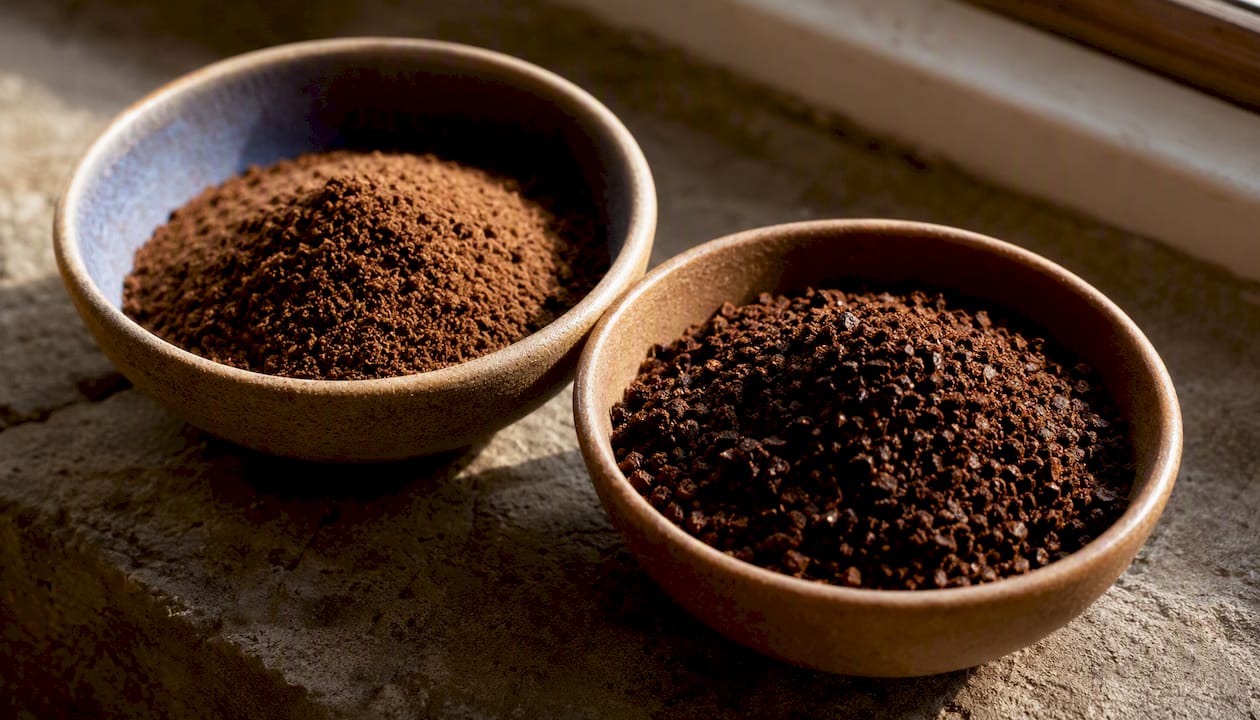
In practice: if you switch from a dark roast to a light roast and keep the same tablespoon count, your brew will be stronger than expected. If you switch from light to dark, it may taste weaker. A scale eliminates this entirely because you’re targeting grams, not volume. For more on dialing in light roast brewing methods specifically, the grind and ratio adjustments are worth understanding before you brew your first bag.
As a general rule: start with the same 1:16 ratio regardless of roast, then adjust by taste. Light roast drinkers often find 1:15 brings out more of the nuanced flavor without thinning the cup.
What consistent measuring actually teaches you
Most people spend years making coffee by feel and wondering why some mornings taste better than others. The answer is almost always one of three things: the dose was off, the beans were older than they realized, or the water was different. Weighing your coffee fixes the first problem immediately. Using fresh beans fixes the second. Filtered water handles the third.
Once you brew at 1:16 with a scale for a week, you’ll have a clear baseline. From there, small adjustments (one gram up or down) tell you exactly what your palate prefers. That’s more useful than any brewing chart, because it’s calibrated to your machine, your water, and your taste.
Moustachecoffeeclub’s brewing guides and coffee education resources go deeper on extraction, grind, and origin if you want to keep refining.
Fresh beans make every measurement work harder

Stale beans are the silent variable that no ratio can fix. When beans are weeks past roast, they extract unevenly, taste flat, and push you to add more grounds chasing a flavor that isn’t there anymore. Fresh beans, roasted to order and shipped the same day, behave predictably. Your 1:16 ratio actually works the way it’s supposed to.
Moustachecoffeeclub ships ultra-light, nordic-style single-origin beans roasted to order, sourced from Ethiopia, Colombia, and other carefully selected origins. Every bag arrives at peak freshness, which means your measurements stay consistent from the first cup to the last. Start a subscription and get freshly roasted beans delivered on your schedule, so the only variable left is how you like your coffee.
Sources
- Coffee-to-Water Ratio Guide: How Much Coffee Per Cup, by Method | JayArr Coffee
- Coffee Ratios & Measurements: A Complete Brew Guide
- Why You Should Use a Scale to Brew Coffee | Serious Eats
- The Best Way to Make Coffee | Coffee Brewing 101 | Mr. Coffee
- Suggested Coffee Measurement Chart (Mr. Coffee manual) | ManualsLib
- Sunbeam coffee maker instruction manual (tables of tbsp per cup)
FAQ
How many scoops of coffee should I put in a coffee maker?
A standard coffee scoop holds about 2 level tablespoons (roughly 10–12 grams). Use one scoop per 8–10 fl. oz. of water as a starting point, then adjust to taste. Driven Coffee’s scoop guide notes that machine-cup confusion (5 fl. oz. vs. 8 fl. oz.) is the most common reason scoops don’t produce the expected strength.
How much coffee grounds do I use for a 12-cup coffee maker?
At 1:16 and a 5 fl. oz. machine-cup definition, a 12-cup maker uses 60 fl. oz. of water and needs about 110 grams (12–13 level tablespoons) of ground coffee.
How much water do I need for 2 cups of coffee?
Two machine cups equal 10 fl. oz. of water. Weigh out approximately 18 grams of coffee (or 2 level tablespoons) for that volume at 1:16.
Why does my drip coffee taste different every morning?
Inconsistent tablespoon measures, varying bean freshness, and water quality are the three most common causes. A kitchen scale and fresh beans, like those from Moustachecoffeeclub, remove most of that variability.
Recommended
- French Press Brew Guide | How to Make French Press Coffee | Moustache Coffee Club
- How To Brew Pour Over Coffee | Step-by-Step Guide | Moustache Coffee Club
- How to Make Cold Brew Coffee | Easy Recipe & Ratio | Moustache Coffee Club
- How to Dial In Light Roast Coffee for Home Baristas | Blog | The Moustache Coffee Club