How to Make Coffee With Water and Nothing Else
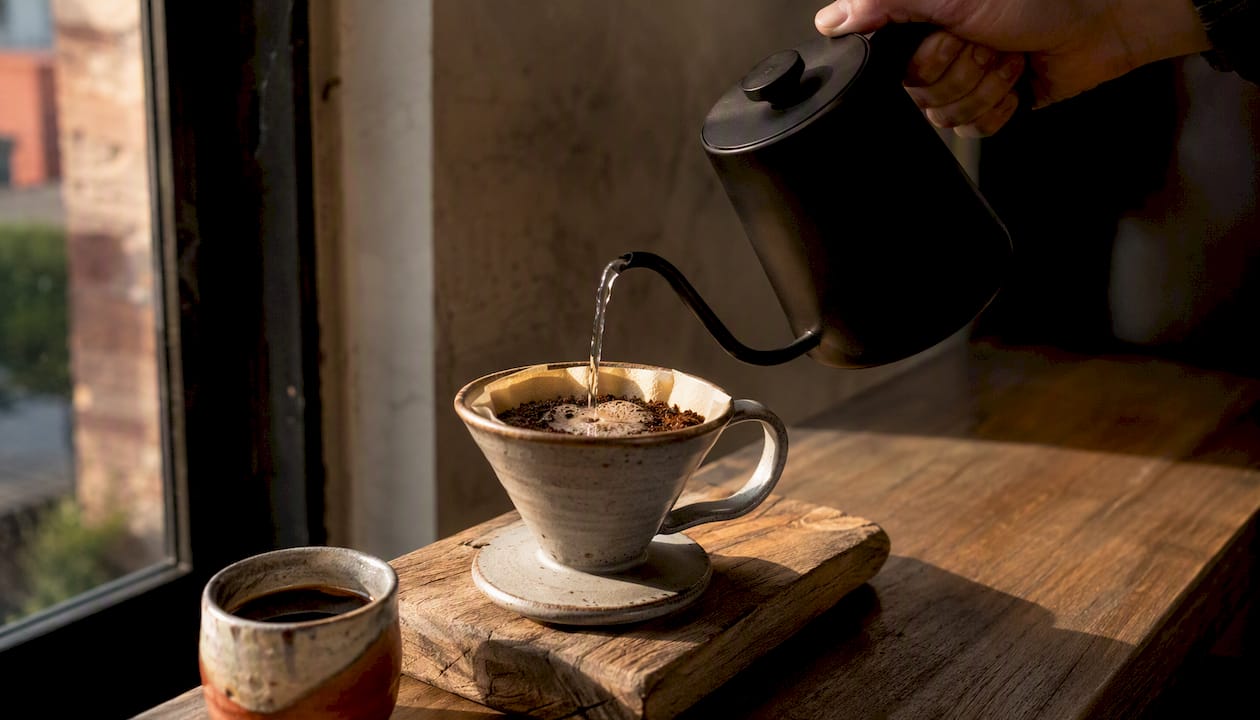
The simplest way to brew coffee without a machine is immersion: pour hot water over grounds, let it sit, then strain the liquid off. Start with a 1:16 ratio by weight (1 gram of coffee for every 16 grams of water) or, if you’re measuring by scoops, about 2 tablespoons of grounds per 6 fluid ounces of water.
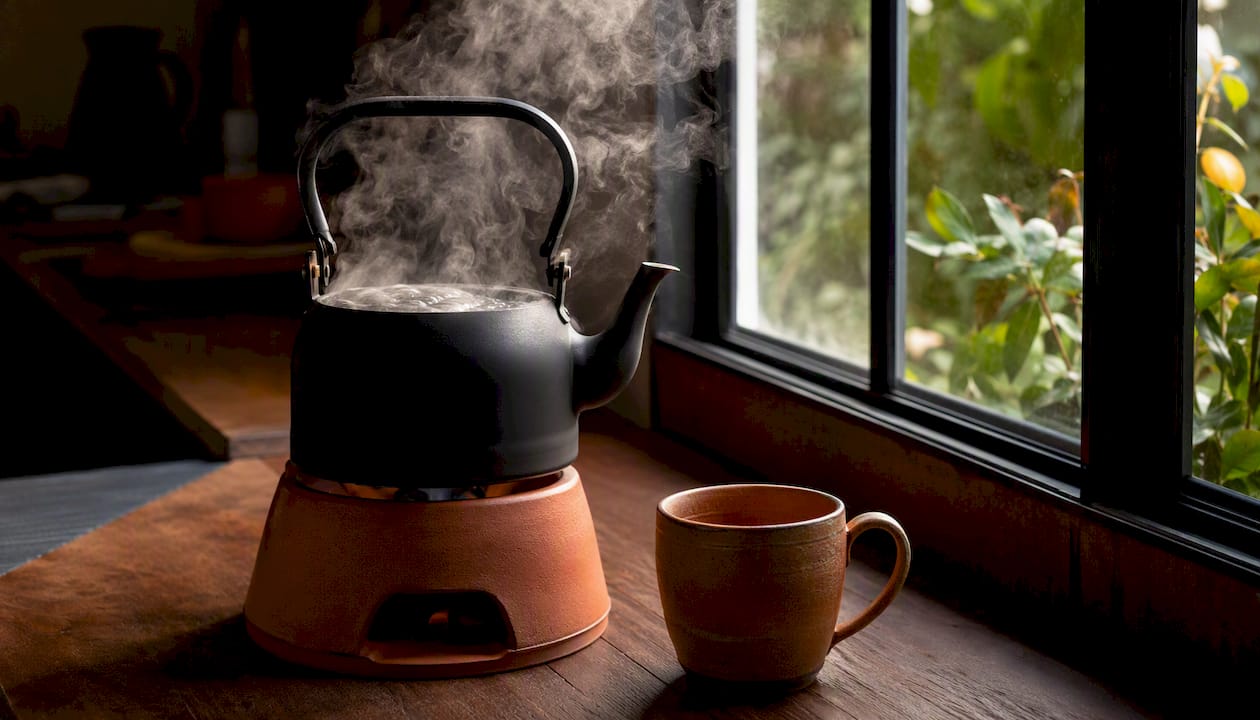
Bring water to a boil, then let it rest off the heat for about 30 seconds. That gets you into the 195–205°F range without needing a thermometer. Stir in your grounds, steep for 4 minutes, then strain.
- Ratio: 1:16 (coffee to water, by weight)
- Temperature: 195–205°F, or boiling water rested 30 seconds
- Time: 4-minute steep
That’s the whole method. Everything below covers the exact numbers for other techniques, plus how to fix a cup that comes out too weak, too bitter, or full of grit.
Key Takeaways
Consistent coffee at home comes down to four controllable variables: a 1:16 starting ratio, water around 200°F, fresh grounds, and a steady steep time.
| Start with a moderate ratio | Use about 1 gram of coffee per 16 grams of water, or roughly 2 tablespoons per 6 fluid ounces. | Hit the right temperature | Boil water, then let it rest 30 seconds to land near 200°F without a thermometer. | | Steep four minutes | Most immersion methods, including cowboy coffee and French press, need about 4 minutes of contact time. | | Strain before the sludge | Pour slowly and stop before the last inch to avoid gritty sediment. | | Fresh beans change everything | Moustache Coffee Club ships single-origin beans roasted to order, which keeps the same ratios and timings more repeatable cup to cup. |
Table of Contents
- Essentials for Making Coffee With Only Water and Grounds
- What Ratio and Temperature Should You Use?
- Five Recipes You Can Make Without a Coffee Maker
- How Do You Strain Coffee Without a Filter?
- Small Habits That Make Every Cup More Consistent
- Why Do Ratio and Temperature Actually Matter?
- A Simple Morning Routine Worth Repeating
- Want Fresher Beans Without the Guesswork?
- Sources
- FAQ
Essentials for Making Coffee With Only Water and Grounds
You need four things: fresh coffee grounds, decent water, a heat source, and a clean vessel to steep in. Everything else is a convenience upgrade, not a requirement.
- Essential: grounds, water, heat, a mug or pot
- Helpful: a kettle, a kitchen scale, a timer, a coarse sieve or cheesecloth, a grinder
Water quality matters more than most beginners assume. Tap water loaded with chlorine or heavy minerals will flatten the cup no matter how good your beans are, so a basic pitcher filter is worth the money if your tap water tastes off.
Pro Tip: No thermometer? Bring water to a full boil, pull it off the heat, and count 30 seconds before pouring. That single habit gets you into the right temperature window every time.
What Ratio and Temperature Should You Use?
Three numbers control almost everything about how your coffee tastes: how much coffee you use, how hot the water is, and how long the two spend together. Memorize these and you can brew confidently with any method.
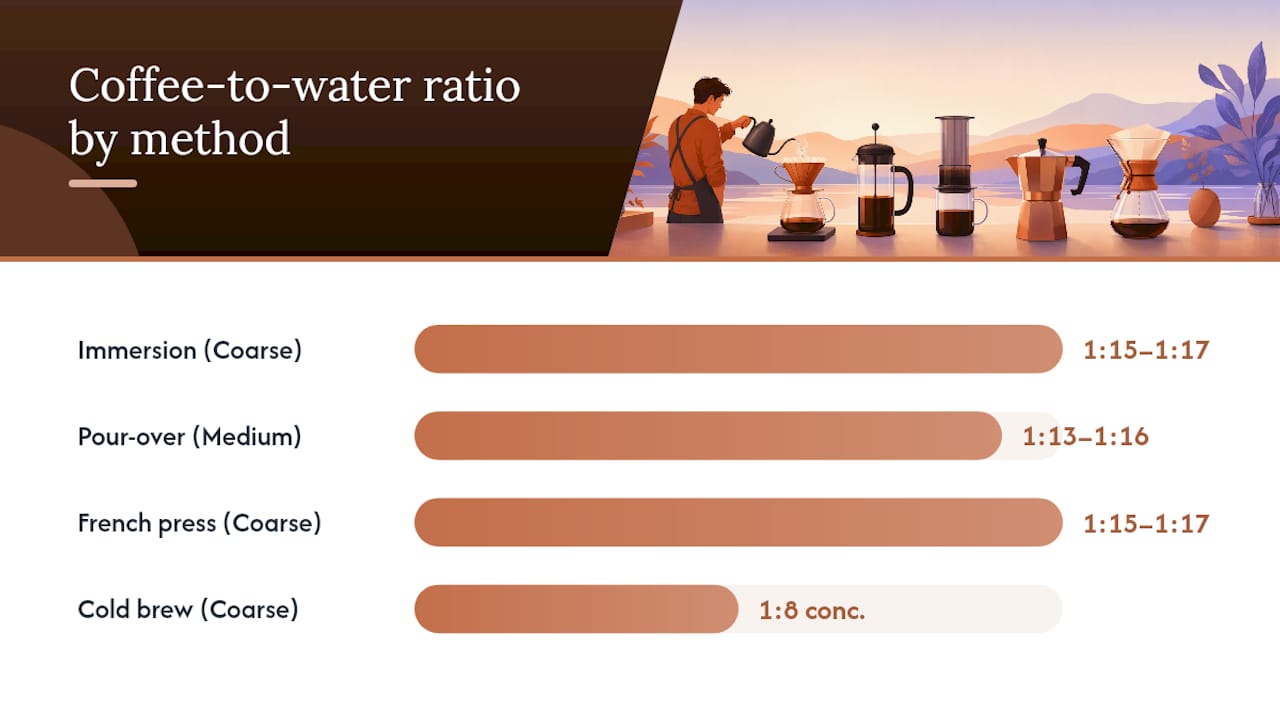
Coffee-to-water ratios in the specialty world typically run 1:15 to 1:17 by weight, with 1:16 as a solid starting point for most home brewing. If you don’t own a scale, roughly 2 tablespoons of grounds per 6 fluid ounces of water gets you close.
| Method | Grind size | Ratio | Time |
|---|---|---|---|
| Immersion / cowboy | Coarse | approximately 1:15 to 1:17 ratio | about 4 minutes |
| Pour-over | Medium | roughly 1:13 to 1:16 ratio | 2 to 4 minutes |
| French press | Coarse | approximately 1:15 to 1:17 ratio | about 4 minutes |
| Cold brew | Coarse | around 1:8 concentrate | steeped for several hours |
Water temperature should land between 195°F and 205°F, with specialty brewing guides often targeting closer to 93°C, or about 200°F. Water any hotter than that scorches the grounds and pulls out bitter compounds; any cooler and you’ll under-extract into sour, weak coffee.
Five Recipes You Can Make Without a Coffee Maker
Pick the one that matches what you have on hand. None of these require anything beyond hot water, grounds, and something to strain with.
- Stovetop “cowboy” coffee. Boil water, remove from heat, stir in coarse grounds at roughly 3 tablespoons per 6 ounces of water. Steep 4 minutes, then let the grounds settle for another minute before pouring slowly, leaving the sediment behind. A pinch of salt in the grounds cuts bitterness if the batch runs strong.
- French press, or steep-and-decant if you don’t own one. Coarse grind, 1:16 ratio, pour water just off boil. Stir once, steep 4 minutes, then either plunge or simply let it settle and pour carefully into a second vessel.
- Simple pour-over. Set a paper filter (or a folded paper towel) over a mug. Use a medium grind at roughly 1:13 to 1:16. Wet the grounds first with about twice their weight in water and wait 30 to 45 seconds. This “bloom” lets trapped carbon dioxide escape, which prevents the water from channeling around dry pockets of grounds. Then pour the rest in slow circles, aiming for a total drawdown of 2 to 4 minutes.
- AeroPress-style improvisation. Use a medium-fine grind in a mug, add hot water at a tighter 1:13 ratio, stir well, steep 1 to 2 minutes, then press the grounds down with a fine sieve or press the liquid through a folded paper towel into a second cup.
- Cold brew. Combine coarse grounds with room-temperature or cold water at roughly a 1:8 ratio. Steep 12 to 18 hours in the refrigerator, strain through cloth or a fine sieve, then dilute the concentrate with water or milk to taste before drinking.
Immersion methods like the cowboy pour and French press tend to produce a fuller, heavier body with a bit of texture, while pour-over produces a cleaner cup that shows off a single-origin’s brighter notes. If you’re brewing something with distinct fruit or floral character, pour-over is worth the extra five minutes. For more on how technique shapes the finished cup, see this breakdown of how brewing method affects specialty coffee flavor.
How Do You Strain Coffee Without a Filter?
No coffee maker doesn’t mean no filter option. A fine-mesh kitchen sieve works in a pinch. Double-layered paper towels, a clean cotton cloth, or even a fresh sock (yes, really) will catch most grounds. Cheesecloth is ideal if you have it.
The lazy option works too: let the grounds settle to the bottom for a minute or two after stirring, then pour slowly and stop before you hit the sludgy last inch. Stopping short of that final pour is the single easiest way to avoid a gritty cup.
- Too bitter: lower the water temperature, shorten the steep, or grind coarser.
- Too sour or weak: grind finer, steep longer, or use slightly hotter water.
- Gritty: switch to a coarser grind, give it more settling time, or strain through a finer cloth.
Pro Tip: When diluting cold-brew concentrate, start with a 1:1 ratio of concentrate to water and adjust from there. It’s much easier to add water than to fix an overly weak cup.
| Symptom | Likely fix |
|---|---|
| Bitter | Cooler water, shorter steep, coarser grind |
| Sour/weak | Finer grind, longer steep, hotter water |
| Gritty | Coarser grind, longer settle, finer strainer |
Small Habits That Make Every Cup More Consistent
Consistency comes from a handful of repeatable habits, not expensive gear.
- Buy beans roasted within the last two weeks and grind them right before brewing.
- Use a scale when you can. Tablespoons are fine, but weight removes the guesswork.
- Preheat your mug or vessel with hot water first, and rinse paper filters to remove papery taste.
- Filter your tap water if it smells or tastes off.
- Change one variable at a time (ratio, then grind, then temperature) so you know what actually shifted the flavor.
- Store beans in an airtight container away from heat and light, not in the fridge.
Freshness affects flavor more than almost anything else you control, since coffee starts losing its aromatic compounds within days of roasting. If you want the mechanics behind that, this piece on why freshly roasted beans taste better walks through the degassing process, and proper storage for whole bean coffee helps preserve it.
Why Do Ratio and Temperature Actually Matter?
Water is the solvent. Everything you taste in a cup got pulled out of the grounds by that water, and how much gets pulled out depends on four levers working together: ratio, temperature, time, and grind size.
Push any one lever too far and the balance breaks. Too hot or too long, and you extract bitter compounds late in the process. Too cool or too short, and you never reach the sweeter, more balanced compounds that come out midway through extraction. That’s why specialty coffee resources keep repeating the same numbers: a 1:15 to 1:17 ratio and water around 93°C (200°F) sit in the sweet spot where most beans extract evenly.
Bean freshness, grind consistency, precise ratio, and water temperature matter more than the equipment you brew with. Get those four right and a mason jar will outperform a fancy machine run carelessly.
Pro Tip: When troubleshooting a bad cup, adjust ratio first, then grind, then temperature. Changing all three at once tells you nothing about what actually fixed it.
A Simple Morning Routine Worth Repeating
My mornings run on a mason jar, boiled water, and a 1:16 ratio. Boil the kettle, count to 30, pour over coarse grounds, wait four minutes, strain into a mug. That’s it.
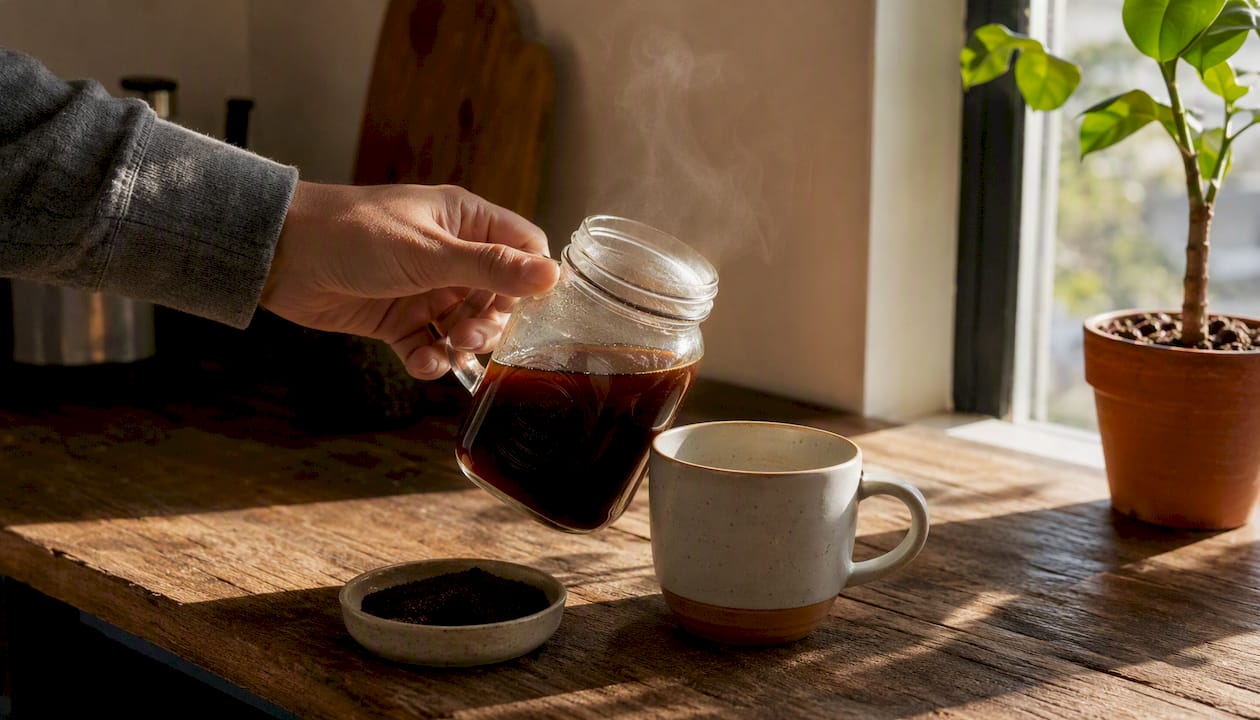
The two changes that improved my cup the most weren’t fancy: switching to beans roasted within the past two weeks, and being consistent about water temperature instead of eyeballing it. Small stuff, big difference.
Want Fresher Beans Without the Guesswork?
Every technique in this guide works better with beans that were roasted recently, since stale coffee flattens even a perfect 1:16 pour. Moustache Coffee Club roasts to order and ships the same day, which means the beans hitting your kettle are still close to their peak instead of sitting on a shelf for months.

Each subscription is built around ultra-light, Nordic-style single-origin coffee from places like Ethiopia and Colombia, roasted to preserve the character that a careful pour-over is designed to show off. If you want to pair fresher beans with better technique, browse the coffee education hub for brewing guides, or start a subscription and get freshly roasted beans on your next delivery.
Sources
- Brewing - NCA - About Coffee
- Pour over guide | Pulled Coffee
- How to Brew Coffee at Home: A Complete Guide
- How to Make Coffee Without a Coffee Maker
- Brewing coffee without a coffee maker | Mastering Coffee
FAQ
Can you make coffee with just water?
Yes. Combine hot water with coffee grounds using an immersion method, steep about 4 minutes, then strain the liquid from the grounds.
Can I make coffee directly with water without any equipment?
You can brew directly in a mug or pot by pouring hot water over grounds and straining through a sieve, cloth, or paper towel once it steeps. No coffee maker is required.
How much coffee do I use for 4 cups of water?
At a 1:16 ratio, roughly 4 cups of water calls for around 60 grams of coffee, or roughly 8 tablespoons.
How much coffee do I add to 2 cups of water?
Two cups of water (about 16 fluid ounces) needs roughly 30 grams of coffee at a 1:16 ratio, which comes out to about 4 tablespoons.
Recommended
- How To Brew Pour Over Coffee | Step-by-Step Guide | Moustache Coffee Club
- How to Make Cold Brew Coffee | Easy Recipe & Ratio | Moustache Coffee Club
- French Press Brew Guide | How to Make French Press Coffee | Moustache Coffee Club
- How to Clean Coffee Equipment Step by Step | Blog | The Moustache Coffee Club