How to source single origin beans sustainably and ethically
Finding genuinely ethical single origin coffee feels harder than it should be. You’re staring at a bag covered in buzzwords like “sustainable,” “responsibly sourced,” and “direct trade,” but there’s no farm name, no region detail, and no way to verify any of it. The specialty coffee world has a marketing problem, and it falls on you to cut through the noise. This guide walks you through exactly what to look for, how to evaluate roasters and suppliers, how to brew for the best results, and how to build a sourcing practice that actually reflects your values.
Table of Contents
- What you need to source single origin beans
- How to evaluate bean sources for ethics and sustainability
- Buying and brewing: Practical steps for single origin bean enthusiasts
- How to verify results and refine your sourcing strategies
- Why transparency beats certifications for sourcing single origin beans
- Explore sustainable single origin beans with Moustache Coffee Club
- Frequently asked questions
Key Takeaways
| Point | Details |
|---|---|
| Certifications are not enough | Always prioritize roaster transparency and traceability over labels alone. |
| Ask for farm details | Request specific farm, region, and processing info before purchasing single origin beans. |
| Track your sourcing | Maintain a log of sourcing and tasting notes to refine your coffee choices and ensure quality. |
| Adapt brewing methods | Adjust brewing to bean profile for best flavor and aroma, using specialty guides where possible. |
| Subscriptions can help | Curated coffee subscriptions make sourcing single origin beans easier and more transparent. |
What you need to source single origin beans
Before you start comparing roasters or reading bag copy, you need a clear picture of what legitimate ethical sourcing actually looks like. Think of it as building a checklist that separates real transparency from polished branding.
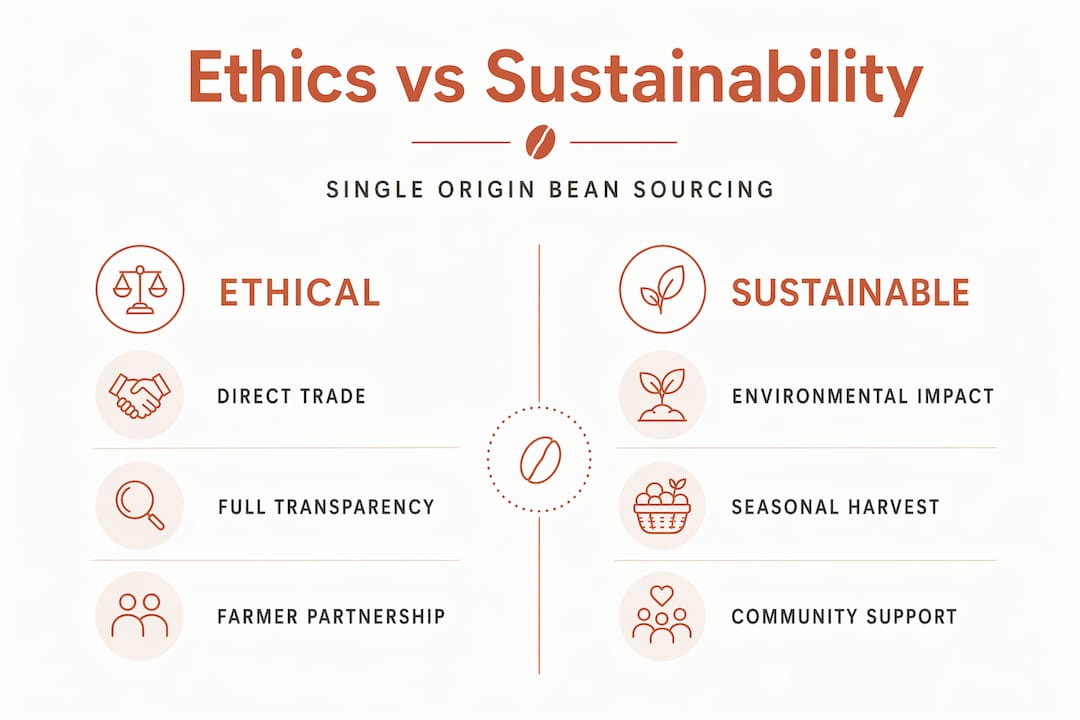
Certifications are a starting point, not a finish line. Fair Trade, USDA Organic, and Rainforest Alliance certifications all signal that a coffee met certain standards at some point in the supply chain. A solid ethical/sustainable checklist includes appropriate certifications as a baseline, paired with roaster transparency and traceability to confirm what those labels actually claim. Certifications cost money, and not every small, ethical farm can afford them. So treat them as one data point, not the whole story.
Here’s what to look for when evaluating any single origin offering:
- Farm or cooperative name: Can you identify the specific source?
- Region and country of origin: Not just “Ethiopia” but a specific growing region like Yirgacheffe or Sidama.
- Processing method: Natural, washed, honey processed? This tells you a lot about flavor and farm practices.
- Harvest season: Freshness matters, and knowing the harvest year confirms the beans aren’t sitting in a warehouse.
- Farmer or producer name: The gold standard of traceability.
- Roast date: Freshly roasted beans should be used within 2 to 6 weeks of roasting.
When it comes to materials and suppliers, you need access to roasters who publish this information openly. Explore single origin coffee regions to understand the geographic context behind the beans you’re buying. Knowing the difference between a washed Ethiopian Yirgacheffe and a natural processed Sidama, for example, helps you ask smarter questions and recognize when a roaster is being vague.
Pro Tip: Before purchasing any single origin coffee, email or message the roaster and ask directly: “Can you share the farm name, processing method, and harvest season for this lot?” A roaster committed to transparency will answer without hesitation. Vague or defensive responses are a red flag.
| What to look for | Why it matters |
|---|---|
| Farm or cooperative name | Confirms traceability to the source |
| Processing method | Reveals farming practices and flavor profile |
| Harvest season | Ensures freshness and supply chain accountability |
| Certifications (Fair Trade, Organic) | Baseline ethical standard, not a guarantee |
| Farmer or producer name | Highest level of traceability |
| Roast date | Confirms freshness for optimal brewing |
How to evaluate bean sources for ethics and sustainability
Once you have your checklist, the real work begins: evaluating whether a roaster’s claims hold up under scrutiny. This is where most coffee buyers stop short, and it’s where the biggest difference in quality and ethics is made.
Here’s a step-by-step approach to assessing any roaster or supplier:
- Visit their website and look for origin reports. Reputable roasters publish detailed information about each coffee lot, including farm visits, producer relationships, and pricing paid above market rate.
- Check for traceability documentation. Some roasters share direct trade contracts or pricing transparency reports. This level of openness is rare but powerful.
- Look at their coffee descriptions. Vague language like “sourced from small farms in Central America” is a warning sign. Specific language like “Finca El Paraíso, Huila, Colombia, washed process, harvested November 2025” is what you want.
- Research the roaster’s sourcing relationships. Have they visited the farms? Do they talk about the farmers by name? Genuine relationships show up in the storytelling.
- Cross-reference certifications. If a roaster claims Fair Trade certification, you can verify it through the certifying body’s public database.
Here’s something that surprises many specialty coffee buyers: many single origin offerings are uncertified, which means buyers should not assume ethics or sustainability from certifications alone. In fact, some of the most ethically sourced coffees in the world carry no certification at all because the farms are too small or too remote to afford the audit process.
Transparency and traceability matter more than the label on the bag. A roaster who can tell you the farmer’s name, the altitude of the farm, and the price paid per pound is giving you more assurance than a certification sticker ever could.
This is a critical distinction. Certified coffees follow a defined process, but that process has gaps. Direct trade relationships, where a roaster works personally with a producer year after year, often result in better outcomes for farmers and better coffee for you. Learning more about sustainable sourcing methods helps you recognize which roasters are doing this work seriously.
Certified vs. uncertified single origin beans: key differences
| Factor | Certified (Fair Trade/Organic) | Uncertified but transparent |
|---|---|---|
| Verified standards | Yes, through third-party audit | No formal audit |
| Cost to producer | High certification fees | No fees required |
| Traceability | Variable | Often higher with direct trade |
| Ethical assurance | Baseline guaranteed | Depends on roaster relationships |
| Flavor quality | Not related to certification | Often higher with direct sourcing |
If you’re ready to explore ethical coffee subscriptions built around this kind of transparency, look for platforms that publish origin reports and maintain ongoing producer relationships rather than rotating through anonymous lots.
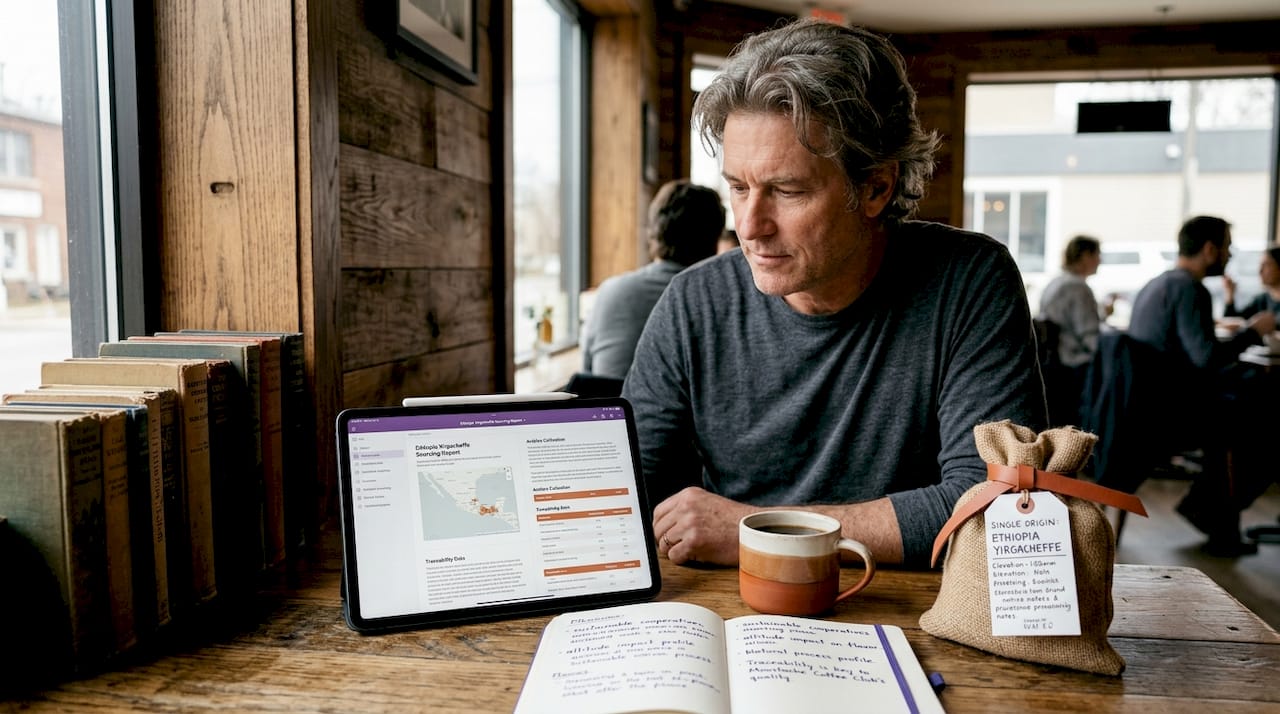
Pro Tip: Ask the roaster for the farmer’s name and the specific community or cooperative behind your coffee. The Ethiopian Coffee Network emphasizes that genuine transparency includes the farm or region, the processing method, and the producer’s name. If a roaster can’t or won’t provide this, keep looking.
Buying and brewing: Practical steps for single origin bean enthusiasts
You’ve done the research, you’ve identified a trustworthy source, and now it’s time to buy and brew. This stage is where your sourcing work pays off in the cup, but only if you handle the beans correctly.
Purchasing steps to follow:
- Verify traceability before checkout. Confirm the bag or product listing includes the farm name, region, processing method, and harvest date. If it’s not there, ask before you buy.
- Order freshly roasted beans. Look for a roast date on the bag. Beans roasted to order are ideal. Avoid anything without a roast date or with a “best by” date that’s more than a year out.
- Start with a single variety. If you’re new to a roaster, begin with one origin to understand their roasting style before committing to a subscription.
- Store beans properly. Use an airtight container away from light and heat. Whole beans stay fresh longer than pre-ground.
- Grind just before brewing. This is non-negotiable for specialty beans. Pre-grinding accelerates flavor loss dramatically.
The Ethiopian Coffee Network stresses transparency in traceability, including the farm or region, processing method, and farmer name. When you buy from a roaster who provides this, you’re also getting a flavor roadmap. A natural processed Ethiopian Yirgacheffe will taste wildly different from a washed Colombian Huila, and knowing the processing method helps you dial in your brew.
Brewing tips for maximizing flavor in single origin beans:
- Use water between 195°F and 205°F. Boiling water at 212°F scorches delicate flavors.
- Follow a brew ratio of 1:15 to 1:17 (coffee to water by weight) as a starting point.
- Use a scale. Eyeballing coffee and water volumes introduces inconsistency.
- Bloom your grounds for 30 to 45 seconds before the full pour. This releases CO2 and improves extraction.
- Adjust grind size based on taste. Sour or weak? Grind finer. Bitter or harsh? Grind coarser.
For a detailed walkthrough of technique, the pour over brewing guide covers everything from grind size to water temperature in the context of specialty single origin beans.
Common mistakes to avoid:
- Using beans that are more than 6 weeks past their roast date
- Brewing with boiling water, which destroys floral and fruit notes
- Using incorrect ratios, which leads to under or over extraction
- Skipping the bloom step, which results in uneven extraction
- Grinding too far in advance and losing volatile aromatics
How to verify results and refine your sourcing strategies
Sourcing ethically isn’t a one-time decision. It’s an ongoing practice that gets sharper the more attention you pay to what ends up in your cup. The feedback loop between flavor and sourcing information is one of the most underused tools in specialty coffee.
Signs that your sourcing is working:
- Clear, distinct flavor notes that match the origin profile (citrus in Ethiopian, chocolate in Colombian, stone fruit in Kenyan)
- No flatness, mustiness, or generic “coffee” taste, which often signals stale or poorly sourced beans
- Consistent quality across multiple bags from the same roaster
- Roaster communication that includes updates on harvests, producer news, or seasonal changes
- Packaging that includes specific origin details rather than vague regional claims
A solid ethical/sustainable sourcing checklist always includes roaster transparency and traceability as the core verification mechanism. The flavor in your cup is the final confirmation that the sourcing chain held up.
Pro Tip: Keep a sourcing log. For each coffee you buy, record the roaster name, farm or region, processing method, roast date, and your tasting notes. Over time, you’ll identify patterns: which origins you prefer, which roasters deliver consistent quality, and which certifications or sourcing claims actually correlate with flavor. This turns your coffee habit into a genuine practice.
Revisit your sourcing approach every few months. New harvests come in seasonally, and a roaster you trusted last year might have changed their sourcing relationships. Staying engaged with coffee sourcing guides keeps your knowledge current and your palate sharp.
Why transparency beats certifications for sourcing single origin beans
Here’s the uncomfortable truth that most sourcing guides won’t tell you: chasing certifications is often the least effective way to source ethically. It feels reassuring because there’s a logo on the bag and a third party involved. But certifications audit a moment in time, not an ongoing relationship. They verify that a farm met certain standards during an inspection window, not that those standards are maintained day to day or that the farmer is actually thriving.
The benchmarking data from the single origin space makes this clear: certifications are not the norm, and yet plenty of genuinely excellent, ethically sourced coffees exist without them. The farms producing some of the world’s most celebrated lots in Ethiopia, Colombia, and Kenya often operate outside the certification system entirely because the economics don’t work for small producers.
What actually works is direct knowledge. When a roaster can tell you that they visited a specific farm in Sidama in January, paid 30% above the Fair Trade floor price, and have worked with the same producer for five consecutive harvests, that’s a sourcing story you can trust. No certification delivers that level of accountability.
We’ve seen this firsthand in the coffees we source and feature. The lots that generate the most excitement from our subscribers are almost never the certified ones. They’re the ones with a name attached, a story behind them, and a flavor profile so distinct that you could pick them out of a lineup. Transparency about coffee origins and transparency is what separates a meaningful cup from a marketing exercise.
The shift in mindset is simple but powerful: stop asking “is this certified?” and start asking “can you tell me who grew this and how?” That question will take you further than any logo ever will.
Explore sustainable single origin beans with Moustache Coffee Club
If this guide has you thinking more carefully about where your coffee comes from, we built Moustache Coffee Club specifically for you.
Our fresh single origin subscriptions are roasted to order and ship with full origin details including farm name, region, processing method, and harvest season. No vague sourcing claims, no mystery lots. Every bag tells a story you can verify. Our coffee education hub goes deeper on origin reports, sustainable sourcing practices, and the producers behind each coffee. And if you’re ready to put your sourcing knowledge into practice, our pour over brewing guide helps you get every bit of flavor out of the beans you’ve worked so hard to find.
Frequently asked questions
What does ‘single origin’ actually mean for coffee beans?
Single origin beans come from a specific farm, region, or cooperative, which allows for greater traceability and produces unique flavor profiles tied to that specific growing environment.
Is a Fair Trade certification enough to guarantee ethical sourcing?
No, certifications are only a baseline for ethical sourcing; roaster transparency and direct traceability to the farm or producer matter significantly more for genuine assurance.
How do I find out the farm or producer behind my beans?
Ask the roaster directly for the farm name, region, and processing method. The Ethiopian Coffee Network emphasizes that genuine transparency includes the producer’s name, and reputable sellers often include this on packaging or their website.
Are most single origin beans certified organic or Fair Trade?
No. Certified coffees made up just 20% of offerings in industry benchmarking, meaning the majority of single origin coffees on the market carry no formal certification.
What are common mistakes when brewing single origin beans?
Using stale beans past their peak, brewing with boiling water, or relying on incorrect brew ratios all damage flavor. Freshness, proper water temperature between 195°F and 205°F, and consistent technique are the three factors that matter most.
Recommended
- Best Coffee Subscription | Ultra-Light Nordic-Style Single Origin Coffee | Moustache Coffee Club
- Coffee Education Hub | Ultra-Light Nordic-Style Brewing Guides & Origins | Moustache Coffee Club
- Best Coffee Subscription | Fresh Roasted Single Origin | Moustache Coffee Club
- How To Brew Pour Over Coffee | Step-by-Step Guide | Moustache Coffee Club