Taste Origin, Not Roast: Nordic Style Coffee for Home Baristas
Nordic style coffee is a roasting philosophy built around ultra-light to light roasts that let a bean’s origin, not the roast itself, define the cup. Expect bright acidity, floral or citric notes, and a tea-like clarity you won’t find in a medium or dark roast. It’s usually brewed as filter coffee, though some dial it into espresso, and freshness matters more here than with darker roasts. Roasters like Moustache Coffee Club build entire subscription programs around this idea.
TL;DR:
- Nordic-style coffee emphasizes ultra-light roasts that showcase the origin’s natural acidity, floral notes, and clarity, with freshness being critical within two to three weeks of roasting.
- Roasters tailor their development time based on origin, stopping shortly after first crack to preserve delicate flavors and avoid underdevelopment, which can taste grassy or sour.
- Proper brewing adjustments, such as using a finer grind and longer bloom or steeping times, are essential to enhance brightness and fullness in light roasts.
- Purchase decisions should focus on recent roast date, specific origin, processing method, and tasting notes like citrus or floral, avoiding vague labeling or blends.
- Light roasts are best suited for filter brewing and those who enjoy exploring origin differences, while milk-based drinks or lovers of darker roasts may find this style too thin or bright.
Table of Contents
- The Defining Traits of Nordic-Style Roasting
- Where the Nordic Roasting Movement Started
- How Nordic Roasters Actually Roast: Technique and Profile
- Flavor Profile and How to Brew It Right
- What to Look For Before You Buy
- How Moustache Coffee Club Practices Nordic-Style Roasting
- Who Actually Benefits From Drinking This Way
- Try Nordic-Style Coffee Without the Guesswork
- Sources
- FAQ
The Defining Traits of Nordic-Style Roasting
Nordic-style beans look different before you even grind them. The color runs light cinnamon to pale brown, with no surface oil, because the roast stops well before the sugars caramelize into the darker, oilier surface you’d see on a French roast. The goal isn’t to hide the coffee behind roast flavor. It’s to get out of the way and let terroir speak, which means prioritizing acidity, florality, and delicate sweetness over the caramel, chocolate, or smoky notes that heavier roasting builds in.
This philosophy is more about intent than a fixed color chart, since Nordic and Scandinavian roasters vary their exact roast level from ultra-light to medium depending on the lot. Some origins and processes show off this style better than others.
- Washed East African coffees, especially from Ethiopia and Kenya, tend to shine with pronounced citrus and floral character.
- Certain Latin American naturals can work too, though they carry more risk of tasting underdeveloped if the roaster pulls them too early.
- Underdevelopment is the real hazard: a light roast stopped too soon reads as grassy or sour rather than bright, which is why roaster skill matters more here than in darker profiles.
Where the Nordic Roasting Movement Started
The style traces back to Scandinavian roasting and barista communities, where roasters like Tim Wendelboe and The Coffee Collective started pushing lighter profiles to showcase exceptional green coffee rather than mask it. Scandinavian roasters pioneered this lighter approach specifically because they had reliable access to high-quality green coffee, which made experimentation worthwhile.
A few forces pushed the movement forward:
- Competition culture in Norway and Denmark rewarded roasters who could demonstrate clean, distinct cup characteristics rather than roast-driven sameness.
- Direct trade relationships gave roasters confidence to buy lots that could handle, and reward, a lighter touch.
- Word of mouth among baristas turned a regional habit into an international reference point for filter coffee.
The result wasn’t a rulebook. It was a shared conviction that a great green coffee deserves a roast that reveals it, not one that overwrites it.
How Nordic Roasters Actually Roast: Technique and Profile
There’s no single Nordic roast curve. What roasters share is a mindset: development time gets tailored to each origin rather than applied as a blanket formula. A Kenyan lot might hit ideal clarity with a shorter development window than a dense Brazilian natural, so the “Nordic” label describes a tailored process, not a stopwatch number.
Three control points shape the outcome:
- Charge temperature. A lower charge temp gives the roaster more control over the early drying phase, which matters when you’re trying to preserve delicate acids.
- Airflow and drum speed. Higher airflow with a moderate roast speed tends to protect acidity and sweetness, while a slower, hotter roast risks flattening both into muddiness.
- Stop point relative to first crack. Many Nordic-style roasts end shortly after first crack, well before second crack ever starts, which keeps roast-derived bitterness out of the cup.
Getting this right takes repeated cupping and small-lot testing, since dialing in the right development point for each origin is closer to a craft skill than a fixed recipe. That’s also why roast-to-order matters so much for light roasts specifically: they degas and lose their sharpest aromatics faster than dark roasts, so a bag sitting on a shelf for weeks tastes flatter and more muted than one roasted days ago.
Pro Tip: If a light roast tastes green or vegetal rather than bright, that’s usually an underdevelopment problem, not a bad bean. Ask the roaster how many days post-roast the bag was shipped.
Flavor Profile and How to Brew It Right
A well-executed Nordic-style coffee tastes like the origin report reads: citric acidity from a washed Kenyan, jasmine and stone fruit from an Ethiopian, tea-like body instead of heavy mouthfeel. Light and ultra-light roasts show more origin-derived flavor precisely because there’s less roast character covering it up, but that same transparency means brewing mistakes show up loudly too.
A few adjustments make a real difference:
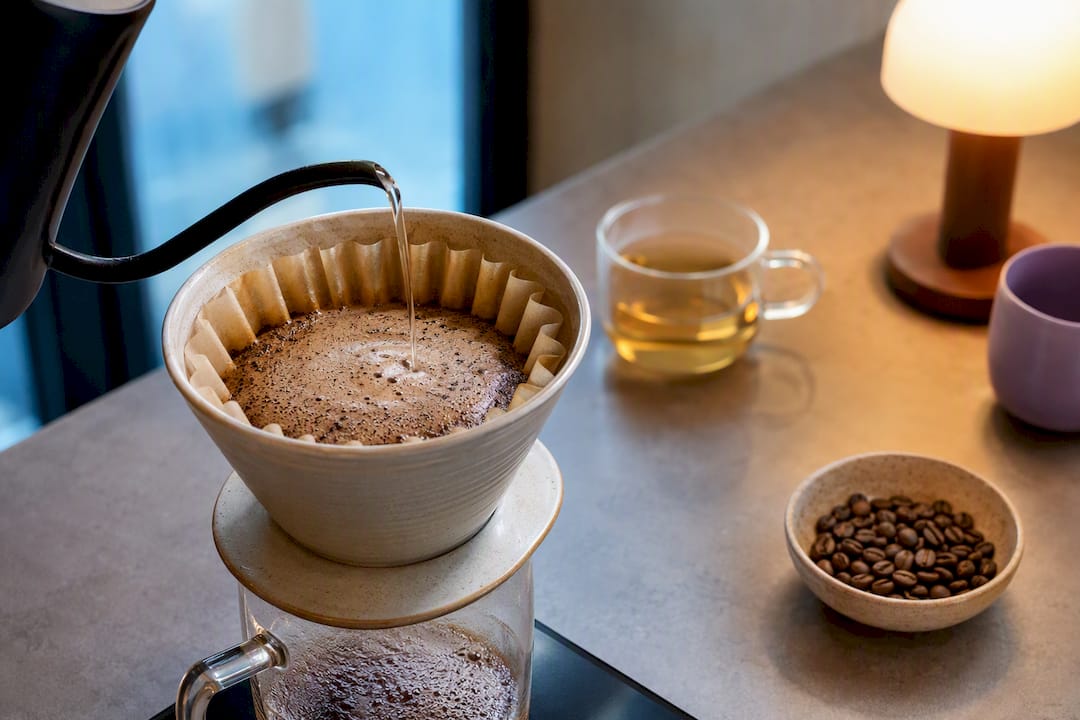
- Pour-over: Go slightly finer than you would for a medium roast, extend your bloom to 45 to 60 seconds, and push water temperature toward the higher end, around 205°F. Longer blooms and careful grind sizing help light roasts taste fuller rather than thin.
- AeroPress or Clever: A longer steep, 2 to 3 minutes, before pressing or draining draws out sweetness that a fast brew skips past.
- Cold brew: Light roasts need a shorter steep than dark roasts, usually 12 to 14 hours, or the result turns sour rather than smooth.
- Espresso: Use a lower dose and a slightly coarser grind than you’d use for a dark roast blend; the goal is clarity, not syrupy body.
Pro Tip: If your cup tastes sour, extend the brew time or grind finer. If it tastes bitter and dry, you’ve likely overextracted, so pull back on time or coarsen the grind. If it’s thin, add more coffee before you touch anything else.
For a full walkthrough of grind and temperature settings, the dialing-in guide for Nordic-style coffee at home covers method-specific adjustments in more depth.
What to Look For Before You Buy
The label tells you most of what you need to know before the bag is even open. Trustworthy Nordic-style coffee lists a roast date, not just a “best by” window, since freshness is non-negotiable at this roast level. It also names the origin specifically, not just a country, and states the process (washed, natural, honey) rather than staying vague.
Check for these signals on a product page:
- A roast date within the past two to three weeks, ideally closer to the day you order.
- Single-origin sourcing with a specific farm, cooperative, or region named, not a generic blend.
- Processing method stated clearly, since it directly shapes acidity and body.
- Tasting notes that actually match a light roast profile, such as citrus, florals, or tea-like body, rather than chocolate and nut descriptors that belong to darker roasts.
- Small-lot or limited releases, which usually signal the roaster is chasing peak flavor in a specific harvest rather than blending for consistency at scale.
Roast-to-order operations matter here because they compress the gap between roasting and drinking, which is exactly the window that determines whether you taste the coffee at its best.
How Moustache Coffee Club Practices Nordic-Style Roasting
Moustache Coffee Club builds its subscription model entirely around the ultra-light, Nordic-style approach, sourcing single-origin lots from regions including Ethiopia and Colombia and roasting to order rather than to a warehouse shelf.
A few things back that up:
- Coffee ships the day it’s roasted, which addresses the freshness problem light roasts are most vulnerable to.
- Subscribers can give feedback that shapes future selections, rather than receiving a static, one-size-fits-all bag.
- Origin reports and brewing guides, including a piece on why ultra-light roasting preserves flavor, give readers the technical grounding to brew what they buy correctly.
Who Actually Benefits From Drinking This Way
Nordic-style coffee rewards filter-focused home baristas, origin explorers, and anyone who prefers a bright, delicate cup over a heavy one. If you brew mostly pour-over or AeroPress and enjoy comparing how a Kenyan differs from a Colombian, this is your lane.
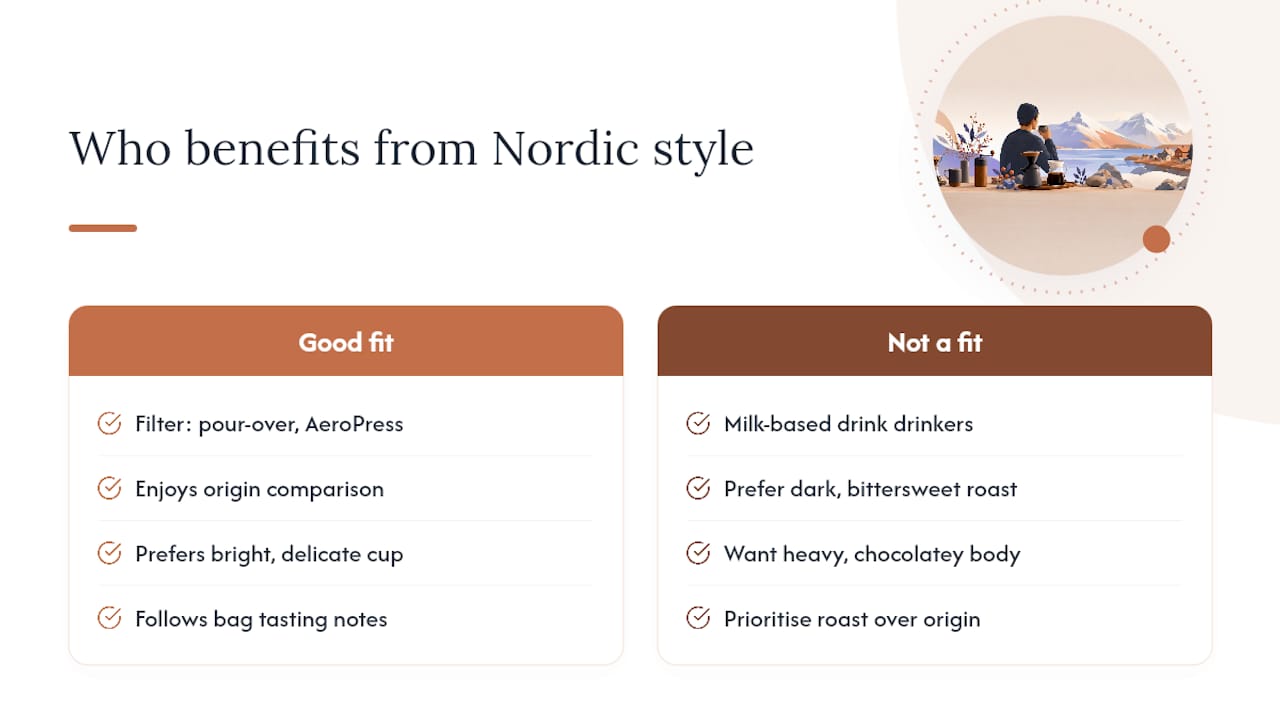
It’s not the right fit for every mood or every mug. Milk-based drinks and dark-roast lovers chasing bittersweet, chocolatey depth will find light roasts thin by comparison, and that’s a legitimate preference, not a failure of the coffee. The smartest approach is to follow the tasting notes on the bag rather than treat “lighter is always better” as gospel. Origin and process tell you more about what’s in your cup than roast level alone ever will.
Try Nordic-Style Coffee Without the Guesswork
Reading about origin clarity is one thing. Tasting the difference between a washed Ethiopian and a Colombian natural, both roasted to show their own character, is another.
Some subscription coffee services deliver ultra-light, single-origin beans roasted to order and shipped on the day of roasting to maximize freshness. Every bag comes with tasting notes and access to brewing guides built specifically for lighter roasts, so you’re not left guessing at grind size or water temperature. If you want to start simple, the subscription plans page lays out the available tiers, including the Duet plan at $24 per week per bag. Not ready to commit for yourself? A gift subscription is a low-pressure way to introduce someone else to origin-forward coffee, and pairing it with a coffee mug from McLaren Tee Hub rounds out the gift nicely. Pick a plan, or start with a single bag, and taste what origin clarity actually means.
Sources
For a deeper technical breakdown of how roasters tailor development time by origin, ROEST’s guide to Nordic roasting style is a solid starting point. Serious Eats offers useful practitioner context in its primer on Scandinavian coffee culture, including how roasters like Tim Wendelboe shaped the movement. Lore Roasters makes the case that “Nordic” describes a philosophy rather than a fixed roast number. Readers wanting hands-on brewing help can turn to the home barista guide for dialing in light roast coffee.
FAQ
What Is a Nordic Style Coffee?
It’s coffee roasted to an ultra-light or light level specifically to highlight the origin’s natural acidity, aroma, and flavor rather than adding roast-derived caramel or smoke notes.
Why Do Scandinavians Drink So Much Coffee?
Coffee culture in Scandinavia runs deep historically and socially, and that widespread daily consumption created strong demand for high-quality green coffee, which in turn gave roasters the material to experiment with lighter profiles.
What Is the Best Norwegian Coffee?
There’s no single “best,” since taste depends on origin and process, but Norwegian roasters built their reputation on sourcing exceptional single-origin lots and roasting them lightly to showcase that quality, an approach brands like Moustache Coffee Club apply with beans from origins including Ethiopia and Colombia.
What Is a Nordic Light Roast Coffee?
It’s a coffee roasted just past first crack, stopped well before second crack, producing a pale color with no surface oil and a cup defined by bright acidity and delicate sweetness rather than roast bitterness.
How Fresh Should Nordic-Style Coffee Be?
Because light roasts lose aromatic intensity faster than dark roasts, freshness within two to three weeks of the roast date matters, and roast-to-order sourcing gets you even closer to peak flavor.