Tracking Coffee Subscription Feedback for Better Cups
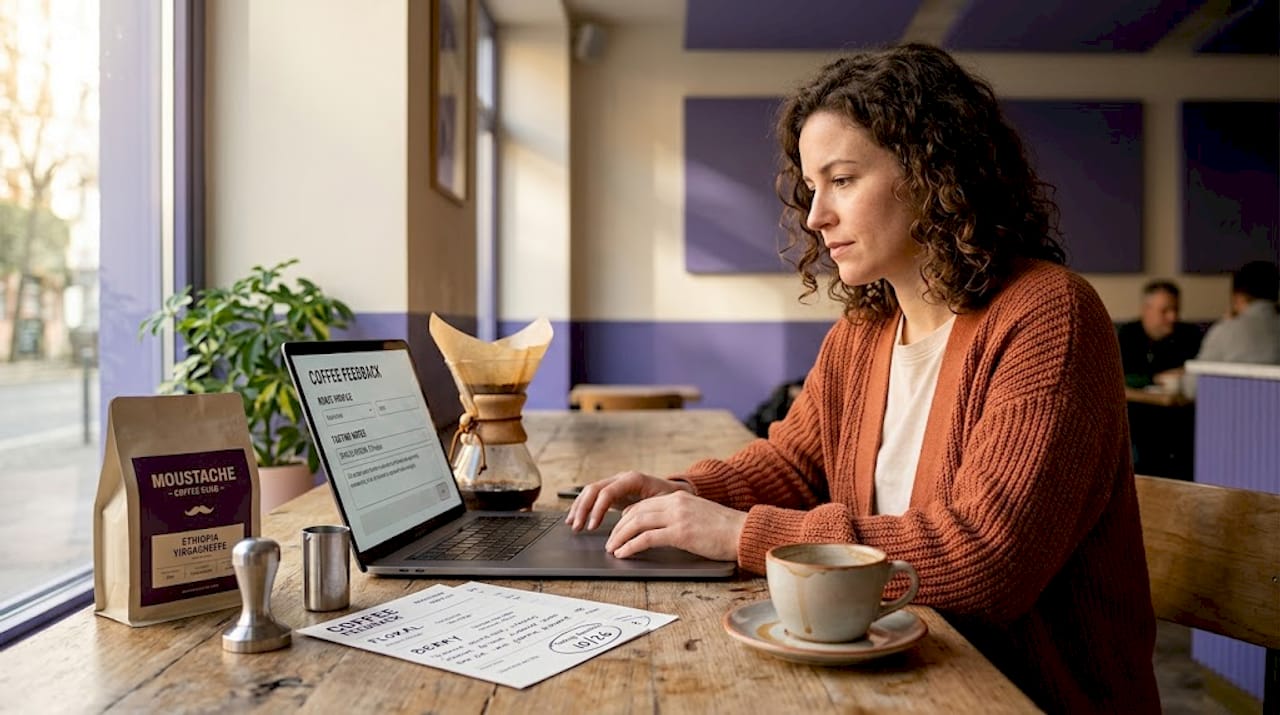
You signed up for a specialty coffee subscription hoping each bag would feel like a discovery. Instead, you keep getting coffees that miss the mark. Too dark, too fruity, or just not what you ordered in your head. The problem usually isn’t the roaster. It’s the feedback loop. Tracking coffee subscription feedback turns a guessing game into a genuinely personalized experience, and most subscribers have no idea how much control they actually have. This guide walks you through exactly what to track, how to submit feedback that actually works, and how to manage your history over time.
Table of Contents
- Key Takeaways
- Tracking coffee subscription feedback: what to collect first
- How to write feedback that actually improves your selections
- Managing your feedback history over time
- Common feedback mistakes to avoid
- What good feedback tracking actually delivers
- My honest take on feedback as a specialty coffee subscriber
- Try Moustache Coffee Club’s personalized subscription
- FAQ
Key Takeaways
| Point | Details |
|---|---|
| Prepare before you rate | Collect brewing details and shipment info before submitting feedback to make every response count. |
| Be specific in your notes | Vague feedback like “too bitter” doesn’t help roasters adjust. Name the flavor, the method, the grind. |
| Manage your brew queue | Override automated suggestions in your subscription dashboard to take control of what ships next. |
| Build a feedback history | Revisiting past ratings helps you spot preference patterns and communicate shifts more clearly. |
| Active feedback reduces churn | Subscribers who engage with feedback tools report higher satisfaction and more coffees they actually love. |
Tracking coffee subscription feedback: what to collect first
Before you rate a single bag, you need a system. Jumping straight into reviews without any context produces feedback that’s hard to act on, both for you and for the roaster.
Start by noting the basics for every shipment: the origin, roast date, grind setting you used, brew method, water temperature, and the ratio you pulled. This context transforms a vague impression into something useful. Brewing method and grind details in feedback prevent guesswork and allow roasters to make finely tuned recommendations based on real preparation conditions.
You also need a place to store all of this. Here’s how the main options compare:
| Method | Best for | Pros | Cons |
|---|---|---|---|
| Subscription dashboard | Most users | Built-in, tied to your order history | Limited customization |
| Spreadsheet | Detail-oriented trackers | Fully customizable fields | Requires manual upkeep |
| Notes app or journal | On-the-go tasters | Fast and portable | Hard to search or sort |
| Dedicated coffee app | Enthusiasts | Structured tasting notes, shareable | Separate from your subscription |
The subscription dashboard is your default home base. It connects your ratings directly to your order history, which is exactly what AI-driven platforms use to refine future recommendations. But pairing it with a simple spreadsheet or notes app lets you capture details the platform’s form may not ask for, like exactly how the coffee tasted on day three after opening.
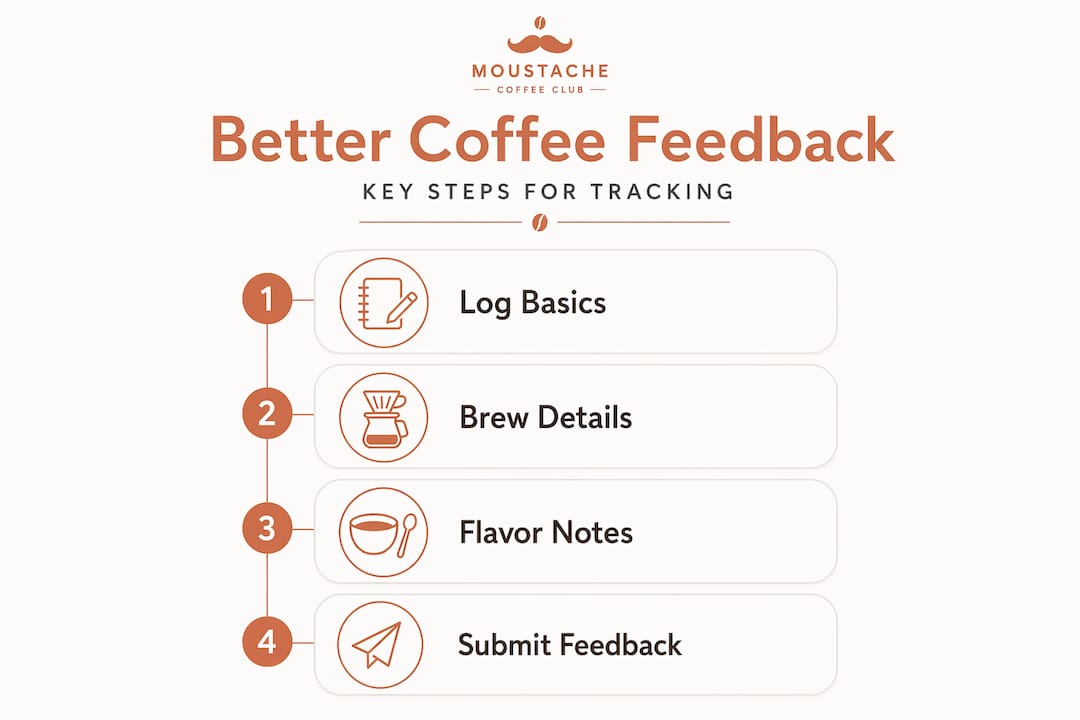
Pro Tip: Set up a simple template before your first bag arrives. Include fields for origin, roast date, brew method, grind size, dose, water temp, and a free-text flavor notes column. Having this ready means you fill it in while the coffee is fresh in your memory, not three days later when the impression has faded.
How to write feedback that actually improves your selections
This is where most subscribers fall short. Monitoring coffee feedback is only useful if the feedback itself is specific enough to act on.
A structured rating process matters here. Most platforms offer some form of rating scale, but the most effective approach uses four categories: loved, liked, neutral, and disliked. Each category does something different. “Loved” and “liked” coffees train the recommendation engine to send you more of what works. “Neutral” and “disliked” ratings help it rule out what doesn’t. Engaged subscribers who actively track their feedback see roughly 73% of tested coffees marked “worth drinking again,” which is a strong signal that the system works when you use it consistently.
Here’s a step-by-step process for writing feedback that moves the needle:
- Rate immediately after your first full brew. First impressions are the most accurate. Don’t wait until you’ve finished the bag.
- Describe the flavor in specific terms. Instead of “fruity,” say “bright citrus with a short finish” or “jammy stone fruit that lingers.” Flavor wheels available in most coffee education resources can help you find the right language.
- Include your brew method and any deviations. If you normally use a pour-over but switched to a French press for this bag, say so. Context changes everything.
- Flag any defects clearly. Ferment, mold, underdevelopment, and stale notes all mean different things to a roaster. Defect-linked feedback improves quality scores at origin and can unlock better sourcing for future lots.
- State what you’d want differently. End every review with a preference signal. “I’d prefer this origin a touch lighter” or “I’d love more coffees from this region” gives the algorithm something concrete to work with.
Pro Tip: The phrase “too bitter” tells a roaster almost nothing. “Bitter finish when brewed at 94°C with a 1:15 ratio on a V60, but balanced at 92°C” tells them everything. The more specific you are, the faster your selections improve.
Managing your feedback history over time
One-time feedback is useful. A history of feedback is transformative. This is the part of monitoring coffee feedback that most subscribers skip, and it’s exactly where the biggest gains live.
Here’s how to build and use a feedback history that actually works for you:
- Review your ratings every three to four shipments. Look for patterns. If you’ve rated three Ethiopian naturals as “loved” and two washed Colombians as “neutral,” that’s not a coincidence. That’s a preference signal.
- Update your preference profile proactively. Don’t wait for the platform to figure it out. If your taste has shifted toward lighter, more floral cups, log into your dashboard and update your stated preferences. Queue management in subscription dashboards lets you override automated suggestions for greater satisfaction.
- Track your brew queue separately. Note which coffees are scheduled next and whether they align with your current preferences. Many subscribers let the algorithm run unchecked, then wonder why they keep getting bags they don’t love.
- Correlate delivery timing with feedback quality. A bag that arrived after sitting in a hot warehouse for a week will taste different from one delivered fresh. Note arrival condition and roast date gap in your feedback so the platform can factor in logistics alongside preference.
- Communicate preference shifts clearly when they happen. If you’ve moved from darker roasts to ultra-light, nordic-style profiles, say that explicitly in your next feedback submission. Gradual drift in ratings is harder for algorithms to detect than a clear stated preference.
Pro Tip: Set a recurring monthly reminder to review your subscription dashboard and your personal feedback log together. Five minutes of comparison every month will do more for your subscription quality than any individual rating.
Common feedback mistakes to avoid
Even well-intentioned subscribers make feedback errors that undercut their own experience. Here’s what to watch for:
- Submitting feedback without brewing context. A rating without a brew method is like a restaurant review that doesn’t mention what you ordered. Vague descriptions without specific context are nearly impossible for roasters to translate into adjustments.
- Rating based on one brew. Specialty coffee often behaves differently as the bag degasses. A coffee that tastes flat on day one can open up beautifully by day three. Try at least two brews before submitting your final rating.
- Ignoring feedback prompts. Most platforms send post-delivery emails or in-app prompts asking for ratings. Skipping these means missing the easiest opportunity to shape your next shipment.
- Never updating your preference profile. Your tastes change. A profile you set up two years ago may no longer reflect what you actually want. Stale preference data produces stale recommendations.
- Focusing only on negatives. Positive feedback is equally important for training the recommendation engine. If a coffee was exceptional, say exactly why, not just that you liked it.
The fix for most of these is a simple habit shift. Treat feedback as a short ritual after each shipment, not an optional survey. Even five minutes of careful notes after your first brew will separate your experience from the average subscriber’s.
What good feedback tracking actually delivers
When you commit to tracking coffee subscription feedback with this kind of consistency, the results show up fast. Data-refined recommendations have become the primary driver of loyalty in maturing subscription markets, replacing the novelty factor that drew early adopters in.

On a personal level, you’ll notice a higher proportion of coffees in the “loved” and “liked” categories. The algorithm narrows its search radius based on your history, which means fewer misses and more of the flavor profiles you actually want.
The impact goes beyond your cup, too. Specific defect-linked feedback closes the quality loop at origin, helping producers unlock better prices and repeat contracts with roasters. Your detailed notes, sent consistently, contribute to a better supply chain for everyone involved in that coffee.
At the brand level, the numbers are clear. Enhanced feedback and cancellation features have helped subscription brands reduce monthly churn by 23% in documented cases. Subscribers who engage with feedback tools stay longer and spend more, which means brands have real incentive to invest in better feedback infrastructure when their customers use it.
My honest take on feedback as a specialty coffee subscriber
I’ve been using coffee subscriptions long enough to have made every mistake in this guide. For the first year, I rated bags with one-word descriptions and never touched my preference profile. My selections were inconsistent at best.
What changed my experience wasn’t finding a better subscription. It was taking twenty minutes to set up a simple spreadsheet and committing to write three sentences of context with every rating. Within two shipments, the recommendations shifted noticeably. Within two months, I was getting bags I genuinely looked forward to opening.
What I’ve learned is that most subscribers dramatically underestimate their own role in the personalization process. The algorithm is only as good as the data you give it. Customer feedback trains the recommendation engine, and detailed notes adjust the system’s search radius to better match your actual preferences. That’s not marketing language. That’s how the system literally works.
The other thing I’d push back on is the idea that feedback is for the brand’s benefit. Yes, roasters and producers gain from your specificity. But the primary beneficiary of tracking your coffee subscription feedback is you. Every detailed note you submit is an investment in a better cup next month.
— Sean
Try Moustache Coffee Club’s personalized subscription
If you’ve been putting real effort into your feedback and your current subscription still isn’t responding, it may be time for a service built around personalization from the start.
Moustachecoffeeclub offers ultra-light, nordic-style single-origin subscriptions roasted to order, with a subscriber dashboard designed to capture and apply your feedback with every shipment. Coffees sourced from Ethiopia, Colombia, and beyond are profiled individually so your ratings translate directly into selections that match your taste. Whether you’re refining your palate or already know exactly what you want, join the subscription and put your feedback to work. You can also explore the brewing guides and origin reports to sharpen the language you use in your reviews, which makes every rating more effective.
FAQ
How does tracking feedback improve my coffee subscription?
Tracking coffee subscription feedback gives the recommendation engine specific data to match future shipments to your actual preferences. Subscribers who rate consistently and with detail receive a higher proportion of coffees they enjoy over time.
What information should I include in coffee subscription feedback?
Always include your brew method, grind setting, water temperature, and specific flavor impressions. Including brewing context prevents guesswork and allows roasters to make precise adjustments to future recommendations.
How often should I update my coffee subscription preferences?
Review and update your preference profile every two to three months, or immediately after a noticeable shift in your taste. Stale preference data leads to recommendations that no longer reflect what you actually want.
Can my feedback affect coffee quality beyond my own subscription?
Yes. Specific defect feedback reaches producers and can improve quality scores at origin, benefiting the broader supply chain and contributing to better sourcing for future lots.
What is a brew queue and why does it matter for feedback?
A brew queue is the list of upcoming coffees scheduled for delivery in your subscription dashboard. Managing it manually, rather than relying solely on automation, lets you override automated suggestions and align shipments with your current preferences.
Recommended
- Best Coffee Subscription | Fresh Roasted Single Origin | Moustache Coffee Club
- What is a coffee gift subscription? The perfect gift | Blog | The Moustache Coffee Club
- Best Coffee Subscription | Ultra-Light Nordic-Style Single Origin Coffee | Moustache Coffee Club
- Coffee Education Hub | Ultra-Light Nordic-Style Brewing Guides & Origins | Moustache Coffee Club