Why Consumer Choices Affect Coffee Farmers: 2026 Guide
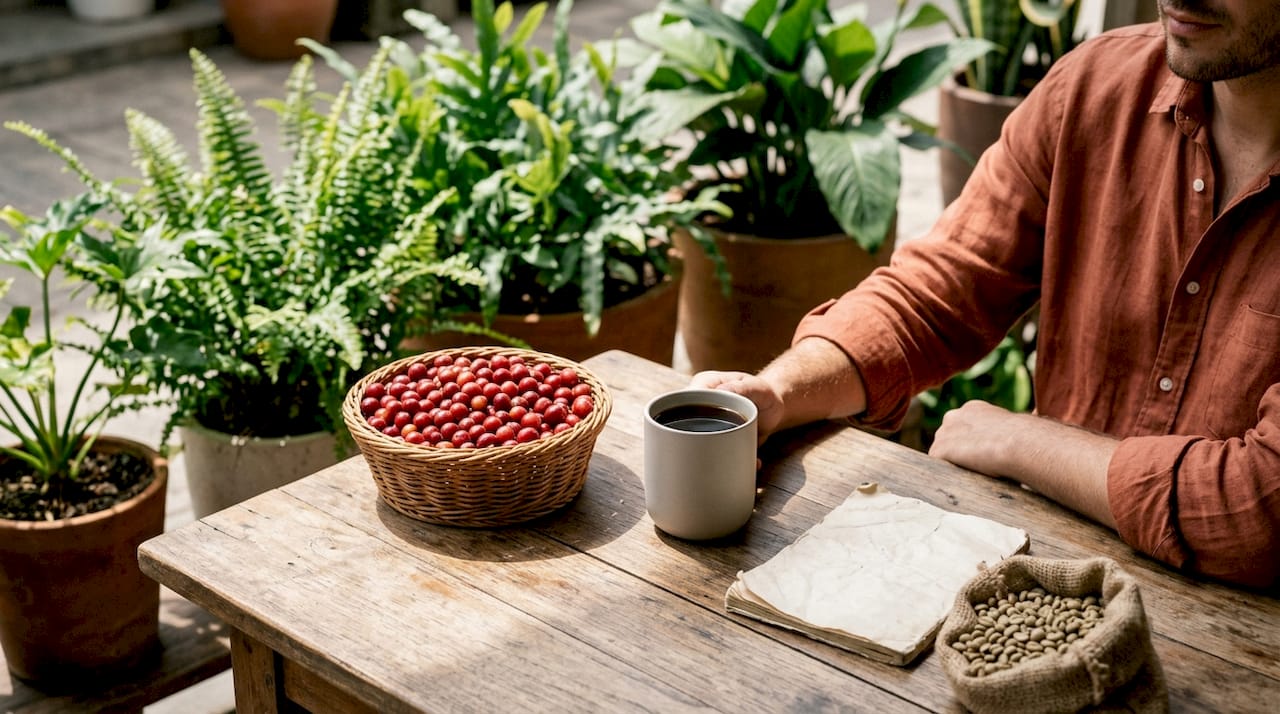
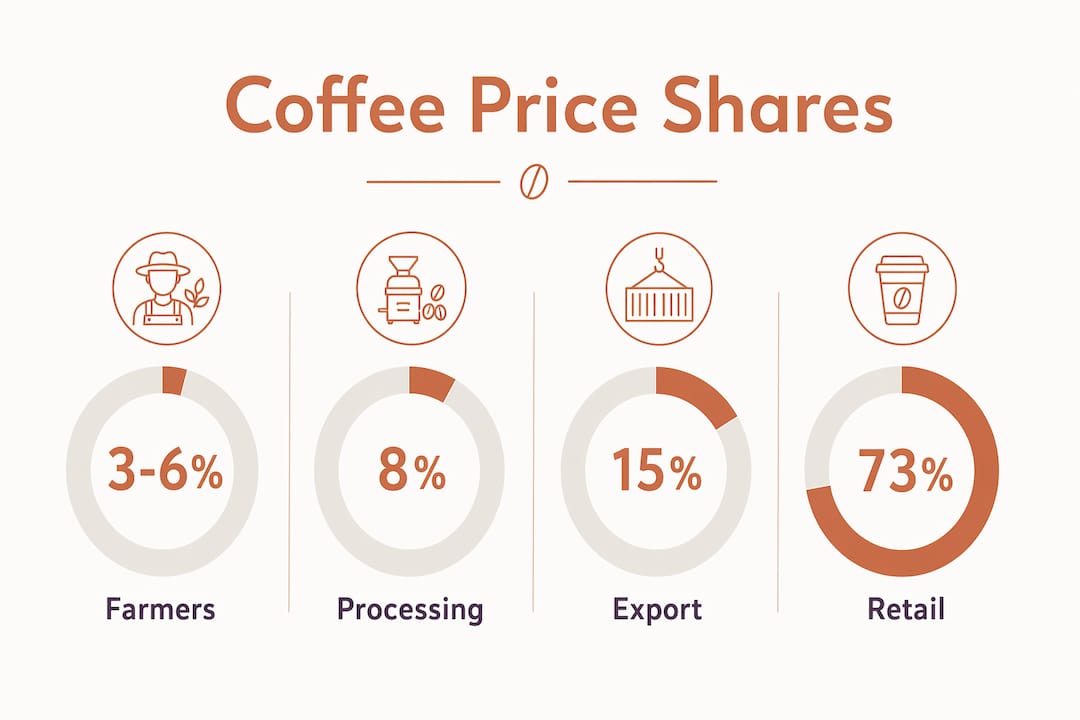
Consumer choices directly determine the economic survival of coffee farmers by shaping demand, pricing, and the distribution of value across the entire supply chain. The 2026 Coffee Barometer confirms that sustainability cannot be built on permanently cheap coffee. Farmers currently receive only 3–6% of the final retail price of coffee, while 25 million smallholder farmers produce 80% of the world’s supply, mostly on family plots under 12 acres. What you buy, and how much you pay, sends a direct signal through that chain.
Why consumer choices affect coffee farmers so directly
The coffee supply chain is long, and value accumulates at every step except the farm. Farmers typically sell unprocessed cherries to local collectors or intermediaries. Value from roasting and branding accrues almost entirely at the processing, roasting, and retail end of the chain, not at the source.
Price volatility makes this worse. When global commodity prices drop, intermediaries still take their cut, and farmers absorb the loss. The dominance of intermediaries forces farmers to sell quickly at low rates, worsening income instability. A farmer in Ethiopia or Colombia has almost no leverage over the price a roaster in Los Angeles charges for a bag.
The 2026 Coffee Barometer also documents that unpaid family labor subsidizes roughly 10% of the retail cost of coffee. That means the low prices consumers expect are partly funded by work that never gets paid. When you choose a cheaper bag without asking how that price was achieved, you participate in that system.
How value is distributed from farm to cup
The gap between what a farmer earns and what a consumer pays is not a mystery. It reflects deliberate structural choices about who bears risk and who captures reward.
| Stage | Approximate share of retail price |
|---|---|
| Farmer (cherry sale) | 3–6% |
| Processing and milling | 8–12% |
| Export and shipping | 10–15% |
| Roasting and packaging | 25–35% |
| Retail and marketing | 30–45% |
Specialty coffee changes this math somewhat. Specialty premiums of $4–$8 per pound compare to commodity prices of $1.50–$2.50 per pound. That difference can double or triple a farmer’s gross income per harvest. The catch is that farmers still capture only a small percentage of the final retail price even in specialty markets.
Do certifications actually protect coffee farmer livelihoods?
Certifications like Fair Trade are the most visible signal of ethical sourcing, but they carry real limitations. Fair Trade sets a price floor, which helps during commodity price crashes. It does not guarantee a living income, and it does not cover the rising costs of climate adaptation.
Certification programs also incur administrative costs that many of the most vulnerable smallholders cannot afford. The farmers who need protection most are often the ones excluded from certification systems. A label on your bag is a starting point, not a guarantee.
Regenerative agriculture is another intervention that gets significant attention. Research confirms it improves soil health and can increase yields. Regenerative practices alone do not close the living income gap for coffee farmers in most producing countries. Farm-level improvements work best when paired with structural changes in how coffee is priced and purchased.
Common misconceptions about certifications worth knowing:
- Price floors are not living wages. Fair Trade minimums were set years ago and have not kept pace with inflation or climate costs.
- Certification does not equal direct trade. A certified bag may still pass through multiple intermediaries.
- Not all certifications are equal. Some focus on environmental standards, others on social ones. Few address both comprehensively.
- Certification costs fall on farmers. Annual fees and audits are paid by producers, not buyers.
Pro Tip: When reading a coffee bag, look for origin reports or direct sourcing disclosures alongside certifications. A roaster willing to name the farm and the price paid is a stronger signal than a logo alone. Moustachecoffeeclub publishes origin reports for every coffee in its subscription.
How does consumer willingness to pay shape farmer income?
Consumer behavior and coffee economics are tightly linked. When buyers consistently choose the cheapest available option, they signal to roasters and retailers that price matters more than sourcing. Roasters respond by sourcing cheaper, which pushes prices down at origin.
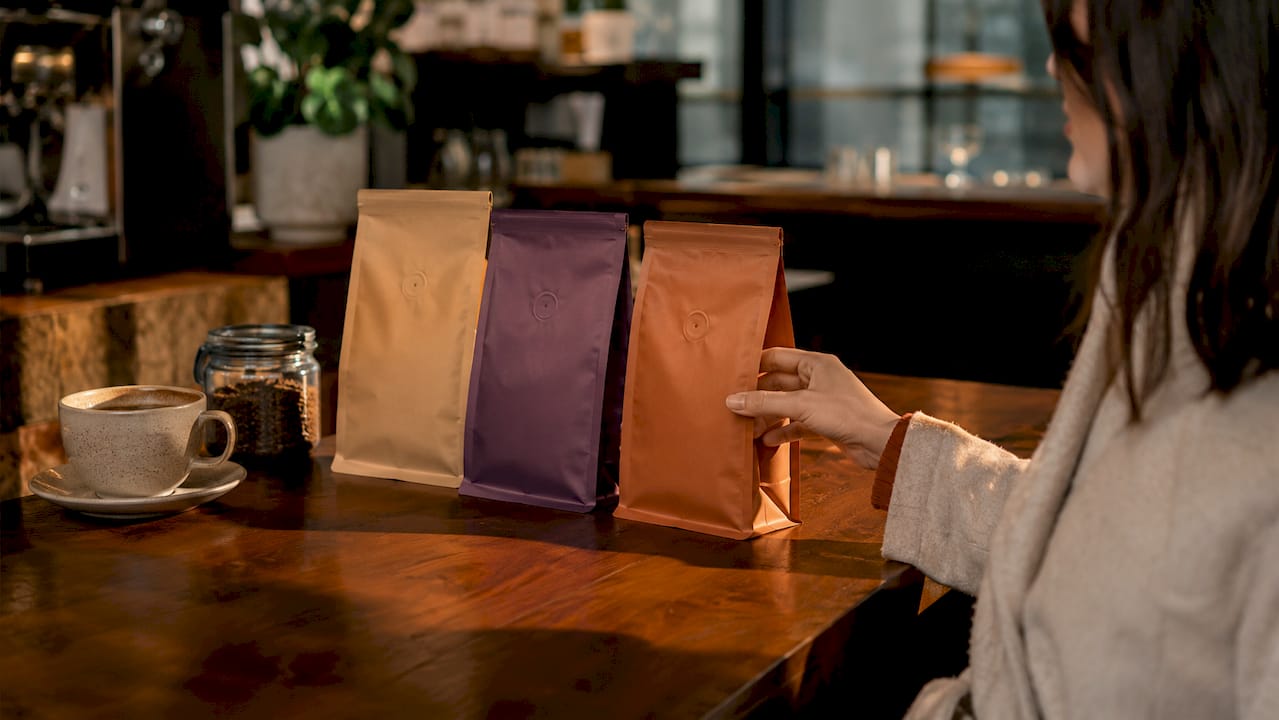
The reverse is also true. Consumer demand for transparency and ethical sourcing influences market behavior at scale. When enough buyers ask where their coffee comes from and pay a premium for a credible answer, roasters have a financial incentive to source better and pay more. This is how consumer behavior and coffee supply chains interact in practice.
The economics of specialty coffee purchasing show a clear pattern. Farmers supplying specialty roasters who pay above commodity rates earn meaningfully more per harvest. That income difference affects whether a farmer can invest in better processing equipment, hire help during harvest, or send children to school.
Key ways consumer willingness to pay affects farming outcomes:
- Higher prices at retail create room for higher prices at origin, but only when roasters pass them on.
- Demand for single-origin coffee creates accountability because the source is named and traceable.
- Subscription models that commit to regular purchases give roasters the confidence to offer farmers forward contracts, reducing income volatility.
- Asking questions about sourcing pushes roasters toward greater transparency, even before a purchase is made.
Understanding local sourcing benefits in food systems more broadly shows the same pattern. Shorter, more direct supply chains consistently deliver more value to producers. Coffee is no exception.
What practical steps can consumers take to support farmers?
Ethical coffee consumption does not require a degree in supply chain economics. A few consistent habits make a real difference.
- Pay for quality, not just certification. A bag priced at $18–$22 for a single-origin specialty coffee is more likely to reflect fair sourcing than one priced at $8. Price alone is not proof, but it creates the margin needed for better farmer payments.
- Choose roasters who name their sources. Farm names, cooperative names, and country of origin are basic transparency signals. Roasters who publish sourcing and sustainability practices are more accountable than those who do not.
- Understand what certifications actually cover. Read the types of coffee certifications before assuming a label solves everything. Certifications vary widely in scope and rigor.
- Support subscription models with direct sourcing. Subscriptions create predictable demand. Predictable demand lets roasters make longer-term commitments to farmers, which stabilizes income.
- Ask your roaster directly. Email or message the brand and ask what they paid for the coffee. Roasters who can answer that question are operating at a different level of accountability than those who cannot.
Pro Tip: Single-origin coffees from Ethiopia, Colombia, or other named regions are easier to trace than blends. When you buy ethically sourced single-origin beans, you create a direct link between your purchase and a specific farming community.
Key Takeaways
Consumer choices shape coffee farmer livelihoods by determining which sourcing models survive, which roasters thrive, and ultimately how much value reaches the people who grow the crop.
| Point | Details |
|---|---|
| Farmers earn very little | Farmers receive only 3–6% of retail price, with unpaid family labor subsidizing another 10%. |
| Certifications have limits | Fair Trade and similar programs help but do not guarantee living incomes or cover climate costs. |
| Specialty premiums matter | Specialty pricing can double or triple farmer income compared to commodity rates. |
| Consumer demand drives change | Consistent demand for transparency pushes roasters to source more ethically and pay more at origin. |
| Direct sourcing is most effective | Named-farm, single-origin, and subscription models create the accountability and stability farmers need. |
The uncomfortable truth about ethical coffee
I have spent years reading origin reports, talking to roasters, and tracking how premiums actually move through supply chains. The honest conclusion is that consumer choices matter, but they are not sufficient on their own.
The structural problem is real. A farmer in a remote growing region faces limited market access, no credit, and infrastructure that makes it hard to add value before selling. No amount of consumer goodwill fixes a road that does not exist or a processing mill that a cooperative cannot afford. The 2026 Coffee Barometer is clear that lasting transformation requires redesigning how value and risk are shared across the full supply chain, not just adding a certification logo.
What I find genuinely encouraging is that consumer behavior still moves the needle. When buyers shift spending toward roasters with transparent sourcing, those roasters grow. When they grow, they buy more from the farmers they have relationships with. That is a real feedback loop, even if it is slower than we would like.
The most effective thing you can do is not just buy better coffee. It is to stay curious, ask questions, and reward the roasters who can actually answer them. Trust built on transparency is more durable than trust built on marketing. That is the standard I hold Moustachecoffeeclub to, and it is the standard worth holding any coffee brand to.
— Sean
How Moustachecoffeeclub connects your cup to the farmer
Moustachecoffeeclub sources ultra-light, Nordic-style single-origin coffees from regions including Ethiopia and Colombia, with origin reports published for every coffee in the rotation. Every bag is roasted to order, which means no sitting in a warehouse for weeks before it reaches you.
The subscription model creates the kind of predictable, committed demand that gives farmers and their roasting partners the confidence to plan ahead. You get freshly roasted beans and detailed sourcing information. The farmers supplying those beans get a buyer who is not just chasing the lowest price. That is the practical version of ethical coffee consumption, delivered to your door.
FAQ
Why do coffee farmers earn so little from retail prices?
Farmers sell unprocessed cherries, so the value added by processing, roasting, and branding accrues elsewhere. The 2026 Coffee Barometer documents that farmers receive only 3–6% of the final retail price.
Does buying Fair Trade coffee guarantee a living income for farmers?
Fair Trade sets a price floor that helps during commodity price crashes, but it does not guarantee a living income. Administrative costs also exclude many of the most vulnerable smallholders from certification.
How does specialty coffee help farmer livelihoods?
Specialty coffee commands $4–$8 per pound compared to $1.50–$2.50 for commodity coffee. That premium can double or triple a farmer’s gross income per harvest when roasters pass the value on.
What is the most effective way to support coffee farmers as a consumer?
Buying single-origin coffee from roasters who publish sourcing details and pay above commodity rates is the most direct way to support farmers. Subscription models that create predictable demand add further stability.
Can consumer choices alone fix the coffee industry’s structural problems?
Consumer choices influence market behavior but cannot resolve structural barriers like limited infrastructure, credit access, or intermediary dominance. Systemic reform in commercial purchasing models is also required.
Recommended
- How Coffee Brands Practice Sustainability in 2026 | Blog | The Moustache Coffee Club
- Why Ethical Coffee Matters as a Gift in 2026 | Blog | The Moustache Coffee Club
- What Is Direct Trade Coffee? Your 2026 Buyer’s Guide | Blog | The Moustache Coffee Club
- How to source single origin beans sustainably and ethically | Blog | The Moustache Coffee Club


