Why Ethical Coffee Matters as a Gift in 2026
Most people picking out a gift spend more time worrying about price and presentation than about where the product came from or who made it. That default thinking is worth rethinking. Understanding why ethical coffee matters as a gift goes far deeper than a feel-good label on the bag. When you give ethically sourced coffee, you are connecting the person you care about to a farmer, a community, and a set of values that extend well beyond the morning cup. This guide breaks down what that connection actually looks like and why it changes everything about the gifting experience.
Table of Contents
- Key takeaways
- Why ethical coffee matters as a gift
- How ethical gifts support coffee-growing communities
- Why ethical coffee gifts resonate with conscious consumers
- Practical tips for choosing ethical coffee gifts
- My honest take on ethical coffee gifting
- Give a gift that means something more
- FAQ
Key takeaways
| Point | Details |
|---|---|
| Ethical sourcing has real impact | Fair Trade premiums fund schools, healthcare, and infrastructure in coffee-growing communities. |
| Financial stability for farmers | The Fairtrade Minimum Price protects growers from market volatility and enables long-term investment. |
| Gift buyers want meaning | Consumers pay 20 to 40% more for ethically sourced products because values matter in purchase decisions. |
| Transparency builds trust | Storytelling and traceability make ethical coffee gifts memorable and emotionally resonant for recipients. |
| Quality and ethics go together | Single-origin, roast-to-order coffees from ethical sources deliver both superior flavor and proven social impact. |
Why ethical coffee matters as a gift
The phrase “ethical coffee” gets thrown around a lot. Before you can appreciate why it matters as a gift, it helps to know what it actually means in practice, not in marketing language.
At its core, ethical coffee sourcing is about ensuring that the farmers, workers, and communities involved in growing and processing coffee are treated fairly and compensated honestly. Fair Trade certification is one of the most recognized frameworks for this. The Fairtrade Minimum Price guarantees farmers a stable income that covers sustainable production costs, regardless of how volatile global commodity markets become. That stability is not a small thing. Coffee prices can swing dramatically from year to year, and without a floor price, small farmers in countries like Ethiopia and Colombia are constantly at risk.
Beyond the minimum price, there is a second layer called the Fair Trade premium. Fair Trade premiums are additional sums paid on top of the fair price, designated specifically for community investment projects. These funds are managed democratically by producer cooperatives. That means the farmers themselves decide whether the money goes toward a new school, a health clinic, better irrigation, or agricultural training. It is community ownership, not charity.
Sustainable farming practices are another pillar. Ethical coffee producers protect biodiversity, reduce chemical inputs, and invest in soil health so that farming remains viable for the next generation. The importance of sustainable coffee extends to environmental outcomes that affect everyone, not just the people in the growing region.
Here is a quick look at the key dimensions of ethical coffee sourcing:
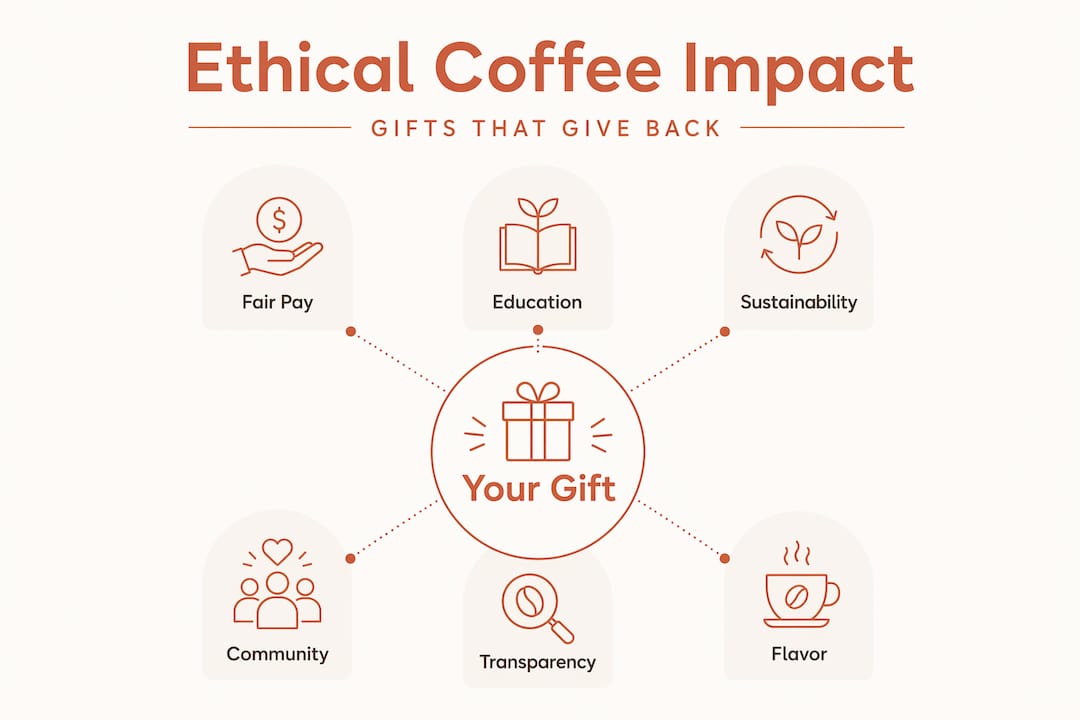
| Dimension | What it means in practice |
|---|---|
| Fair pricing | Minimum price floors and premiums above market rates |
| Community investment | Premiums directed to schools, healthcare, infrastructure |
| Environmental stewardship | Organic practices, biodiversity, reduced chemical use |
| Transparency | Traceability from farm to cup, open supply chain data |
| Labor rights | Safe working conditions, no child labor, cooperative empowerment |
How ethical gifts support coffee-growing communities
When you hand someone an ethically sourced coffee gift, the positive effect starts upstream, at the farm level, and works its way forward. This is where the real argument for choosing ethical coffee as a gift idea becomes concrete.
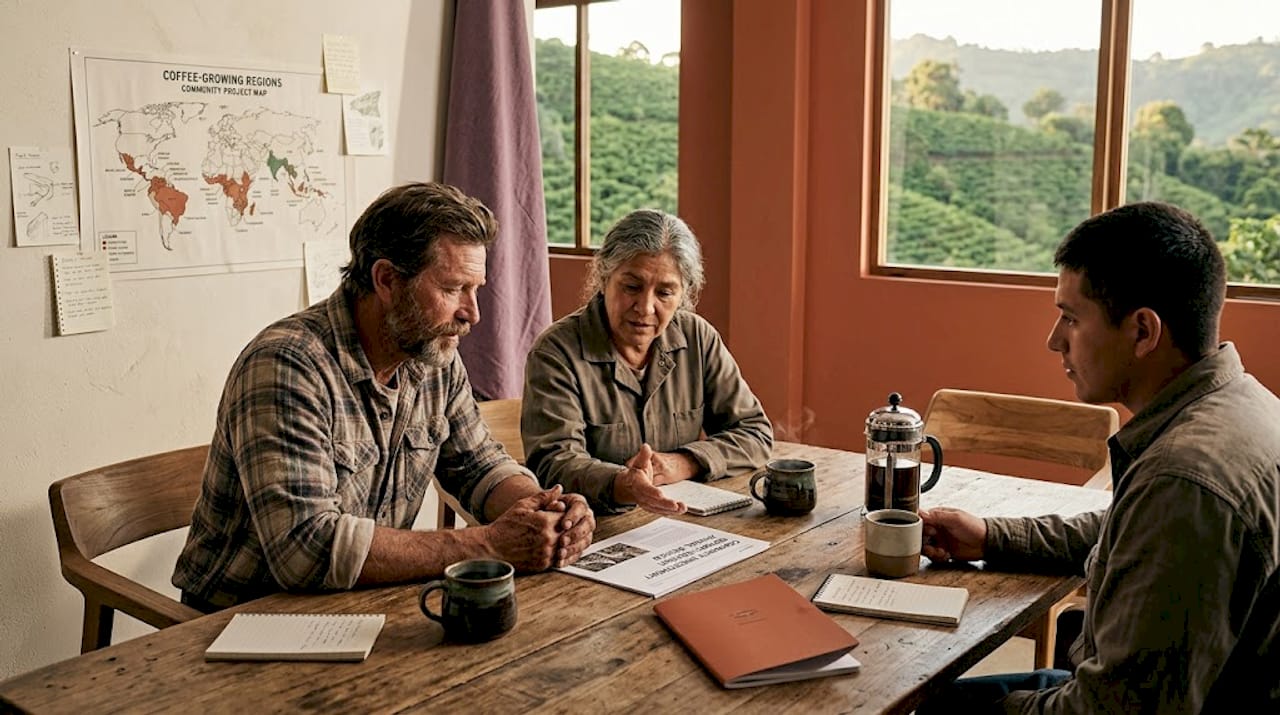
The financial benefits are direct. Exceptional producers can receive payments 300% above fair trade minimums when their quality and social impact are recognized. That is not a rounding error. That is the difference between a family staying on their land or being forced to abandon it for urban wage labor.
Community development funded by premiums creates visible change:
- Education: New classrooms and school supplies in regions where literacy rates remain low.
- Healthcare: Mobile clinics and community health workers funded by cooperative premiums.
- Infrastructure: Roads, clean water systems, and electricity for villages that lack basic services.
- Sustainable farming support: Training programs and equipment that improve both yield and environmental outcomes.
The empowerment dimension is often overlooked. Cooperatives give small farmers collective bargaining power they would never have as individuals. When a cooperative negotiates directly with a specialty roaster, the farmers set terms. They vote on how premiums are spent. That democratic participation builds resilience over years, not just seasons.
Specialty coffee supports farmers in ways that go well beyond the check. Long-term relationships between roasters and producers create knowledge transfer, quality feedback loops, and mutual investment in crop improvement. Gifts that support ethical sourcing tap into that entire system every time someone opens a bag.
Pro Tip: When selecting a coffee gift, look for brands that publish origin reports or producer profiles. That level of detail signals a real relationship with the farm, not just a certification checkbox.
Why ethical coffee gifts resonate with conscious consumers
Gift buyers who care about sustainability are not a niche. Premium gifting channels show growing demand for ethically certified coffees, with consumers willing to pay a premium of 20 to 40% for products that align with their values. When a gift reflects what someone actually believes in, it lands differently than another generic item.
Here is why ethical coffee gifts resonate so strongly with today’s recipients:
-
They tell a story. A bag of single-origin Ethiopian coffee with a producer profile attached gives the recipient something to think about and share. Ethical coffee customers are motivated by transparency and a desire to connect with the people behind the product, not just flavor. That narrative quality is something a gift card or a bottle of wine simply cannot replicate.
-
They reflect shared values. Giving ethically sourced coffee signals that you noticed what the recipient cares about. That recognition is deeply meaningful. It says you did not just grab something off a shelf.
-
They reward quality seekers. Ethical sourcing and flavor quality are not in tension. Single-origin coffees from farms paid fairly enough to invest in their craft consistently outperform commodity blends. The recipient gets an exceptional cup and a clean conscience.
-
They create lasting connection. A gift subscription to a responsibly sourced roaster keeps delivering that feeling month after month. Each new coffee is a fresh reminder of the thought behind the original gift.
The benefits of ethical coffee gifts are not abstract. They show up in every cup, every origin story, and every moment the recipient thinks about where their coffee came from.
Practical tips for choosing ethical coffee gifts
Knowing that ethical coffee makes a better gift is one thing. Knowing how to choose the right one is where most people need guidance.
Look for real traceability, not just labels
Certifications like Fair Trade are a solid starting point, but the best ethical coffees go further. Look for brands that publish the farm name, the country and region of origin, the harvest date, and the producer’s story. That level of traceability confirms the relationship is real. For a practical breakdown of what to look for when buying specialty coffee, focusing on both quality and ethics gives you a useful framework.
Prioritize freshness
Ethical sourcing means nothing if the coffee arrived stale. Roast-to-order means the beans were roasted specifically for your order, not sitting in a warehouse. Single-origin coffees are particularly sensitive to freshness because their distinctive flavors are most vibrant in the first few weeks after roasting. When you choose a coffee gift subscription that roasts to order, you combine ethical sourcing with peak flavor. That combination is hard to beat.
Match the format to the recipient
Not every gift buyer wants to give a bag of beans. Consider the recipient’s lifestyle:
- A one-time gift box works for someone curious but not yet committed.
- A monthly subscription suits someone who drinks coffee daily and values discovery.
- A curated tasting set with two or three single origins is ideal for someone who enjoys comparison and exploration.
Pro Tip: Include a printed tasting card or origin story with your gift. It converts a consumable into an experience. The recipient gets context, and the gift becomes a conversation starter.
Communicate the ethical story
Do not hide the sourcing details in fine print. Write a short note explaining what fair trade means in this context, which community benefited, or what makes this particular origin special. Most recipients will not read an entire label. A personal message bridges the gap and makes the ethical dimension feel personal, not performative.
My honest take on ethical coffee gifting
I’ve spent enough time around specialty coffee to know that “ethical” has become a word brands use without necessarily meaning it. The labels are easy to acquire. The ongoing relationships that make ethical sourcing real are harder to build and much easier to abandon when margins tighten.
What I’ve seen is that the roasters who stay true to their values over time are the ones building long-term relationships with producers, paying premiums consistently, and visiting farms rather than just listing them on their website. Gift buyers who connect their purchase to that kind of ongoing supply chain relationship are doing something genuinely different from buying a certified product off a supermarket shelf.
My opinion is that the most important thing a gift buyer can do is ask one question: Does this brand know the farmer by name? If the answer involves a cooperative relationship, a multi-year pricing commitment, and publicly available origin data, you are in the right place. If the answer is a vague certification badge and nothing more, keep looking.
Gifts that combine real quality with verified ethics do something ordinary gifts cannot. They make the recipient feel good every single morning, and they make the giver feel good knowing the impact is real. That combination is rare. When you find a brand that delivers it consistently, the gift buys itself.
— Sean
Give a gift that means something more
If you are ready to move from good intentions to a gift that actually delivers on them, Moustache Coffee Club is worth your attention.
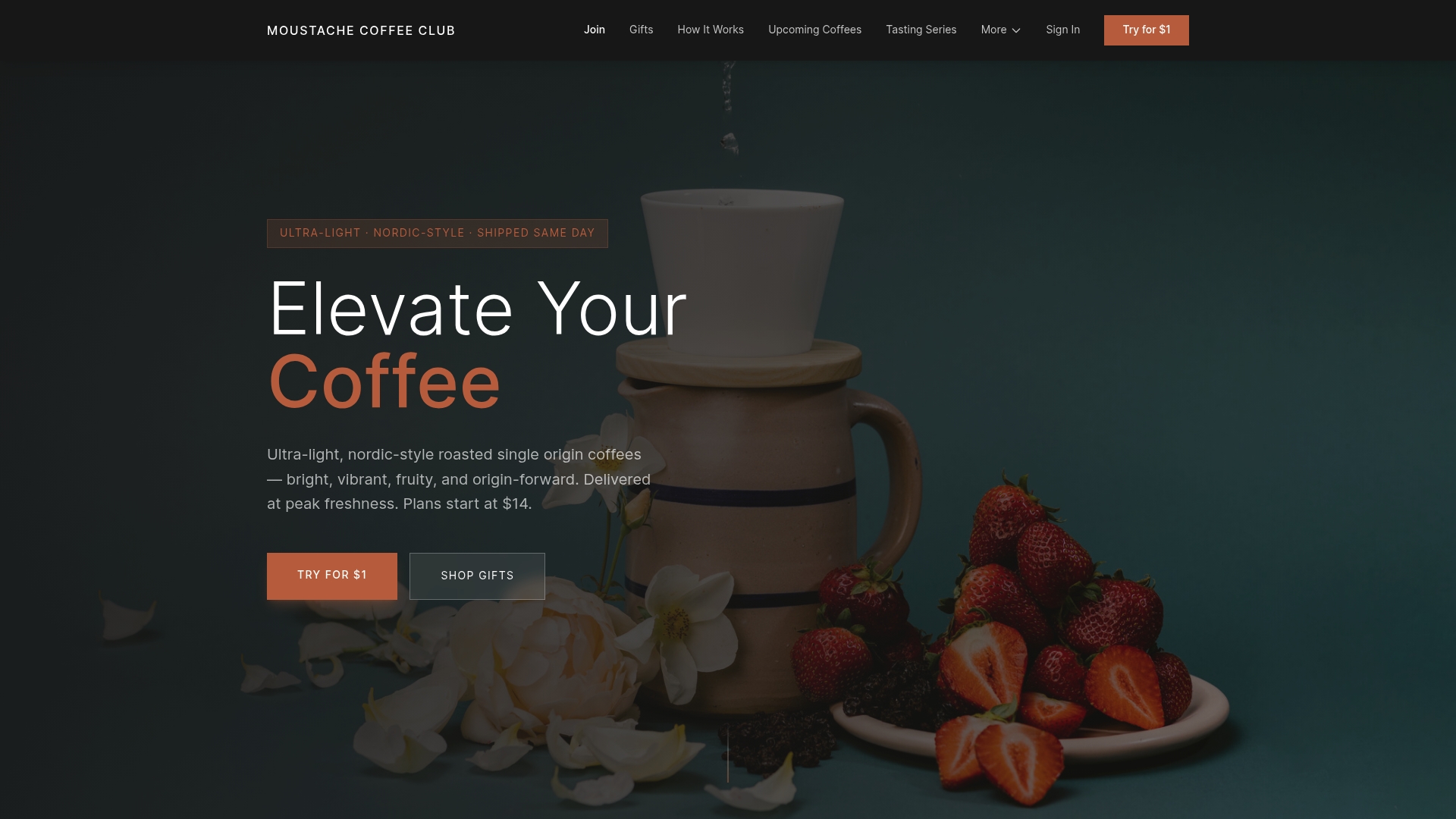
Moustache Coffee Club sources ultra-light, Nordic-style single-origin coffees from farms in Ethiopia, Colombia, and beyond, roasting each batch to order so every gift arrives at peak freshness. Every coffee comes with full origin transparency: the farm, the region, the producer’s story. The gift subscription options let the recipient receive freshly roasted beans each month, connecting them to a different ethical producer with every delivery. For gift buyers who want to understand the sourcing story behind each origin, the coffee education hub provides detailed brewing guides and origin reports. This is what gifts that support ethical sourcing look like when executed properly.
FAQ
What makes coffee “ethical” as a gift?
Ethical coffee as a gift means the coffee was sourced through fair pricing, transparent supply chains, and practices that support farmer livelihoods and environmental health. Certifications like Fair Trade and direct trade relationships with named producers are strong indicators.
Why choose fair trade coffee over regular coffee as a gift?
Fair trade coffee guarantees farmers a minimum price that covers sustainable production costs and directs additional premiums to community projects like schools and healthcare. Regular commodity coffee offers no such protections for growers.
Is ethical coffee a good gift for people who are not already coffee enthusiasts?
Yes. Single-origin ethical coffees come with stories, flavors, and origins that engage even casual drinkers. The ethical narrative adds meaning that any recipient can appreciate, regardless of how deep their coffee knowledge goes.
How do I know if a coffee brand is genuinely ethical?
Look for brands that publish producer names, farm locations, harvest details, and pricing transparency. Certifications are a baseline, but ongoing relationships with specific farms and publicly available sourcing data are stronger evidence of real commitment.
Do ethical coffee gifts cost significantly more?
Consumers typically pay a premium of 20 to 40% for ethically sourced coffee. For a gift, that difference is modest relative to the added meaning, quality, and community impact the recipient receives.
Recommended
- Why coffee gifts suit corporate gifting: a buyer’s guide | Blog | The Moustache Coffee Club
- How to source single origin beans sustainably and ethically | Blog | The Moustache Coffee Club
- How specialty coffee supports farmers: The ethical drinker’s guide | Blog | The Moustache Coffee Club
- How a coffee tasting experience gift delights coffee lovers | Blog | The Moustache Coffee Club