Why freshly roasted beans taste better: a guide
Even exceptional coffee can taste flat, dull, or lifeless if the beans are past their prime. That’s the uncomfortable truth most people miss when they’re obsessing over origin, variety, or brewing method. The reason why freshly roasted beans taste better isn’t about premium pricing or fancy packaging. It’s chemistry, and timing, and the simple reality that coffee is a perishable product that most grocery store shelves treat like it isn’t. If you’ve ever brewed a technically perfect cup and still felt underwhelmed, bean freshness is almost always the answer.
Table of Contents
- The chemistry behind freshness: volatile compounds and oxidation
- Grinding just before brewing: preserving flavor and aroma
- Comparing whole bean vs pre-ground coffee and grinding methods
- Timing your brew: finding the peak freshness window
- Storing and handling to maintain freshness after roasting
- Why fresh roasting is the foundation but expertise unlocks the full flavor
- Experience the freshest beans delivered to your door
- Frequently asked questions
Key Takeaways
| Point | Details |
|---|---|
| Volatile compounds define flavor | Freshly roasted beans retain many volatile organic compounds that create complex flavors, which diminish rapidly after roasting. |
| Grind immediately before brewing | Grinding exposes the bean to oxygen, causing quick loss of aroma and flavor; grinding just before brewing preserves freshness. |
| Use whole beans and a burr grinder | Whole beans protect flavor longer and a burr grinder ensures uniform grounds for balanced extraction. |
| Optimal freshness window matters | Peak coffee flavor typically occurs 7 to 21 days after roasting; brewing within this window yields the best taste. |
| Proper storage slows degradation | Storing beans airtight, cool, and dark preserves freshness by limiting oxidation and moisture exposure. |
The chemistry behind freshness: volatile compounds and oxidation
Roasting transforms raw green coffee into the aromatic, complex ingredient you actually want to drink. During that process, heat triggers hundreds of chemical reactions that produce volatile organic compounds, the aromatic molecules responsible for everything from bright citrus notes to deep cocoa tones. Freshly roasted coffee retains a high concentration of these volatile compounds and aromatic oils, which are directly responsible for complex flavor notes that dissipate through oxidation.
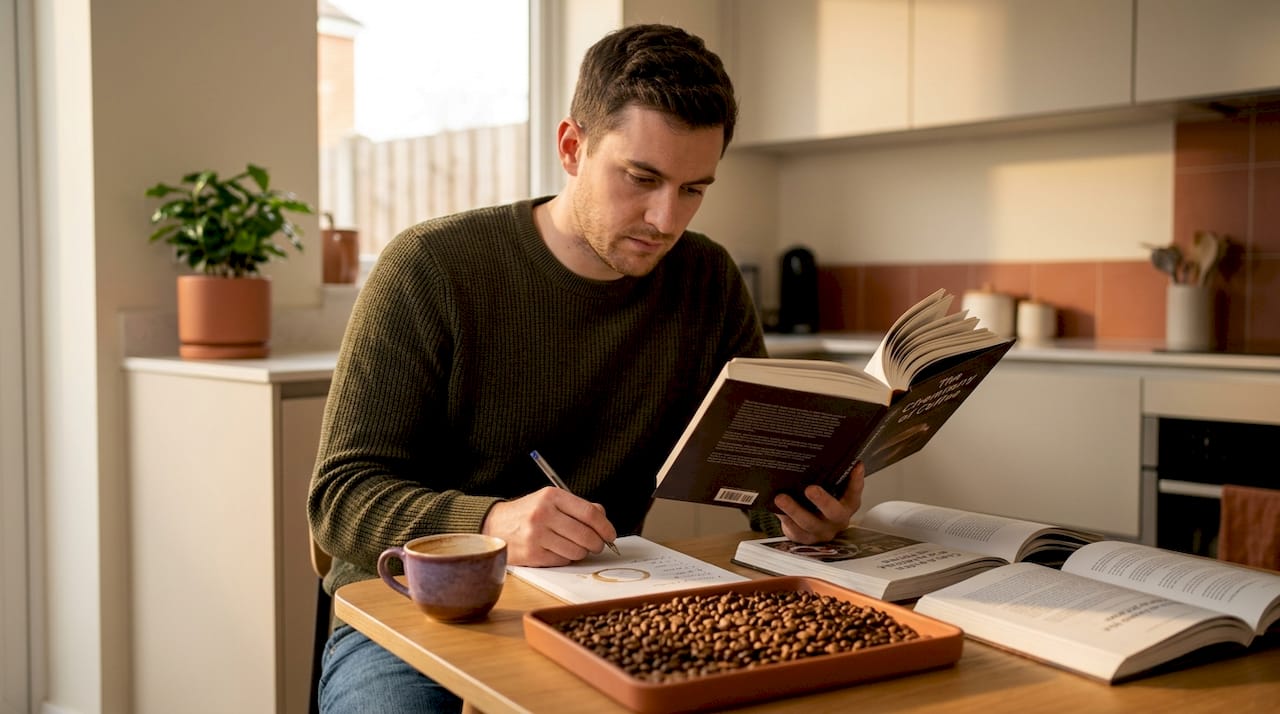
The problem? Those compounds start escaping the moment roasting ends. Oxygen reacts with the oils on and inside the bean, turning them rancid over time. Light and heat accelerate this process further. What you’re left with is a bean that looks and smells like coffee but delivers a muted, sometimes cardboard-like experience in the cup.
Here’s what the freshness window actually looks like in practice:
| Days after roast | Flavor state | What to expect in the cup |
|---|---|---|
| 0 to 2 days | Too fresh | Sour, thin, CO2-disrupted extraction |
| 3 to 7 days | Early peak | Bright, vibrant, aromatic complexity emerging |
| 7 to 21 days | Peak window | Full sweetness, balanced acidity, layered flavor |
| 22 to 45 days | Declining | Muted aromatics, less clarity |
| 45 days and beyond | Stale | Flat, lifeless, possible rancid oil notes |
A few key things that happen chemically as beans age:
- Volatile aromatic compounds evaporate, stripping out notes like florals, citrus, and delicate fruit
- Oxidation turns oils rancid, introducing flat or bitter undertones
- CO2 dissipates, which initially sounds like a good thing but it’s actually a marker of freshness that affects extraction
- Moisture loss changes the cell structure, making extraction uneven and less predictable
Whole beans protect this internal chemistry far better than ground coffee. The outer shell acts as a barrier, slowing oxidation at the surface. That’s why understanding coffee aroma and flavor science matters long before you even think about brewing technique.
“The difference between a two-week-old roast and a three-month-old roast isn’t subtle. It’s the difference between a living flavor profile and an echo of one.”
Grinding just before brewing: preserving flavor and aroma
Understanding freshness is only part of the equation. How and when you grind also radically affects your cup, and this is where a lot of enthusiasts still lose significant flavor.
When you grind whole beans, you shatter that protective outer structure. The total surface area exposed to oxygen increases dramatically, and grinding multiplies oxygen exposure, speeding up flavor loss significantly. Aromatic compounds that took weeks to develop escape in minutes. Pre-ground coffee sold in bags has usually been sitting ground for weeks before you even open the package.
Here’s why grinding just before brewing matters so much:
- Aromatics begin escaping within minutes of grinding, not hours
- Pre-ground coffee loses CO2 faster, affecting the bloom stage in pour over and filter brewing
- Stale grounds extract unevenly, often pulling bitter or sour notes instead of the sweet middle flavors
- Freshly ground beans produce a stronger, more fragrant bloom, visually confirming CO2 presence and good extraction
This is also where grind size becomes essential. Different brewing methods require specific particle sizes to extract properly. A coarse grind for a French press allows slow, full immersion extraction. A fine grind for espresso maximizes pressure-based extraction. Pre-ground coffee is typically a medium grind optimized for nothing in particular, which means it consistently underperforms across most brewing methods.
Understanding the benefits of grinding before brewing makes this immediately apparent the first time you compare a fresh-ground pour over to one made with pre-ground coffee from the same bag.
Pro Tip: If you’re unconvinced, run a side-by-side test. Grind half your beans fresh and pre-grind the other half, sealing them in a container overnight. Brew both the following morning using identical ratios and technique. The difference in aroma alone will convert you.
Comparing whole bean vs pre-ground coffee and grinding methods
Let’s put this into practice by comparing whole bean coffee to pre-ground, and examining how your grind method affects the final cup.
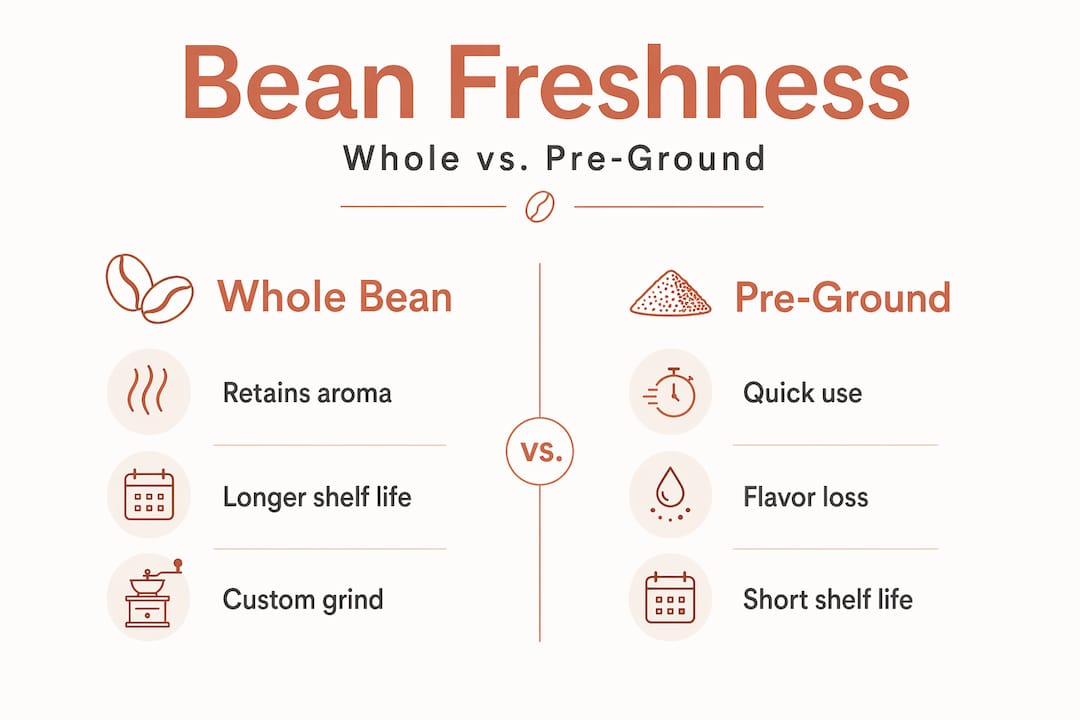
Coffee pros strongly recommend never using pre-ground beans because whole beans preserve freshness longer and allow for more consistent, balanced extraction, especially when paired with a quality burr grinder.
| Factor | Whole bean (fresh ground) | Pre-ground coffee |
|---|---|---|
| Freshness shelf life | 3 to 4 weeks post-roast | Degrading immediately after grinding |
| Aroma on opening | Strong, complex, bloom-worthy | Noticeably muted |
| Extraction consistency | High, controllable | Low, grind size fixed |
| Flavor range | Full range from bright to deep | Compressed, often flat |
| CO2 retention | Good | Minimal |
The grinder type matters just as much as timing:
- Blade grinders chop beans randomly, producing particles of wildly different sizes. Small particles over-extract and taste bitter; large particles under-extract and taste sour. Both happen in the same cup.
- Burr grinders crush beans between two abrasive surfaces set at a fixed distance, producing uniform particle sizes. Uniform grounds extract evenly, which means balanced acidity, sweetness, and body in the final cup.
- Conical burr grinders (the most common quality home option) are particularly good at retaining heat balance during grinding, which protects delicate volatile compounds from the friction heat that blade grinders generate
For brewing methods like French press, understanding the grinding benefits specific to coarse grounds helps you see how grinder choice and freshness work together, not independently.
Pro Tip: If you’re upgrading your coffee setup, prioritize a good burr grinder before spending on an expensive brewer. Fresh grinding with a $100 burr grinder beats a $400 brewer running on pre-ground every single time.
Timing your brew: finding the peak freshness window
Knowing when to brew within the freshness timeline lets you unlock your beans’ full flavor potential. The peak flavor window typically falls between 7 and 21 days after roasting, but the degassing stage that precedes it is just as important.
After roasting, beans release carbon dioxide through a process called degassing. This is not a flaw. It’s a sign of freshness. But too much CO2 interferes with extraction, causing channeling in espresso and creating sour, thin filter coffee. Here’s how to navigate the timeline:
- Days 1 to 2: Rest the beans. Brewing at this stage produces unstable, uneven results as CO2 dominates the extraction
- Days 3 to 6: Light roasts and single origin filter coffees start showing early flavor, still evolving
- Days 7 to 14: The sweet spot for most filter and pour over brewing. Acidity and sweetness are in balance
- Days 10 to 14: Ideal for espresso. Crema stabilizes, flavor clarity improves, and the shot pulls more predictably
- Days 21 to 30: Still excellent if stored well. Flavors begin to integrate and soften slightly
- Beyond day 30: Drink it, but don’t expect the same brightness or aromatic lift
| Brew method | Ideal days post-roast | Why |
|---|---|---|
| Pour over / filter | 7 to 14 days | Full aromatic expression, bright acidity |
| Espresso | 10 to 14 days | CO2 dissipates enough for stable crema |
| French press | 7 to 21 days | Immersion is more forgiving, oils stay rich |
| Cold brew | 14 to 28 days | Slower extraction benefits from slightly integrated flavor |
Exploring the freshness timeline for specialty coffee helps clarify why roast date matters so much more than best-by date.
Pro Tip: Always look for the roast date on specialty coffee bags, not the best-by date. A best-by date tells you when the roaster gives up. A roast date tells you where you actually are in the flavor journey.
Storing and handling to maintain freshness after roasting
Even with perfect roast timing and grinding, poor storage undoes all of it. Oxygen, light, heat, and moisture all accelerate oxidation and rancidity, so protecting your beans between uses is not optional if you want to preserve the freshly roasted coffee flavor you paid for.
Practical storage rules that actually hold up:
- Use a one-way valve container. It lets CO2 escape but blocks oxygen from entering. Most specialty coffee bags come with these built in, so don’t transfer beans unnecessarily
- Keep beans away from light. UV light degrades aromatic oils faster than most people realize. Clear canisters on a sunny countertop are worse than the original bag
- Avoid the freezer for daily-use beans. Condensation during thaw introduces moisture, which accelerates flavor breakdown. Freezing works for long-term storage of a sealed, unopened bag only
- Don’t store near heat sources. Above the stove or near the kettle seems convenient but the ambient heat accelerates staling by weeks
- Grind only what you need. Storing ground coffee, even in a sealed container, is significantly worse than whole beans
- Buy in quantities you’ll finish in two to three weeks. Freshness strategies are irrelevant if the beans sit for two months regardless
Pro Tip: If you receive freshly roasted beans with a roast date less than five days ago, keep them in their original bag with the valve closed and wait before opening. Patience here pays directly in flavor.
Why fresh roasting is the foundation but expertise unlocks the full flavor
Here’s the perspective most articles skip: freshly roasted beans are the raw potential for great coffee, not the guarantee of it. We’ve seen this play out repeatedly. Someone invests in quality specialty beans, uses a good grinder, and still ends up with a cup that doesn’t live up to what they expected. Almost always, it’s because one link in the chain was ignored.
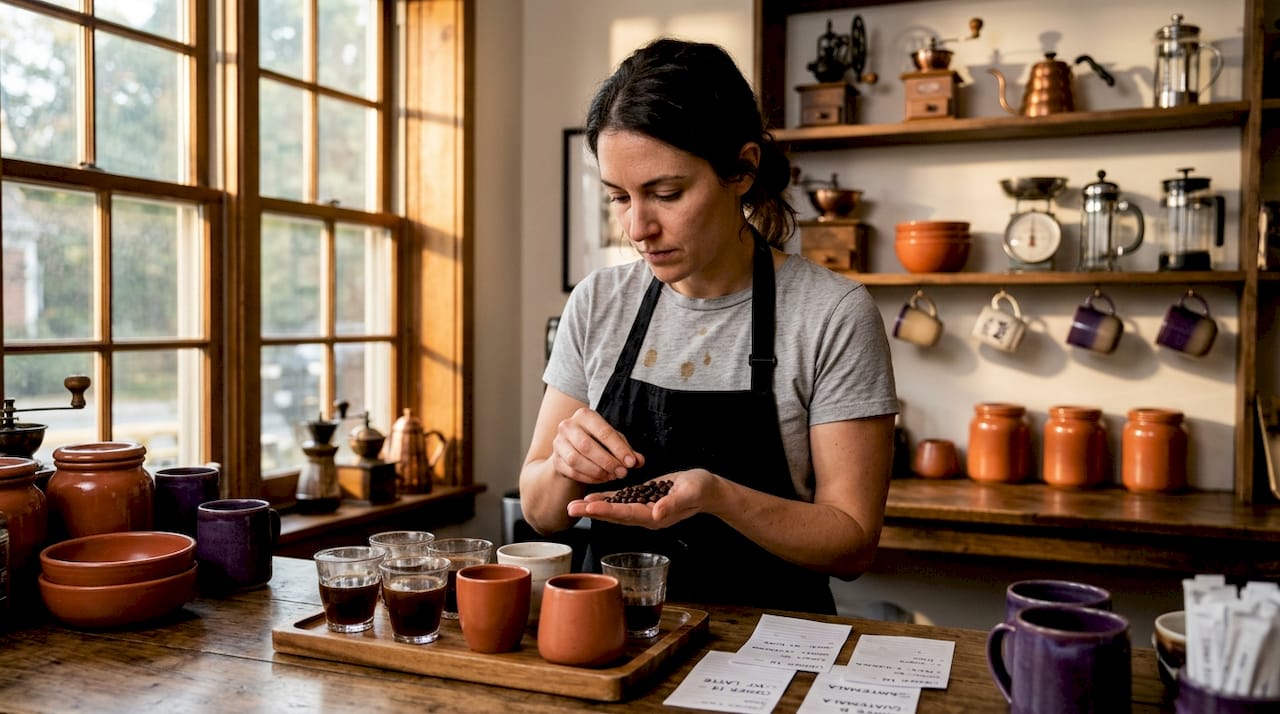
The most common mistakes that waste fresh beans are brewing too soon after roast (that CO2 problem is real and significant), grinding inconsistently, and under-appreciating the storage window. You can buy an extraordinary Ethiopian natural processed coffee, full of strawberry and jasmine notes on the cupping table, and turn it into a flat, slightly bitter beverage by grinding it the night before and leaving it on the counter.
What separates genuinely good coffee from technically fresh coffee is the combination of informed handling with quality ingredients. A quality burr grinder is not a luxury for coffee enthusiasts. It is the most direct upgrade available. Respecting the degassing window costs you nothing but attention. Storing beans correctly takes thirty seconds. These are not advanced techniques. They’re just disciplined habits applied consistently.
The other thing worth saying plainly: ultra-light roasting, as practiced in the Scandinavian tradition, demands even more attention to freshness than darker roasts. Lighter roasts retain more of the coffee’s origin character, but those delicate, complex notes are also the first to vanish as beans age. If you’re drinking light roasted single origin coffee and not engaging seriously with roast date and freshness, you’re paying for complexity you’re not tasting. The deep relationship between freshness and flavor is especially significant at the lighter end of the roast spectrum.
Freshness creates the potential. Everything else determines whether you reach it.
Experience the freshest beans delivered to your door
Knowing the science is one thing. Having access to reliably fresh beans is another. The most common barrier for specialty coffee lovers isn’t knowledge, it’s inconsistent supply and no clear roast date to guide them.

At Moustache Coffee Club, every bag is roasted to order and ships within the peak freshness window, so you’re never guessing where you are in the flavor timeline. Our fresh coffee subscription delivers expertly curated, ultra-light roasted single origin coffees from Ethiopia, Colombia, and beyond, straight to your door on your schedule. Pair your subscription with our coffee brewing guides to put everything you’ve learned here into practice, including how to dial in your grind and time your brew for each specific origin. For pour over fans, our pour over brewing guide is a practical starting point that connects freshness, grind, and technique in one place.
Frequently asked questions
How long after roasting should I use coffee beans for the best flavor?
For peak flavor, use whole beans within 7 to 21 days after roasting, when volatile compounds and aromas are at their most expressive. The ideal window for peak flavor for most Arabica beans falls within this range.
Why is grinding coffee just before brewing recommended?
Grinding right before brewing keeps aromatic compounds intact by limiting oxygen exposure, which begins degrading flavor almost immediately. Grinding multiplies surface area exposed to oxygen by thousands of times, accelerating the loss of both flavor and aroma compounds.
Does the type of grinder affect coffee taste?
Yes, significantly. Burr grinders produce uniform grounds that extract evenly for balanced flavor, while blade grinders create inconsistent particle sizes that lead to both over-extraction and under-extraction in the same cup. A burr grinder is essential for clarity and balance.
How should I store freshly roasted coffee to keep it fresh longer?
Store beans in an airtight, opaque container with a one-way valve, away from light, heat, and moisture, and grind only what you need immediately before brewing. Oxygen, light, heat, and moisture are the four primary accelerants of oxidation and rancidity in stored beans.
Recommended
- How To Brew Pour Over Coffee | Step-by-Step Guide | Moustache Coffee Club
- Coffee Education Hub | Ultra-Light Nordic-Style Brewing Guides & Origins | Moustache Coffee Club
- Best Coffee Subscription | Ultra-Light Nordic-Style Single Origin Coffee | Moustache Coffee Club
- How to Make Cold Brew Coffee | Easy Recipe & Ratio | Moustache Coffee Club