Why Light Roast Has More Caffeine: The Real Truth
Most coffee drinkers believe darker means stronger, and lighter means weaker. So why light roast has more caffeine than dark roast seems to contradict everything you’ve been told at the coffee shop. The truth is, this isn’t really a caffeine story. It’s a measurement story. Whether your light roast actually delivers more caffeine than a dark roast depends almost entirely on how you measure it. This article breaks down the science of bean density, roasting chemistry, and brewing variables so you can stop guessing and start knowing exactly what’s in your cup.
Table of Contents
- Key takeaways
- Why light roast has more caffeine by the scoop
- Caffeine’s remarkable stability under heat
- Volume vs weight: the measurement that changes everything
- Other variables that outweigh roast level
- How to actually control your caffeine intake
- My take on the scoop habit that won’t die
- Try the coffee that makes the measurement matter
- FAQ
Key takeaways
| Point | Details |
|---|---|
| Measurement method matters most | Scooping by volume gives light roast more caffeine per serving due to denser, heavier beans. |
| Caffeine survives roasting intact | Heat does not destroy caffeine in any meaningful amount during the roasting process. |
| Weight beats volume for accuracy | Measuring 20 grams of any roast yields nearly identical caffeine content across roast levels. |
| Bean type outweighs roast color | Robusta beans carry roughly double the caffeine of Arabica regardless of how dark they’re roasted. |
| Brewing variables shift the math | Extraction time, grind size, and water ratio affect caffeine in your cup far more than roast level. |
Why light roast has more caffeine by the scoop
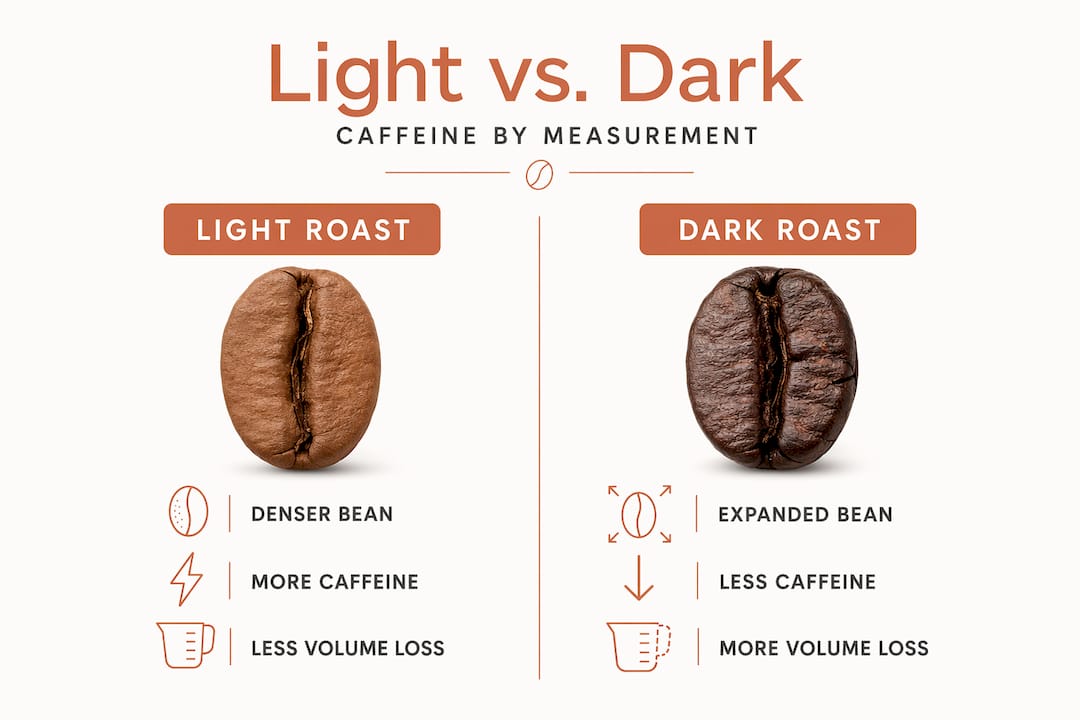
The answer starts with what happens to a coffee bean inside a roaster. Light roast beans stop their roasting journey early, before the first or second “crack” that marks deeper roast levels. They retain more of their original moisture, stay structurally compact, and remain noticeably smaller and heavier than their darker counterparts.
Dark roast beans undergo a longer, hotter process. They lose water through evaporation, their cell walls expand and break down, and they literally puff up. The result is a bean that is physically larger but significantly less dense. When you scoop a tablespoon of dark roast, you are scooping mostly air pockets and expanded cell structure. A tablespoon of light roast packs in more actual bean mass.
Here is where the caffeine equation changes. Denser beans pack more caffeine per scoop because you are fitting more grams of coffee into the same volume. More grams means more caffeine molecules delivered to the brewing water. So, by volume, light roast consistently comes out ahead.
Key physical differences between roast levels:
- Light roast beans weigh more per scoop because they are denser and less expanded
- Dark roast beans have lost water mass, making them lighter per equivalent volume
- The same tablespoon scoop can contain measurably fewer grams of dark roast than light roast
- Bean mass loss during roasting comes primarily from water evaporation and cell expansion, not caffeine loss
Pro Tip: Weigh your coffee before you brew even once. You will immediately see how much your scoops vary by roast level. Most home brewers are shocked at the gram difference in a single tablespoon between a light and a dark roast.
Caffeine’s remarkable stability under heat
Here is the part of the story that surprises almost everyone. Caffeine is extraordinarily resistant to heat. Its melting point sits around 235°C, far above the 180 to 230°C range that typical coffee roasters operate within. That means the heat inside a roaster is simply not hot enough to break down caffeine in any meaningful way.
“Caffeine is a thermally stable alkaloid. The temperatures and durations used in standard coffee roasting are insufficient to cause meaningful caffeine degradation.” This is why the caffeine content in light roast vs dark roast beans, measured by equal weight, is nearly identical.
Roasting does change a lot about a coffee bean. Polysaccharides break down. Phenolic compounds transform. Sugars caramelize and create those deep, bitter flavor compounds you associate with dark roast. But caffeine remains structurally stable throughout all of this chemical transformation.
The misconception that roasting “burns off” caffeine is understandable but incorrect. What roasting actually does is reduce the bean’s total mass. When mass goes down but caffeine stays constant, the concentration of caffeine per gram actually increases slightly in darker roasts. However, because dark roast beans weigh less individually, you end up with fewer grams in a scoop, so that slight concentration advantage gets cancelled out.
The bottom line: neither roast destroys caffeine, and neither roast creates it. The caffeine was locked into the green bean long before the roaster touched it.
Volume vs weight: the measurement that changes everything
This is the core of the caffeine comparison light vs dark debate, and it deserves a clear side-by-side look.
| Measurement method | Light roast result | Dark roast result |
|---|---|---|
| 1 tablespoon scoop | ~7-8 grams, higher caffeine | ~5-6 grams, lower caffeine |
| 20 grams by weight | ~95 mg caffeine | ~93 mg caffeine |
| 1 cup brewed (volume scoop) | Noticeably more caffeine | Less caffeine per serving |
| 1 cup brewed (weight-based) | Nearly identical caffeine | Nearly identical caffeine |
When you measure by scoops, volume measurements vary by bean density and systematically favor lighter roasts. When you measure by weight, the caffeine difference between light and dark roast becomes almost negligible. Research shows that 20 grams of light roast yields nearly the same caffeine as 20 grams of dark roast.
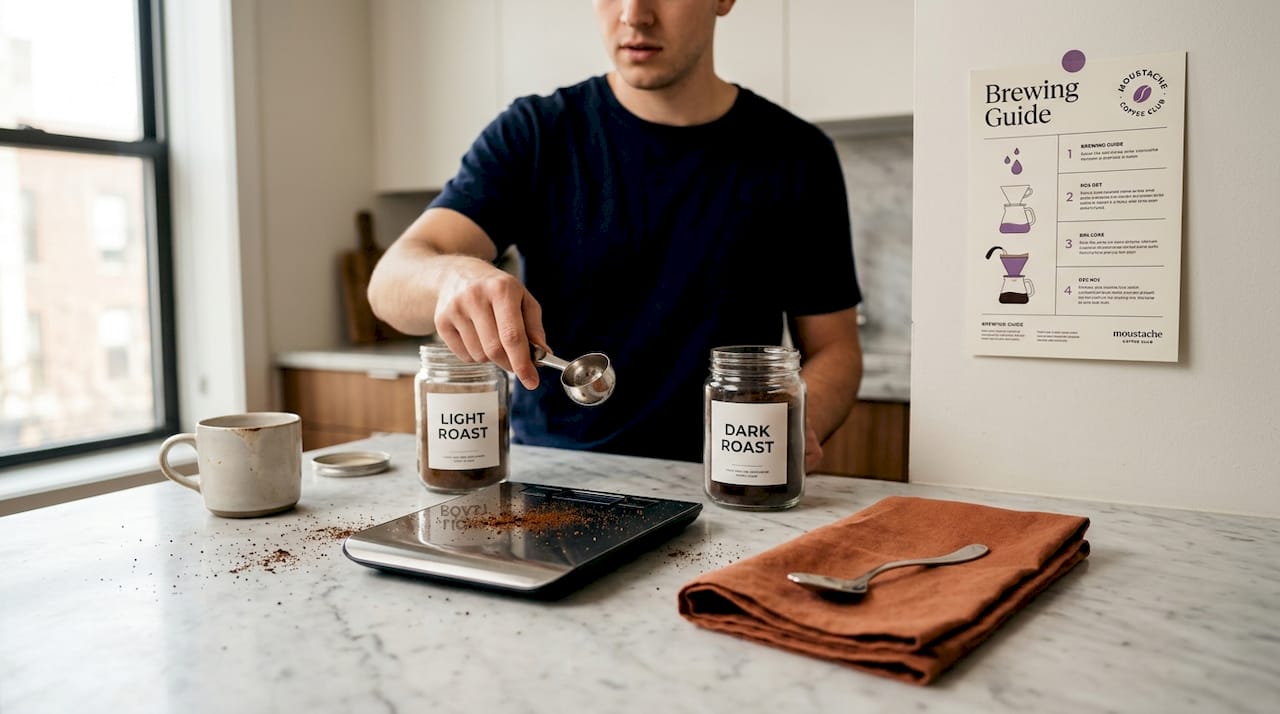
For home brewers, this has real practical consequences. If you use a scoop to measure and want consistency, you will naturally end up with more caffeine from lighter roasts, day after day, without realizing the measurement is driving the result rather than the roast itself. Cafes that train baristas to measure by weight remove this variable entirely, which is why specialty coffee shops obsess over gram-precise dosing.
Measuring coffee by weight removes the density bias that scoop measurements introduce and gives you reliable, repeatable caffeine dosing no matter what roast you are brewing.
Pro Tip: A basic digital kitchen scale costs less than $15 and will transform your brewing consistency more than any expensive gear upgrade. Set it to grams, tare your filter or portafilter, and dose the same weight every single time.
Other variables that outweigh roast level
Understanding how much caffeine in light roast vs dark roast matters less than most people think once you factor in the other variables that actually drive caffeine levels in your brewed cup.
- Bean species: Robusta beans contain roughly double the caffeine of Arabica beans. A dark roasted Robusta will crush a light roasted Arabica for caffeine content every time, regardless of roast level. If you are drinking a light roast Arabica from Ethiopia and comparing it to a dark roast blend containing Robusta, roast color is the least relevant factor.
- Brewing method: Espresso is concentrated but served in small volumes. Drip coffee is diluted but served in larger cups. Cold brew steeped for 18 hours extracts caffeine differently than a three-minute pour-over. The brewing method and extraction time affect caffeine solubility far more dramatically than roast level.
- Grind size: Finer grinds expose more surface area to water, which pulls out more caffeine faster. Coarser grinds slow extraction. Two identical coffees at different grind sizes, brewed for the same time, can yield meaningfully different caffeine levels.
- Coffee-to-water ratio: This is the most direct caffeine lever you have. Double your coffee dose and you nearly double your caffeine. Halve it and you cut caffeine roughly in half. The ratio matters more than roast level by a wide margin.
The caffeine variation between light and dark roast by volume is usually less than 10%, and often undetectable in real-world consumption. These other variables can swing caffeine by 50% or more.
How to actually control your caffeine intake
If you want genuine control over how much caffeine ends up in your cup, forget roast color as your primary dial. Here is a practical approach that actually works.
- Switch to weight-based measuring. Buy a digital scale and dose by grams every time. This single change removes the density variable and gives you consistent caffeine dosing whether you are brewing light, medium, or dark roast.
- Know your bean species. Check whether you are buying Arabica or Robusta, or a blend. This tells you more about your baseline caffeine than the roast level on the bag ever will. Most specialty single-origin coffees are 100% Arabica.
- Dial in your brewing method. If you want to dial in light roast specifically, adjust grind size and water temperature carefully. Light roasts are denser and require different parameters than dark roasts to extract evenly.
- Control your ratio first. Before adjusting any other variable, decide on a coffee-to-water ratio and stick to it. A standard starting point is 1:15 (1 gram of coffee to 15 grams of water) for most filter brewing methods.
- Stop using roast color as a caffeine shortcut. It is the least reliable indicator available. Use it to choose flavor profiles, not to predict how wired you will feel.
My take on the scoop habit that won’t die
I have explained bean density to more coffee drinkers than I can count, and the scoop habit persists not because people are uninformed but because scooping is fast and familiar. Your grandfather scooped. Your coffee maker came with a scoop. It feels like the obvious method.
What changed my own routine was realizing I was chasing a feeling, not a measurement. I thought I was getting more from a lighter roast because it seemed more intense to me. What was actually happening? I was scooping denser beans and delivering more grams of coffee than I realized. Once I started weighing, my light roast brews became noticeably less intense at the same weight as my previous dark roast doses.
That experience reframed everything. The caffeine content in light roast coffee isn’t magically higher. It is a function of how much coffee you actually put in the brewer. The roast color is almost irrelevant to the caffeine math. Bean density is what drives the scoop-based difference, and a scale makes that irrelevant entirely.
My honest recommendation is to stop thinking about caffeine through the lens of roast level at all. Think in grams. Think in ratios. And if you are chasing flavor rather than caffeine, light roast ultra-light Nordic style coffees from Moustache Coffee Club offer something genuinely worth exploring, not because they have more caffeine but because they taste like nothing you have brewed from a standard grocery shelf bag.
— Sean
Try the coffee that makes the measurement matter
At Moustache Coffee Club, the focus is ultra-light, Nordic-style single-origin specialty coffee. These beans are roasted to order, which means you receive coffee at peak density and freshness, not beans that have been sitting in a warehouse for weeks gradually losing their characteristics.

When you start your subscription at Moustache Coffee Club, you get access to detailed origin reports and brewing guides through the coffee education hub, where you can explore precise brew ratios and extraction techniques for ultra-light roasts specifically. Fresh, consistently roasted beans also make weight-based measuring far more predictable. When you know your coffee was roasted within the last week, your dose-to-flavor and dose-to-caffeine relationship stays steady from bag to bag. That is the kind of control worth having.
FAQ
Does light roast actually have more caffeine?
It depends on how you measure. By volume scoop, light roast typically delivers more caffeine because denser beans pack more grams per scoop. By weight, light and dark roast contain nearly identical caffeine per gram.
Does roasting destroy caffeine in coffee?
No. Caffeine has a high melting point around 235°C and remains chemically stable at typical roasting temperatures. Any caffeine reduction during roasting is negligible and does not meaningfully affect the caffeine in your cup.
What has a bigger impact on caffeine than roast level?
Bean species makes the largest single difference. Robusta beans contain roughly double the caffeine of Arabica. Brewing method, grind size, and coffee-to-water ratio also affect caffeine far more than whether the roast is light or dark.
How should I measure coffee for consistent caffeine?
Use a digital scale and measure in grams rather than scoops. Weight-based measurement removes the density variable between roast levels and gives you repeatable caffeine dosing every brew.
Is the caffeine difference between light and dark roast noticeable?
In real-world consumption, the caffeine variation between light and dark roast by volume is typically less than 10%. For most people, this difference is undetectable without precise measurement tools.
Recommended
- How to Dial In Light Roast Coffee for Home Baristas | Blog | The Moustache Coffee Club
- Roast to order coffee: advantages for single-origin lovers | Blog | The Moustache Coffee Club
- Why freshly roasted beans taste better: a guide | Blog | The Moustache Coffee Club
- How to buy specialty coffee: expert tips for flavor and quality | Blog | The Moustache Coffee Club