How Coffee Processing Affects Taste: A Flavor Guide
Coffee processing is defined as the method used to remove fruit and dry coffee beans after harvest, and it determines the cup’s sweetness, acidity, body, and aroma before a single roast or brew decision is made. Most coffee lovers focus on origin or roast level, but the processing method is the single biggest variable shaping what lands on your palate. Washed, natural, honey, and anaerobic fermentation each leave a distinct chemical fingerprint on the bean. Understanding how coffee processing affects taste gives you a real framework for choosing coffees you’ll love, not just ones that sound good on a label.
How does coffee processing affect taste?
Processing method is the first and most consequential flavor decision in a coffee’s life. The fruit surrounding a coffee seed contains sugars, acids, and microbes. How long those compounds stay in contact with the bean, and under what conditions, determines the flavor compounds that survive into your cup.
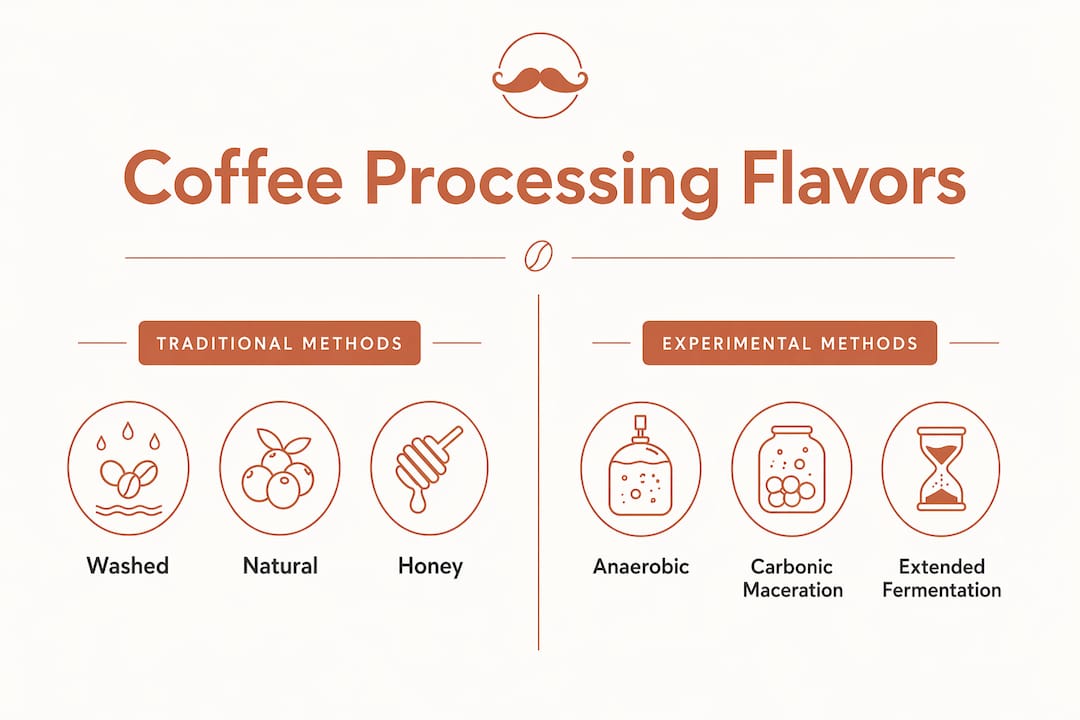
Here is how each major method shapes the sensory experience:
- Washed (wet process): The fruit is removed before drying. The result is a clean, origin-focused flavor with bright acidity and minimal process signature. Terroir shines through because the bean is not masked by fermentation byproducts.
- Natural (dry process): The whole cherry dries intact for 3–6 weeks, reaching 10–12% moisture. Extended fruit contact produces blueberry, mango, and stone fruit notes with a fuller body and 10–15% higher perceived sweetness than washed coffees.
- Honey process: The skin is removed but varying amounts of mucilage remain on the bean during drying. Yellow honey retains roughly 25% mucilage; black honey retains about 75%. More mucilage means more sugar browning, more caramel character, and a heavier mouthfeel.
- Anaerobic fermentation: Beans ferment in sealed, oxygen-free tanks. This environment produces intense esters and alcohols that translate to tropical fruit, wine-like, and floral notes in the cup. Anaerobic-processed coffees carry process signatures three times stronger than washed coffees.
| Method | Typical Notes | Body | Acidity | Process Signature |
|---|---|---|---|---|
| Washed | Citrus, floral, tea-like | Light to medium | High | Weak |
| Natural | Blueberry, mango, chocolate | Full | Low to medium | Strong |
| Honey | Caramel, stone fruit, brown sugar | Medium to full | Medium | Moderate |
| Anaerobic | Tropical, wine, jasmine | Full | Variable | Very strong |
Pro Tip: When you read a tasting note like “blueberry” on a bag from Ethiopia, check the processing method first. That note almost certainly comes from natural processing, not the origin alone.
What biochemical changes during processing create flavor?
Flavor in coffee is not invented during roasting. It is built during processing through fermentation chemistry, and roasting simply develops what is already there.
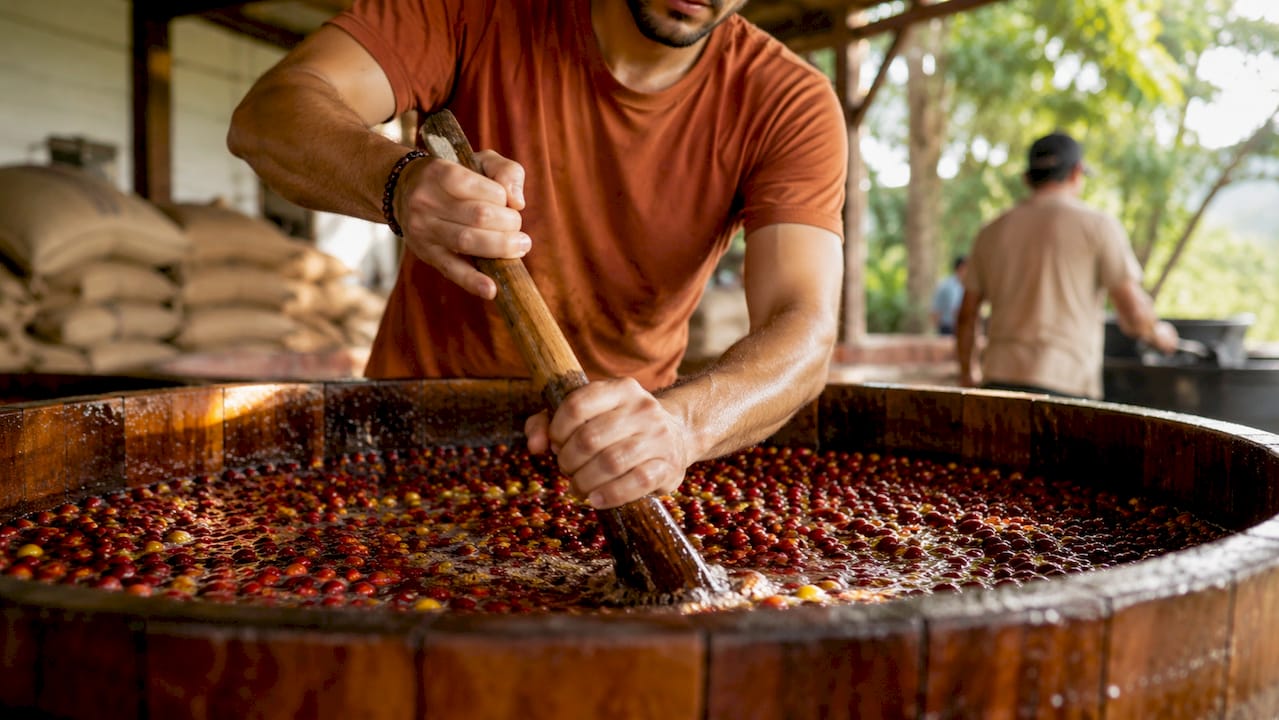
Microbes, including yeasts and lactic acid bacteria, consume the sugars in the coffee cherry’s mucilage layer. This produces esters, alcohols, and organic acids. Ethyl acetate creates fruity, solvent-like brightness. Isoamyl acetate contributes banana and pear notes. Lactic acid adds a smooth, creamy quality. The specific microbial community, shaped by temperature, time, and oxygen availability, determines which of these compounds dominate.
Fermentation time and temperature are the two most controllable variables. Research on carbonic maceration shows that fermenting at 30°C for 120+ hours produces a measurably favorable profile of acids, esters, and alcohols. That level of control is why experimental producers treat fermentation like a precision tool, not a passive step.
Processing also shapes what happens during roasting. Extended fermentation increases free amino acids and sugars in the bean. These are the raw materials for the Maillard reaction, the chemical process responsible for roasted aroma and brown color. A naturally processed bean from Ethiopia arrives at the roaster with a richer pool of flavor precursors than a washed bean from the same farm. The roast develops faster and produces more complex aromatics as a result.
Pro Tip: If you want to understand the full journey from cherry to cup, Moustachecoffeeclub’s guide on how a cherry becomes a bean maps every stage where flavor is built or lost.
Washed vs. natural vs. honey vs. anaerobic: how do the flavors compare?
The clearest way to understand coffee taste by processing method is to compare the sensory attributes side by side, not just the tasting notes but the structural qualities that define the cup.
Washed coffees are the most transparent. Because the fruit is removed early, the bean’s inherent character, shaped by soil, altitude, and variety, comes through without interference. An analysis of 12,500 specialty coffees confirms that washed coffees carry process signatures three times weaker than anaerobic-processed coffees. That is not a flaw. For a high-altitude Colombian or a Kenyan AA, washed processing lets the origin speak at full volume.
Natural coffees sit at the opposite end of the spectrum. The prolonged drying period floods the bean with fruit-derived sugars and acids. Fruit-forward notes like blueberry and mango register 10–15% more intensely than in washed coffees. The body is heavier, the finish is longer, and the sweetness is unmistakable. The tradeoff is consistency. Natural processing depends on reliable dry, sunny weather over three to four weeks. Humidity or rain during drying increases the risk of fermentation defects and off-flavors.
Honey processing occupies the middle ground, but it is not a single profile. The color label tells you how much mucilage was left on the bean during drying. Yellow honey is closer to washed, with clean sweetness and moderate body. Red honey adds more caramel depth. Black honey approaches natural territory, with intense fruit character and a syrupy mouthfeel. The color labels indicate mucilage oxidation levels, not origin or quality grade.
Anaerobic and other experimental methods are where the impact of coffee processing on flavor becomes most dramatic. A 2026 study found that fermenting Robusta with a 2.5% banana extract improved sensory scores from 77.75 to 83.75. That is a significant jump, and it illustrates how controlled fermentation variables can push a coffee well beyond what its origin alone would produce.
How does processing influence roasting and brewing outcomes?
Processing does not stop shaping coffee once the bean is dry. The chemical legacy it creates directly affects how the bean behaves in the roaster and in your brewer.
Natural and honey-processed beans have denser cores and drier exteriors than washed beans. Roasters who apply the same charge temperature and development time across all processing types will get uneven results. The standard adjustment is to use a lower charge temperature and extend development time for natural and honey-processed beans, allowing heat to penetrate the denser core without scorching the dry exterior. Roasters must adapt techniques for these beans to achieve a uniform roast.
The higher sugar and amino acid content in naturally processed beans also means the Maillard reaction kicks in earlier during roasting. A roaster working with a natural Ethiopian Yirgacheffe needs to monitor development more carefully than with a washed version of the same origin. The window between underdeveloped and overdeveloped is narrower.
Brewing is the final stage where processing choices show up. Washed coffees extract cleanly and consistently, making them forgiving across brew methods from pour-over to espresso. Natural and honey-processed coffees carry more dissolved solids and sugars, which can lead to over-extraction if you use the same parameters you’d apply to a washed bean. Dropping your water temperature by a few degrees or shortening your brew time often brings a natural-processed coffee into better balance. For a deeper look at how method and bean interact, Moustachecoffeeclub’s guide on brewing method and flavor covers the practical adjustments worth making.
Key Takeaways
Coffee processing is the primary flavor-shaping variable in specialty coffee, acting before roasting or brewing to determine sweetness, acidity, body, and aroma in the final cup.
| Point | Details |
|---|---|
| Processing determines flavor first | Method choice sets sweetness, acidity, and body before roasting or brewing begins. |
| Natural process maximizes sweetness | Fruit-forward notes register 10–15% more intensely than in washed coffees. |
| Honey color signals mucilage level | Yellow to black honey labels indicate oxidation and correlate directly to sweetness intensity. |
| Anaerobic fermentation amplifies complexity | Process signatures are three times stronger than washed coffees, producing tropical and wine-like notes. |
| Roasting and brewing need method-specific adjustments | Natural and honey beans require lower charge temps and adjusted extraction to avoid imbalance. |
Why processing is the most underrated variable in your cup
I have tasted a lot of coffees over the years, and the single most common misconception I run into is that origin is destiny. People assume an Ethiopian coffee will always taste like blueberries, or a Colombian will always be nutty and balanced. Processing blows that assumption apart every time.
I have had washed Ethiopians that tasted like white tea and lemon zest, and natural Ethiopians from the same farm that tasted like blueberry jam. Same soil, same altitude, same variety. The processing method was the only variable. That experience changed how I read every coffee label I encounter.
The other thing most people miss is that experimental methods are not a gimmick. Anaerobic fermentation and controlled carbonic maceration are producing coffees that score higher for balance and mouthfeel than traditional methods in blind tastings. The science backs it up. When fermentation variables are dialed in precisely, the results are repeatable and genuinely exciting.
My honest recommendation: if you have only ever drunk washed coffees, try a natural or a black honey from the same origin. The contrast will teach you more about processing’s impact in one cup than any article can. If you want to go further, look for producers who publish their fermentation data. Transparency at that level signals a producer who treats processing as craft, not just logistics. Moustachecoffeeclub’s specialty coffee buying guide is a good starting point for knowing what to look for.
— Sean
Taste the difference processing makes with Moustachecoffeeclub
Understanding how processing influences coffee taste is one thing. Tasting the difference is another experience entirely.

Moustachecoffeeclub sources single-origin coffees processed by washed, natural, and honey methods from Ethiopia, Colombia, and beyond, roasted ultra-light in the Nordic tradition to preserve every processing-driven flavor note. Each shipment comes with origin reports that detail the processing method, fermentation approach, and drying conditions, so you know exactly what shaped your cup. The coffee education hub pairs with every delivery to help you brew each processing style at its best. Ready to taste the full spectrum? Start your subscription and explore washed clarity, natural sweetness, and honey complexity in a single rotating plan.
FAQ
What is the biggest flavor difference between washed and natural coffee?
Washed coffees are clean, bright, and origin-focused, while natural coffees are fruit-forward, sweeter, and fuller in body. Fruit-forward notes in natural coffees register 10–15% more intensely than in washed coffees due to extended cherry contact during drying.
Does honey processing taste like honey?
Honey processing does not add honey flavor to coffee. The name refers to the sticky mucilage left on the bean during drying, which produces caramel, brown sugar, and stone fruit notes depending on how much mucilage is retained.
Why do anaerobic coffees taste so intense?
Anaerobic fermentation in sealed, oxygen-free tanks produces high concentrations of esters and alcohols. Analysis of specialty coffees shows anaerobic-processed beans carry process signatures three times stronger than washed coffees, which explains the wine-like and tropical intensity in the cup.
Does processing affect how I should brew coffee?
Yes. Natural and honey-processed coffees contain more dissolved sugars and solids, which can cause over-extraction with standard parameters. Lowering water temperature slightly or shortening brew time often produces a more balanced result with these processing styles.
Can the same coffee origin taste completely different by processing method?
Absolutely. A washed and a natural coffee from the same Ethiopian farm can taste like entirely different coffees. Processing determines which flavor compounds develop in the bean, making it a more powerful flavor variable than origin alone in many cases.
Recommended
- How Brewing Method Affects Specialty Coffee Flavor | Blog | The Moustache Coffee Club
- How a Coffee Cherry Becomes a Roasted Bean | Blog | The Moustache Coffee Club
- Why freshly roasted beans taste better: a guide | Blog | The Moustache Coffee Club
- How Single Origin Differs from Blends: A Coffee Guide | Blog | The Moustache Coffee Club