How to Store Whole Bean Coffee for Peak Freshness
Proper whole bean coffee storage means keeping beans airtight, cool, dry, and away from light to preserve their flavor compounds and aromatic oils. Air, heat, moisture, and light are the four forces that degrade coffee quality fastest. Get these four factors under control and your beans stay at peak flavor for weeks. Miss even one, and a bag of excellent single-origin Ethiopian or Colombian beans can taste flat within days.
How to store whole bean coffee: the four enemies of freshness
Coffee freshness degrades through four distinct pathways, each with a different mechanism and timeline. Understanding all four tells you exactly why every storage rule exists.
Air and oxidation are the fastest threats. After roasting, beans release CO2 in a process called degassing. That CO2 actually protects the bean’s aromatic oils in the short term. Once it dissipates, oxygen moves in and oxidizes the oils that carry flavor. This is why original bags with one-way valves work so well in the first week or two. The valve lets CO2 out without letting oxygen in.
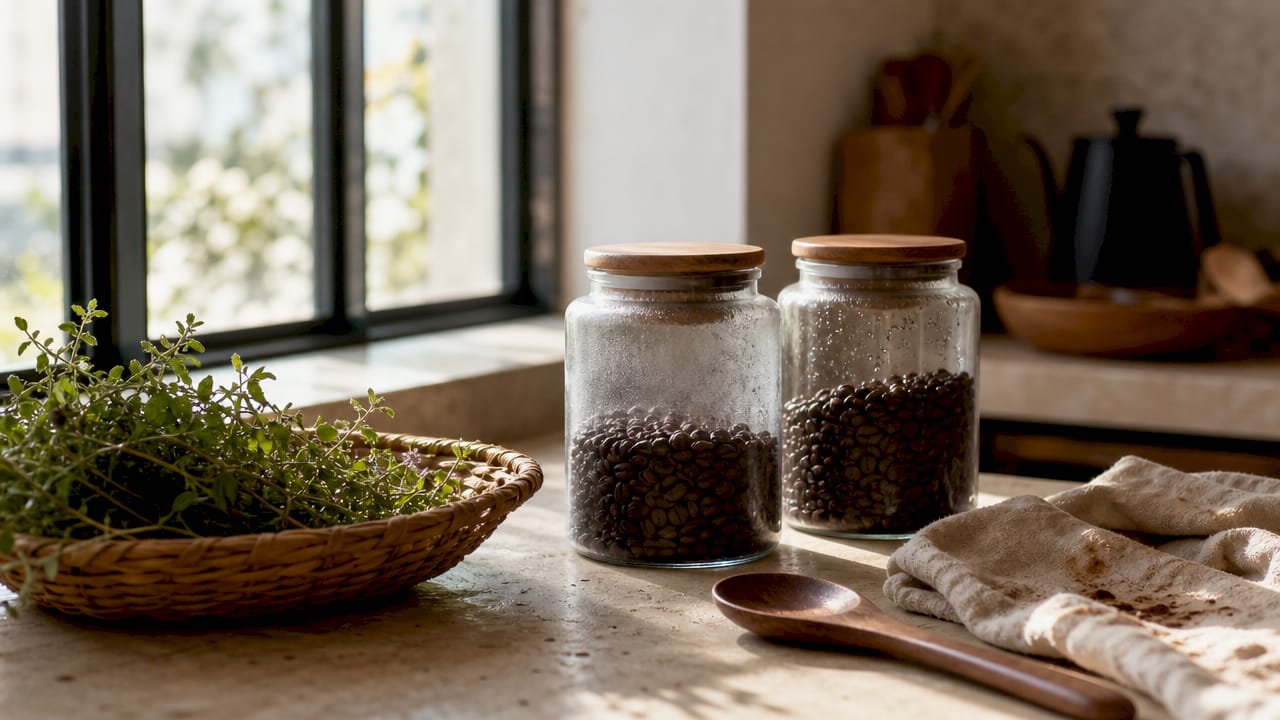
Light breaks down the aromatic compounds in coffee oils through a photochemical reaction. Even indirect sunlight through a window causes measurable degradation over several days. Opaque containers are not optional for serious home brewers. They are the baseline.
Heat accelerates every chemical reaction that causes staling. A warm kitchen counter near the stove is one of the worst places to keep beans. Temperatures above 20°C speed up the breakdown of volatile compounds that give specialty coffee its complexity.
Moisture is the most insidious threat because its damage is invisible until you taste it. Humidity causes beans to absorb water, which triggers off-flavor development and mold risk. This is also why storing beans in the refrigerator is a bad idea. The fridge introduces condensation every time you open the door, and beans absorb surrounding food odors through their porous surface.
| Factor | Primary damage | Speed of impact | Key defense |
|---|---|---|---|
| Air (oxygen) | Oxidizes aromatic oils | Fast (days) | Airtight or vacuum container |
| Light | Breaks down flavor compounds | Moderate (days to weeks) | Opaque container |
| Heat | Accelerates all staling reactions | Fast (days) | Cool pantry, 15–20°C |
| Moisture | Off-flavors, mold risk | Fast (hours to days) | Dry environment, no fridge |
Short-term storage: keeping beans fresh for up to four weeks
For most home brewers buying coffee every two to four weeks, short-term storage is the only method you need. The goal is simple: minimize air exposure, block light, and keep the temperature stable between 15–20°C.
The original bag with a one-way valve is your first line of defense. Roasters design these bags specifically to manage degassing while blocking oxygen. Fold the top down tightly after each use and clip it shut. This works well for the first one to two weeks after opening.
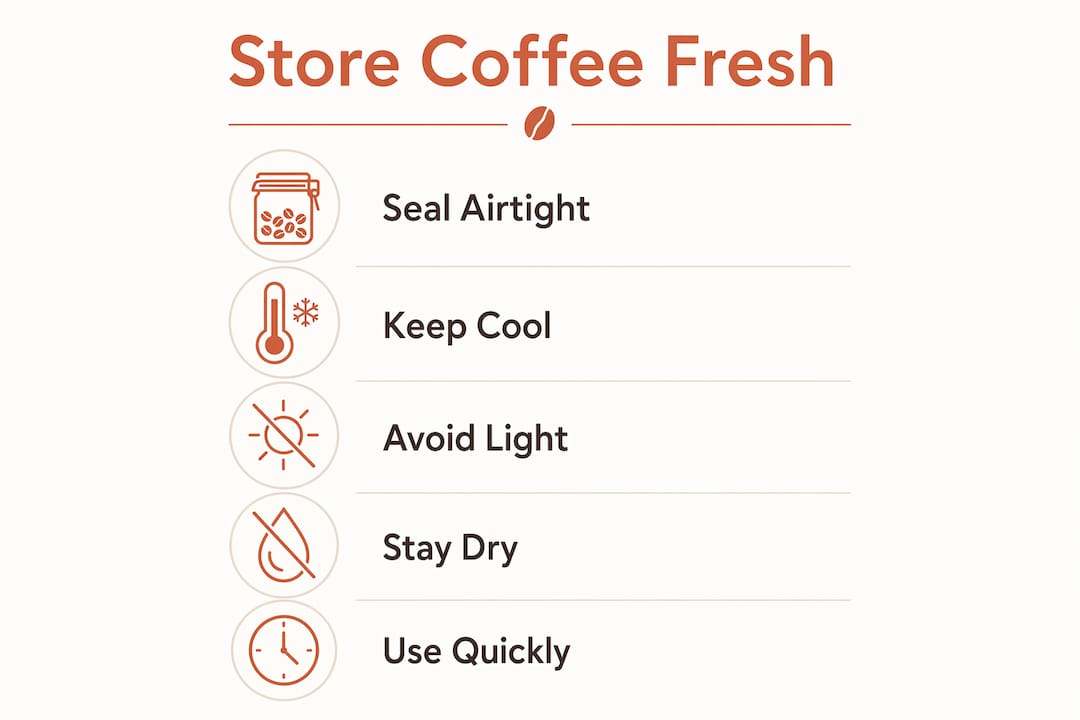
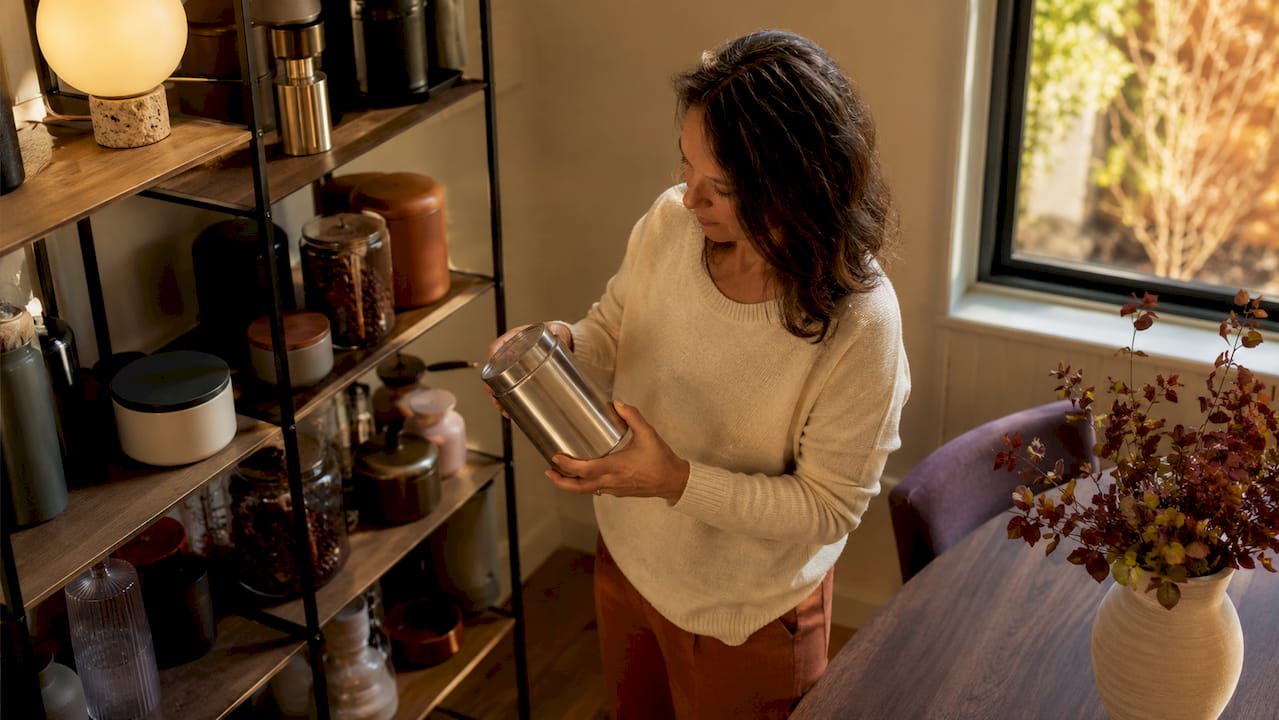
Once you transfer beans to a secondary container, choose an opaque, airtight canister. Stainless steel and ceramic are the best materials because they block light completely and do not absorb odors. Clear glass jars look attractive on a counter but expose beans to light every time you walk past. Avoid them unless you store the jar inside a dark cabinet.
The best container types for short-term storage:
- Stainless steel vacuum canisters (such as Airscape or Fellow Atmos): physically remove trapped air, not just seal it
- Ceramic canisters with rubber-sealed lids: block light and odor completely
- Original roaster bags with one-way valves: ideal for the first 1–2 weeks post-opening
- Opaque food-grade plastic containers with airtight lids: a practical budget option
Pro Tip: Clean your storage canister every 14 days with mild dish soap and let it dry completely before refilling. Residual oils turn rancid quickly and contaminate your next batch of fresh beans, no matter how good the coffee is.
Keep your canister in a cool, dark pantry or cupboard away from the stove, oven, and any appliance that generates heat. A shelf on the opposite side of the kitchen from your coffee maker is ideal.
Freezing whole bean coffee: the right way to do it long-term
Freezing is the correct method for storing beans you will not use within 30 days. Done properly, it preserves aromatic compounds with minimal loss. Done carelessly, it ruins the beans through condensation and freezer burn.
The single most important rule: portion your beans before freezing. Divide them into single-use or weekly-use amounts before they ever enter the freezer. Once a portion is thawed, use it within one to two weeks and never refreeze it.
Follow this sequence for safe long-term freezing:
- Divide your beans into weekly portions immediately after receiving them.
- Place each portion in a vacuum-sealed bag or airtight freezer-safe container.
- Remove as much air as possible before sealing. A vacuum sealer is ideal. A zip-lock bag with the air squeezed out works in a pinch.
- Label each portion with the roast date and freeze at -18°C.
- When ready to use, move one portion to your countertop and let it reach room temperature completely before opening the bag. This prevents condensation from forming on the beans.
- Transfer to your regular storage canister and use within 1–2 weeks.
Temperature fluctuations cause condensation that leads to soggy beans and freezer burn flavors. A strict no-refreeze policy for thawed beans is non-negotiable.
Pro Tip: Store your frozen portions at the back of the freezer where temperature is most stable. The door shelf experiences the most temperature swings every time the freezer opens, making it the worst spot for coffee.
Container comparison: which storage method retains the most flavor?
Not all containers perform equally. The difference between a basic jar and a vacuum canister is measurable in flavor, not just theory.
Vacuum canisters retain about 25% more aromatic compounds over three weeks compared to standard airtight jars. That gap matters most for light roast specialty coffee, where delicate floral and fruit notes are the first to fade.
| Container type | Aroma retention | Light protection | Ease of use | Cleaning needs |
|---|---|---|---|---|
| Original valve bag | Good (1–2 weeks) | Good (opaque) | Very easy | None |
| Airtight glass jar | Moderate | Poor (clear) | Easy | Weekly |
| Ceramic canister | Good | Excellent | Easy | Every 14 days |
| Stainless steel vacuum canister | Excellent | Excellent | Moderate | Every 14 days |
| Vacuum-sealed freezer bag | Excellent (frozen) | Good | Requires sealer | Single use |
| Medical centrifuge tubes | Excellent (single dose) | Good | Specialized | Single use |
Specialty shops use medical centrifuge tubes to store coffee in precise single doses. Each tube holds one dose, sealed airtight, with virtually no oxygen exposure. This approach is extreme for most home brewers but worth knowing if you want to preserve a rare or expensive lot.
For daily use, the stainless steel vacuum canister is the best balance of performance and practicality. Brands like Airscape and Fellow Atmos are widely available and designed specifically for coffee storage.
Daily habits that protect your coffee’s flavor
The best container in the world does not compensate for poor daily habits. These practices make the biggest difference in your cup quality over time.
- Grind immediately before brewing. Grinding just before brewing preserves complex flavor compounds that dissipate quickly once the bean is broken open. Pre-ground coffee loses its best qualities within 15–30 minutes of grinding.
- Check the roast date, not the expiration date. Most specialty roasters print a roast date on the bag. Aim to use beans within 2–4 weeks of that date for peak flavor. Waiting 7–14 days post-roast allows the beans to degas fully, which produces a more balanced and flavorful cup.
- Measure your portions before closing the container. Every time you open your canister, you introduce a small amount of air. Measure out your dose, then seal immediately. Do not leave the lid off while you set up your brewer.
- Never store beans in the fridge. The fridge introduces moisture through condensation and transfers odors from other foods directly into your beans. A cool, dark pantry at room temperature is always the better choice.
- Buy in quantities you will use within four weeks. Freshness is a function of time. Buying a large bag to save money costs you flavor. For brewing methods that highlight delicate notes, like pour over or Chemex, fresh beans make a dramatic difference.
Consistency in these simple habits matters more than expensive equipment. A $15 ceramic canister used correctly outperforms a $60 vacuum canister that is never cleaned and left on a sunny counter.
Key takeaways
Proper whole bean coffee storage requires airtight containers, cool dark conditions, and consistent daily habits to preserve flavor from roast date to cup.
| Point | Details |
|---|---|
| Control the four enemies | Air, light, heat, and moisture each degrade beans. Address all four simultaneously. |
| Use vacuum canisters for best results | Vacuum canisters retain about 25% more aromatic compounds over three weeks than standard jars. |
| Freeze only in portioned batches | Divide beans before freezing at -18°C and never refreeze a thawed portion. |
| Grind just before brewing | Grinding immediately before use preserves volatile flavor compounds that disappear within minutes. |
| Clean your canister every 14 days | Rancid residual oils contaminate fresh beans. Regular cleaning is as important as the container itself. |
What I’ve learned from years of storing specialty coffee
The most common mistake I see home brewers make is buying a great canister and then ignoring it for months. They invest in the gear and skip the habit. A vacuum canister with rancid oil residue from three months ago does more damage to your coffee than a clean mason jar.
My honest recommendation: start with the original roaster bag for the first week, then transfer to a stainless steel vacuum canister stored in a dark cabinet. That two-step approach costs almost nothing extra and covers 90% of the freshness equation. If you buy more beans than you can use in a month, portion them into vacuum-sealed bags and freeze them the same day they arrive.
The freezing advice intimidates people, but the process takes five minutes. The payoff is real. I have pulled frozen portions of a Yirgacheffe from Ethiopia after six weeks and brewed a cup that tasted nearly identical to week-one freshness. Portioning is the entire secret.
One thing most guides skip: the roast date sweet spot. Beans roasted to order, like those from Moustachecoffeeclub, arrive at the ideal window for freshly roasted beans. Waiting 7–14 days post-roast before brewing lets CO2 finish degassing. Brew too early and the CO2 interferes with extraction, producing an uneven, slightly sour cup. Brew in that 7–21 day window and the same beans taste dramatically better.
Storage is not about perfection. It is about removing the obvious threats consistently. Airtight. Dark. Cool. Clean. Grind fresh. Do those five things every time and your coffee will taste noticeably better within a week.
— Sean
Fresh beans worth storing: Moustachecoffeeclub subscriptions

Getting storage right only matters if the beans are worth protecting. Moustachecoffeeclub sources single-origin specialty coffees from Ethiopia, Colombia, and other top-producing regions, roasted to order in the ultra-light Nordic style that preserves each origin’s distinct flavor profile. Beans ship within days of roasting, so they arrive in that ideal 7–14 day degassing window ready for your canister. A fresh coffee subscription gives you a consistent supply of roast-dated beans at the right quantity for your brewing schedule, so you are never storing beans longer than necessary. Moustachecoffeeclub also offers brewing guides and origin reports to help you get the most from every bag.
FAQ
How long do whole bean coffee beans stay fresh?
Whole beans stored in an airtight, opaque container at 15–20°C stay at peak flavor for 2–4 weeks after roasting. After that, flavor compounds gradually fade even in ideal conditions.
Should you refrigerate coffee beans?
No. Refrigerating coffee beans introduces condensation and causes beans to absorb surrounding food odors, both of which degrade flavor. A cool, dark pantry is always the better option.
What is the best container for storing coffee beans?
A stainless steel vacuum canister retains about 25% more aromatic compounds over three weeks compared to a standard airtight jar. Ceramic canisters with rubber-sealed lids are a strong second choice.
Can you freeze whole bean coffee?
Yes, but only in portioned, vacuum-sealed batches at -18°C. Thawed beans must be used within 1–2 weeks and must never be refrozen, as repeated temperature changes cause condensation and flavor loss.
When is the best time to grind coffee beans?
Grind immediately before brewing. Flavor compounds dissipate quickly once beans are ground, so pre-grinding even an hour ahead results in a noticeably flatter cup.
Recommended
- Why freshly roasted beans taste better: a guide | Blog | The Moustache Coffee Club
- How to buy specialty coffee: expert tips for flavor and quality | Blog | The Moustache Coffee Club
- How a Coffee Cherry Becomes a Roasted Bean | Blog | The Moustache Coffee Club
- Receiving Roasted-to-Order Coffee: A Connoisseur’s Guide | Blog | The Moustache Coffee Club