What Is Direct Trade Coffee? Your 2026 Buyer’s Guide
Direct trade coffee is a sourcing model where roasters buy green coffee beans directly from producers, cutting out commodity brokers, importers, and certification bodies entirely. The result is a shorter supply chain, higher prices for farmers, and better cup quality for you. Unlike Fair Trade, direct trade carries no official certification or regulatory body. It emerged with third-wave pioneers like Intelligentsia Coffee and Stumptown Coffee Roasters, and it has since become the defining sourcing philosophy of serious specialty coffee.
What is direct trade coffee and how does it work?
Direct trade is an unregulated sourcing model where roasters purchase green coffee directly from producers, bypassing commodity brokers. That single structural change reshapes everything: pricing, quality control, and the relationship between the person growing your coffee and the person roasting it.
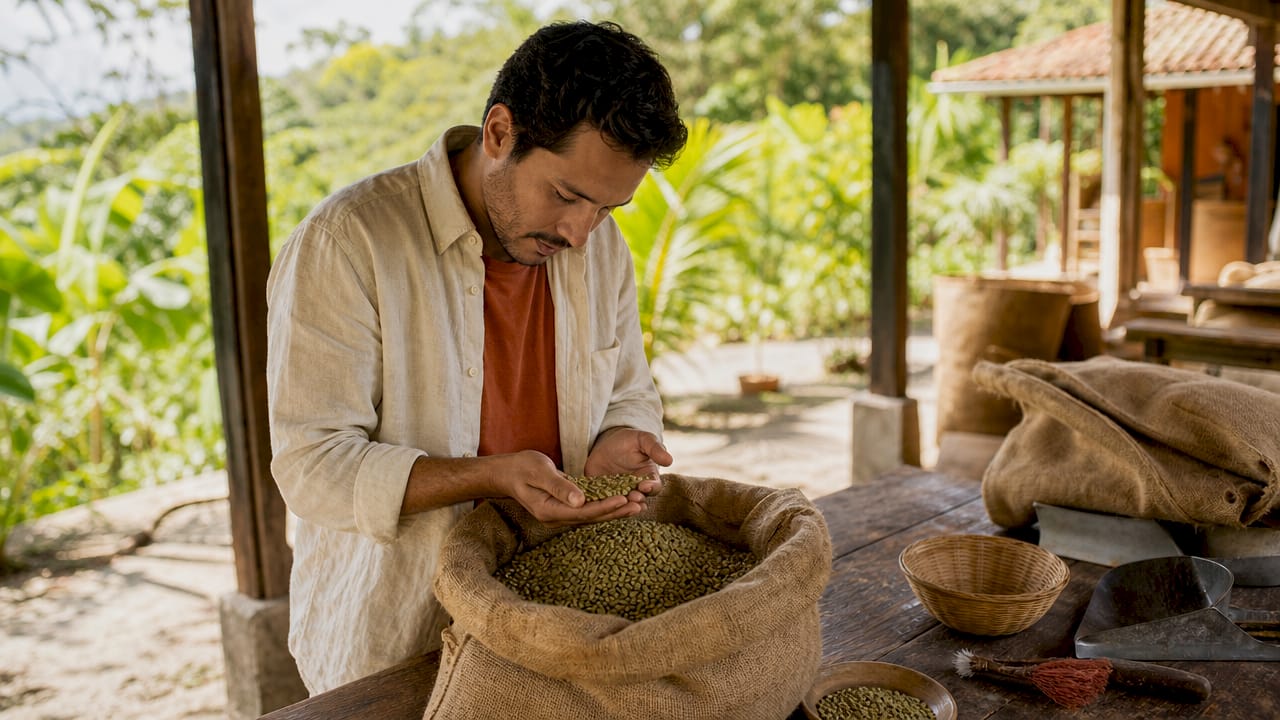
The model selects coffee based on cup quality, not commodity market fluctuations. Roasters travel to farms, taste lots in the field, and negotiate prices face to face. This is not a transaction. It is a multi-year working relationship built on shared goals.

Specialty lots in direct trade typically fetch $3–$8 per pound FOB, with competition-grade lots exceeding $15–$50 per pound. Compare that to standard commodity pricing, and the gap is significant. Farmers receive a price that actually reflects the quality of their work.
How a direct trade relationship is built
The process follows a clear sequence. Roasters identify promising farms or cooperatives, often through importers who specialize in relationship coffee or through referrals within the specialty community. They visit the farm, assess processing methods, and cup samples. If the quality meets their standard, they negotiate a price and commit to purchasing across multiple harvests.
That multi-harvest commitment is what separates direct trade from one-off spot buying. A farmer who knows a roaster will return next year has a reason to invest in better processing equipment, shade-grown cultivation, or fermentation experiments. The relationship creates the conditions for quality to improve over time.
Pro Tip: When evaluating a roaster’s direct trade claims, look for evidence of repeat purchases from the same farm across at least two consecutive harvests. One-time buys dressed up as direct trade are common.
The feedback loop between roasters and producers is one of the model’s most underappreciated features. Roasters share detailed cupping scores and processing notes with farmers after each harvest. That information empowers producers to adjust their methods and improve quality in a measurable way. It turns a commercial transaction into a genuine knowledge exchange.
What are the benefits and challenges of direct trade coffee?
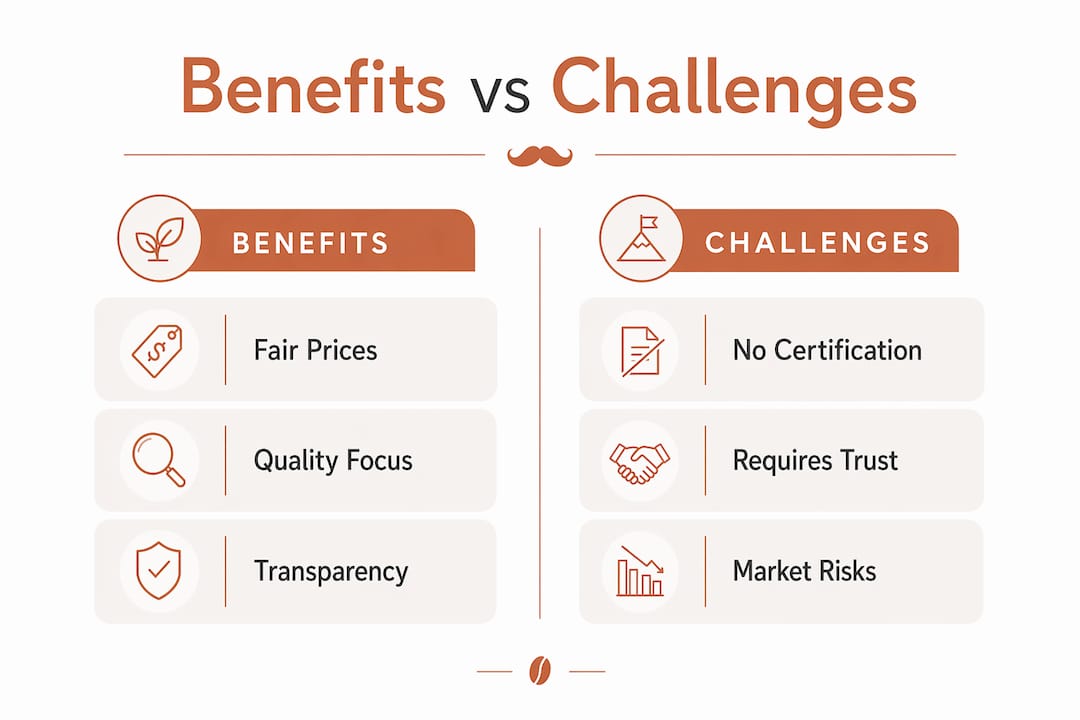
Direct trade delivers real advantages for farmers, roasters, and consumers. But it also carries risks that buyers need to understand before trusting a label.
Benefits for farmers, roasters, and consumers
- Higher farm-gate prices. Direct trade payments commonly run 2–5 times the commodity market price. Commodity farmers often receive only 7–10% of the retail price of coffee. Direct trade aims to close that gap significantly.
- Price stability. Roasters often pay at least 25% above Fair Trade pricing, giving farmers a more predictable income and the ability to invest in sustainable farming practices.
- Quality-driven incentives. Farmers are rewarded for producing better coffee, not just more coffee. That shifts the entire incentive structure of the farm.
- Transparency for consumers. Authentic direct trade roasters publish farm names, FOB prices, and relationship histories. You know exactly where your coffee came from and what was paid for it.
- Better flavor in the cup. When farmers are paid fairly and given quality feedback, they produce more expressive, complex coffees. The ethical sourcing and the flavor profile are directly connected.
Pro Tip: Check the roaster’s website for an origin report or transparency document. If they cannot name the farm, the region, and the price paid, the “direct trade” label is marketing, not sourcing.
Challenges and risks worth knowing
Direct trade has no regulatory body and no certification standard. Any roaster can use the term without meeting any defined criteria. That flexibility allows for tailored partnerships that rigid certification models cannot support, but it also opens the door to misleading claims.
Consumers must do their own due diligence. Roasters who genuinely practice direct trade welcome scrutiny. Those who do not tend to offer vague language about “relationships” without naming farms or publishing prices. Volatile commodity markets also create real pressure on both sides of a direct trade agreement. When global coffee prices spike, a roaster locked into a premium price may face margin pressure. When prices drop, a farmer dependent on one roaster relationship carries concentration risk.
How does direct trade compare to Fair Trade?
Direct trade and Fair Trade both aim to improve conditions for coffee farmers, but they operate through fundamentally different mechanisms.
| Factor | Direct Trade | Fair Trade |
|---|---|---|
| Certification | None. Self-regulated by roasters. | Third-party certified by Fair Trade USA or Fairtrade International. |
| Pricing | Negotiated per lot based on quality. Often 2–5x commodity price. | Minimum floor price set by certification body. |
| Transparency | Published farm names, FOB prices, and relationship history. | Certification label confirms standards met, but farm-level detail varies. |
| Quality focus | Central. Cup score drives price and relationship. | Secondary. Social and labor standards are primary. |
| Market channel | Specialty cafes and roasters. | Supermarkets and mainstream retail. |
| Auditing | None. Consumer trust depends on roaster disclosure. | Annual third-party audits required. |
Fair Trade tends to dominate supermarket shelves, while direct trade drives the specialty coffee market. Neither model is universally superior. Fair Trade provides a certified floor that protects farmers in commodity markets. Direct trade offers the potential for much higher prices, but only when the roaster is genuinely committed.
Organic certification sits in a separate category entirely. It addresses farming inputs, not pricing or relationships. A coffee can be organic, Fair Trade, and direct trade simultaneously. These labels address different parts of the supply chain. For a full breakdown of how these certifications stack up, the specialty coffee certifications guide at Moustachecoffeeclub covers each system in detail.
How to identify and buy authentic direct trade coffee
Buying genuine direct trade coffee requires more than reading a label. Here is what to look for.
- Find the farm name. Authentic direct trade roasters name the specific farm or cooperative on the bag and on their website. “Ethiopia Yirgacheffe” is a region. “Halo Beriti Cooperative, Gedeo Zone, Ethiopia” is a source.
- Look for published pricing. True direct trade verification requires roasters to publish FOB prices, farm names, and evidence of recurring relationships. If the price paid is not listed anywhere, ask.
- Check for multi-year relationships. A roaster who has purchased from the same farm for three consecutive harvests is demonstrating commitment. A roaster who lists a new farm every season may be spot buying and calling it direct trade.
- Read the origin report. Many serious specialty roasters publish annual transparency or origin reports. These documents detail every farm relationship, the prices paid, and the quality scores received. Absence of this document is a red flag.
- Use trusted specialty roasters and subscriptions. Working with roasters who specialize in ethical single-origin sourcing removes much of the guesswork. Their sourcing practices are publicly documented and consistently applied.
When you find a genuine direct trade coffee, the flavor profile often reflects the care in the supply chain. Expect more clarity, more distinct origin character, and a cleaner finish than you get from commodity blends. Ethiopian coffees sourced this way often show bright florals and stone fruit. Colombian lots tend toward caramel sweetness and citrus acidity. The terroir comes through when the farmer had the resources to let it.
Key takeaways
Direct trade coffee is the most transparent sourcing model in specialty coffee, and the quality in your cup is a direct result of the prices paid at the farm.
| Point | Details |
|---|---|
| No certification exists | Direct trade is self-regulated; roasters must publish farm names and prices to prove authenticity. |
| Prices are significantly higher | Direct trade payments run 2–5 times commodity price, giving farmers real margin to reinvest. |
| Quality drives the relationship | Roasters select and repurchase based on cup scores, creating incentives for continuous improvement. |
| Fair Trade serves a different market | Fair Trade certifies minimum standards for mainstream retail; direct trade targets specialty quality. |
| Verification is your responsibility | Look for farm names, FOB prices, multi-year relationships, and published origin reports before buying. |
Why direct trade has moved from charity to strategy
I have watched the direct trade conversation shift considerably over the past decade. When Intelligentsia and Stumptown first popularized the model in the early 2000s, it was framed almost entirely around ethics. Pay farmers more. Do the right thing. That framing was well-intentioned but it positioned direct trade as a premium you paid for your conscience, not for your cup.
What I find more compelling now is the business case. Producers are increasingly vetting roasters, not just the other way around. Farmers with exceptional lots have options. They choose partners who offer price stability, quality feedback, and long-term commitment. The best farms are not waiting for charity. They are selecting business partners who make their operation more resilient.
That shift matters for consumers too. When you buy from a roaster with genuine direct trade relationships, you are not just paying a premium for ethics. You are paying for a supply chain that has been built for quality from the ground up. The farmer had the resources to process carefully. The roaster had the information to select the best lots. That is not charity. That is how good coffee gets made.
The challenge I keep coming back to is verification. The term “direct trade” is used loosely enough that it can mean almost anything. I think the most useful thing a consumer can do is treat it as a starting point for a question, not a final answer. Ask the roaster. Read the origin report. If they cannot answer, find someone who can.
— Sean
Fresh direct trade coffee, roasted to order
Moustachecoffeeclub sources single-origin coffees from farms in Ethiopia, Colombia, and beyond, roasted in the ultra-light Nordic style to preserve the origin flavors that direct trade relationships make possible.
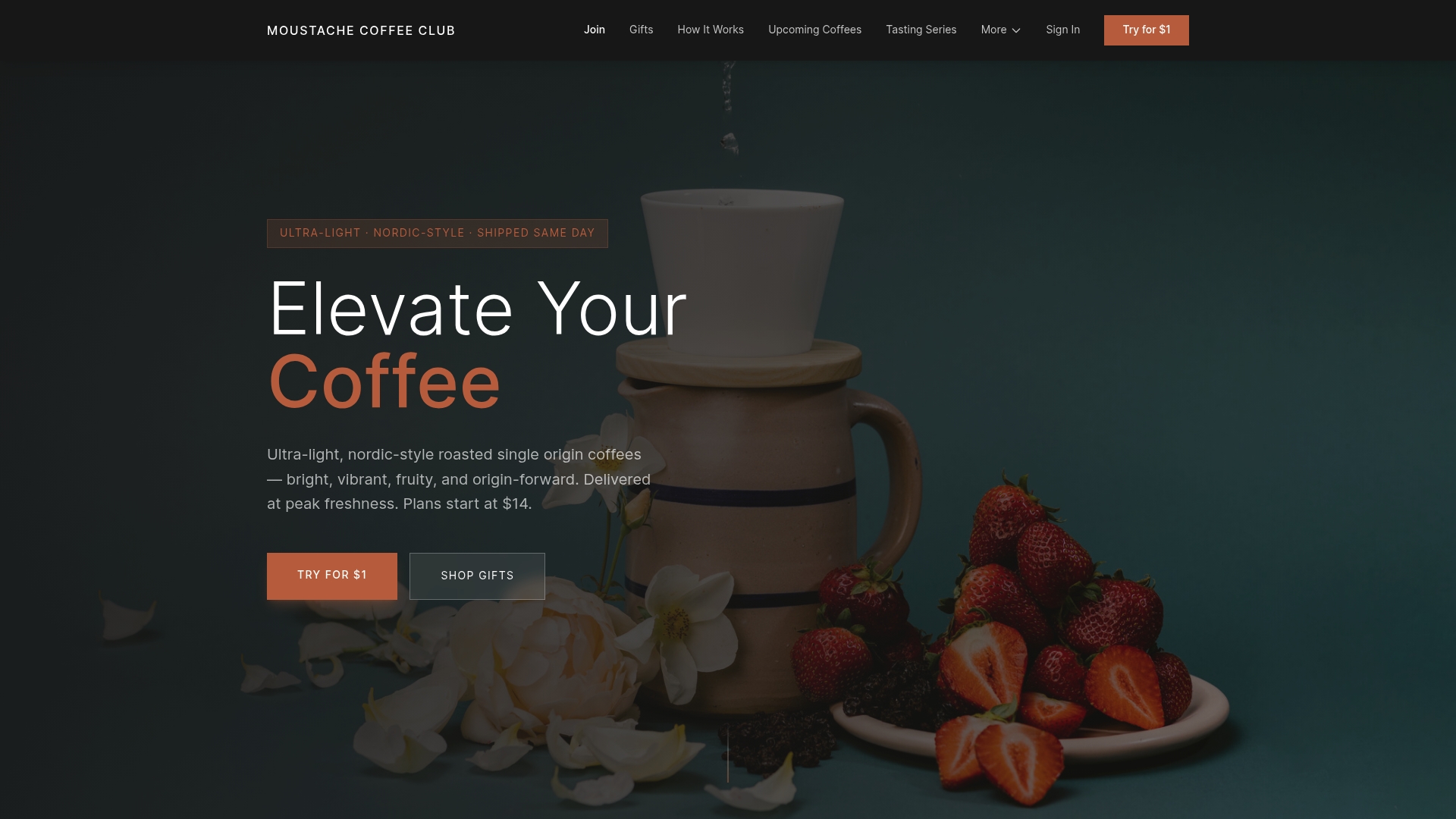
Every bag ships freshly roasted to order, and each coffee comes with detailed origin information so you know exactly where it came from and how it was sourced. The coffee education hub includes brewing guides and origin reports that put direct trade sourcing in full context. If you want to taste what an honest supply chain produces, the single-origin subscription is the most direct way to find out.
FAQ
What does direct trade mean in coffee?
Direct trade means a roaster purchases green coffee beans directly from the producer, without commodity brokers or certification bodies. Prices are negotiated based on cup quality, and relationships typically span multiple harvests.
Is direct trade better than Fair Trade?
Direct trade often pays farmers more and prioritizes cup quality, but it has no certification or auditing. Fair Trade provides a certified minimum price and labor standards, making it more reliable for mainstream markets where roaster transparency is harder to verify.
How do I know if a coffee is truly direct trade?
Look for the farm name, the price paid (FOB), and evidence of multi-year purchasing relationships on the roaster’s website or origin report. Published pricing and farm names are the clearest indicators of an authentic direct trade relationship.
Does direct trade coffee taste different?
Direct trade coffee tends to show more distinct origin character because farmers are incentivized to process carefully and roasters select based on cup quality. Expect cleaner, more expressive flavors compared to commodity blends.
Can a coffee be both Fair Trade and direct trade?
Yes. A coffee can carry Fair Trade certification and still be sourced through a direct trade relationship. The two models address different parts of the supply chain and are not mutually exclusive.
Recommended
- Last-Minute Specialty Coffee Gift Guide for 2026 | Blog | The Moustache Coffee Club
- Why coffee gifts suit corporate gifting: a buyer’s guide | Blog | The Moustache Coffee Club
- How Single Origin Differs from Blends: A Coffee Guide | Blog | The Moustache Coffee Club
- Specialty Coffee Certifications Types: A Professional Guide | Blog | The Moustache Coffee Club